
REVIEW · COMMUNISM HISTORY TOURS
Second World War & Communism (Tip-based 3 hour tour)
Prague remembers its darkest years in plain sight. This three-hour walk links wartime resistance, the Holocaust, Communist rule, and the Velvet Revolution through streets and squares you might otherwise pass without a second thought. I love the clear, chronological story and the final visit to the Anthropoid memorial crypt, where the tour ends with one of the most dramatic chapters of Czech resistance.
I also like the tip-based price, listed at just $3.60, which lets you decide what the experience was worth. The main caution is physical: you will walk about 5 kilometers, and group size may not always match the advertised expectation of a small group. One report described 24 people, so ask about numbers if that matters to you.
The guides are the heart of this experience. Kamil is praised for bringing passion and personal experience to the story, while Vaclav is noted for presenting the material in a clear sequence and keeping a large group moving. Katerina has also been praised for first-hand accounts of life under Communism. If you want Prague beyond castles and pretty lanes, this is a useful three-hour investment.
In This Review
- Key points to know before you go
- Why this Prague history walk is worth your time
- Klárov begins with independence and resistance
- Pinkas Synagogue brings the war down to human scale
- Old Town Square explains the Prague Uprising
- Wenceslas Square covers occupation, protest, and Jan Palach
- The Kafka head shows how art survived Communism
- Národní třída and the Velvet Revolution
- The National Theatre introduces Václav Havel
- Dancing House adds a surprising wartime detail
- The Anthropoid crypt is the powerful final chapter
- The guides make or break this experience
- Price, group size, and walking effort
- Who should book this tour?
- Should you book the Second World War and Communism tour?
- FAQ
- How long is the Second World War and Communism tour?
- What language is the tour offered in?
- Where does the tour start?
- Where does the tour end?
- Is entry to the Anthropoid museum included?
- How much walking is involved?
- Can I cancel for a full refund?
Key points to know before you go
- The route connects nine places: You begin at Klárov and finish at the Saints Cyril and Methodius Cathedral crypt.
- The story runs from World War I to the fall of Communism: You will cover Nazi occupation, Czech Jewish communities, the Prague Uprising, the 1968 invasion, Jan Palach, and the Velvet Revolution.
- The Anthropoid memorial is the emotional finish: Entry to the Museum of Anthropoid Operation is included, with the tour ending in the crypt used as a wartime hideout.
- The price is unusually low: The advertised cost is $3.60 per person, with a tip-based payment model that rewards a guide you feel served you well.
- Plan for a serious walk: The route takes about three hours and covers roughly 5 kilometers, with standing at outdoor locations.
- English is the only listed language: A certified, in-person English-speaking guide leads the tour.
Why this Prague history walk is worth your time
This is not a tour of famous Prague architecture with a few war stories sprinkled in. It is a focused walk through the city’s political and human upheavals during the last century.
The route explains how Czechoslovakia became independent after World War I, why Hitler occupied it early in World War II, how Jewish communities were destroyed or scattered, and how the end of the war helped create conditions for Communist power. It then moves through the 1968 invasion, the death of Jan Palach, artistic expression under Communism, and the peaceful fall of the regime.
That sequence matters. You get a cause-and-effect story rather than a collection of disconnected dates. At several points, the guide ties national events to a particular street, monument, building, or public square. I find that approach far more useful than trying to absorb Czech history from a textbook after you return home.
The tour is especially helpful if you already know a little about World War II or the Cold War but want to understand how those events affected Czechoslovakia. It also works for a first-time visitor who wants a better grasp of modern Prague before exploring the Old Town, castle, or Jewish Quarter on your own.
More communism history tours in Prague:
- Prague: Communism History and Nuclear Bunker Guided Tour
★ 4.7 · 2,417 reviews - Prague Communism History and Nuclear Bunker Tour
★ 5.0 · 1,742 reviews - Communism & Nuclear Bunker Tour + 70s Canteen Lunch (own expense)
★ 5.0 · 1,036 reviews
Klárov begins with independence and resistance
The meeting point is MetrocafeKlárov at Klárov 51 in Malá Strana. The first stop takes about 20 minutes and introduces two monuments: the Memorial to the Second Resistance and the Winged Lion Memorial.
This opening gives you the political background needed for everything that follows. You will hear how Czechoslovakia gained independence after World War I, why the country became one of the first places occupied by Hitler, and what happened to Czechoslovak soldiers during World War II.
Klárov is a sensible starting point because the guide can set the national story before the walk turns toward individual communities and acts of resistance. Listen closely here. The explanation of independence and occupation helps clarify why the Czech resistance mattered, and why the wartime choices made by soldiers and civilians were so difficult.
This is an outdoor stop, and admission is free. You will be standing while the guide speaks, so comfortable shoes and weather-ready clothing are sensible.
Pinkas Synagogue brings the war down to human scale
At Pinkas Synagogue, the tour spends about 15 minutes on the fate of Czech Jewish communities. The focus is not simply on numbers. You will learn how many people managed to emigrate and what happened to those who could not.
That personal scale is important. The tour’s wider political story could easily become a parade of governments, invasions, and dates. Pinkas Synagogue shifts attention to families and communities caught in those events.
The stop is also a reminder that Prague’s wartime story is not only about military occupation or resistance leaders. The destruction of Jewish life is central to understanding what Nazi rule meant here. The short time allocation means you should not expect a full Jewish Quarter tour, but it gives you a meaningful wartime frame.
Admission to this stop is free as part of the walking route. If you want extensive time inside the synagogue or other Jewish Quarter sites, plan a separate visit.
Old Town Square explains the Prague Uprising
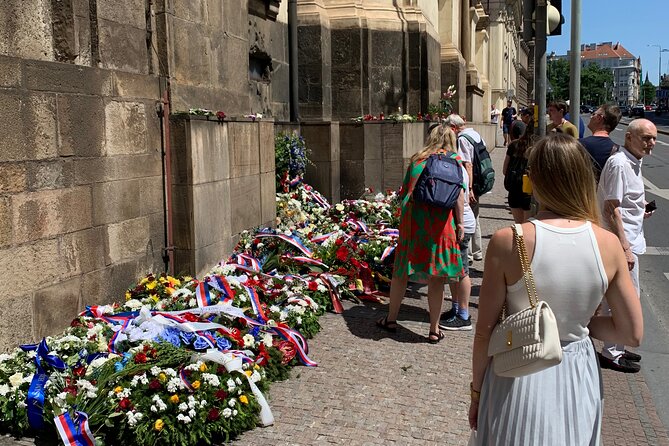
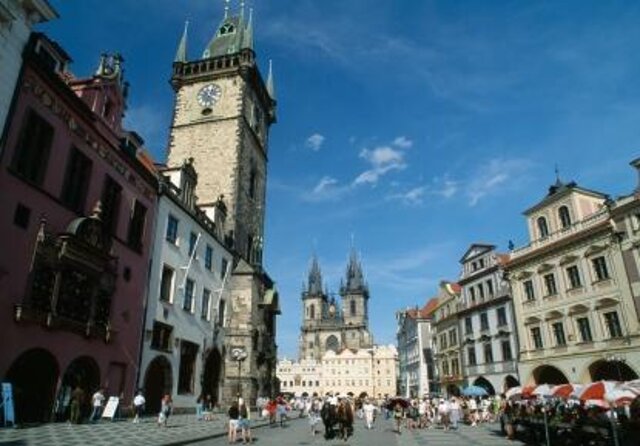
At Staroměstské náměstí, beside the Old Town Hall, the guide explains the Prague Uprising and the final stage of World War II. The stop lasts around 20 minutes.
This is where the tour begins to connect the end of Nazi rule with what came next. The story does not stop at liberation. You will hear how the aftermath of the war helped set the stage for the rise of Communism in Czechoslovakia.
That transition is one of the strongest parts of the route. Many short city tours treat 1945 as a clean finish. This one uses the moment to show that liberation brought a new political struggle rather than a simple return to normal life.
Old Town Square can be crowded and noisy, so stay close enough to hear the guide. The setting is visually impressive, but the subject is serious. Expect more standing and listening than sightseeing inside a building.
More World War II tours in Prague:
- Prague: WWII Guided Tour & The Crypt of Operation Anthropoid
★ 4.7 · 1,030 reviews - WWII in Prague Tour & The Crypt of Operation Anthropoid
★ 5.0 · 817 reviews - Small-Group World War 2 & Operation Anthropoid Tour in Prague
★ 5.0 · 231 reviews - Prague: World War 2 and Operation Anthropoid Walking Tour
★ 4.8 · 193 reviews
Wenceslas Square covers occupation, protest, and Jan Palach
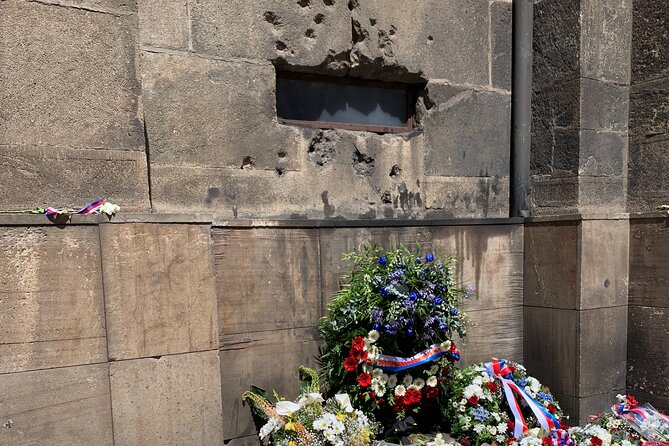
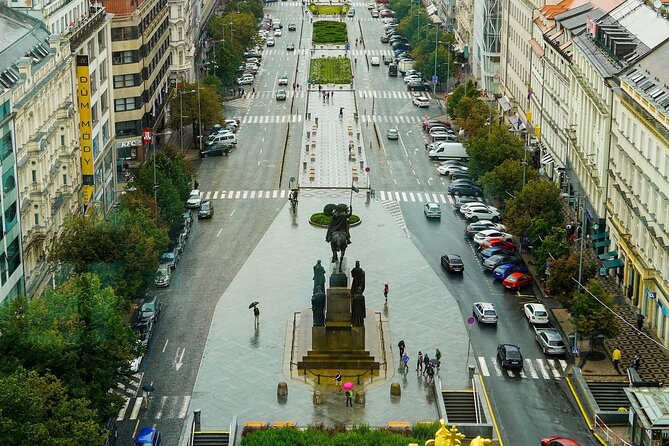
The next 20-minute stop is Wenceslas Square. Here you will learn what happened after Communism took power, why Warsaw Pact armies invaded Czechoslovakia in 1968, and where Jan Palach carried out his self-immolation.
This part gives the tour its Cold War weight. The 1968 invasion is not presented as an abstract clash between superpowers. The focus is on what Communist rule meant inside Czechoslovakia and how military intervention crushed hopes for reform.
Jan Palach’s story adds a painful human dimension. The guide identifies the location connected with his protest, allowing you to connect a personal act of sacrifice with the wider public resistance in the square.
Wenceslas Square is also one of the easiest places to understand how Prague’s public spaces became political stages. Demonstrations, state power, mourning, and calls for change all meet here. The stop is free, but the square is large, so listen for the exact point where the guide gathers the group.
The Kafka head shows how art survived Communism
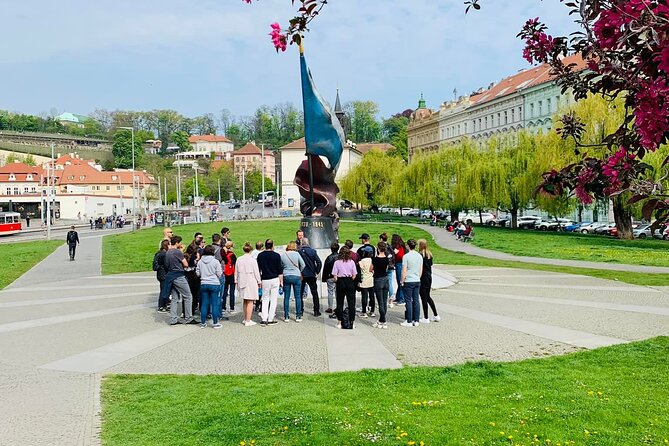
At OC Quadrio, the tour pauses for about 15 minutes beside the Rotating Head of Kafka. The sculpture becomes an entry point for discussing art during Communism.
This is a welcome change of pace. Political history can become heavy, and the Kafka head shows how public art can carry questions about identity, authority, and freedom without turning the stop into a formal museum lecture.
The guide’s task here is to explain the cultural climate rather than simply point out an unusual sculpture. You will see how art fit into a society where public expression was shaped by the political system.
The sculpture is outside, admission is free, and this is a good place to take a quick photo if the group allows time. Do not expect the tour to cover Prague’s entire modern art scene. The stop has a narrower purpose: art as a way of understanding life under Communism.
Národní třída and the Velvet Revolution
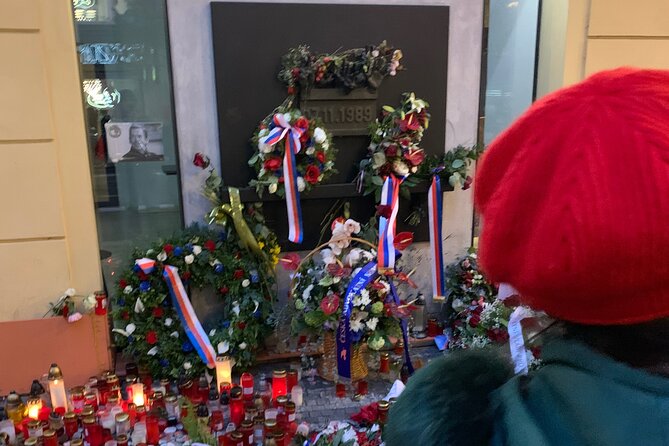
The hands reaching from the wall on Národní třída mark the next 15-minute stop. Here the guide explains the Velvet Revolution and the fall of Communism.
This is the point where the earlier stories gather momentum. You have heard about occupation, political control, invasion, and personal protest. Now the route turns to the public movement that brought Communist rule to an end.
The walk works best when the guide keeps the story connected to the street. Národní třída is not treated as just another photo stop. It represents the power of ordinary people gathering in public and demanding change.
The subject is relatively recent, which makes this part especially useful for understanding modern Czech identity. The guide may also help you place Václav Havel’s role in the events that followed.
The National Theatre introduces Václav Havel
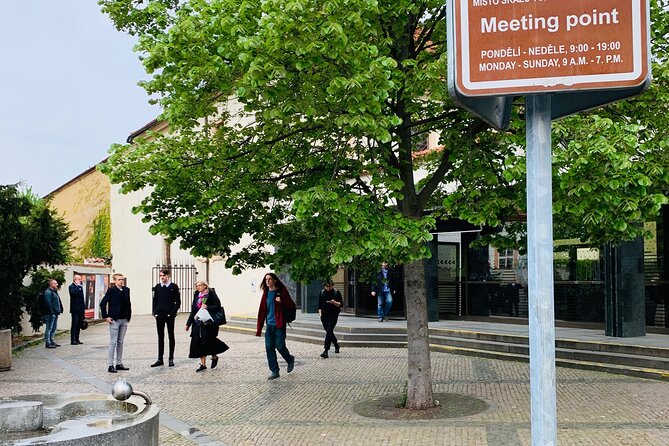
The National Theatre stop lasts about 10 minutes and focuses on Václav Havel, the first president of Czechoslovakia after the fall of Communism, and his role during the Velvet Revolution.
The shorter timing is appropriate. This is a linking stop rather than a full biography. You will get enough context to understand why Havel mattered as a dissident, public voice, and political leader during the change of government.
The National Theatre also fits the tour’s continuing interest in culture and public life. After the Kafka discussion, the route shows how theatre, language, and public ideas could matter in a political struggle.
I would pay attention to the guide’s explanation of Havel’s transition from opposition figure to president. It helps you see the Velvet Revolution as more than a change in party leadership. The tour presents it as a change in the country’s public and political direction.
Dancing House adds a surprising wartime detail
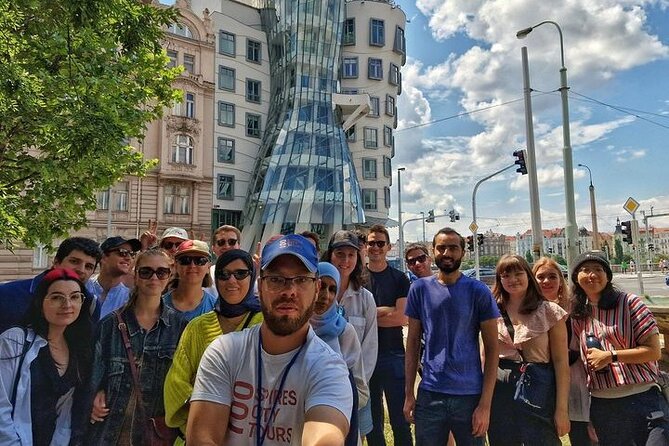
At the Dancing House, the guide spends about 10 minutes showing you the building and telling the story of the Valentine’s Day bombing.
This stop may seem like a break from the political storyline, but it adds a less familiar wartime detail to the walk. The Dancing House is one of Prague’s most recognizable modern buildings, so the contrast between its playful design and the account of wartime bombing is striking.
The time here is brief. Treat it as a story stop and an exterior view, not a visit inside the building. The tour keeps moving toward its final and most important location.
The Dancing House also gives you a useful orientation point. The end of the tour is only a minute from here, so you can easily return to the area later or continue toward Charles Square after the guide finishes.
The Anthropoid crypt is the powerful final chapter
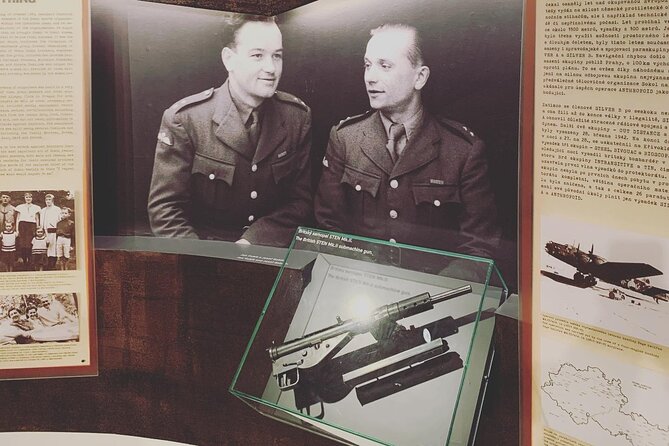
The tour ends at the Orthodox Cathedral of Saints Cyril and Methodius on Resslova Street. The final 20 minutes cover Operation Anthropoid, described as the most important achievement of Czechoslovak resistance during World War II.
Entry to the Museum of Anthropoid Operation is included. More significantly, the tour ends in the crypt, the hideout used by soldiers connected with the operation.
This is the strongest reason to choose this walk instead of a general city tour. The earlier stops provide political context, but the crypt gives the resistance story a physical setting. You finish not at a grand viewpoint, but in a memorial space tied directly to the people being discussed.
Animals are not allowed inside the war memorial, although service animals are allowed on the tour generally. The crypt is one minute from the Dancing House or Charles Square, which makes the ending convenient for continuing your day.
Because the final site is a war memorial, keep the mood respectful. The tour provides free entry, but the experience is not light sightseeing. It is a solemn finish to an already serious route.
The guides make or break this experience
The strongest praise goes to the guides’ storytelling and organization. Kamil is singled out for clear knowledge, passion, familiarity with the subject, and personal experience. One account describes paying more than expected because the guide made the three hours feel worthwhile.
Vaclav is praised for presenting events in a clear, linear order and building suspense as the group moved through the city. That matters here. The subject covers more than 70 years, and a guide who jumps around can leave you confused.
Katerina is praised for taking the group from World War II through Communism to the present day, with first-hand accounts of life under Communist rule. Another guide, Kuba, is described as clear and informative.
Guide quality can vary on any walking tour, but the pattern here is encouraging. The most important question is not whether the guide recites every date. It is whether the guide helps you understand why events unfolded as they did and keeps the human cost visible.
Price, group size, and walking effort
At $3.60 per person, this is an excellent value if you judge it purely by the amount of guided time and the included Anthropoid entry. The tip-based model also gives you room to reward a guide who delivers a strong experience.
Still, the listed price is not necessarily the full amount you may choose to spend. The structure asks you to decide what the tour was worth, so bring enough money to tip if the guide earns it. Several comments indicate that people voluntarily paid more than the basic price because they valued the guide’s work.
The physical demand is moderate, but not trivial. The route covers about 5 kilometers over three hours, with repeated stops on city streets. It is not recommended for people with mobility problems, and you should wear comfortable shoes.
Group size deserves a clear warning. The activity is described as private, with only your group participating, yet one account reported a group of 24 despite an expectation of no more than eight. That could affect how easily you hear the guide and how personal the experience feels. If a small group is important, confirm the current arrangement before booking.
Who should book this tour?
I would choose this tour if you care about World War II, the Holocaust, the Cold War, political protest, or the end of Communism. It is also a smart pick if you have already seen Prague’s castle and Old Town and want the modern story behind the city.
The tour suits adults and older teenagers who can handle serious subjects and a long walk. It is less suitable if you want interiors, leisurely photography, or a broad introduction to Prague’s art and architecture.
Book it early if your schedule is fixed. The experience is booked an average of 19 days ahead, which suggests that popular dates can fill. Confirmation arrives at booking, and free cancellation is available until 24 hours before the start time. Changes or cancellations inside that window are not accepted, and the tour requires a minimum number of participants.
Should you book the Second World War and Communism tour?
Yes, if modern Czech history is a priority. The route is well chosen, the price is low, and the included Anthropoid memorial gives the tour a memorable ending.
Book with two reservations: expect a substantial walk, and do not assume the group will be tiny. If you need a slower pace, have mobility concerns, or prefer a private conversation with the guide, this may not be the right fit.
For most history-minded visitors, though, it offers something many Prague tours skip: a clear explanation of how war, occupation, Communist power, protest, and democratic change shaped the city you see today.
FAQ
How long is the Second World War and Communism tour?
The tour lasts approximately three hours.
What language is the tour offered in?
The tour is offered in English with an in-person certified guide.
Where does the tour start?
It starts at MetrocafeKlárov, Klárov 51, 118 00 Prague 1, Malá Strana.
Where does the tour end?
It ends at the Orthodox Cathedral of Saints Cyril and Methodius on Resslova Street, in the crypt connected with the Anthropoid soldiers’ hideout.
Is entry to the Anthropoid museum included?
Yes. Free entry to the Museum of Anthropoid Operation is included.
How much walking is involved?
The route covers about 5 kilometers and requires a moderate level of physical fitness. It is not recommended for people with mobility problems.
Can I cancel for a full refund?
Yes, if you cancel at least 24 hours before the experience start time. Cancellations or changes made less than 24 hours before the start are not accepted for a refund.
Newest listings in Prague
- World War II 4WD Tour from Prague with Lunch★ 4.4 · 3 reviews
- Prague: Historical Walking Tour with Focus on World War 2★ 4.3 · 12 reviews
- WWII and Communism History in Prague’s Old Town Private Tour★ 5.0 · 4 reviews
- Wroclaw: Giant Mountains & Valley of Palaces Day Tour★ 4.8 · 36 reviews
- Walking tour of Prague in French : Nové Město★ 4.9 · 16 reviews
- Walking tour of Prague in french: Old Town & Charles Bridge★ 4.9 · 62 reviews
- Vltava River Cruise and Private Tour of Prague’ Old Town★ 5.0 · 1 review
- Ultimate Unlimited Beer Pong with Czech Beer★ 4.6 · 5 reviews
Communism History Tours, compared.
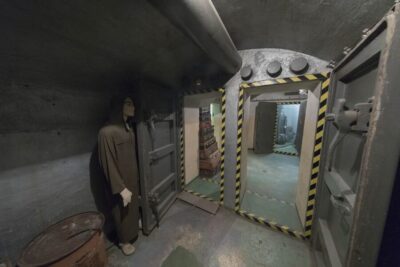
Communism History and Nuclear Bunker Guided Tour
Read our review →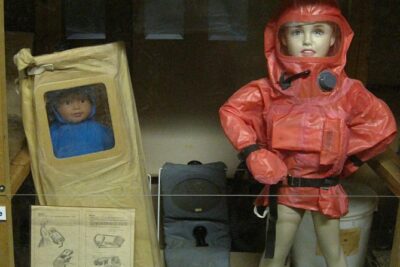
Prague Communism History and Nuclear Bunker Tour
Read our review →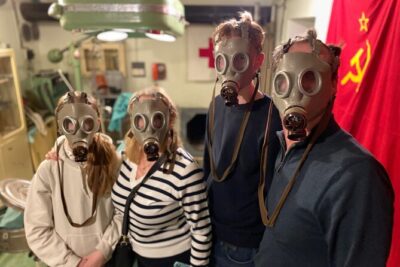
Communism & Nuclear Bunker Tour + 70s Canteen Lunch (own expense)
Read our review →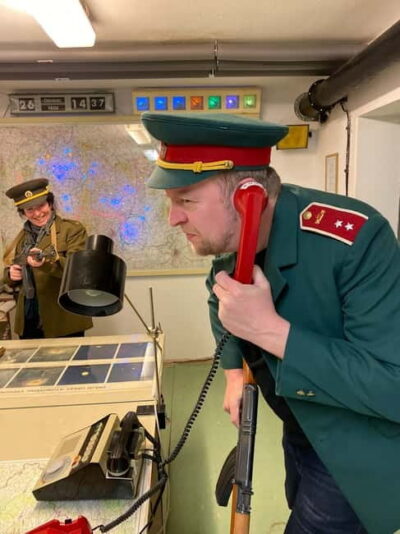
Communism and Bunker Tour with 70s Canteen Lunch
Read our review →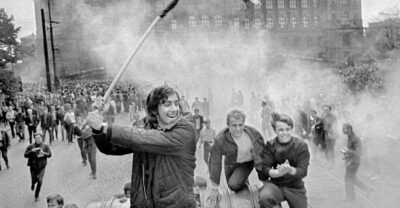
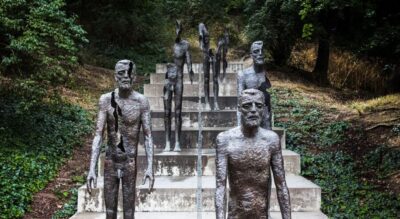
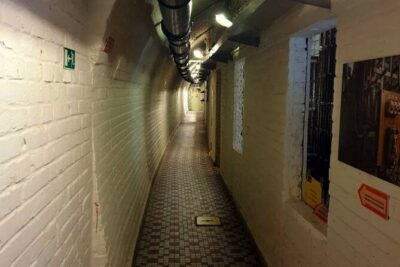
Skip the Line: 10-Z Bunker Entrance Ticket in Brno
Read our review →
Browse the lists this tour appears in