
REVIEW · COMMUNISM HISTORY TOURS
Communism & Nuclear Bunker Tour + 70s Canteen Lunch (own expense)
History hides under Prague’s polished surface. This 3.5-hour walking tour connects grand squares with the harder story of Czechoslovakia under Nazi rule, Soviet pressure, and Communist government. I especially like the combination of street-level history and a real 1950s nuclear bunker. The small groups, capped at 10 people, also give you room to ask questions and hear personal stories from guides such as Klara and Leo.
The stop at a 1970s workers’ canteen adds a welcome local touch. You can try Kofola, a Czech soft drink, or order a proper working-class lunch at your own cost. The main drawback is that the tour covers serious material at a brisk pace, and the bunker has narrow underground spaces, so it is not a good choice if you are claustrophobic or have mobility limits.
In This Review
- Key points to know before booking
- Why this tour adds something different to Prague
- Starting at the Powder Tower and Republic Square
- Old Town Square and the Era of Fear
- From shopping and surveillance to Narodni Street
- Wenceslas Square and the Prague Spring
- Eating at a 1970s workers’ canteen
- Going underground into the 1950s nuclear shelter
- What the small group changes
- Timing, price, and practical planning
- Who should book this Prague experience?
- Should you book the Communism and Nuclear Bunker Tour?
- FAQ
- How long does the tour last?
- Where does the tour begin?
- Where does the tour end?
- Is the nuclear bunker admission included?
- Is lunch included in the price?
- What can I have at the canteen?
- How large is the group?
- Is the tour suitable for someone with claustrophobia?
- Can I cancel for a full refund?
Key points to know before booking
- A real Cold War bunker: Enter a nuclear shelter dating from the 1950s, with period objects and hands-on exhibits.
- History tied to actual places: Learn about 1948, the Prague Spring, and the Velvet Revolution while standing in the squares and streets where events unfolded.
- Small groups matter: With no more than 10 people, you can ask questions and have a more personal conversation with the guide.
- Lunch is not included: The canteen stop is part of the experience, but food and drinks cost extra.
- The bunker fee is included: The listed price of about $35.07 includes the 10 EUR Cold War Museum admission.
- A useful modern-history route: The walk begins at the Powder Tower and ends in the upper part of Wenceslas Square.
Why this tour adds something different to Prague
Prague is easy to admire without understanding its recent past. You can walk beneath Gothic towers, admire Old Town Square, and climb Wenceslas Square without realizing how much political pressure those same spaces carried during the 20th century.
This tour changes that. Instead of treating Communism as a remote chapter in a textbook, it connects political events to familiar streets, department stores, offices, monuments, and gathering places. You hear how ordinary people dealt with shortages, surveillance, manipulated trials, work camps, and life behind the Iron Curtain.
I like that the tour does not focus only on famous leaders. The guides explain how large political shifts affected family life and daily choices. Klara, in particular, has shared personal memories of growing up in Communist Czechoslovakia, which gives the subject a human scale. Leo has also been praised for explaining the country’s journey through Communism in a clear and entertaining way.
The experience is not a standard sightseeing walk. You will see major Prague landmarks, but the purpose is to understand them through modern Czech history. That makes this a strong choice after you have already seen the medieval center, or for anyone who wants a more serious look at the country.
More communism history tours in Prague:
- Prague: Communism History and Nuclear Bunker Guided Tour
★ 4.7 · 2,417 reviews - Prague Communism History and Nuclear Bunker Tour
★ 5.0 · 1,742 reviews - Prague: Communism and Bunker Tour with 70s Canteen Lunch
★ 4.8 · 250 reviews
Starting at the Powder Tower and Republic Square
Meet your guide near the Powder Tower at Náměstí Republiky. Look for the person holding a blue umbrella. The Powder Tower marks the edge between Prague’s Old Town and New Town, making it a practical starting point for a walk through the city’s political past.
The opening section looks at the creation of Czechoslovakia in 1918. You learn why the new state mattered after the collapse of the Austro-Hungarian Empire and why Adolf Hitler was interested in taking it as an early target.
The guide then sets up the effects of the Second World War and the 1945 liberation by the Russian Red Army. These events help explain why the Communist Party gained support in the 1946 election. The point is not simply to memorize dates. You get a sense of how war, fear, political uncertainty, and Soviet influence shaped the choices available to the country.
This first stop lasts about 15 minutes. It is brief, but it gives the rest of the walk a clear frame. If you know little about Czech history, pay close attention here. The later stops move more easily once you understand how the postwar political balance developed.
Old Town Square and the Era of Fear
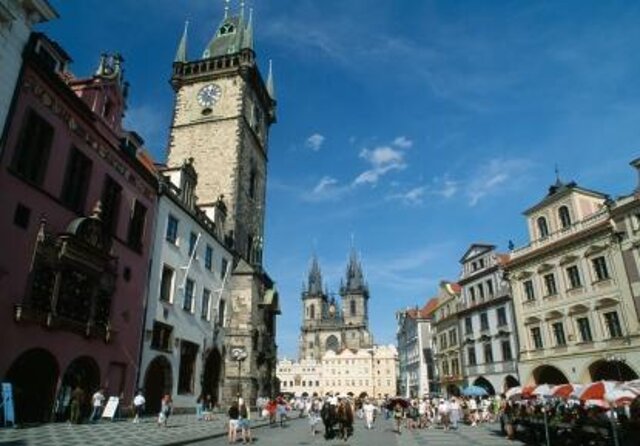
At Old Town Square, the tour reaches the Communist victory of 1948. Communist leaders celebrated here after taking control of the government. The square’s grand architecture can make it feel like a purely medieval or Baroque setting, so hearing about a modern political takeover in the same place changes how you read it.
The guide then explains the 1950s, often remembered as a period of fear. You hear about forced collectivization, manipulated trials, secret police activity, and labor camps. Life behind the Iron Curtain is presented not only as a struggle between political systems, but as a daily reality for people who had to be careful about what they said and whom they trusted.
The walk also points out where Prague’s giant Stalin monument once stood. That detail gives you a useful lesson in how public spaces can be remade by political power. Monuments appear, disappear, and leave behind a changed city even after the government that built them is gone.
This stop lasts roughly 20 minutes. The setting is open and easy to navigate, but the content becomes heavier. You should expect an educational discussion rather than light sightseeing.
From shopping and surveillance to Narodni Street
The route includes the Kotva shopping mall and the former secret police headquarters on Bartolomejska Street. These locations help connect political control with ordinary urban life.
A shopping mall may sound like an odd historical stop, but it offers a useful way to discuss consumer life under Communism. The tour explains what shopping and material life meant in a system where access to goods was not the same as it is today.
The former secret police office brings the focus back to surveillance. Together, these stops show two sides of the period: the public effort to create a functioning socialist society and the private fear created by state security agencies.
The guide also takes you along Narodni Street, the site of the police attack on student protesters on November 17, 1989. That event helped set the Velvet Revolution in motion. You are not just hearing about a political change in an abstract way. You are walking through the place where public anger became impossible to contain.
This route includes side streets and passages that you might not choose while sightseeing on your own. I like that feature because it gives the walk a local rhythm and gets you away from a simple parade of famous facades.
More lunch stops in Prague:
- Prague Guided Walking Tour and Cruise with Authentic Czech Lunch
★ 5.0 · 3,627 reviews - Prague: Vltava River Lunch Cruise in an Open-Top Glass Boat
★ 4.5 · 2,865 reviews - Prague: Hard Rock Cafe with Set Menu for Lunch or Dinner
★ 4.4 · 1,487 reviews - Full-Day Prague Tour with Prague Castle, Lunch and Vltava Cruise
★ 4.0 · 921 reviews
Wenceslas Square and the Prague Spring
Wenceslas Square is central to the tour. It is a broad, busy city space today, but it played a major role in both the Prague Spring of 1968 and the Velvet Revolution of 1989.
In August 1968, Soviet-led forces crushed Czechoslovakia’s attempt to create a freer form of socialism. The guide explains what happened around Wenceslas Square and nearby Vinohradská Street, including the reality behind the Soviet claim of providing peaceful help.
The 1989 section focuses on the protests that ended Communist rule. You hear about Václav Havel and other figures in modern Czech history, while learning how demonstrations grew into a nationwide movement.
The tour spends about 30 minutes here. That is enough time to connect the two events, but not enough to cover every political detail. If you already have a strong interest in the Prague Spring, you may want to read more before or after the walk. The tour’s strength is its clear storytelling and physical setting, not an exhaustive academic lecture.
Eating at a 1970s workers’ canteen
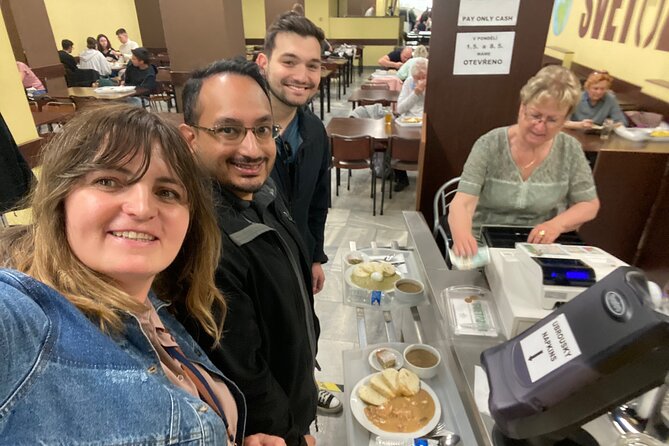
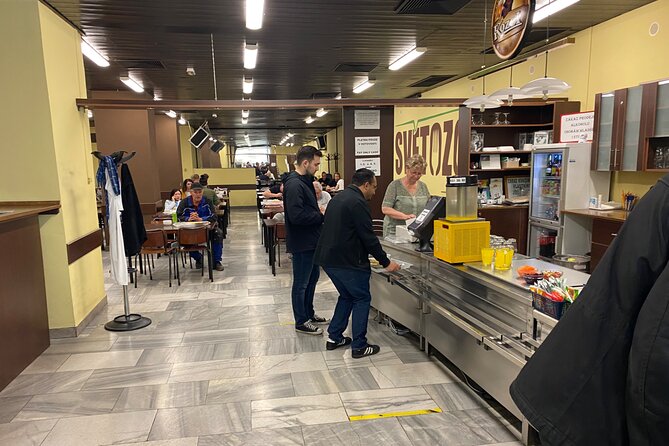
The lunch stop takes place in an authentic canteen from the 1970s, near Wenceslas Square. Food and drinks are not included, so bring money if you want to eat or drink.
You might order a simple Czech working-class meal, or keep it light with Kofola, the sweet herbal soda that became a popular local alternative to Western soft drinks. Guides help with the menu, which is useful if you do not recognize the dishes.
This is one of the most appealing parts of the experience because it shows daily life through food rather than displays. Sitting together in a working canteen gives you a break from the walking and creates time for informal questions.
The stop lasts about 30 minutes. Keep your expectations practical. This is not a restaurant tasting menu or a polished culinary event. The value comes from the setting, the affordable local food, and the chance to share a normal Czech meal with the group.
The extra cost is modest compared with the total tour price, but you should remember that the advertised $35.07 does not cover lunch. If you want the full experience, budget separately for your meal and drink.
Going underground into the 1950s nuclear shelter
The bunker is the tour’s main physical attraction. It is located in the upper part of Wenceslas Square, where the walk concludes. The entrance fee, listed as 10 EUR, is included in the tour price.
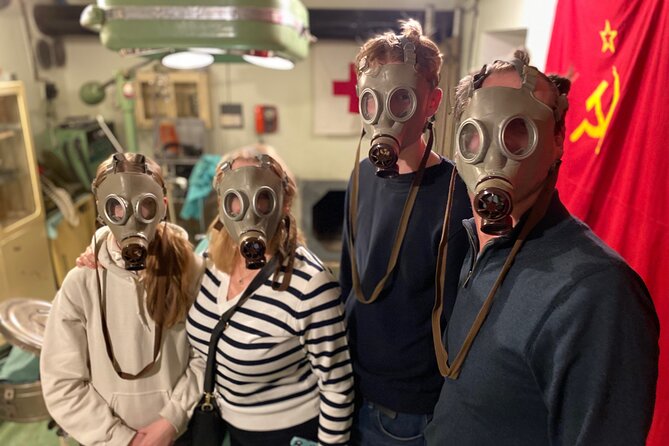
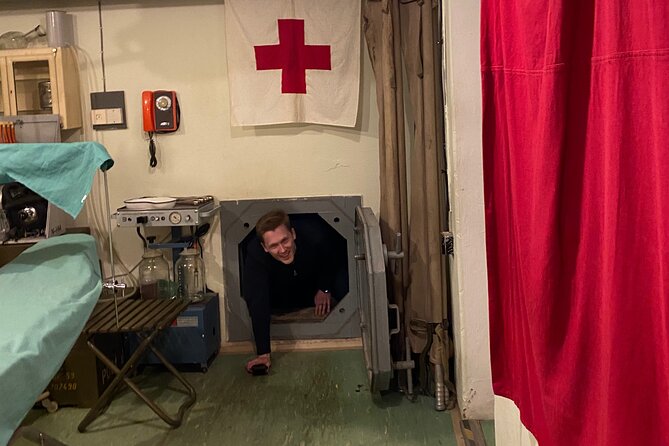
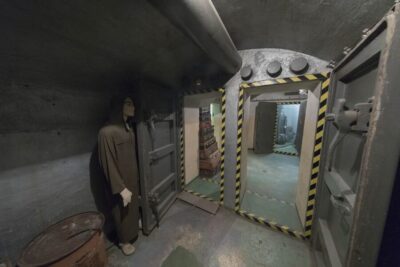
Inside, you see a real nuclear shelter dating from the 1950s. The bunker includes Cold War objects and exhibits that make the threat of nuclear conflict feel more immediate. The atmosphere is stark and enclosed, a sharp contrast to the open city streets above.
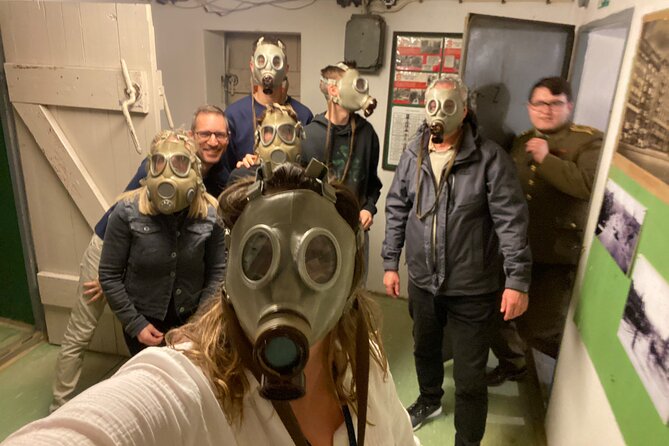
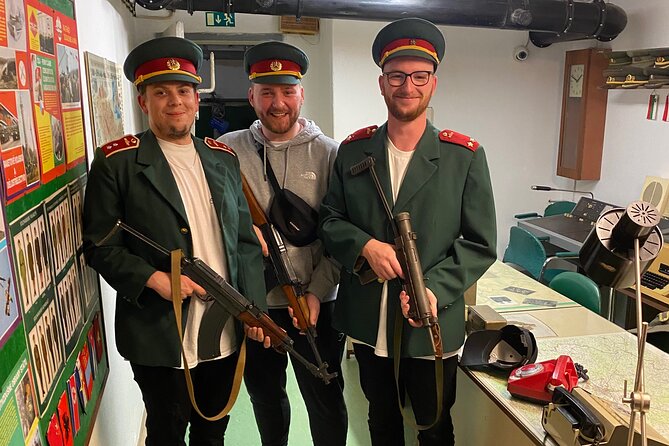
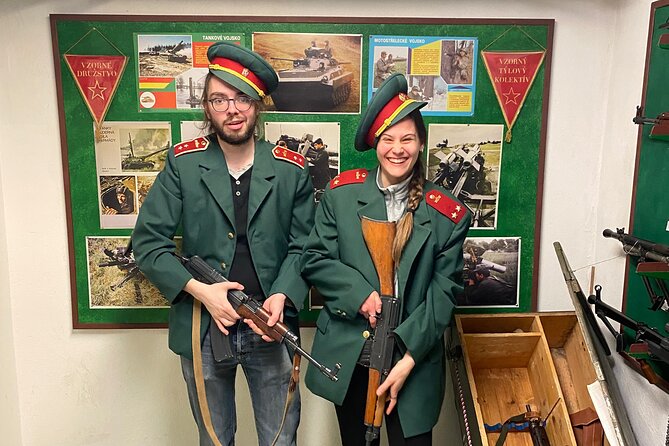
Some parts are interactive. Depending on the visit, you may handle a gas mask, take part in a mock secret-police interrogation, or examine equipment connected with the period. The hands-on elements make the history easier to remember, though the serious subject should not be reduced to a game.
The bunker visit lasts about one hour. You use an elevator to go down one level, then walk approximately 30 steps to the second level below. That detail matters if stairs are difficult for you. Narrow underground areas can also be uncomfortable for anyone with claustrophobia.
The bunker is especially effective because it is not simply a room filled with old objects. It gives you a sense of how authorities prepared for a disaster that never arrived, while people above ground lived with the possibility of nuclear war. Guides such as Klara and Leo help connect the exhibits to the political tension of the era.
What the small group changes
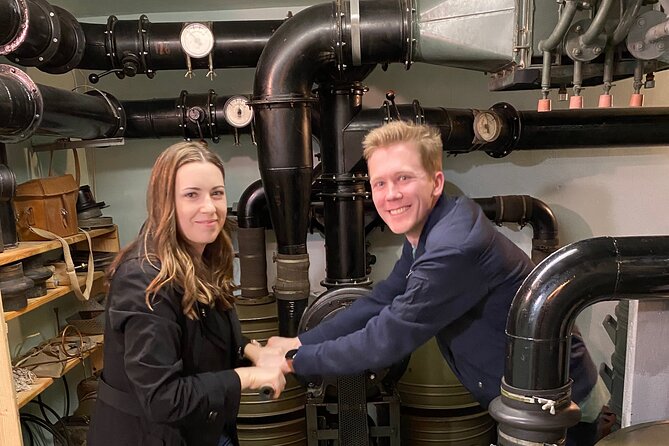
The maximum group size is 10 people, and groups can be much smaller. Some departures have had only two or three participants. That can make a major difference on a history-heavy walk.
You can ask about family life, politics, food, work, or current Czech affairs without waiting for a large crowd to move along. Guides have also helped participants choose food at the canteen and explained unfamiliar dishes.
A small group does not guarantee a private tour, but it usually makes the conversation more flexible. If you enjoy asking questions, the format is a strong advantage. It also suits solo visitors who want a structured way to meet a few people while seeing a less typical side of Prague.
The quality of the experience depends partly on the guide. The strongest guide feedback centers on Klara, Clara, and Leo, with praise for clear explanations, humor, personal stories, and the ability to answer questions. Guides can bring the material to life, but the balance of personal storytelling and formal history may vary by departure.
Timing, price, and practical planning
The tour lasts approximately 3 hours and 30 minutes. Since it combines walking, a canteen stop, and one hour underground, plan it as a substantial half-day activity.
The price is about $35.07 per person. That is a fair deal if you value the bunker admission and want a guide to connect several parts of Prague’s modern past. The included 10 EUR bunker fee makes the price easier to justify, especially since the walk also includes a small-group guide.
Food and drinks are extra. You do not have to order a full lunch, but the canteen is part of the intended experience, so budget for at least a drink if you want to take part.
The tour is offered in English and uses a mobile ticket. It begins at the Powder Tower and ends at Wenceslas Square, so you do not return to the starting point. Both locations are near public transportation.
Free cancellation is available if you cancel at least 24 hours before the scheduled start. Changes or cancellations made inside that period are not refundable.
Who should book this Prague experience?
I would choose this tour if you want modern Czech history tied to real locations. It suits first-time visitors who have already seen Prague’s main medieval sights, as well as repeat visitors looking for a different route.
It is particularly good for:
- People interested in the Cold War, Communism, or Central European history
- Visitors who prefer small groups and conversation
- Solo visitors who enjoy meeting a few people during a walk
- Anyone curious about everyday life, not only political leaders
- History-minded families with older children who can handle serious subject matter
I would skip it if you want a relaxed architecture walk with little political discussion. The tour covers repression, police violence, occupation, and fear. It also involves several hours of movement and an underground visit.
Should you book the Communism and Nuclear Bunker Tour?
Book it if you want Prague’s recent past explained clearly and personally. The bunker is memorable, but the full value comes from the route leading to it: Republic Square, Old Town Square, Narodni Street, Wenceslas Square, and a workers’ canteen each add another piece to the story.
The tour offers good value at about $35.07 because the bunker admission is included and the group is limited to 10 people. Just plan for extra money at the canteen, wear comfortable shoes, and avoid it if enclosed spaces make you uneasy.
For a visitor who wants more than castles, churches, and postcard views, this is one of the better ways to understand what Prague endured during the 20th century.
FAQ
How long does the tour last?
The experience lasts approximately 3 hours and 30 minutes, including the walking route, canteen stop, and nuclear bunker visit.
Where does the tour begin?
It begins at the Powder Tower, Náměstí Republiky 5, in Prague’s Old Town. Look for the guide holding a blue umbrella.
Where does the tour end?
The tour ends in the upper part of Wenceslas Square, Václavské náměstí.
Is the nuclear bunker admission included?
Yes. The 10 EUR Cold War Museum admission is included in the tour price.
Is lunch included in the price?
No. Food and drinks at the 1970s workers’ canteen are at your own expense.
What can I have at the canteen?
You can order a working-class Czech meal or have Kofola, a popular Czech soda. The guide can help you choose your food.
How large is the group?
The group has a maximum of 10 people. Some departures may have fewer participants.
Is the tour suitable for someone with claustrophobia?
No. The tour is not recommended for people with claustrophobia because the bunker contains narrow underground spaces.
Can I cancel for a full refund?
Yes, if you cancel at least 24 hours before the experience begins. Cancellations made less than 24 hours before the start are not refunded.
Newest listings in Prague
- World War II 4WD Tour from Prague with Lunch★ 4.4 · 3 reviews
- Prague: Historical Walking Tour with Focus on World War 2★ 4.3 · 12 reviews
- WWII and Communism History in Prague’s Old Town Private Tour★ 5.0 · 4 reviews
- Wroclaw: Giant Mountains & Valley of Palaces Day Tour★ 4.8 · 36 reviews
- Walking tour of Prague in French : Nové Město★ 4.9 · 16 reviews
- Walking tour of Prague in french: Old Town & Charles Bridge★ 4.9 · 62 reviews
- Vltava River Cruise and Private Tour of Prague’ Old Town★ 5.0 · 1 review
- Ultimate Unlimited Beer Pong with Czech Beer★ 4.6 · 5 reviews
Communism History Tours, compared.
Communism History and Nuclear Bunker Guided Tour
Read our review →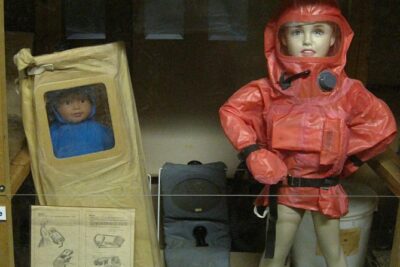
Prague Communism History and Nuclear Bunker Tour
Read our review →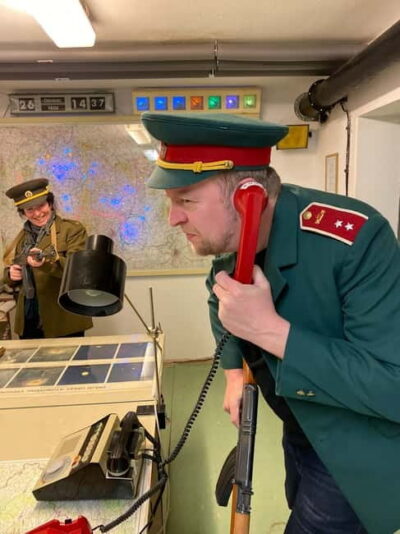
Communism and Bunker Tour with 70s Canteen Lunch
Read our review →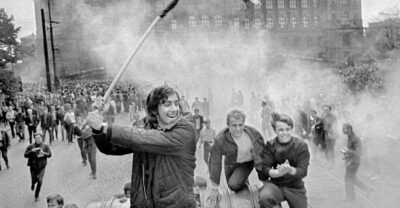
Second World War & Communism (Tip-based 3 hour tour)
Read our review →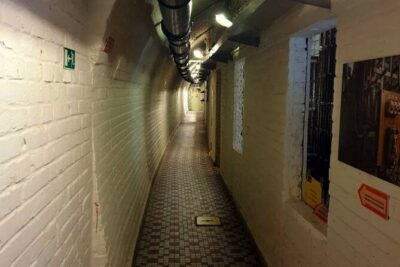
Skip the Line: 10-Z Bunker Entrance Ticket in Brno
Read our review →
Browse the lists this tour appears in