
REVIEW · WORLD WAR II TOURS
Prague: WWII Guided Tour & The Crypt of Operation Anthropoid
Prague’s wartime story hides in plain sight. This 150-minute walking tour connects Old Town streets, a 12th-century underground shelter, rare WWII objects, and the crypt where Operation Anthropoid reached its tragic end. I especially like the mix of real places and original material, plus the chance to see Prague through the eyes of its resistance fighters and ordinary citizens.
The guides, including Pavel, George, Hannah, Anna, and Ottokar, are repeatedly praised for their command of the subject and strong storytelling. I also like that your public transport ticket is included for the ride across town. The main caution is the amount of walking, which can feel strenuous on icy or wet streets, and the advertised two and a half hours may stretch closer to three.
In This Review
- Key points to know before you book
- Starting at the Powder Tower in Republic Square
- Old Town streets and the human cost of occupation
- Inside U Kunštátů palace and its medieval cellars
- The private WWII collection and original photographs
- Taking public transport toward the cathedral
- Operation Anthropoid and the crypt beneath Saints Cyril and Methodius
- How the guides shape the experience
- Walking demands, weather, and accessibility
- Is $42 a fair price?
- Who should book this Prague WWII tour?
- Should you book it?
- FAQ
- How long does the tour last?
- Where does the tour meet?
- What language is the tour conducted in?
- Is public transportation included?
- Are entry fees included?
- Is the tour suitable for wheelchair users?
- What happens if it rains?
Key points to know before you book
- Begin beside the Powder Tower: Meet 30 meters in front of Prašná Brána at Republic Square, beside the green kiosk.
- Step into medieval cellars: The underground rooms of U Kunštátů palace date to the 12th century and were used as a makeshift wartime shelter.
- Handle history at a private collection: Original WWII artifacts, photographs, documents, and memorabilia make the past feel close at hand.
- Follow Operation Anthropoid to its final refuge: The tour ends at the crypt beneath Saints Cyril and Methodius Cathedral.
- Expect serious walking and plenty of detail: Comfortable shoes matter, and the tour suits people ready to listen carefully.
- Pay $42 for a full package: Guiding, entries, the private collection, and public transport are included, though hotel pickup is not.
Starting at the Powder Tower in Republic Square
Your meeting point is easy to identify if you know what to look for. The guide waits 30 meters in front of the Powder Tower, near the green kiosk, carrying a black umbrella with a white logo. Republic Square is served by Náměstí Republiky metro station, so you can reach it without crossing much of central Prague.
This is a useful starting place because the tour moves straight into Prague’s urban story. You are not being driven to a distant museum and shown a series of isolated exhibits. Instead, the guide uses the city streets to explain what happened before, during, and after World War II.
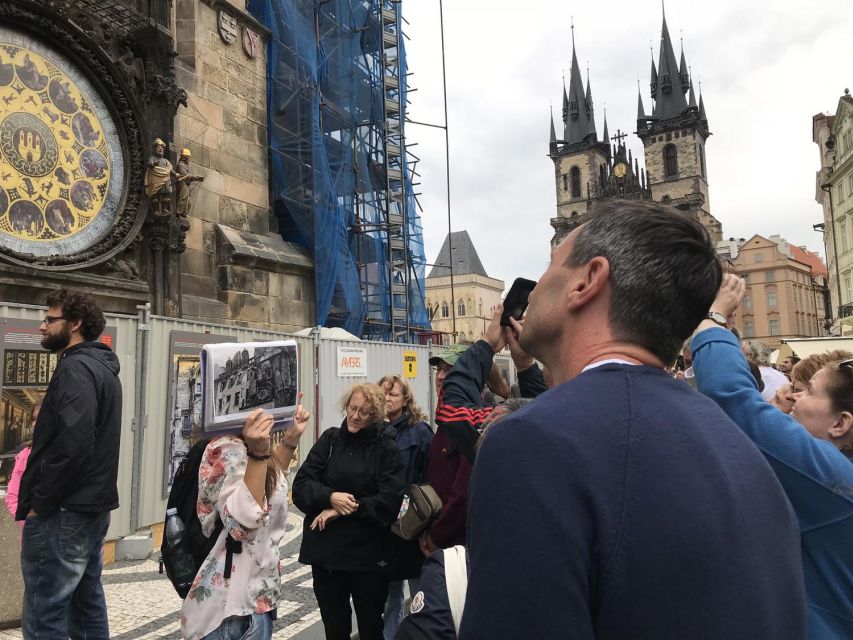
The opening walk focuses on the Old Town and the marks that war left behind. You may see scars on walls, locations tied to resistance activity, and Jewish stumbling stones set into the pavement. Those small brass markers can be easy to miss when you are hurrying toward Prague Castle or the Astronomical Clock. Here, they become part of a larger account of how the war affected people living in the city.
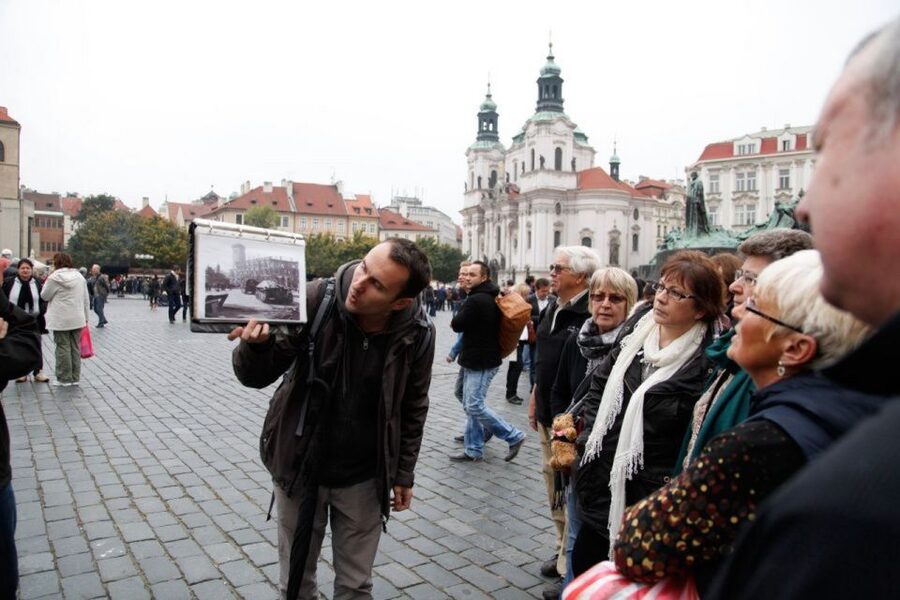
The best guides add old photographs to the walk. Ottokar, Pavel, George, Hannah, and Anna are all praised for using images, documents, or personal collections to compare occupied Prague with the streets in front of you. That method gives the tour a useful before-and-after effect. You see the modern city, then picture how the same place looked under Nazi control.
More World War II tours in Prague:
- WWII in Prague Tour & The Crypt of Operation Anthropoid
★ 5.0 · 817 reviews - Small-Group World War 2 & Operation Anthropoid Tour in Prague
★ 5.0 · 231 reviews - Prague: World War 2 and Operation Anthropoid Walking Tour
★ 4.8 · 193 reviews
Old Town streets and the human cost of occupation
This part is not just a list of dates and military names. The tour explains the background to the war, the Nazi domination of Czechoslovakia, and the impact on Prague’s wider population. You hear about resistance, fear, sacrifice, and the many people who helped quietly rather than becoming famous.
That human scale is one of the tour’s strongest features. You are encouraged to think about citizens who hid information, supported resistance fighters, or simply tried to survive under an oppressive regime. The phrase silent heroes fits this section well. The story is not limited to the seven men who later died in the crypt. It also considers the civilians caught in the machinery of occupation.
You should be ready for a lot of information. George is praised for explaining cause and effect, while other guides are noted for separating legend from fact. That matters in a subject where dramatic stories can easily become simplified. A strong guide can help you understand not only what happened, but why certain choices were made and what followed from them.
The walking format also creates a tradeoff. You gain places and atmosphere that a lecture room cannot provide, but you need to keep moving and listening outdoors. On a warm day, this may feel relaxed. On an icy day, as one January group found, slippery pavement can make the route harder. Wear shoes with good grip and dress for changing weather.
Inside U Kunštátů palace and its medieval cellars
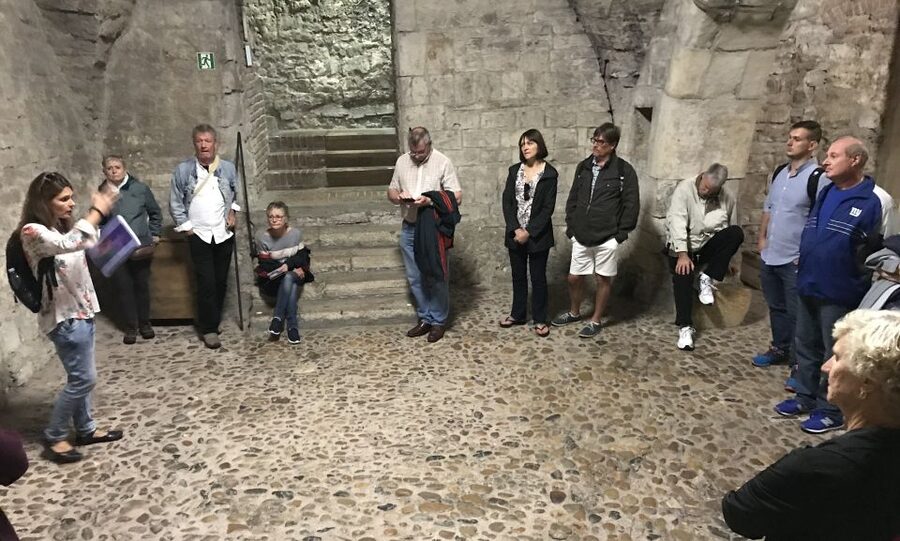
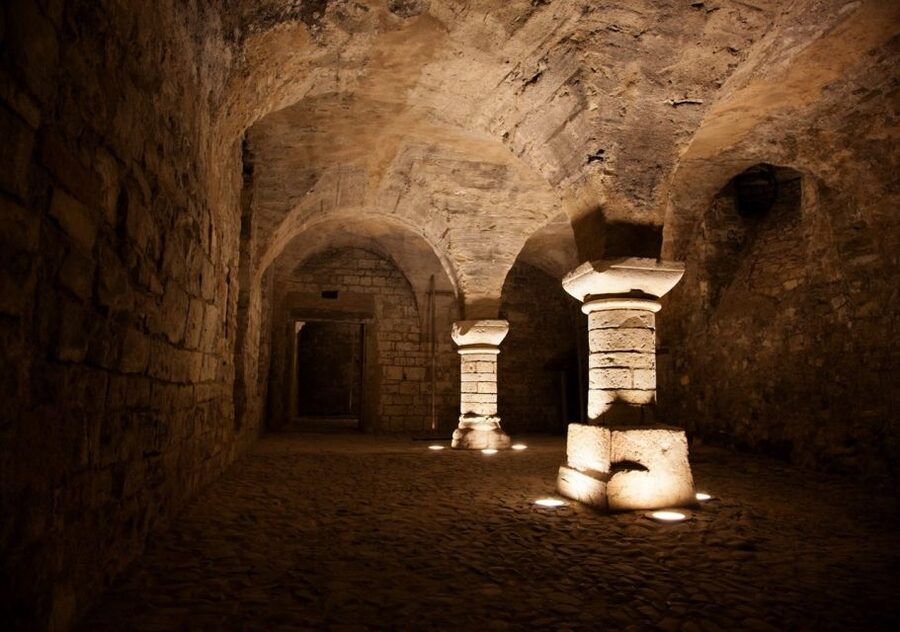
One of the tour’s most unusual stops is the underground level of U Kunštátů palace in the heart of Old Town. The palace dates from the 12th century, so the setting already carries a long history before the WWII story begins.
The cellars served as a makeshift shelter during the war. That detail changes how you read the space. These are not purpose-built modern galleries with polished displays. The underground rooms help you picture people seeking protection below the city while events unfolded above them.
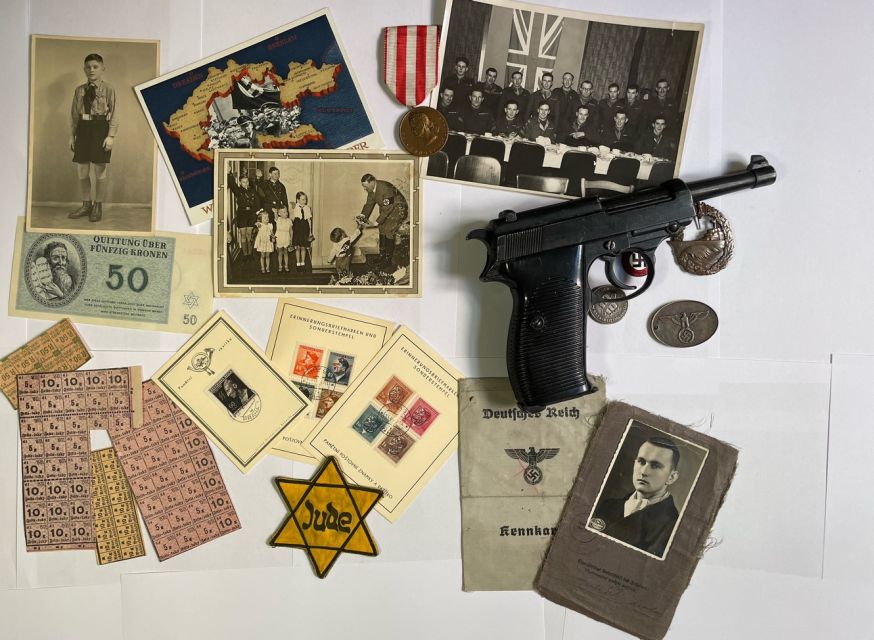
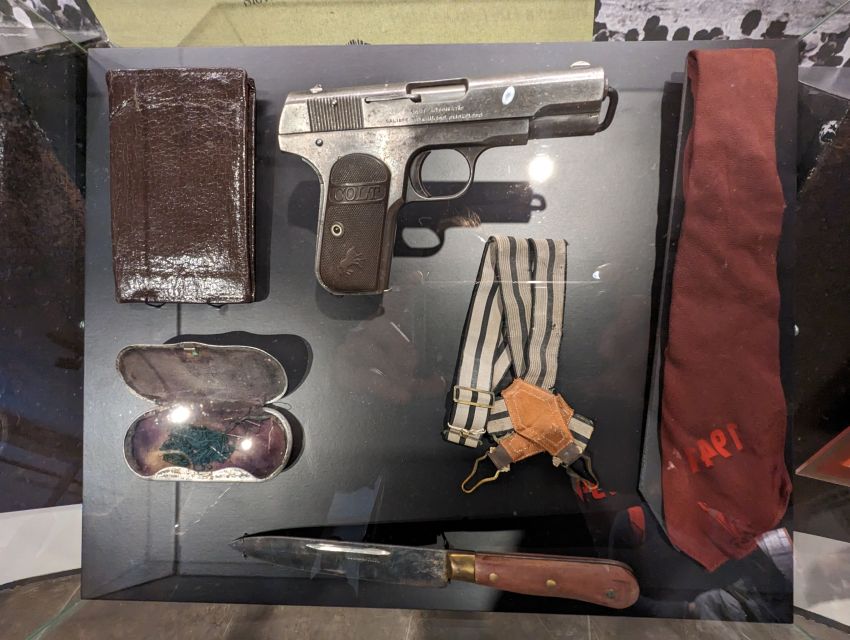
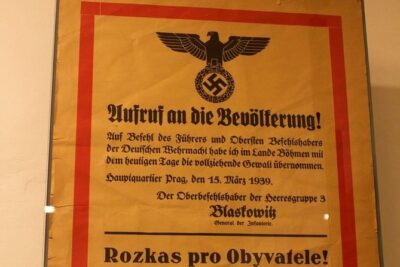
You also see a private collection of WWII artifacts and memorabilia here or during the connected collection visit. The material includes original objects, photographs, paperwork, and Nazi-era items. Some guides bring a folder of photographs or a flip chart so you can compare past and present locations without relying on a screen.
The opportunity to handle selected artifacts is a major plus, but the experience depends partly on the guide and the group. It is not simply a museum visit where every object is behind glass with a long label. The guide provides the explanation, answers questions, and links the items to the larger story of Prague under occupation.
I would not expect a huge museum collection. The appeal is personal scale and direct contact with physical evidence. If you enjoy military history, old documents, and small details that help explain daily life, this stop adds real value. If you prefer grand monuments and quick sightseeing, the amount of explanation may feel heavy.
The private WWII collection and original photographs
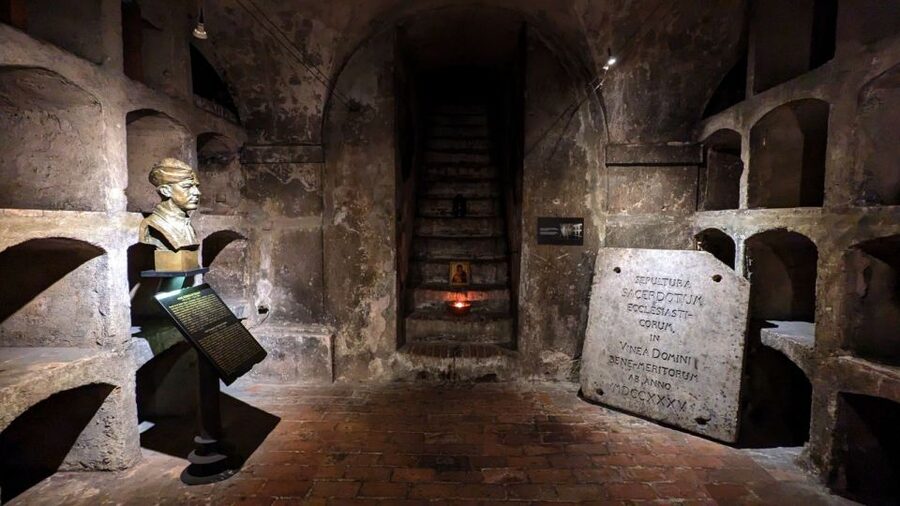
The private collection gives the tour a personal character. Guests have described seeing original memorabilia, documents, photographs, and relics, with time to ask questions and, in some cases, handle objects. That is a rare privilege on a general city tour.
The guides make good use of visual material. A photograph of occupied Prague placed beside the same street today can reveal details you would otherwise pass without noticing. A document or object can also make the story less abstract. You are no longer dealing only with a textbook account of the Nazi regime or the resistance.
Ottokar receives special praise for his intensity and use of a folder of images rather than modern technology. That approach will appeal to you if you prefer a human guide who can adjust the pace and answer questions instead of pressing through a fixed audio track.
The collection visit may take place in a pub setting, according to the tour experience. That informal location is part of its charm, although it may not match your idea of a traditional museum. One person felt the final walk to the memorabilia stop was less worthwhile than the crypt itself. That is a fair point: the artifacts are interesting, but the crypt is the emotional center of the tour.
A few more Prague options to compare
- Prague: 50-Minute Sightseeing Evening Cruise
★ 4.2 · 33,780 reviews - Prague: Medieval Dinner with Unlimited Drinks
★ 4.4 · 19,847 reviews - Prague: Skip-the-line Castle Ticket and Optional AudioGuide
★ 4.3 · 11,121 reviews - Prague: Castle Tour with Local Guide and Entry Ticket
★ 4.6 · 10,422 reviews
Taking public transport toward the cathedral
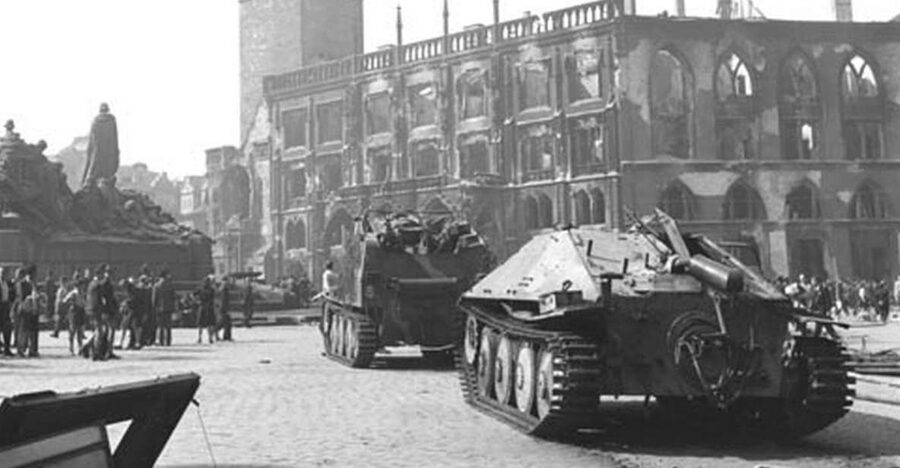
The route includes a public transport ride, and your ticket is provided. That small practical detail matters because the tour covers more ground than a compact Old Town stroll. You can focus on the guide rather than finding a ticket machine or wondering which fare you need.
The ride also helps connect two parts of Prague’s wartime geography. You begin among central Old Town landmarks and finish at Saints Cyril and Methodius Cathedral, where Operation Anthropoid’s story becomes much more immediate.
Do not treat the tram or other public transport segment as dead time. Guides continue explaining the setting and the next part of the story, and the movement across the city gives you a sense of how resistance activity unfolded in a real urban environment.
The tour is advertised at 150 minutes, but the actual pace can vary. Several experiences lasted about two and a half hours, while one described it as a three-hour tour. If you have a lunch reservation, concert, or another timed visit, leave a little breathing room.
Operation Anthropoid and the crypt beneath Saints Cyril and Methodius
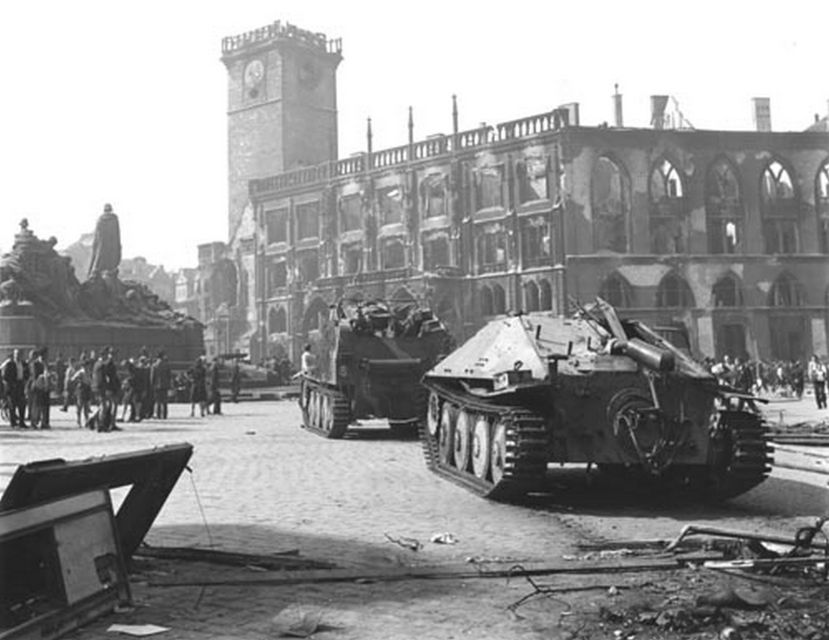
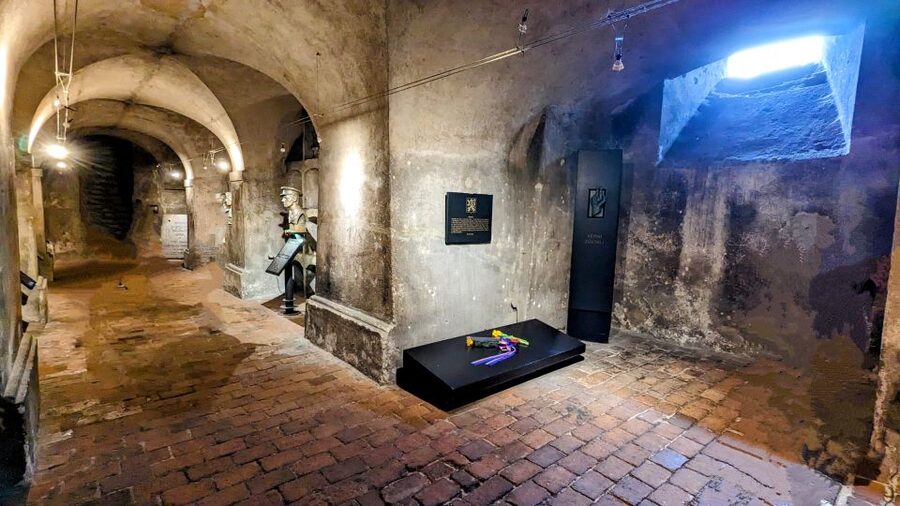
The final stop is the Crypt of Operation Anthropoid beneath Saints Cyril and Methodius Cathedral. This is where the tour’s earlier explanation pays off. By the time you arrive, you have heard about the Nazi occupation, the resistance network, the mission, and the choices that led the men to this place.
Operation Anthropoid was the resistance mission designed to eliminate SS Obergruppenführer Reinhard Heydrich, one of the Nazi regime’s most feared figures. The crypt museum presents the mission and the final stand of the resistance fighters. The experience is serious and moving rather than merely dramatic.
The guides are particularly effective when they explain the site before letting you enter. Ottokar is praised for describing the significance of the rooms, wishing the group well, and then stepping away so people could experience the crypt quietly. That is a respectful way to handle a place connected with courage, sacrifice, and death.
You should expect a compact historical site rather than a large museum. Its power comes from the location and the story attached to it. The crypt is not a decorative stop added to fill time. It is the point where the tour’s themes of resistance and civilian courage become concrete.
The nearby cathedral is included as well. Entry to both the Saints Cyril and Methodius Crypt and Cathedral is part of the price. The visit is especially worthwhile if you have seen the film Anthropoid or already know the broad outline, but the tour also supplies enough background for newcomers.
How the guides shape the experience
The strongest feature here is the guiding. Pavel is praised for making the subject more interesting than expected and for bringing actual relics from the past. George is noted for dry wit, precise explanations, and a folder of old photographs. Hannah is repeatedly described as passionate, friendly, and clear in English.
Anna receives credit for organization, including handling the public transport tickets. Ottokar is praised for his intensity, visual aids, and detailed explanation of the resistance story. The names vary by departure, so you cannot choose a particular guide from the information provided, but the pattern is clear: this experience depends heavily on a live historian rather than a standard script.
That can be a benefit or a limitation. A good guide can answer questions, correct myths, and spend more time on subjects that interest your group. It also means the tone and pace may differ from one departure to another. The available feedback points strongly toward passionate, well-prepared guides, but you should still expect a talk-heavy tour.
English is the listed language. If you want a quiet stroll with only brief commentary, choose another activity. If you enjoy asking questions and following a detailed historical explanation, this format should suit you well.
Walking demands, weather, and accessibility
Plan this as an outdoor walking experience with an indoor finish. The tour runs rain or shine, so bring a waterproof layer in poor weather and wear practical shoes. Slippery winter pavement has made the route more demanding for some groups.
The tour is stroller accessible, and service animals are allowed. Pets are not allowed, and the tour is not suitable for wheelchair users. No hotel pickup or drop-off is provided, so you need to reach Republic Square independently.
The walk is not described with an exact distance, but several people found it strenuous. That is worth taking seriously, especially if you have mobility concerns or are planning it after a full day of sightseeing. The included transport reduces some of the distance, but it does not turn the activity into a seated tour.
Is $42 a fair price?
At $42 per person, the price is reasonable for a focused history tour if you plan to visit the crypt anyway. Your fee covers the guide, U Kunštátů underground cellars, the cathedral and crypt, the private WWII collection, and public transport. You are paying for access and interpretation, not just admission tickets.
The value is strongest for people who would otherwise miss the smaller wartime traces around Old Town. The guide points out places, images, and stories that are easy to overlook on your own. The private artifacts also add something that a standard city walk usually lacks.
It is less compelling if you only want to see the cathedral crypt and have little interest in WWII history. In that case, a shorter standalone visit may fit your plans better. But if you want the setting, background, resistance story, and final memorial site explained as one connected experience, $42 is a fair spend.
Free cancellation is available up to 24 hours before the start, and you can reserve now while paying later. Those terms are useful if your Prague schedule is still shifting, but the most important practical decision is choosing a time when you can walk without rushing.
Who should book this Prague WWII tour?
I would recommend it most strongly to:
- WWII history enthusiasts
- Visitors interested in Czech resistance and Operation Anthropoid
- People who prefer real locations over a conventional museum
- Film viewers who want more context about the mission
- Curious visitors who enjoy old photographs, documents, and physical artifacts
- Anyone seeking a different side of Prague beyond its medieval and imperial sights
Families with older children may also find it meaningful, provided they can manage the walking and serious subject matter. It is less suitable for very young children who need constant movement or for anyone seeking a light, fast-paced introduction to Prague.
Should you book it?
Book it if you want Prague’s WWII story told through streets, shelters, objects, and the crypt itself. The best reasons are the guides, the private collection, the old photographs, and the emotional weight of ending beneath Saints Cyril and Methodius Cathedral.
Skip it if you dislike long explanations, cannot manage an outdoor walk, or only want a quick visit to the crypt. For everyone else, this is a thoughtful $42 experience that adds human detail to Prague’s past and leaves you looking at the Old Town with sharper eyes.
FAQ
How long does the tour last?
The listed duration is 150 minutes. Some experiences have taken closer to three hours, so allow extra time if you have another timed booking afterward.
Where does the tour meet?
Meet 30 meters in front of the Powder Tower, Prašná Brána, at Republic Square. The guide waits beside the green kiosk with a black umbrella marked with a white logo.
What language is the tour conducted in?
The live guided tour is conducted in English.
Is public transportation included?
Yes. A public transportation ticket is included for the ride during the tour.
Are entry fees included?
Yes. The price includes entry to the underground cellars of U Kunštátů palace, the Saints Cyril and Methodius Crypt and Cathedral, and access to the private WWII artifacts and memorabilia collection.
Is the tour suitable for wheelchair users?
No. The tour is not suitable for wheelchair users. It is stroller accessible, and service animals are allowed.
What happens if it rains?
The tour takes place rain or shine. Wear suitable clothing and comfortable shoes, since much of the experience takes place outdoors.
Newest listings in Prague
- World War II 4WD Tour from Prague with Lunch★ 4.4 · 3 reviews
- Prague: Historical Walking Tour with Focus on World War 2★ 4.3 · 12 reviews
- WWII and Communism History in Prague’s Old Town Private Tour★ 5.0 · 4 reviews
- Wroclaw: Giant Mountains & Valley of Palaces Day Tour★ 4.8 · 36 reviews
- Walking tour of Prague in French : Nové Město★ 4.9 · 16 reviews
- Walking tour of Prague in french: Old Town & Charles Bridge★ 4.9 · 62 reviews
- Vltava River Cruise and Private Tour of Prague’ Old Town★ 5.0 · 1 review
- Ultimate Unlimited Beer Pong with Czech Beer★ 4.6 · 5 reviews
World War II Tours, compared.
WWII in Prague Tour & The Crypt of Operation Anthropoid
Read our review →
Small-Group World War 2 & Operation Anthropoid Tour in Prague
Read our review →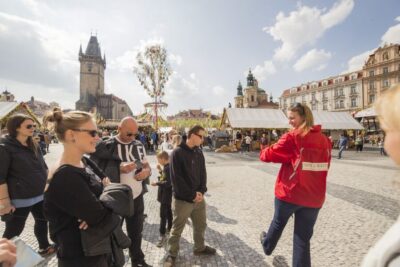
World War 2 and Operation Anthropoid Walking Tour
Read our review →
Terezin In-Depth Holocaust Tour From Prague’s Center (max 7 pax)
Read our review →
Browse the lists this tour appears in