
REVIEW · WORLD WAR II TOURS
Small-Group World War 2 & Operation Anthropoid Tour in Prague
History can hide in plain sight. This three-hour walk connects Prague streets, buildings, and churches with the Nazi occupation, Czech resistance, and the 1942 attempt to kill Reinhard Heydrich, the man known as the Butcher of Prague. I especially like the way the tour links the wider causes of World War II to personal stories, and I value the final visit to the Church of St. Cyril and St. Methodius, where the resistance fighters made their last stand. The main drawback is that much of the experience is guide-led storytelling rather than dramatic wartime ruins, so this suits you best if you enjoy listening, walking, and filling in the past with photos and explanation.
The tour begins at 1:30 p.m. in Prague’s Old Town and ends in the New Town, near the church crypt. You cover a lot of ground, with frequent stops rather than one long march. Guides such as Allen, Daniel, Dana, Martin, Richard, Robin, Pablo, and Rafek have been praised for clear English, strong subject knowledge, and genuine feeling for the topic, though one poor experience described a dull delivery. Bring good shoes, arrive early, and expect some standing outdoors.
In This Review
- Key points worth knowing before you book
- Why Prague’s wartime story needs a walking tour
- Old Town Hall and the loss of Czech independence
- Celetna Street and the tightening grip of occupation
- Melantrichova and the resistance network
- The Heydrich assassination and its brutal aftermath
- Vodičkova and Karlovo náměstí after the attack
- St. Cyril and St. Methodius Church, the tour’s strongest stop
- What the three-hour format feels like
- Guide quality makes a real difference
- Is $33.88 good value?
- Who should book this Prague history walk?
- Should you book the Operation Anthropoid tour?
- FAQ
- Where does the tour begin?
- What time does the tour start?
- Where does the tour end?
- How long does the tour last?
- Is the tour offered in English?
- Is the church visit included?
- Is the memorial crypt included?
- How large can the group be?
- Is the tour suitable for young children?
- What is included in the price?
- How much walking is involved?
- Can I cancel for a full refund?
Key points worth knowing before you book
- The crypt is the emotional high point: The final stop at St. Cyril and St. Methodius includes the underground space where Czech paratroopers hid after the assassination of Heydrich.
- The tour begins with the road to war: You do not simply hear about 1942. The guide explains the Treaty of Versailles, economic crisis, nationalism, Hitler’s rise, and the creation of Czechoslovakia.
- Prague’s ordinary streets become historical evidence: Old Town Hall, Celetna Street, Petschek Palace, Wenceslas Square, and several former resistance locations all gain meaning through the stories attached to them.
- It is a real walking tour: The route lasts about three hours, includes standing at many stops, and requires a moderate level of fitness.
- The group can include up to 30 people: That is still manageable, but a larger group may make it harder to hear in busy streets.
- The price is modest for the time involved: At $33.88 per person, the tour offers a useful history lesson plus entry to the church and memorial.
Why Prague’s wartime story needs a walking tour
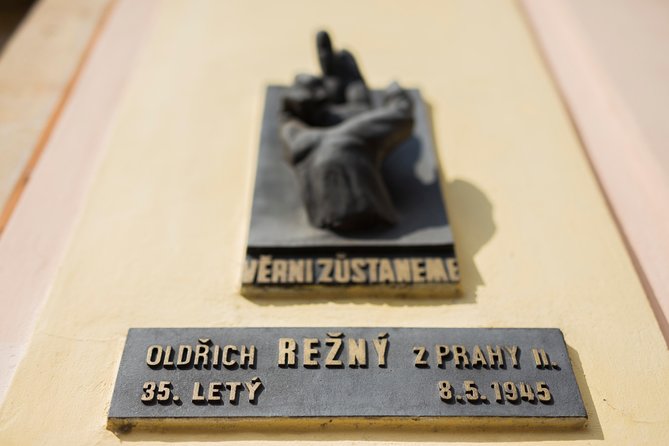
Prague was not reduced to rubble in the way some European cities were, and that can make its World War II story easy to miss. The streets often look peaceful. Medieval towers remain in place. Cafes and shops occupy buildings tied to occupation, resistance, interrogation, and betrayal.
That is exactly why a guide helps. Without one, you may walk past a former Gestapo headquarters or a resistance safehouse without noticing anything unusual. The tour adds the missing layer: who used the building, what happened there, and how the city’s people lived under German control.
The opening section also gives you useful political context. At U Budovce, the guide explains how the First World War, the Treaty of Versailles, runaway inflation, the Great Depression, and rising nationalism helped create conditions for another war. You also hear about the collapse of major European powers and the creation of new states, including Czechoslovakia.
This beginning takes patience. It is mostly explanation, not sightseeing, and one person found the opening too slow. I would not choose this tour if you want to reach the famous assassination story immediately. I would choose it if you want to understand why Czechoslovakia became important to Nazi Germany and why the events of 1938 to 1942 unfolded as they did.
More World War II tours in Prague:
- Prague: WWII Guided Tour & The Crypt of Operation Anthropoid
★ 4.7 · 1,030 reviews - WWII in Prague Tour & The Crypt of Operation Anthropoid
★ 5.0 · 817 reviews - Prague: World War 2 and Operation Anthropoid Walking Tour
★ 4.8 · 193 reviews
Old Town Hall and the loss of Czech independence
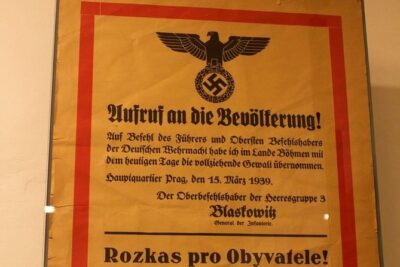
At the Stone Bell House, the focus shifts to the Sudeten German Party, the Munich Agreement, and the creation of the Protectorate of Bohemia and Moravia. These topics can sound dry in a book, but they matter because they explain how Czechoslovakia was dismantled before the war had fully begun.
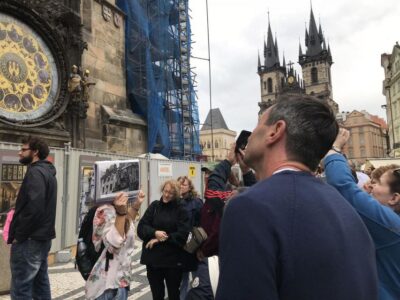
The stop at the Old Town Hall brings the story into physical view. You see the part of the building destroyed during the Prague Uprising in May 1945. The guide also describes daily life during the occupation and the uprising that helped bring the war in Prague to an end on May 8.
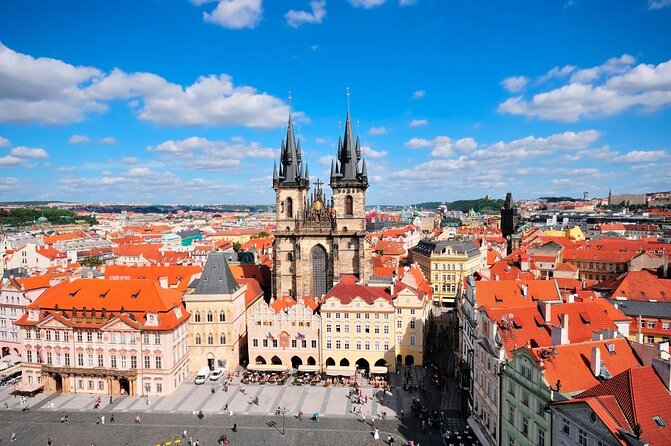
You also get a view of a Gothic church that has dominated this part of Old Town since the fourteenth century. That architectural pause helps break up the political material, though this is not a tour of church interiors or medieval Prague. The focus stays on how the city’s older streets became the setting for modern conflict.
Celetna Street and the tightening grip of occupation
Celetna Street is connected with November 17, 1939, when Czech students were executed and the country’s universities were closed. The guide places those actions within the rule of Konstantin von Neurath and the growing pressure that made Czech public and intellectual life dangerous.
The appointment of Reinhard Heydrich on September 27, 1941, marks the next major turn. Heydrich was sent to take control of the Protectorate, and his arrival brought harsher enforcement and a more focused campaign against resistance.
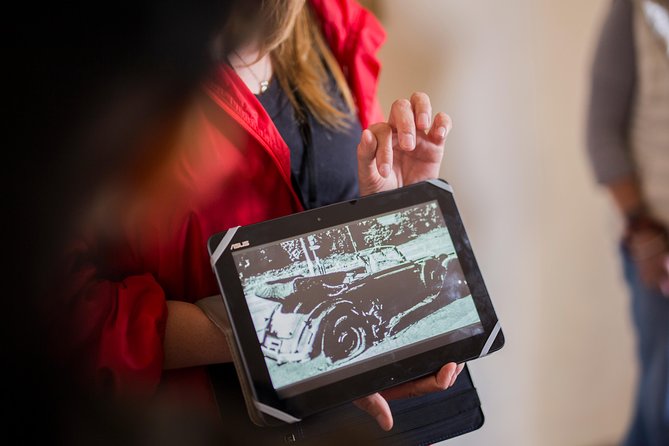
This portion of the walk works best when your guide tells the story through people, not just dates. Several guides have been praised for using photos and individual names to make the events easier to follow. One guide also connected the period with the fact that Oskar Schindler was a Czech Sudeten German, a detail many people do not know.
Melantrichova and the resistance network
At Melantrichova, you hear what came before Operation Anthropoid. The guide explains the exiled Czech government in London and the covert missions known as Operation Benjamin, Silver A, and Silver B.
These names can become confusing, especially when several operations and resistance members are introduced in quick succession. Still, this stop provides essential background. The assassination was not an isolated act by two men. It depended on planning, intelligence, parachute drops, communications, safehouses, and a network of people willing to risk their lives.
You see the building connected with the apartment of Josef and Marie Svatoš. It served as one of the resistance hideouts. There is no promise of a preserved interior or a museum-style display here. You are looking at an ordinary Prague building while the guide explains its extraordinary role.
That contrast is one of the tour’s strengths. The resistance was often hidden in apartments, churches, and back rooms rather than grand public monuments. You begin to see why independent sightseeing would miss so much.
A few more Prague options to compare
- Prague: 50-Minute Sightseeing Evening Cruise
★ 4.2 · 33,780 reviews - Prague: Medieval Dinner with Unlimited Drinks
★ 4.4 · 19,847 reviews - Prague: Skip-the-line Castle Ticket and Optional AudioGuide
★ 4.3 · 11,121 reviews - Prague: Castle Tour with Local Guide and Entry Ticket
★ 4.6 · 10,422 reviews
The Heydrich assassination and its brutal aftermath
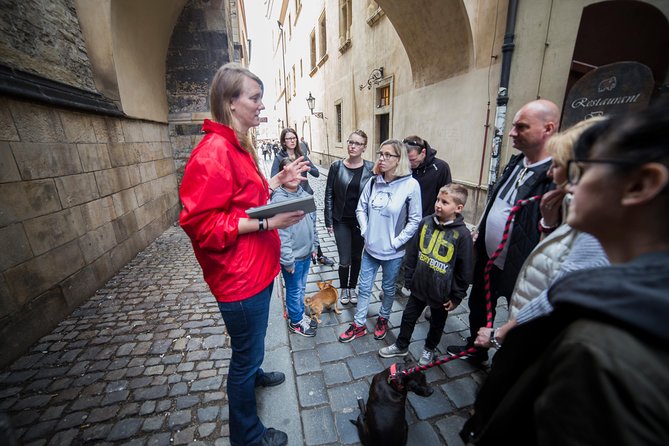
The Baťa department store is linked with the aftermath of the attack on Heydrich. Objects found at the assassination scene were displayed there, giving the guide a place to explain what happened and how the investigation developed.
The tour then reaches Wenceslas Square and the destruction of Lidice. On June 10, 1942, the village’s men were executed and its women were sent to concentration camps. Lidice was erased as a community.
This is one of the hardest sections of the walk. The subject is not treated as a side note, and the tour does not soften the Nazi response. You should expect painful material about reprisals and the danger faced by anyone who helped the resistance.
At the Esplanade Hotel, you hear that the hotel was favored by Nazis during the occupation. At Petschek Palace, the story becomes even darker. The building served as a Gestapo headquarters where Czechoslovaks were interrogated, tortured, and killed in large numbers.
Petschek Palace also connects to Karel Čurda. On June 16, 1942, he entered the building and betrayed his comrades, changing the course of the search for Heydrich’s assassins. The stop does not offer a theatrical recreation. Its force comes from the plain fact that an attractive city building once housed a machinery of terror.
Vodičkova and Karlovo náměstí after the attack
On Vodičkova, the guide discusses two unsuccessful covert missions, Tin and Bioscop. These operations help show that the resistance effort involved more than the one famous attack. Plans failed, messages were lost, and people faced constant risk.
At Karlovo náměstí, the subject turns to the bombing of Prague in 1945. This helps correct the idea that the city escaped all wartime damage. Prague did not endure the same level of destruction as many other European capitals, but the war still reached its streets.
This section may feel less visually dramatic than the crypt. You will spend much of the time listening while looking at modern buildings and traffic. One favorable account made this point clearly: there may not be much left to see at some locations, so photos and narration carry the story.
I consider that a fair trade for the price, but you should know what you are buying. This is not a sequence of preserved battlefields. It is a guided reading of the city.
St. Cyril and St. Methodius Church, the tour’s strongest stop
The visit to the Church of St. Cyril and St. Methodius is included in the price, and it is the part I would most want to see. The church became the final refuge of the Czech paratroopers involved in Operation Anthropoid and other resistance members after Heydrich’s assassination.
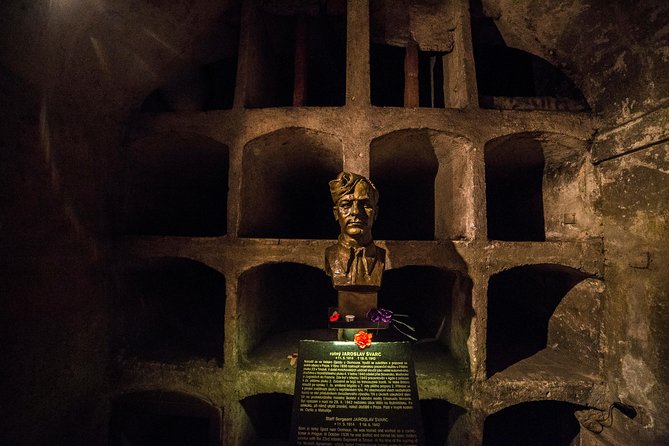
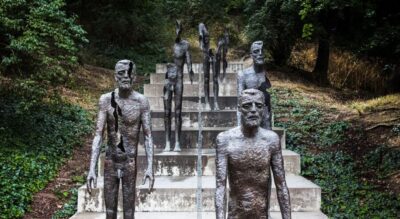
The tour includes the church and the National Memorial to the Heroes of the Heydrich Terror. You visit the crypt where the fighters hid and ultimately paid with their lives.
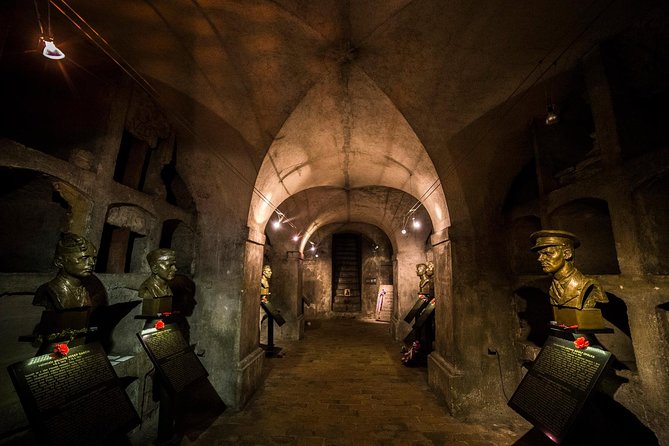
The crypt is atmospheric in a way that photographs cannot fully convey. It is a confined, serious place, and the story feels close because the space itself was part of the resistance’s final hours. One account described the crypt as the highlight because it gives you a direct sense of the sacrifice.
The visit lasts about 35 minutes in total, with 15 minutes listed for the cathedral and 20 minutes for the memorial. This is not a quick photo stop. Your guide remains with you for the visit, adding context to the displays and the site.
Allow yourself a quiet moment here. The tone changes from street history to remembrance. For many people, this is where the earlier names, dates, and operations finally come together.
What the three-hour format feels like
The tour is listed at roughly three hours, with the individual stops ranging from three to eight minutes before the church and crypt. In practice, you should expect repeated short explanations, walking between sites, and time spent standing outside.
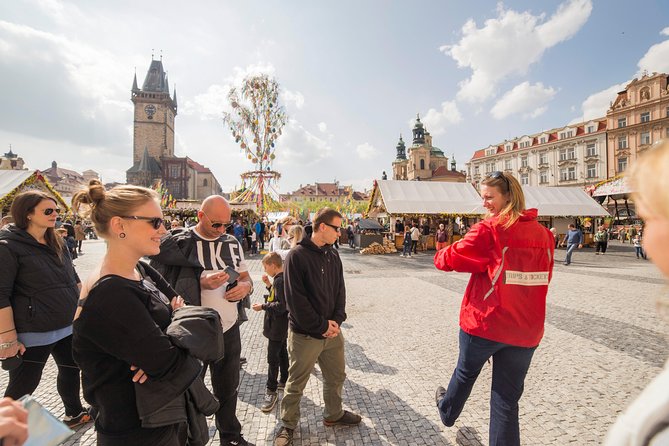
The route starts in central Old Town and finishes at Resslova 9a in New Town. Hotel pickup is not included, and you make your own way to the meeting point at Týnská 627/7. The end point is near public transportation, which makes it easy to continue your day, but the tour does not return you to the starting location.
A group of up to 30 people is allowed. That is not an intimate private walk, though the small-group format should be easier to manage than a large city tour. If hearing is important to you, stand close to the guide and arrive early. The meeting point is outside the McGee’s Trips & Tickets building, not inside the shop.
Wear shoes suited to several hours on Prague streets. The tour requires moderate physical fitness, and one person specifically warned about the amount of walking and standing. There is no food or drink included, so carry water and eat beforehand.
Guide quality makes a real difference
The strongest part of this experience is the guide. Allen received repeated praise for enthusiasm, clear English, and his ability to explain the Czech struggle before, during, and after World War II. Daniel was praised for detailed knowledge and a careful approach to a difficult subject. Dana was described as patient, friendly, and able to keep talking through the full route.
Richard, a history student in Prague, was singled out for strong English and storytelling. Robin was praised for sharing small facts and bringing pride and feeling to the stories. Pablo was valued for his passion, while Martin was described by one person as an excellent communicator and by another as too monotone.
That mixed experience matters. A fact-heavy tour depends heavily on presentation. One person left after about 20 minutes, finding the delivery repetitive and hard to hear. The company acknowledged the criticism and said the guide’s presentation was addressed.
I would not treat that one poor experience as a reason to dismiss the tour, since the overall rating is 4.8 from 231 reviews and 95 percent of customers recommend it. Still, you should understand the risk: the quality of the day depends on how your assigned guide tells a dense and serious story.
Is $33.88 good value?
At $33.88 per person, I think the tour offers good value if you want a structured introduction to Prague’s World War II history. You receive about three hours with a local guide, a route through several historically important places, and entry to the Church of St. Cyril and St. Methodius plus the memorial crypt.
The price is especially reasonable for a first visit because the tour saves you from piecing together scattered sites on your own. You would likely pass the safehouse building, Petschek Palace, the Old Town Hall damage, and other locations without knowing what happened there.
The value drops if you already know the political background or have taken another occupation-themed tour. Some of the lead-up to World War II may overlap with a general Prague history walk. You also need to accept that several locations are exterior views with narration rather than formal exhibits.
Free cancellation is available up to 24 hours before the 1:30 p.m. start time. Cancellations made later are not refunded, and the tour requires a minimum number of participants. Children under six are free, but the subject matter is not recommended for small children.
Who should book this Prague history walk?
I would recommend it to you if you enjoy twentieth-century history, resistance stories, political context, and walking tours that connect ordinary places with major events. It is also a good choice if you have seen films or read about Operation Anthropoid and want to visit the actual church and crypt at the end.
You do not need to be a history specialist. One particularly useful feature is the way the guide explains the chain of events from the First World War through the occupation, resistance, assassination, reprisals, and liberation. That structure gives newcomers a solid base.
I would hesitate if you want spectacular architecture, museum collections, or a tour with little talking. Prague’s World War II story is often invisible without explanation. If you prefer ruins and large-scale battle sites, this route may feel subdued.
Should you book the Operation Anthropoid tour?
Book it if you want Prague to make more historical sense. The route is affordable, the final crypt visit is powerful, and the best guides turn a difficult subject into a clear human story.
Go in prepared for facts, names, and standing outdoors. Arrive at Týnská 627/7 early, confirm you are waiting outside the building, and keep the afternoon open for the full three hours. For a focused look at Czech resistance and the Heydrich assassination, this is a worthwhile addition to a Prague itinerary.
FAQ
Where does the tour begin?
It begins in front of the building at Týnská 627/7 in Prague 1, near McGee’s Trips & Tickets.
What time does the tour start?
The tour starts at 1:30 p.m.
Where does the tour end?
It ends at the Orthodox Cathedral of Saints Cyril and Methodius at Resslova 9a in Prague’s New Town.
How long does the tour last?
The tour lasts approximately three hours.
Is the tour offered in English?
Yes. The tour is offered in English.
Is the church visit included?
Yes. A local guide leads a visit to the Church of St. Cyril and St. Methodius.
Is the memorial crypt included?
Yes. The route includes the National Memorial to the Heroes of the Heydrich Terror and the crypt where the Czech paratroopers hid.
How large can the group be?
The tour can have a maximum of 30 participants.
Is the tour suitable for young children?
The subject includes Nazi occupation, executions, torture, and resistance deaths, so it is not recommended for small children. Children must be accompanied by an adult, and children up to six years old are free.
What is included in the price?
The price includes a local guide and the visit to the Church of St. Cyril and St. Methodius. Hotel pickup, drop-off, food, and drinks are not included.
How much walking is involved?
The tour is a walking experience with regular outdoor stops and standing. A moderate level of physical fitness is recommended.
Can I cancel for a full refund?
Yes, if you cancel at least 24 hours before the experience begins. Cancellations made less than 24 hours before the start time are not refunded.
Newest listings in Prague
- World War II 4WD Tour from Prague with Lunch★ 4.4 · 3 reviews
- Prague: Historical Walking Tour with Focus on World War 2★ 4.3 · 12 reviews
- WWII and Communism History in Prague’s Old Town Private Tour★ 5.0 · 4 reviews
- Wroclaw: Giant Mountains & Valley of Palaces Day Tour★ 4.8 · 36 reviews
- Walking tour of Prague in French : Nové Město★ 4.9 · 16 reviews
- Walking tour of Prague in french: Old Town & Charles Bridge★ 4.9 · 62 reviews
- Vltava River Cruise and Private Tour of Prague’ Old Town★ 5.0 · 1 review
- Ultimate Unlimited Beer Pong with Czech Beer★ 4.6 · 5 reviews
World War II Tours, compared.
WWII Guided Tour & The Crypt of Operation Anthropoid
Read our review →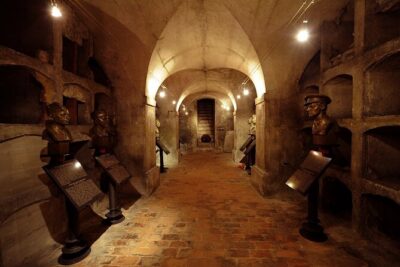
WWII in Prague Tour & The Crypt of Operation Anthropoid
Read our review →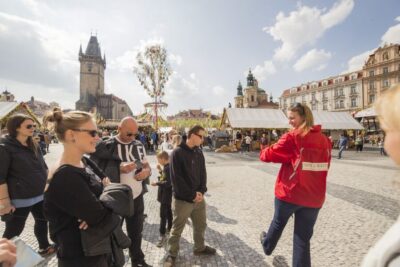
World War 2 and Operation Anthropoid Walking Tour
Read our review →
Terezin In-Depth Holocaust Tour From Prague’s Center (max 7 pax)
Read our review →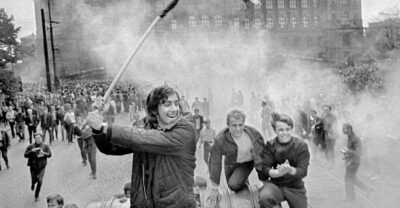
Browse the lists this tour appears in