
REVIEW · COMMUNISM HISTORY TOURS
Communism and World War 2 Prague City Tour
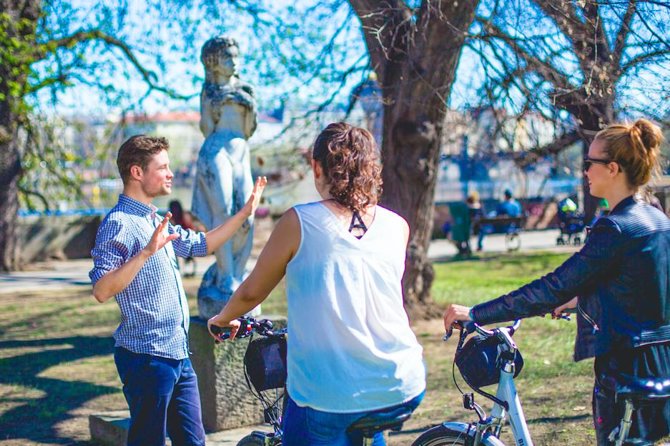
Prague’s modern story is best read on the move. This half-day e-bike tour links more than 30 sites tied to Nazi rule, World War II, and Soviet communism, giving you far more ground than a walking tour while a local guide supplies the context. I especially like the electric bicycles, which make several miles manageable, and the chance to visit places such as the Victims of Communism memorial, the John Lennon Wall, the Jewish Old Town, and the church tied to Operation Anthropoid. The final Czech beer tasting is a pleasant local touch.
The main drawback is that three to three and a half hours is a brisk window for so much history. You will see many places from the outside and hear a compact explanation rather than spend long periods at each one. Still, the tour earns its $78.09 price for anyone who wants a broad introduction to Prague’s difficult 20th-century past, especially with the included Communism Museum entry.
In This Review
- Key points to know before booking
- Why an e-bike makes sense for Prague’s modern history
- Starting in Malá Strana at Besední 2
- The Victims of Communism memorial and Prague’s Soviet era
- John Lennon Wall and the language of protest
- The Jewish Old Town and World War II context
- Cyril and Methodius Church and Operation Anthropoid
- SS headquarters and the marks of occupation
- Kafka Museum and Prague beyond politics
- Six viewpoints that put the city together
- Why Michal’s guiding style matters
- The Communism Museum adds value after the ride
- Beer tasting and the final practical touches
- Is $78.09 a fair price?
- Who should book this Prague e-bike tour?
- Should you book it?
- FAQ
- Where does the tour begin?
- Where does the tour end?
- How long does the tour last?
- What departure times are available?
- Is the e-bike included?
- Is the Communism Museum included?
- Is beer tasting included?
Key points to know before booking
- More than 30 modern-history sites: The route covers Nazi occupation, World War II, communist rule, and the Velvet Revolution.
- E-bikes save your energy: You can cover several miles without turning the tour into a workout.
- Michal is a standout guide: His interest in Czech politics and history adds depth to the ride.
- Six city views: The route includes several photo stops that help you understand Prague’s layout.
- Museum ticket and beer tasting included: Both add value beyond the cycling itself.
- Small-group format: The maximum group size is 15 people, with private timing available by arrangement.
Why an e-bike makes sense for Prague’s modern history
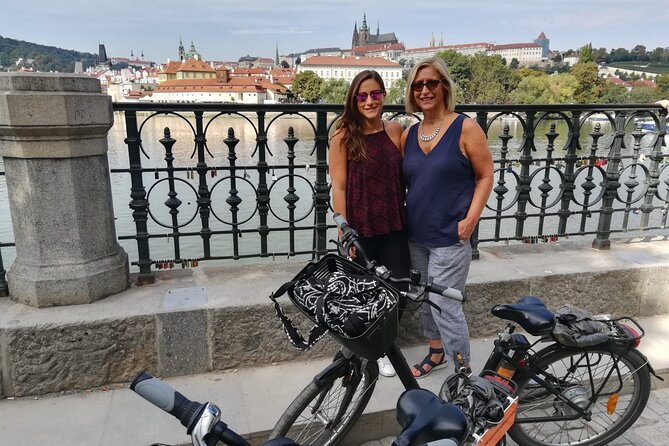
Prague is easy to explore on foot in small sections, but its World War II and communist-era sites are scattered across several neighborhoods. A walking tour would need to focus on one district or spend much of its time moving between stops. The e-bike changes that calculation.
You can ride between the Jewish Old Town, central political sites, riverfront viewpoints, Malá Strana, and locations linked to the Velvet Revolution without using up your best energy before the explanations begin. The electric assistance is especially useful for anyone who wants to cover ground but does not want a strenuous bike tour.
I also like the way cycling changes your sense of the city. You do not simply hop between isolated monuments. You move through the streets that connect them, seeing how Prague’s grand center, river districts, and older neighborhoods fit together.
The bikes are described as easy to use, but you still need to be comfortable riding in an urban setting. Dress for the weather, wear the supplied helmet, and expect a city ride rather than a quiet country excursion. Children must be accompanied by an adult.
More communism history tours in Prague:
- Prague: Communism History and Nuclear Bunker Guided Tour
★ 4.7 · 2,417 reviews - Prague Communism History and Nuclear Bunker Tour
★ 5.0 · 1,742 reviews - Communism & Nuclear Bunker Tour + 70s Canteen Lunch (own expense)
★ 5.0 · 1,036 reviews
Starting in Malá Strana at Besední 2
The tour begins at Prague by E-Bike Shop, Besední 440/2 in Malá Strana, Prague 1. It ends at the same meeting point, so you do not need to arrange a separate return transfer or figure out where the bikes go after the ride.
Departure times are normally 10:00 and 14:00. You can also request your own time, subject to availability. The morning departure gives you more of the day afterward, while the afternoon option can work well if you have already spent the morning seeing Prague Castle or the Old Town.
The meeting point is near public transportation, but hotel pickup and drop-off are not included. Allow enough time to reach Besední 2, especially if you are coming from outside central Prague.
At booking, passport name, number, expiry date, and country are required for every participant. Confirmation arrives within 48 hours, subject to availability. That paperwork is a small nuisance, but it is worth completing carefully so there is no last-minute problem.
The Victims of Communism memorial and Prague’s Soviet era
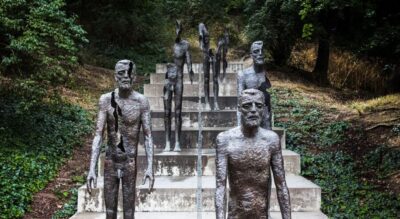
One of the most powerful stops is the Victims of Communism memorial. Its damaged, receding human figures create a stark image of lives diminished by political repression. The monument gives the tour an immediate emotional center, but the guide’s explanation is what helps you place it in the larger story.
The tour covers communist Czechoslovakia from 1948 to 1989. You will hear about the political system, its effect on ordinary life, and the changes that led to the Velvet Revolution. The value here is not just the dates. It is the connection between public spaces, political power, and the people who eventually challenged that system.
This part of the tour suits visitors who have already admired Prague’s medieval streets but want to understand the country’s recent past. The city can look untouched at first glance. The modern story reveals a different Prague, one shaped by occupation, surveillance, censorship, protest, and peaceful political change.
John Lennon Wall and the language of protest
The John Lennon Wall adds a lighter but still political note. Its changing graffiti, messages, and colors connect music with dissent and public expression. It is also one of the tour’s most appealing photo stops.
Do not expect the guide to treat it as just a colorful wall. Its importance comes from the way it represents youthful protest and the desire for free expression during the communist period. The stop also breaks up the heavier wartime material with something more visual and immediate.
I like this contrast. A strong history tour needs room for ordinary people, art, and humor, not only government buildings and tragic events. The wall helps show how political feeling can appear in everyday public places.
More World War II tours in Prague:
- Prague: WWII Guided Tour & The Crypt of Operation Anthropoid
★ 4.7 · 1,030 reviews - WWII in Prague Tour & The Crypt of Operation Anthropoid
★ 5.0 · 817 reviews - Small-Group World War 2 & Operation Anthropoid Tour in Prague
★ 5.0 · 231 reviews - Prague: World War 2 and Operation Anthropoid Walking Tour
★ 4.8 · 193 reviews
The Jewish Old Town and World War II context
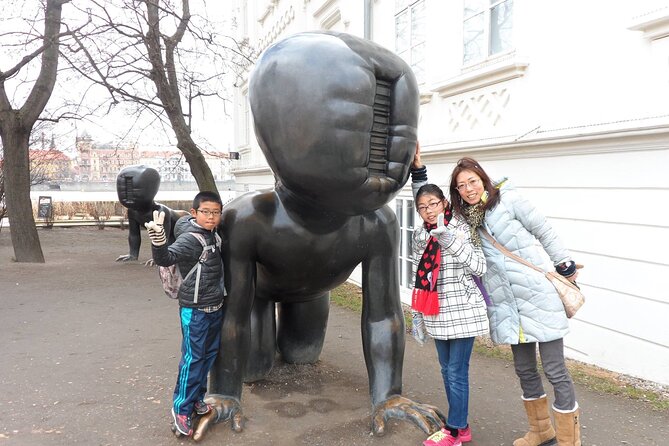
The Jewish Old Town gives the World War II portion of the tour a serious setting. The guide uses the area to explain Prague under Nazi occupation and the destruction caused by the Holocaust. You should expect historical context while moving through the district, not a full museum visit or a long guided tour of every Jewish site.
This is one reason the e-bike format works well. You can see the district as part of the city rather than treating it as a separate stop on a checklist. The route links Prague’s older Jewish quarter with locations tied to the 20th century, showing how occupation affected the city’s streets and communities.
The subject matter is painful, and the tour is not designed as light sightseeing. That is worth considering if you want only architecture and panoramic views. For a visitor trying to understand Prague beyond its postcard image, this historical section is essential.
Cyril and Methodius Church and Operation Anthropoid
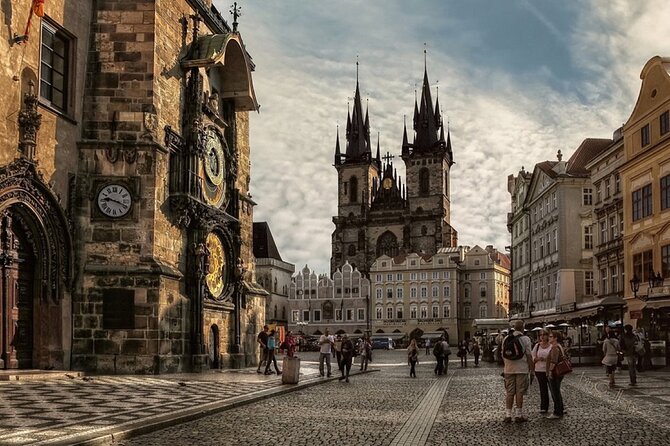
The Church of Saints Cyril and Methodius is tied to Operation Anthropoid, the wartime mission against Reinhard Heydrich, a leading Nazi official in occupied Czechoslovakia. The church became part of the story when resistance fighters took refuge there, making it one of Prague’s key World War II locations.
The tour identifies the church as the setting connected with the film Anthropoid. That connection may help younger visitors place the story, but the site matters even if you have never seen the movie. It brings the wartime narrative down to a single building and the people who made desperate choices there.
The guide’s role is especially important at a stop like this. Without explanation, you might see another handsome church. With the story, the location becomes a place of resistance, sacrifice, and conflict.
SS headquarters and the marks of occupation
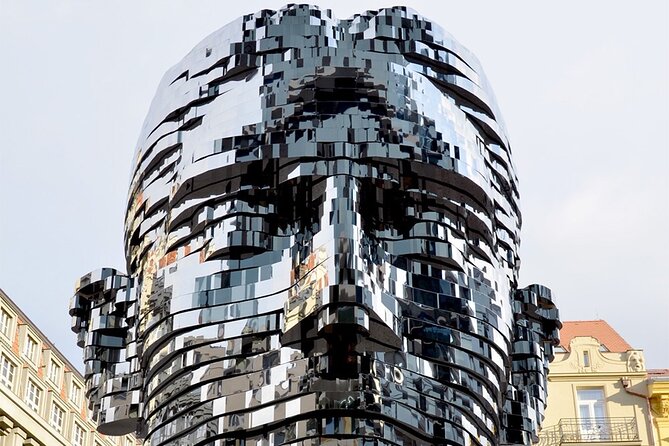
The route also points out the former SS headquarters and locations affected by World War II bombing. These are the kinds of sites you can easily pass without noticing. Their importance is often not visual, so a guide makes the difference.
The tour does not promise an elaborate museum treatment at every place. Instead, it builds a chain of short stops and explanations. That approach gives you a working map of wartime Prague, with the occupation, resistance, and physical damage connected across the center.
I find this kind of interpretation useful because modern cities often hide their hardest stories behind restored facades. A quick stop may not answer every question, but it tells you where to look more closely later.
Kafka Museum and Prague beyond politics
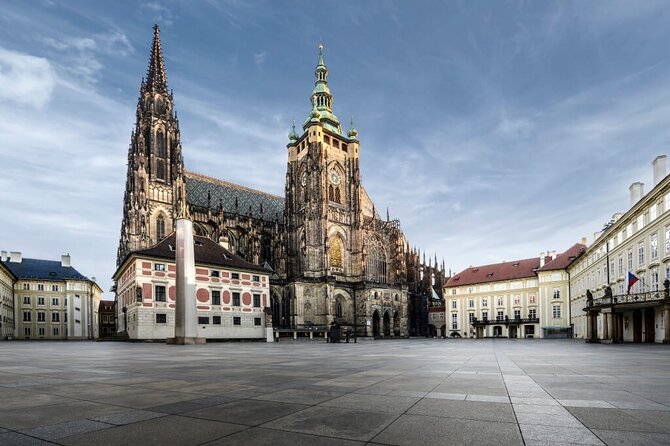
The Kafka Museum appears among the cultural stops, adding another layer to the ride. Franz Kafka is strongly linked with Prague, and the museum area helps widen the tour beyond military and political events.
This does not turn the outing into a general sightseeing tour. The main focus remains World War II and communism. Still, the inclusion of Kafka and other central sights gives you a better feel for the city’s culture and identity.
The tour is at its best when it connects Prague’s famous names and places with its modern political story. You are not only collecting monuments. You are getting a sense of how art, memory, occupation, and public life overlap in one compact city.
Six viewpoints that put the city together
Six scenic viewpoints are included for photographs and orientation. That number matters because Prague’s story can feel scattered when you move from one historic address to another. Looking across the city helps you understand the spaces between the stops.
The views also provide a welcome pause. Three hours of history can be dense, especially when the subject includes Nazi rule, war, and communist repression. A few high points and photo breaks keep the pace from becoming a nonstop lecture.
The exact quality of a view can depend on weather and route conditions, so I would not book this solely as a panorama tour. Think of the viewpoints as a useful bonus to the history, not the main event.
Why Michal’s guiding style matters
Several of the strongest comments about the tour center on Michal, who is described as enthusiastic, friendly, and deeply interested in Czech history and politics. He is also studying politics at a leading Prague university, which helps explain the tour’s focus on context rather than simple sightseeing facts.
That matters on a subject like communism. You want more than a list of dates and leaders. You want someone who can answer questions, explain why a place matters, and connect the past with Prague as it exists today.
The tour has also been praised for a friendly pace and room for questions. One group even made small detours to see places they wanted to investigate. That suggests some flexibility, though you should not assume every departure will follow a custom route. The maximum group size is 15, and a smaller group should make conversation easier.
The Communism Museum adds value after the ride
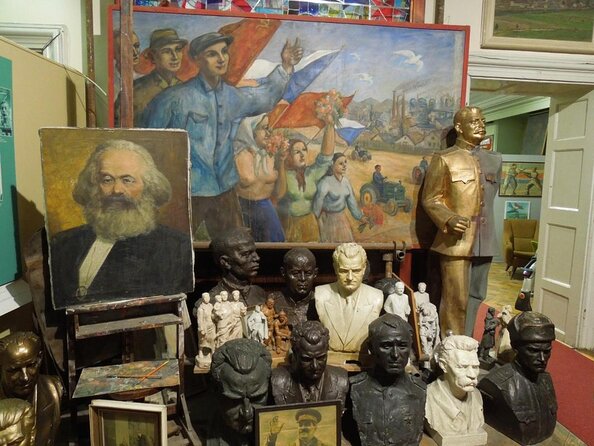
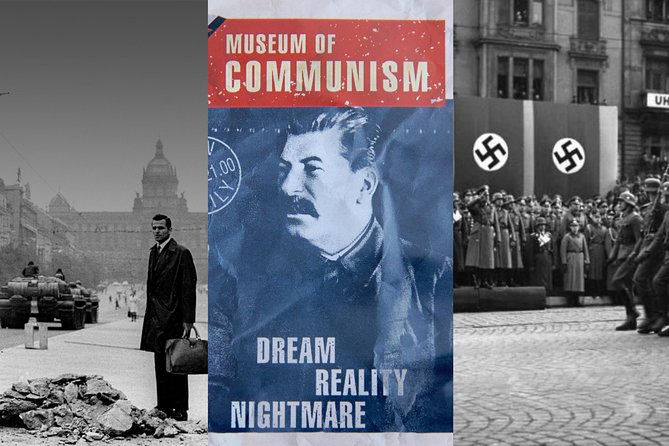
Admission to the Museum of Communism is included. You can use the ticket to continue the subject after the cycling portion, and that is one of the best reasons to allow extra time in your day.
The guide’s explanations can give you a useful framework before you enter. Museum displays make more sense when you already understand the basic timeline and have seen several real places connected with it.
The museum ticket also improves the tour’s value at $78.09 per person. You are not paying only for bike rental and a guide. You receive the e-bike, helmet, bottled water, beer tasting, alcoholic beverage, and museum entry.
The museum visit is not described as part of the three to three and a half hour riding time, so plan it as a separate stop. The bike activity itself ends back at Besední 2.
Beer tasting and the final practical touches
The tour finishes with a Czech beer tasting. You also receive a bottle of water, and the beer is included as an alcoholic beverage. This is a simple ending, but it gives the group time to relax after the ride and talk through what you have seen.
A beer tasting will not appeal to everyone. If you do not drink alcohol, the main value of the tour remains the guide, bike, route, and museum ticket. The supplied water is useful, but you should still dress for the weather and prepare for several hours outside.
The total tour length is approximately three to four hours, with the stated ride time around three to three and a half hours. The slight variation likely reflects the pace of the group and stops along the way, so avoid scheduling an important attraction immediately afterward.
Is $78.09 a fair price?
At $78.09 per person, this is not the cheapest way to see Prague. It is priced above a basic walking tour because it combines transport, a professional guide, museum admission, beer tasting, and a route covering more than 30 locations.
I think the price works best for a first or second day in Prague. You get an overview of the city’s modern history and a better sense of where key districts sit. The e-bike also saves time and energy, which has real value if your visit is short.
The value is weaker if you already know Prague well, dislike cycling in cities, or want long visits inside museums and churches. This is a moving overview, not a slow study tour. You pay for range, interpretation, and convenience.
Who should book this Prague e-bike tour?
I would choose this experience if you want to understand Prague’s 1938 to 1989 period while still seeing a broad slice of the city. It suits couples, friends, solo visitors, and families with children accompanied by an adult, provided everyone is comfortable on an e-bike.
It is also a strong choice if you have spent a few days walking Prague and feel you have only seen the famous surface. The route reveals how much modern history sits behind ordinary streets, walls, churches, and public buildings.
You might choose something else if you need a fully accessible, non-cycling activity, though the supplied information says most people can participate. You should also consider the weather, the fixed meeting point, and the compact pace.
The experience is offered in English, and free cancellation is available up to 24 hours before the start time. Cancellations or changes made inside that window are not refunded or accepted.
Should you book it?
Book this tour if you want a lively, efficient introduction to Prague’s wartime and communist past, with enough sightseeing to keep the history grounded in real places. The strongest reasons are the e-bike range, the included museum ticket, six viewpoints, and Michal’s reported ability to make complicated subjects clear and engaging.
Skip it if you want a quiet walking tour, long museum visits, or a purely scenic ride. For most visitors who want modern history with movement, conversation, and a cold Czech beer at the end, this is a strong use of half a day.
FAQ
Where does the tour begin?
It begins at Prague by E-Bike Shop, Besední 440/2 in Malá Strana, Prague 1.
Where does the tour end?
The activity ends back at the meeting point on Besední.
How long does the tour last?
The tour takes approximately three to four hours. The stated tour time is about three to three and a half hours.
What departure times are available?
Standard departure times are 10:00 and 14:00. You may also reserve your own time, subject to availability.
Is the e-bike included?
Yes. The experience includes use of an electric bicycle and helmet.
Is the Communism Museum included?
Yes. Free entrance to the Museum of Communism is included with the tour.
Is beer tasting included?
Yes. The tour includes Czech beer tasting and an alcoholic beverage. Bottled water is also provided.
Newest listings in Prague
- World War II 4WD Tour from Prague with Lunch★ 4.4 · 3 reviews
- Prague: Historical Walking Tour with Focus on World War 2★ 4.3 · 12 reviews
- WWII and Communism History in Prague’s Old Town Private Tour★ 5.0 · 4 reviews
- Wroclaw: Giant Mountains & Valley of Palaces Day Tour★ 4.8 · 36 reviews
- Walking tour of Prague in French : Nové Město★ 4.9 · 16 reviews
- Walking tour of Prague in french: Old Town & Charles Bridge★ 4.9 · 62 reviews
- Vltava River Cruise and Private Tour of Prague’ Old Town★ 5.0 · 1 review
- Ultimate Unlimited Beer Pong with Czech Beer★ 4.6 · 5 reviews
Communism History Tours, compared.
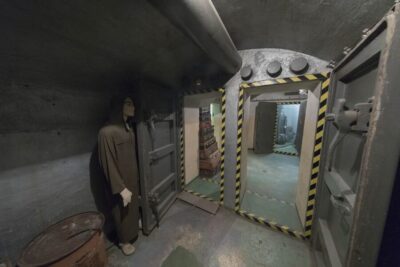
Communism History and Nuclear Bunker Guided Tour
Read our review →
Prague Communism History and Nuclear Bunker Tour
Read our review →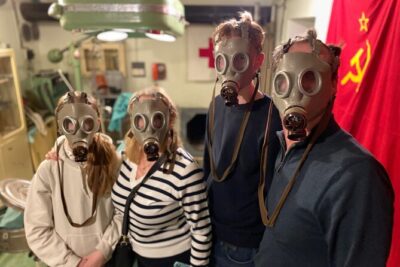
Communism & Nuclear Bunker Tour + 70s Canteen Lunch (own expense)
Read our review →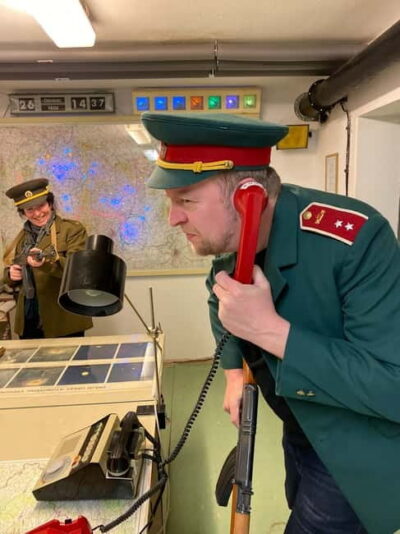
Communism and Bunker Tour with 70s Canteen Lunch
Read our review →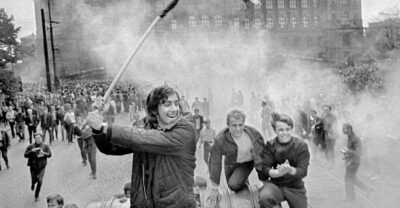
Second World War & Communism (Tip-based 3 hour tour)
Read our review →
Skip the Line: 10-Z Bunker Entrance Ticket in Brno
Read our review →Browse the lists this tour appears in