
REVIEW · COMMUNISM HISTORY TOURS
Prague: World War II and Communist History Tour
History is written into Prague’s streets. This 2.5-hour walk links the Nazi occupation, Czech resistance, Communist rule, and Velvet Revolution through real places rather than loose classroom facts. I especially like the visit connected with the assassination plot against the Nazi security chief, and the way the tour carries the story forward to Václav Havel and 1989. Operation Anthropoid gives the walk its most gripping moment, while Wenceslas Square helps explain the city’s later political upheavals.
The tour costs $34 per person, a fair price for a live English guide and a route covering several central districts. The main drawback is that some locations have little visible evidence today, so the guide’s storytelling matters more than grand monuments. You will also want comfortable shoes and a little extra time, since one past group finished later than the advertised 150 minutes.
In This Review
- Key points to know before you go
- Why this Prague history walk is worth your time
- Starting near Týnská and Prague’s old center
- The Jewish Quarter and the Nazi occupation
- Operation Anthropoid and the assassination plot
- From liberation to the Communist coup
- Wenceslas Square and the Prague Spring
- Normalization, the Plastic People, and Charta 77
- The Dancing House and the road to 1989
- What the walking is really like
- The guide matters more than the scenery
- Is $34 a fair price?
- Who should book this tour?
- FAQ
- Where does the tour meet?
- How long does the tour last?
- What language is the tour offered in?
- How much does the tour cost?
- What historical periods does the tour cover?
- Which Prague locations are included?
- Does the tour discuss the assassination of a Nazi security chief?
- Is the tour only walking?
- Can I cancel or pay later?
- Should you book it?
Key points to know before you go
- The route connects two dark chapters: You move from Nazi occupation and resistance to the Communist coup, Prague Spring, invasion, and Velvet Revolution.
- Operation Anthropoid is the emotional center: The tour explains the assassination attempt on the Nazi security chief and the brutal reprisals that followed.
- Wenceslas Square brings modern politics to life: It is tied to the Prague Spring, Warsaw Pact invasion, and mass demonstrations in 1989.
- The guides make or break the walk: Adam, Tony, Zach, Sean, Amanda, and others have been praised for clear storytelling, humor, and strong command of Czech history.
- You visit more than the postcard center: The route includes the Municipal House, Jewish Quarter, Dancing House, Wenceslas Square, and locations tied to resistance and dissent.
- The walk is best for context, not grand interiors: Much of the value comes from connecting ordinary streets with events that changed the country.
Why this Prague history walk is worth your time
Prague can feel like a city preserved in stone, with Gothic towers, Baroque churches, and medieval lanes doing most of the sightseeing work. This tour asks you to look at a different Prague, the city shaped by occupation, censorship, protest, and political fear.
That change of focus is the main reason I recommend it. You are not simply being shown attractive buildings. You are being told what happened around them, who controlled them, and how ordinary Czechs responded when their country lost its freedom.
The time span is ambitious. In 150 minutes, the guide covers the Nazi occupation, the Czech uprising, the Communist takeover, the disappointment of Communist rule, the Prague Spring, the 1968 invasion, the period known as Normalization, the persecution of the Plastic People of the Universe, Charta 77, and the Velvet Revolution.
That is a lot to fit into one walk. The best guides handle it as a connected story rather than a pile of dates. Past guides named Adam, Tony, Zach, Sean, Amanda, and Analisa have been praised for doing exactly that. The strongest descriptions focus on their ability to make the story clear, personal, and occasionally funny without softening the grim parts.
More communism history tours in Prague:
- Prague: Communism History and Nuclear Bunker Guided Tour
★ 4.7 · 2,417 reviews - Prague Communism History and Nuclear Bunker Tour
★ 5.0 · 1,742 reviews - Communism & Nuclear Bunker Tour + 70s Canteen Lunch (own expense)
★ 5.0 · 1,036 reviews
Starting near Týnská and Prague’s old center
The meeting point is Týnská 639/4 in Staré Město, Prague 1. This places you near the Old Town, a convenient starting area if you are already sightseeing around the Old Town Square and Jewish Quarter.
The first part of the route helps set up the political and social world that existed before and during the Nazi occupation. The Municipal House is one of the important stops. Its elegant public spaces and central location offer a useful contrast to the events discussed here: Prague was a major cultural and industrial center before occupation turned daily life into something far harsher.
You should not expect every stop to have a large memorial or a preserved wartime scene. That is important. At several points, you may be standing on an ordinary street while the guide explains what took place there. The setting can look unchanged, but the physical evidence is often modest.
This makes the guide’s delivery crucial. A strong storyteller gives you the sequence of events, explains why the place mattered, and shows how decisions made in government offices affected families, workers, students, and artists.
The Jewish Quarter and the Nazi occupation
The route skirts or passes through the Jewish Quarter, an area many people visit for its synagogues and cemetery. Here, the tour broadens your understanding of wartime Prague beyond military actions and political leaders.
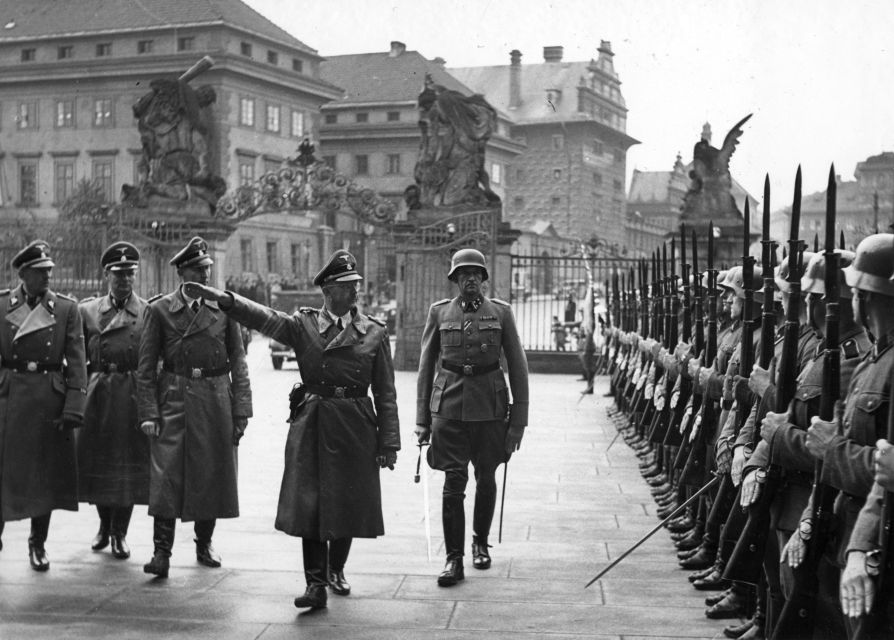
The Nazi occupation did not simply replace one government with another. It changed public life, narrowed personal freedoms, encouraged fear, and turned neighbors, officials, resistance members, and collaborators into part of a dangerous moral tangle.
One strength of this tour is its refusal to make the period too tidy. The story includes resistance and courage, but it also deals with political complicity and the difficult choices people faced. That frankness was one reason the tour received such strong praise from history-minded visitors.
You will hear the story from a Czech perspective, with attention to how locals experienced the occupation and the years that followed. The result is more grounded than a standard account of troop movements and political declarations.
Operation Anthropoid and the assassination plot
The most dramatic section concerns the Czech resistance plan to assassinate a senior Nazi security official. The tour explains the plot, the resistance network behind it, and the Nazi reprisals that followed.
This is the part of the walk that many people remember most clearly. It connects a precise act of resistance with the wider machinery of occupation. The event was not an isolated strike. It led to terrifying consequences for civilians and resistance supporters.
The route has also included the church and crypt where Czech resistance soldiers hid. A visit to this site gives the story a physical focus. Instead of hearing only about a mission in abstract terms, you can stand in a place linked directly with the final stage of the resistance fighters’ escape and defense.
One practical tip: watch Anthropoid before or after the tour if this subject interests you. One participant also recommended Munich as a useful companion film for understanding the wider political background. These films are not required, but they can help you remember the people and decisions discussed during the walk.
The material is harrowing. This is not a light sightseeing tour with a few wartime facts added for flavor. You should choose it because you want to understand the cost of resistance, not because you are looking for a cheerful morning activity.
More World War II tours in Prague:
- Prague: WWII Guided Tour & The Crypt of Operation Anthropoid
★ 4.7 · 1,030 reviews - WWII in Prague Tour & The Crypt of Operation Anthropoid
★ 5.0 · 817 reviews - Small-Group World War 2 & Operation Anthropoid Tour in Prague
★ 5.0 · 231 reviews - Prague: World War 2 and Operation Anthropoid Walking Tour
★ 4.8 · 193 reviews
From liberation to the Communist coup
After the war, Czechoslovakia did not move neatly into peace and stability. The tour follows the shift from Nazi rule to Communist power and explains how the Communist coup changed the country.
This section is especially useful if your knowledge of Central European politics begins and ends with the fall of the Iron Curtain. The postwar years were shaped by disappointment, pressure from the Soviet Union, and political forces that gradually reduced opposition.
The guide’s job here is to explain cause and effect. You will hear how the hopes of liberation and national recovery gave way to a political system that controlled public life, restricted dissent, and left many people disillusioned.
Because there may be few obvious physical markers at the stops, this portion depends heavily on explanation. I would not choose this tour if you want a succession of grand interiors or formal exhibitions. I would choose it if you want the political story placed on the actual streets of Prague.
Wenceslas Square and the Prague Spring
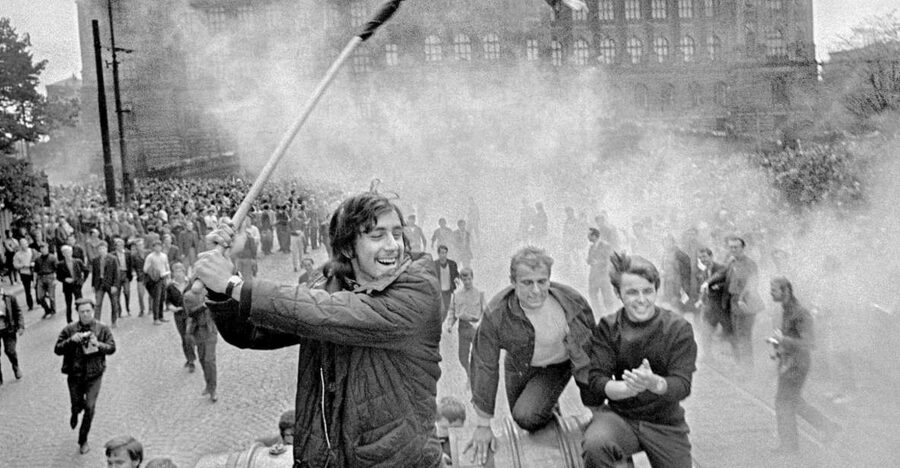
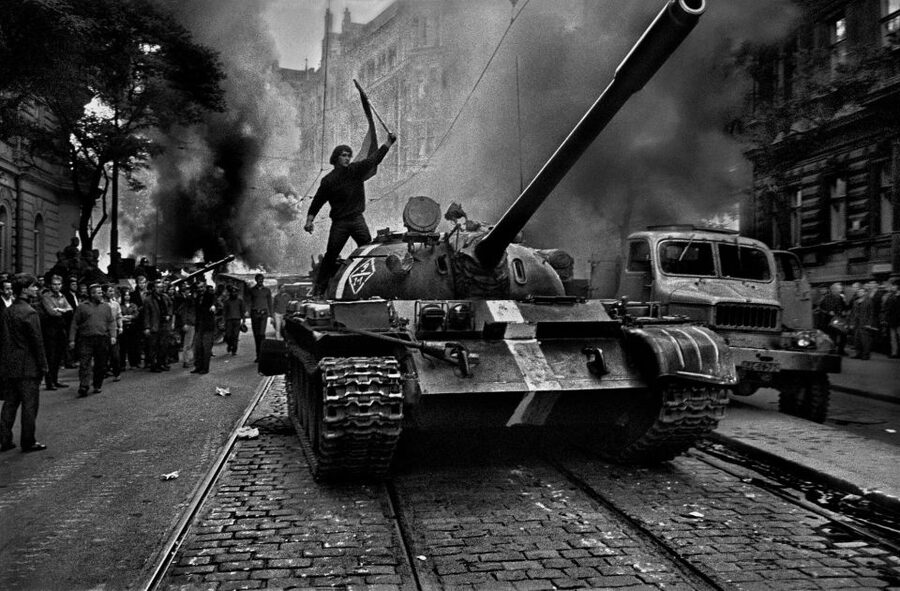
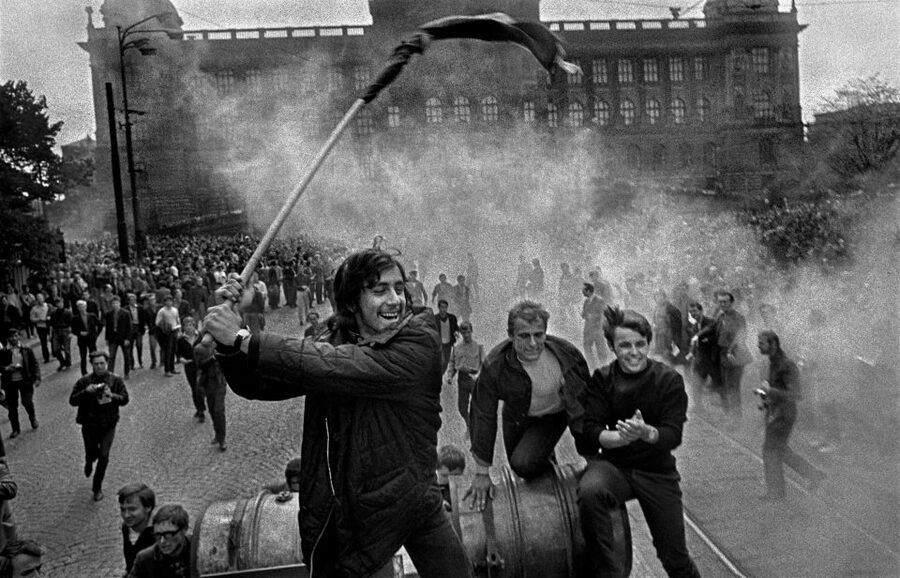
Wenceslas Square is one of the most useful places on the route because it has repeatedly served as a stage for Czech political life. Here, the guide links the Prague Spring with the Warsaw Pact invasion of 1968 and the public reaction that followed.
The Prague Spring brought hopes of reform and a more open form of socialism. Those hopes were crushed when Warsaw Pact forces invaded. In Wenceslas Square, the scale of public protest and the shock of foreign troops become easier to picture.
This is also where the tour shows how political events affect ordinary city life. A square that now carries shops, trams, hotels, and daily traffic once became a place of fear, protest, speeches, and national frustration.
The best guides do not reduce 1968 to a single date. They explain the euphoria before the invasion, the trauma of the invasion itself, and the long disappointment that came afterward. That emotional progression gives the story weight.
Normalization, the Plastic People, and Charta 77
The years after 1968 are often less familiar to international visitors. The tour introduces Normalization, the period when the Communist government tightened control and pushed society back into political obedience.
This part is valuable because it shows that repression did not end with the invasion. It settled into daily routines, professional restrictions, censorship, and pressure to conform.
The discussion of the Plastic People of the Universe adds an unusual cultural angle. This underground band became associated with the wider fight for artistic freedom. Their persecution helped bring writers, musicians, and other dissidents together.
That connection leads to Charta 77, the human rights initiative associated with Václav Havel and other dissidents. You get a sense of how a cultural dispute could grow into a wider challenge to the government’s claim that it respected its own laws.
I like this part because it moves beyond presidents and generals. It shows how musicians, writers, students, and ordinary citizens pushed back in different ways. If you are interested in music, theater, literature, or civil rights, this section may be more memorable than the military history.
The Dancing House and the road to 1989
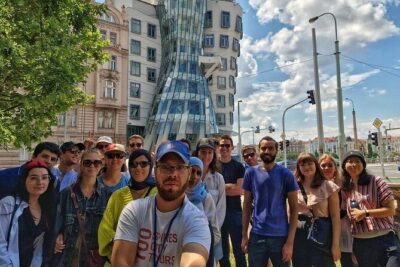
The Dancing House represents a very different Prague from the Municipal House or the Jewish Quarter. Its modern design helps shift the story toward the late Communist period and the city’s changing identity.
The tour uses the route through central Prague to explain how dissatisfaction grew during the final years of Communist rule. The Velvet Revolution did not appear from nowhere. It followed years of controlled public life, private frustration, cultural resistance, and organized dissent.
Václav Havel and an eclectic group of dissidents were swept into power in 1989. The word eclectic matters here. The movement was not built around one narrow interest group. It brought together people with different backgrounds who shared a demand for political change.
You will likely finish with a clearer sense of how quickly events can turn. After decades of Communist rule, the Velvet Revolution brought mass demonstrations and a peaceful transfer of power. The same streets used for state ceremonies and public control became gathering places for citizens demanding a new future.
What the walking is really like
The tour lasts 150 minutes and covers several parts of central Prague. It is a genuine city walk, not a short stroll between two nearby monuments.
One past group received a tram ticket to save time on the route, and some departures have included a museum stop. Since the exact movement can vary, check the schedule and be ready for both walking and possible public transport.
Wear shoes suited to Prague’s uneven streets. The walk may feel easy in cool weather but tiring in heat, rain, or winter cold. One group enjoyed the tour even in heavy rain, while another described coping with oppressive heat. That tells you the guide can keep the story moving, but the weather still matters.
Group size can affect the experience. One participant described a small group that felt almost private and allowed plenty of questions. A smaller gathering also makes it easier to hear the guide at street corners and ask about difficult topics.
The advertised length is 2.5 hours, but one person said the tour ran longer than expected. Do not book a tight museum reservation, meal, or train immediately afterward. A little breathing room makes the day less stressful.
The guide matters more than the scenery
This tour depends on the person leading it. You may stand at places where the meaning is not obvious, so a flat or rushed presentation would weaken the experience.
The strongest guides have been Adam, Tony, Zach, Sean, Amanda, and Analisa, according to the names attached to past departures. The praise is consistent: clear English, strong subject knowledge, humor used at the right moments, and a gift for turning facts into a story.
That does not mean every guide will have the same personality. Still, the pattern suggests that the company places real value on presentation, not just route management.
You should ask questions. The walk covers a lot of ground, and a personal question can help connect a broad event with a detail that matters to you. A good guide can also point you toward films, books, restaurants, or bars, though those recommendations can vary by person.
Is $34 a fair price?
At $34, this is a good-value history tour if you make use of the guide. You are paying for 2.5 hours of live explanation, a route across several central areas, and access to a connected account of events that would take much longer to piece together alone.
The value is strongest if you have already seen Prague’s standard sights. A general Old Town or castle walk can show you the city’s older story. This tour fills in the 20th century, when Prague experienced occupation, dictatorship, reform, invasion, censorship, and peaceful revolution.
It is less useful if you only want interiors, formal memorials, or a photographic tour. Some stops are meaningful because of what happened there, not because the present-day view looks dramatic.
Free cancellation up to 24 hours before the start and the option to reserve now and pay later make it easier to fit into a changing itinerary. The tour is offered in English with a live guide.
Who should book this tour?
I would recommend it to adults, students, and families with older children who want more than Prague’s medieval charm. It suits anyone interested in World War II, resistance movements, Soviet influence, the Cold War, music and dissent, or the fall of Communism.
It is also a smart second-day activity. After you have learned the basic layout of Prague, this route adds meaning to places you may otherwise pass without noticing.
You may want to skip it if you dislike long walks, serious political subjects, or stories involving civilian suffering and repression. You should also allow extra time after the tour, since the emotional and historical material can leave you wanting to pause rather than rush straight to the next attraction.
FAQ
Where does the tour meet?
The meeting point is Týnská 639/4, Staré Město, 110 00 Prague 1, Czechia.
How long does the tour last?
The stated duration is 150 minutes, or 2.5 hours. One past participant reported that the tour lasted longer, so leave extra time afterward.
What language is the tour offered in?
The tour is conducted in English with a live guide.
How much does the tour cost?
The listed price is $34 per person.
What historical periods does the tour cover?
It covers the Nazi occupation, Czech resistance, the Communist coup, Communist rule, the Prague Spring, the Warsaw Pact invasion, Normalization, the Plastic People of the Universe, Charta 77, and the Velvet Revolution of 1989.
Which Prague locations are included?
The route includes the Municipal House, Jewish Quarter, Dancing House, and Wenceslas Square, along with other places connected to the events discussed.
Does the tour discuss the assassination of a Nazi security chief?
Yes. The tour explains the resistance plot to assassinate the Nazi head of the security services and the reprisals that followed.
Is the tour only walking?
It is described as a walking tour. One past departure used a tram ticket to save time, so some routes may include public transport.
Can I cancel or pay later?
You can cancel up to 24 hours in advance for a full refund. You can also reserve your place and pay later.
Should you book it?
Book this tour if you want Prague’s recent past explained as a human story, not a list of dates. The strongest reasons are the Operation Anthropoid section, the links between Prague Spring and 1989, and guides who make difficult material easy to follow.
At $34, it offers solid value, especially for a small group and an engaging guide. Just bring good shoes, expect some stops to rely on narration rather than visible monuments, and leave time afterward. If that sounds like your kind of sightseeing, this is one of the better ways to understand the Prague beneath the pretty rooftops.
More History Tours in Prague
- Prague: Oldtown, Medieval Underground & Dungeon History Tour
★ 4.2 · 8,244 reviews - Prague Old Town, Medieval Underground and Dungeon Historical Tour
★ 4.5 · 3,227 reviews - Prague: Historic City Center Bus Tour with Top Sights
★ 4.4 · 2,360 reviews - Prague Historic Pub Tour with Drinks Included
★ 5.0 · 2,084 reviews
Newest listings in Prague
- World War II 4WD Tour from Prague with Lunch★ 4.4 · 3 reviews
- Prague: Historical Walking Tour with Focus on World War 2★ 4.3 · 12 reviews
- WWII and Communism History in Prague’s Old Town Private Tour★ 5.0 · 4 reviews
- Wroclaw: Giant Mountains & Valley of Palaces Day Tour★ 4.8 · 36 reviews
- Walking tour of Prague in French : Nové Město★ 4.9 · 16 reviews
- Walking tour of Prague in french: Old Town & Charles Bridge★ 4.9 · 62 reviews
- Vltava River Cruise and Private Tour of Prague’ Old Town★ 5.0 · 1 review
- Ultimate Unlimited Beer Pong with Czech Beer★ 4.6 · 5 reviews
Communism History Tours, compared.
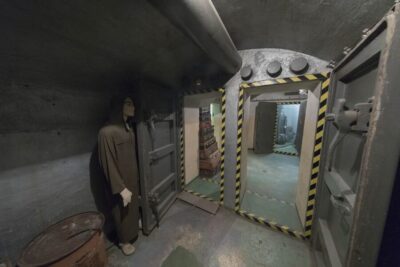
Communism History and Nuclear Bunker Guided Tour
Read our review →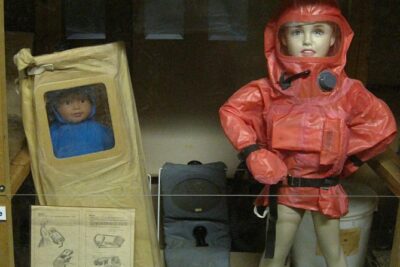
Prague Communism History and Nuclear Bunker Tour
Read our review →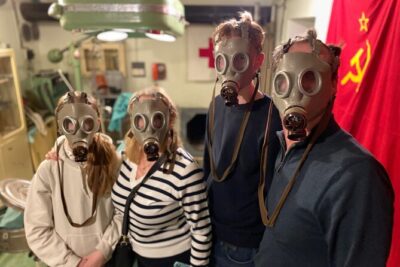
Communism & Nuclear Bunker Tour + 70s Canteen Lunch (own expense)
Read our review →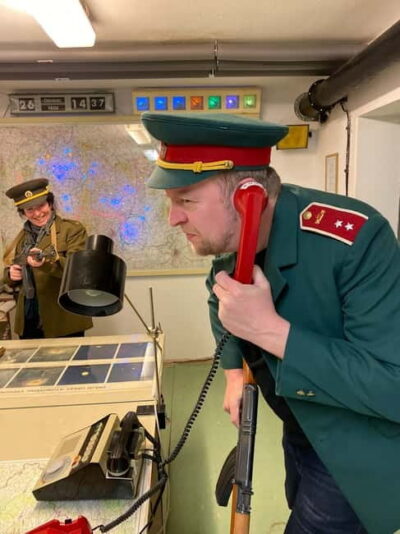
Communism and Bunker Tour with 70s Canteen Lunch
Read our review →
Second World War & Communism (Tip-based 3 hour tour)
Read our review →
Skip the Line: 10-Z Bunker Entrance Ticket in Brno
Read our review →
Browse the lists this tour appears in