
REVIEW · COMMUNISM HISTORY TOURS
Prague: 3–Hour Communism and World War 2 E-Bike Tour
Prague’s modern past is best read in the streets. This 3.5-hour e-bike tour connects Nazi occupation, Communist rule, Jewish Prague, the Velvet Revolution, and anti-Nazi resistance in one compact outing. I especially like the chance to cover more than 30 sites without spending the whole day on foot, and I like that Museum of Communism entry is included rather than treated as an extra.
The small group, limited to 10 people, should make it easier to ask questions, and guides such as Michal, Marek, Tatiana, Tatyana, Nayeem, and Michelle have been praised for clear, friendly storytelling. The main caution is the riding surface: cobblestones and crowded pedestrian areas mean you may need to walk the bike at times, and the route is not a smooth cycling workout from start to finish.
In This Review
- Key points at a glance
- Why this tour works for Prague’s difficult history
- Starting at Malá Strana and getting set up
- Old Town, Jewish Prague, and the marks of occupation
- Cyril and Methodius Church and the Anthropoid story
- The Communist Memorial and the road to 1989
- The Museum of Communism as a built-in pause
- John Lennon Wall, Kafka Museum, and Prague’s changing identity
- How much riding is involved?
- Guide quality and the value of a small group
- Price, inclusions, and what you receive for $74
- Who should book this e-bike history tour?
- Should you book it?
- FAQ
- How long does the Prague Communism and World War 2 e-bike tour last?
- Where does the tour start?
- Where does the tour end?
- What language is the tour conducted in?
- How many people can join the group?
- Is Museum of Communism admission included?
- What historical sites are included?
- Are helmets provided?
- Is water included?
- What should you bring?
Key points at a glance
- More than 30 historical stops: See sites tied to Nazi occupation, the Communist era, the Jewish Old Town, the Velvet Revolution, and modern Prague.
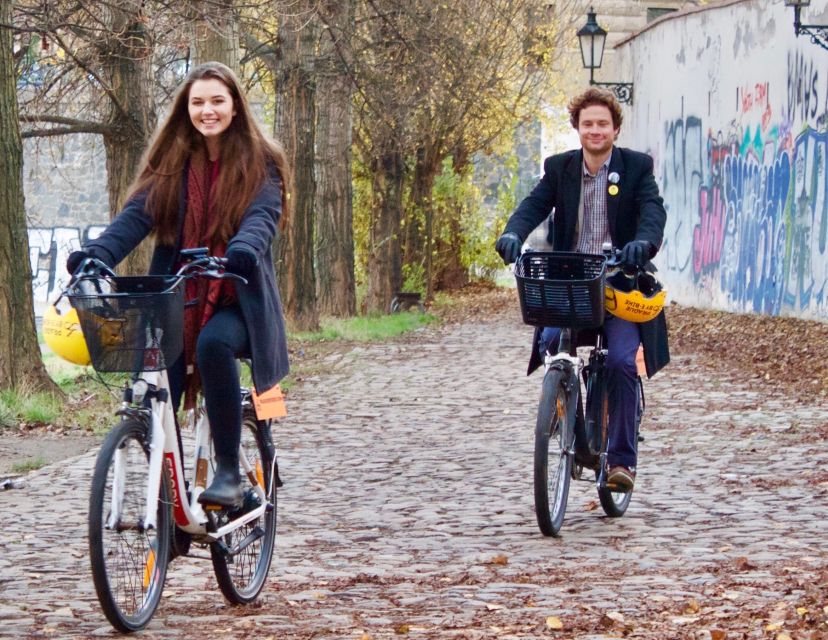
- A useful e-bike advantage: The electric assist helps you reach more of central Prague in three and a half hours, especially on a warm day.
- Museum of Communism included: The museum gives you a place to pause and read, with displays, photographs, objects, and period room settings.
- History beyond the postcard center: The route includes the Victims of Communism memorial, SS Headquarters, bombing locations, Cyril and Methodius Church, and John Lennon Wall.
- Small English-speaking groups: The maximum group size is 10, which allows more room for questions than a large coach or walking tour.
- A simple finish: You return to the starting point and receive a cold beer, along with water during the ride.
Why this tour works for Prague’s difficult history
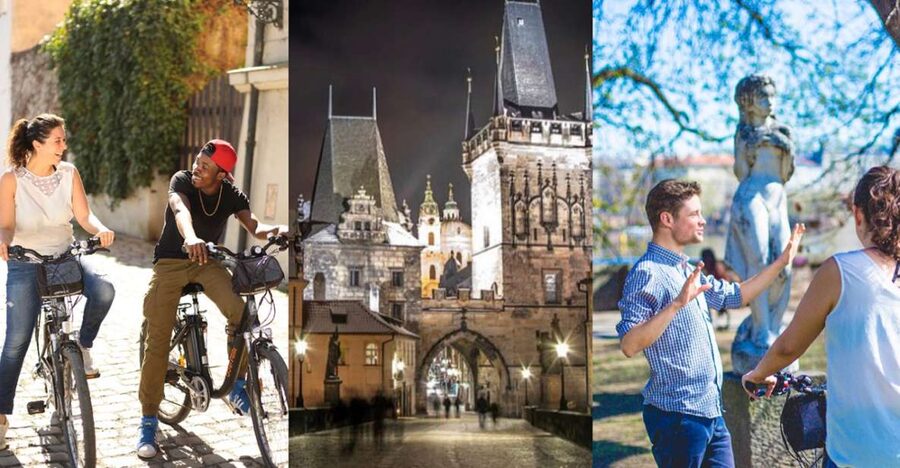
Prague is easy to admire as a city of towers, bridges, and handsome squares. The harder part is understanding the events that shaped daily life here during the 20th century. Nazi occupation, wartime resistance, Soviet influence, censorship, protest, and the fall of Communism all left marks on streets that can look peaceful today.
That is the strength of this outing. Instead of treating World War 2 and Communism as separate textbook chapters, it links them through actual places. You move from the Jewish Old Town to locations connected with German occupation, then onward to Communist-era memorials and the student march that helped set the Velvet Revolution in motion.
I like this format because Prague’s modern history can otherwise feel scattered. A museum gives you facts and dates, while a walking tour gives you atmosphere but covers less ground. The e-bike supplies the missing link: you can move between distant points quickly enough to see how the story fits together.
The tour is conducted in English, and the maximum group size is 10. That is small enough for a guide to respond to questions and adjust explanations. Several guides associated with this experience have been praised for making difficult material understandable and even humorous without turning it into a lecture.
More communism history tours in Prague:
- Prague: Communism History and Nuclear Bunker Guided Tour
★ 4.7 · 2,417 reviews - Prague Communism History and Nuclear Bunker Tour
★ 5.0 · 1,742 reviews - Communism & Nuclear Bunker Tour + 70s Canteen Lunch (own expense)
★ 5.0 · 1,036 reviews
Starting at Malá Strana and getting set up
You meet at Prague by E-Bike, Besední 440/2, in Prague 1’s Malá Strana district. The shop is close to the Újezd tram stop, a useful landmark if you are coming by public transport.
Arrive 15 minutes early. You will need to bring a passport or identity card, and the tour information specifically asks you to have identification with you. Helmets are provided, and a poncho is available if requested. You also receive a bottle of water.
The staff will set you up with an electric bicycle before the historical portion begins. The e-bike is important here not because the tour is described as strenuous, but because it lets you cover a broad section of the city in a limited time. One guide-led outing can reach places that would require several separate walking trips.
Do not picture a silent, polished ride on fresh cycle paths. Some of the riding takes place over cobblestones, and busy areas may require you to get off and walk. The bikes have been described as older by one participant, though still functional. If you are uncertain about cycling on uneven surfaces, tell the guide before setting off.
Old Town, Jewish Prague, and the marks of occupation
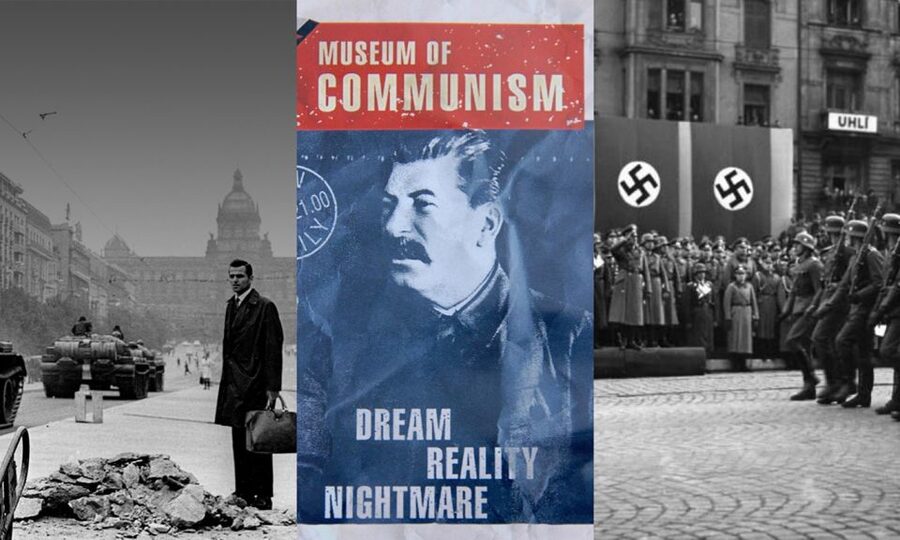
The route includes Prague’s Old Town and the Jewish Old Town, two areas where the city’s beauty can easily distract from its painful past. Your guide provides the context that buildings and squares cannot explain on their own.
The Jewish Old Town is particularly important to the tour’s World War 2 section. It helps place Nazi persecution within Prague’s streets rather than treating it as an event happening somewhere far away. The exact time spent at each location can vary, since the group may pause for questions and traffic or pedestrian conditions can affect the pace.
The tour also includes Second World War bombing locations. These stops are useful because they show that wartime Prague was not simply preserved untouched while the rest of Europe suffered. You get a better sense of how conflict affected the city physically, as well as what happened to its people.
A stop connected with the SS Headquarters brings the occupation story into sharper focus. The subject is grim, but it explains how power was organized and enforced. I would not expect every location to have a large monument or dramatic exhibit. In some places, the guide’s explanation is what makes the site meaningful.
Cyril and Methodius Church and the Anthropoid story
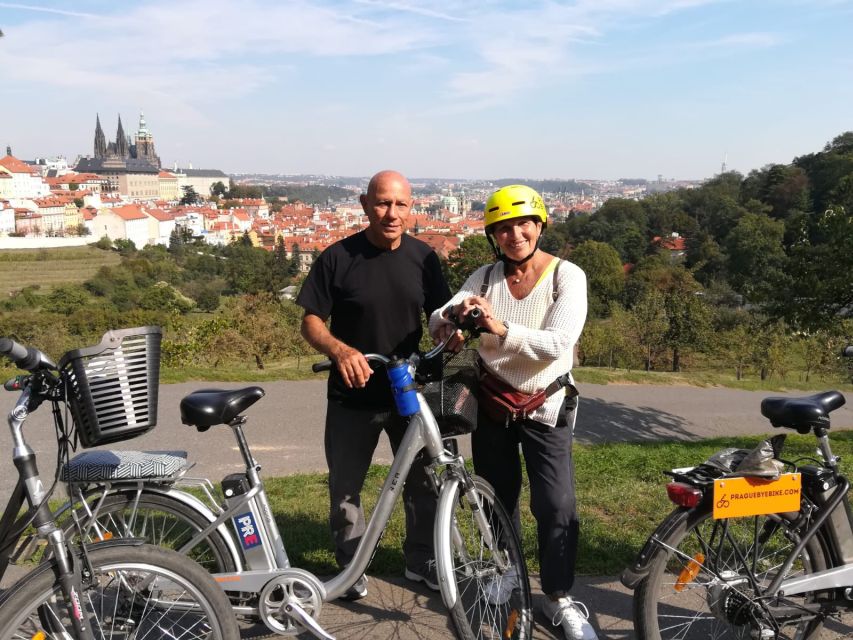
One of the tour’s most distinctive stops is Cyril and Methodius Church. It is associated with the anti-Nazi resistance and was also used as a filming location for the 2016 war film Anthropoid.
For many people, this will be the most memorable World War 2 stop because it connects a real place with an organized act of resistance. The church is not included merely as a pretty religious building. It is part of the story of people who resisted Nazi rule and paid a terrible price.
The film connection adds a modern point of reference, especially if you have seen Anthropoid. Still, the historical importance comes first. The guide’s explanation gives the stop its weight, while the location helps you understand that the events took place in an ordinary part of the city, not on a distant battlefield.
Expect the tour to move between serious subjects and lighter city observations. That balance matters on a half-day outing. Three and a half hours of uninterrupted wartime suffering would be difficult for most people, and the guides appear to make room for broader information about Prague and its residents when the group wants it.
More World War II tours in Prague:
- Prague: WWII Guided Tour & The Crypt of Operation Anthropoid
★ 4.7 · 1,030 reviews - WWII in Prague Tour & The Crypt of Operation Anthropoid
★ 5.0 · 817 reviews - Small-Group World War 2 & Operation Anthropoid Tour in Prague
★ 5.0 · 231 reviews - Prague: World War 2 and Operation Anthropoid Walking Tour
★ 4.8 · 193 reviews
The Communist Memorial and the road to 1989
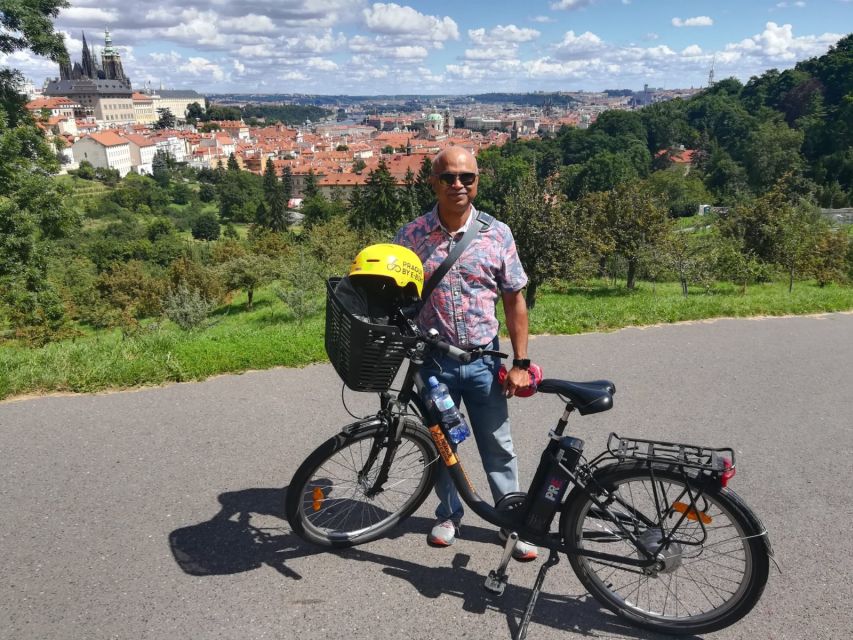
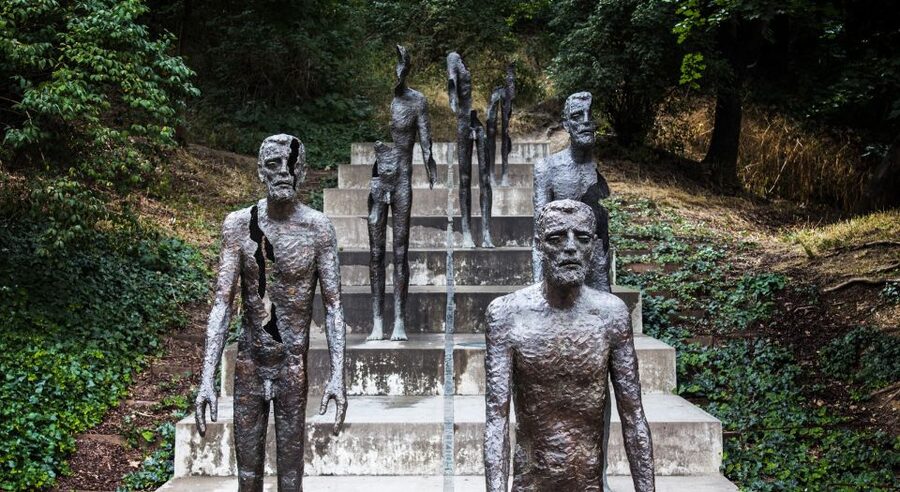
The Victims of Communism memorial is one of the clearest visual reminders of what Communist rule meant for those who suffered under it. It gives the tour a strong emotional center before the story moves toward the fall of the regime.
You also follow the footprints of the student march that helped spark the Velvet Revolution. This is where the tour shifts from explaining government control to showing how ordinary people challenged it. The Velvet Revolution did not arrive as an abstract political change. It grew from public action, protest, and a turning point in the streets.
I like that the tour includes both the memorial and the birthplace of the movement that brought down Communist rule. One shows the cost of repression. The other shows how quickly a system can begin to lose its hold when people act together.
A possible limitation is that the Communist portion may focus more heavily on the Velvet Revolution than on the texture of everyday life under Communism. One participant wanted more discussion of Communist-era buildings and daily routines. If your main interest is housing, shopping, work, school, shortages, or architecture from the period, you should tell the guide at the start and ask for those details.
The Museum of Communism as a built-in pause
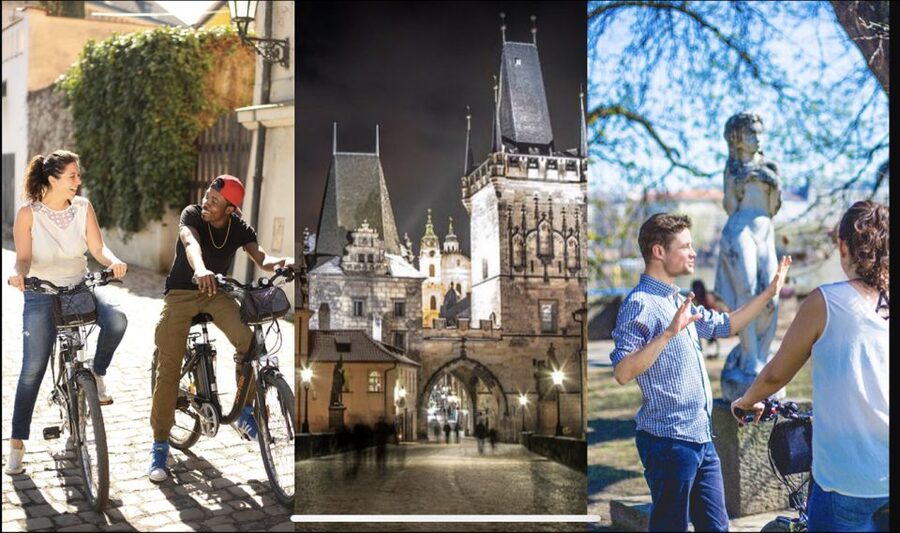
Entrance to the Museum of Communism is included in the price. This is a real advantage, since the museum gives you time to absorb information at your own pace after moving through the city.
The museum contains photographs, objects, artwork, written material, and rooms arranged to resemble Communist-era interiors. It is not described as a huge museum, but one participant found an hour of reading and viewing worthwhile. The displays help fill in areas that can be difficult to explain outdoors, especially censorship, propaganda, political control, and the details of ordinary life.
The museum visit is not necessarily a fully guided walkthrough. The tour information promises free entry, not a private museum lecture. In practical terms, you should expect to spend part of the stop reading and looking independently. That can be welcome after riding, particularly if the day is hot.
The stop also changes the rhythm of the experience. You are not pedaling continuously for three and a half hours. You get a chance to cool down, think through what you have heard, and choose which displays deserve extra attention.
John Lennon Wall, Kafka Museum, and Prague’s changing identity
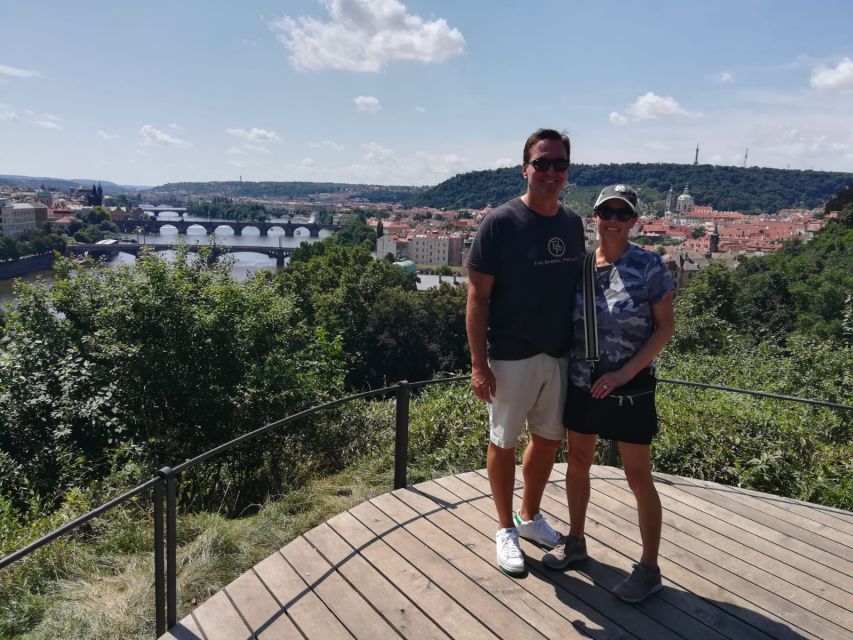
The itinerary includes the John Lennon Wall and Kafka Museum, which widen the story beyond politics alone. These places help show how Prague’s culture and public identity continued to develop under pressure.
The John Lennon Wall is tied to freedom of expression and the city’s counterculture. It gives the tour a more colorful stop after the heavier Communist and wartime subjects. Do not expect it to explain the whole Velvet Revolution by itself. Its value is as a visible symbol of protest, creativity, and public space.
The Kafka Museum adds another layer. Franz Kafka is one of Prague’s best-known literary figures, and the museum helps connect the city to its artistic and intellectual life. The tour does not promise a full museum visit there, so consider this a location-based stop rather than a long indoor exploration.
Including these two sites keeps the outing from becoming only a sequence of political monuments. You get a broader picture of Prague as a city shaped by writers, artists, public protest, occupation, and changing ideas about freedom.
How much riding is involved?
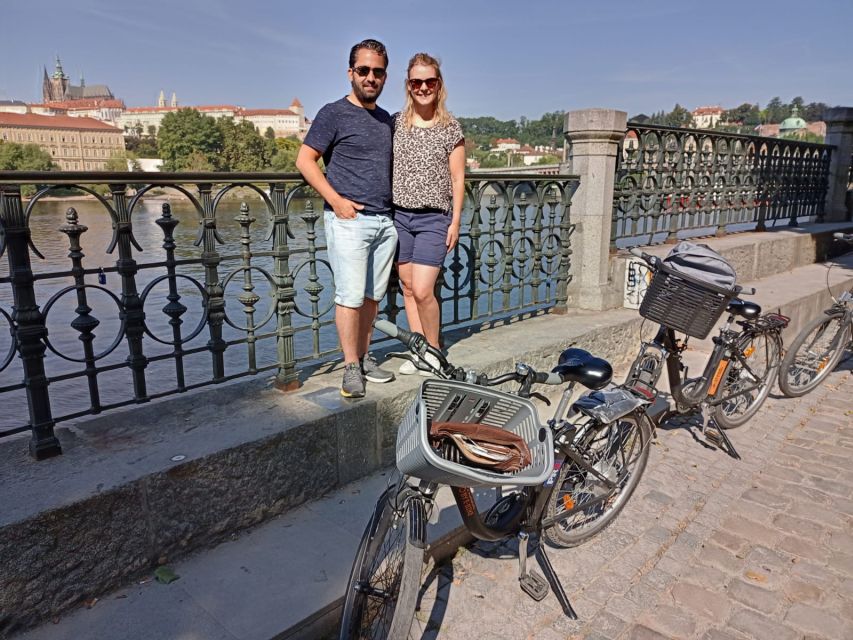
The experience is advertised as a 3.5-hour e-bike tour, and the bicycles are used to reach more than 30 sites. That is a lot of ground for a half-day activity, but the pace is not necessarily constant cycling.
You may stop often for explanations, photographs, and questions. In crowded sections, you may walk the bike. Cobblestones can make the ride less comfortable than the electric motor suggests, so wear secure shoes and expect some vibration.
The e-bike is still a good choice for a hot day or for anyone who wants to see more than a walking tour allows. One participant specifically found the electric bike comfortable in hot weather and appreciated reaching many parts of the city quickly.
The tour should suit you if you are comfortable balancing a bicycle, stopping and starting, and sharing the road or public space with other people. It may be less suitable if you want a smooth, fast ride with long uninterrupted stretches of cycling.
Guide quality and the value of a small group
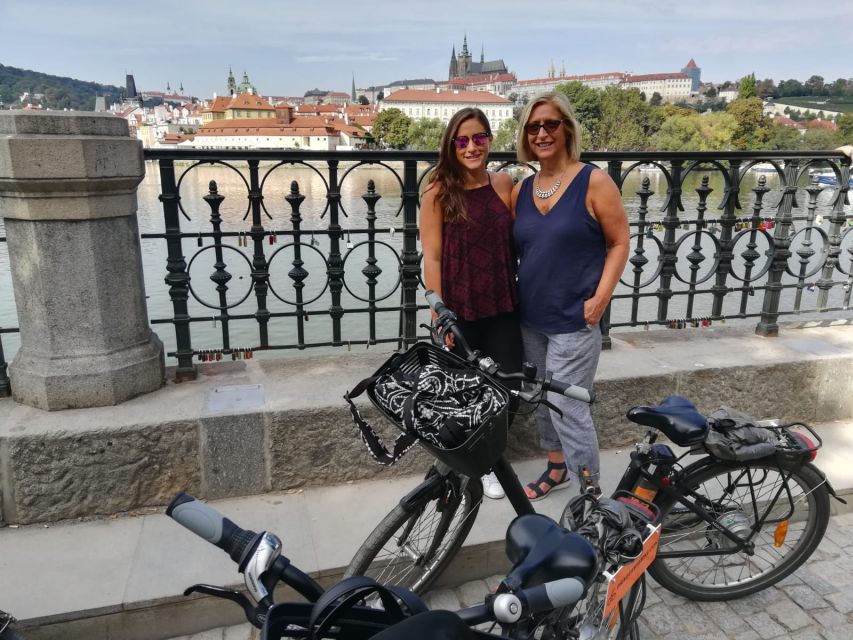
The guide is the most important part of a history tour, and this experience has received strong praise for its personal style. Michal has been described as engaging and well prepared, while Marek was praised for being friendly and clear. Tatiana and Tatyana have also been singled out for careful explanations and a willingness to adjust the outing to the group.
Nayeem and Michelle have likewise been praised for their command of the subject and English. Guide assignments can change, so you should not book solely to receive one particular person. Still, the repeated pattern is encouraging: the guide is expected to do more than point at buildings.
The small group limit of 10 helps. With only two people, one guide was able to answer questions and respond to requests without rushing. Even with a full group, 10 is manageable. You can ask for more information about a particular site instead of losing your question in a crowd.
The best use of that small-group setting is to speak up. If you want more about daily Communist life, Soviet influence, wartime resistance, Jewish Prague, or the Velvet Revolution, say so. The guides appear willing to add general Prague history when asked.
Price, inclusions, and what you receive for $74
At $74 per person, this is not the cheapest way to see Prague. You are paying for a guided experience, an e-bike, equipment, Museum of Communism admission, water, and a cold beer at the end.
The value depends on how much use you make of the historical explanation. If you only want to photograph the main sights, you can see parts of central Prague more cheaply on foot. If you want a connected account of Nazi occupation and Communist rule, the guide adds the part that is hardest to arrange independently.
The included museum ticket matters, especially if you planned to visit the museum anyway. The beer is a pleasant extra rather than the reason to choose the tour. A restaurant discount voucher has also been provided on some outings for Kolkovna, a nearby restaurant serving traditional Czech food, though you should confirm current availability before relying on it.
Free cancellation up to 24 hours before departure and the option to reserve now and pay later make the booking less risky. Those terms are useful in Prague, where weather and changing plans can affect an outdoor activity.
Who should book this e-bike history tour?
I would choose this tour if you want a strong introduction to Prague’s 20th-century history and prefer seeing locations rather than sitting in a classroom. It suits first-time visitors who want to cover a lot in one morning or afternoon, and it works well as a complement to a classic Old Town walking tour.
It is especially good for you if you enjoy asking questions, like connecting films and books to real places, and do not mind a serious subject mixed with ordinary city sightseeing. The e-bike makes it practical for people who might find a long walking tour tiring.
You should think twice if you want a highly specialized academic treatment of Communism, a detailed study of everyday Communist architecture, or a smooth cycling route away from pedestrians and cobbles. The tour touches many subjects, so it gives you breadth more than exhaustive detail at every stop.
Bring your passport or identity card, arrive 15 minutes early, and wear clothing suitable for riding. Ask for a poncho if rain is possible. Most importantly, treat the outing as a moving history lesson, not just a bicycle sightseeing ride.
Should you book it?
Book this tour if you want a well-paced introduction to Prague’s Nazi and Communist past, with more than 30 sites, a small English-speaking group, and Museum of Communism entry included. The guides are the major strength, and the e-bike lets you connect parts of the city that would be tiring to cover on foot.
Skip it if your priority is a quiet, polished ride or a narrow focus on daily life under Communism. For most visitors, though, $74 is fair value for the distance covered, the historical context, the museum admission, and the chance to ask questions along the way.
FAQ
How long does the Prague Communism and World War 2 e-bike tour last?
The tour lasts 3.5 hours. Check availability for the current starting times.
Where does the tour start?
It starts at Prague by E-Bike, Besední 440/2, 118 00 Praha 1, in Malá Strana. The meeting point is close to the Újezd tram station.
Where does the tour end?
The activity ends back at the same meeting point.
What language is the tour conducted in?
The live tour guide conducts the experience in English.
How many people can join the group?
The group is limited to 10 participants.
Is Museum of Communism admission included?
Yes. Free entrance to the Museum of Communism is included.
What historical sites are included?
The tour includes Old Town, the Victims of Communism memorial, John Lennon Wall, Kafka Museum, the SS Headquarters, the Jewish Old Town, World War 2 bombing locations, Cyril and Methodius Church, and locations connected with the Velvet Revolution.
Are helmets provided?
Yes. Helmets are provided, and a poncho is available if requested.
Is water included?
Yes. You receive one bottle of water.
What should you bring?
Bring a passport or identity card. You should also arrive 15 minutes before the scheduled start time.
More Bike Tours in Prague
- Prague E-Bike City Tour with A Local Guide
★ 5.0 · 924 reviews - 7 BEST VIEWS – PRAGUE eBIKE TOUR
★ 5.0 · 793 reviews - Prague: Bike or E-Bike City Tour with A Local Guide
★ 4.9 · 416 reviews - E-BIKE TOUR: 10 Must-See Landmarks & Viewpoints in Prague 1-8per.
★ 5.0 · 270 reviews
Newest listings in Prague
- World War II 4WD Tour from Prague with Lunch★ 4.4 · 3 reviews
- Prague: Historical Walking Tour with Focus on World War 2★ 4.3 · 12 reviews
- WWII and Communism History in Prague’s Old Town Private Tour★ 5.0 · 4 reviews
- Wroclaw: Giant Mountains & Valley of Palaces Day Tour★ 4.8 · 36 reviews
- Walking tour of Prague in French : Nové Město★ 4.9 · 16 reviews
- Walking tour of Prague in french: Old Town & Charles Bridge★ 4.9 · 62 reviews
- Vltava River Cruise and Private Tour of Prague’ Old Town★ 5.0 · 1 review
- Ultimate Unlimited Beer Pong with Czech Beer★ 4.6 · 5 reviews
Communism History Tours, compared.
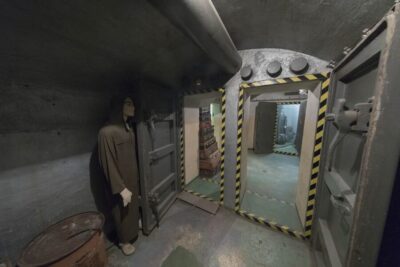
Communism History and Nuclear Bunker Guided Tour
Read our review →
Prague Communism History and Nuclear Bunker Tour
Read our review →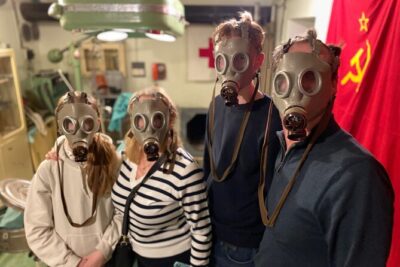
Communism & Nuclear Bunker Tour + 70s Canteen Lunch (own expense)
Read our review →
Communism and Bunker Tour with 70s Canteen Lunch
Read our review →
Second World War & Communism (Tip-based 3 hour tour)
Read our review →
Skip the Line: 10-Z Bunker Entrance Ticket in Brno
Read our review →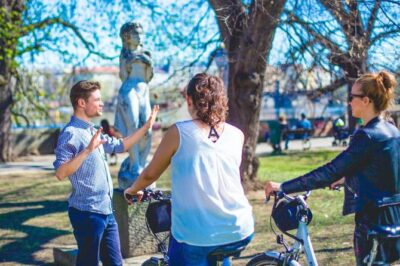
Browse the lists this tour appears in