
REVIEW · COMMUNISM HISTORY TOURS
WWII and Communism History in Prague’s Old Town Private Tour
Prague’s calm streets conceal a violent past. This private walking tour connects the German occupation, the Prague Uprising, the Communist takeover, and the Velvet Revolution in one clear route through the city center. I like the way it links famous places, such as the Astronomical Clock and Wenceslas Square, to events that changed modern Czech life. I also like the choice between a focused two-hour walk and a four-hour version with the Museum of Communism. The main drawback is that the shorter tour covers a lot of serious history quickly, so you will need to stay focused.
The private format is especially useful if you want to ask questions or adjust the pace. Guides speak English, French, German, Italian, Polish, Russian, Spanish, or Czech, and recent guide feedback praised Sofija and Markéta for making difficult subjects clear and engaging. At $104 per person, the price is easier to justify for a small private group than for a large party, but it is worth checking the group size before booking.
In This Review
- Key points to know before you book
- Why this Prague history tour works
- Josefov and the fate of Prague’s Jewish community
- The Old Town Square and the May 1945 Uprising
- Operation Anthropoid and the occupation of Czechoslovakia
- Petschek Palace and the machinery of fear
- Wenceslas Square and the Velvet Revolution
- What you gain from the four-hour Museum of Communism option
- Guide quality, language, and private pacing
- Price, timing, and who gets the best value
- Is this WWII and Communism tour worth booking?
- FAQ
- How long does the tour last?
- What does the two-hour tour include?
- Is the Museum of Communism included?
- What does the Museum of Communism cover?
- Where does the tour meet?
- Is this a private tour?
- What languages are available?
- Is the tour wheelchair accessible?
- Can I cancel the tour?
Key points to know before you book
- Josefov begins the story: See the Maisel and Spanish Synagogues while learning about the deportation of Czech Jews to Theresienstadt.
- The Old Town Square carries wartime scars: The Astronomical Clock and Old Town Hall were damaged during the May 1945 Prague Uprising.
- Operation Anthropoid is part of the wider occupation story: Your guide explains resistance, repression, and the people involved.
- Petschek Palace reveals the darker side of Prague: The former Gestapo headquarters introduces the interrogations and torture faced by Czech resistance members.
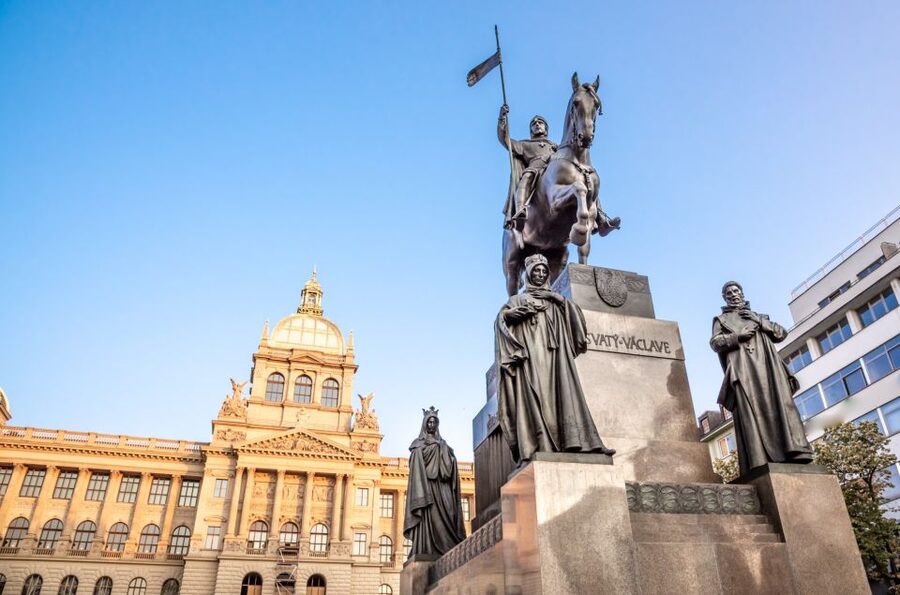
- Wenceslas Square links two dictatorships with a democratic breakthrough: The square was used for Nazi demonstrations and later became a central stage for the 1989 Velvet Revolution.
- The four-hour option adds the Museum of Communism: You get more context on the Cold War, Prague Spring, Soviet invasion, Jan Palach, propaganda, and political trials.
Why this Prague history tour works
I like this tour because it does not treat World War II and Communism as separate schoolbook chapters. In Prague, the two periods are closely connected. The German occupation damaged institutions and lives, the 1945 liberation helped the Communist Party gain support, and the Communist government later shaped how the war was remembered.
A private guide can make those links easier to follow. You are not simply stopping at a plaque, taking a photo, and moving on. The route gives you a political timeline while you walk through places you might otherwise see only as attractive Old Town scenery.
The tour also covers both victims and resistance figures. That balance matters. You hear about the persecution of Czech Jews, the work of the resistance, the Prague Uprising, the Gestapo, Soviet involvement, and the public protests that finally brought Communist rule to an end.
The two-hour option is best if you want an introduction. It is a walking tour through Josefov, the Old Town Square, Petschek Palace, and Wenceslas Square. The four-hour version gives you time for the Museum of Communism, which adds displays and explanations about everyday life and state control.
The subject is not light. You will hear about deportation, torture, executions, censorship, and suicide in protest. I would not choose this as a casual break between cafés, but it is a strong choice if you want to understand how Prague became the city you see today.
More communism history tours in Prague:
- Prague: Communism History and Nuclear Bunker Guided Tour
★ 4.7 · 2,417 reviews - Prague Communism History and Nuclear Bunker Tour
★ 5.0 · 1,742 reviews - Communism & Nuclear Bunker Tour + 70s Canteen Lunch (own expense)
★ 5.0 · 1,036 reviews
Josefov and the fate of Prague’s Jewish community
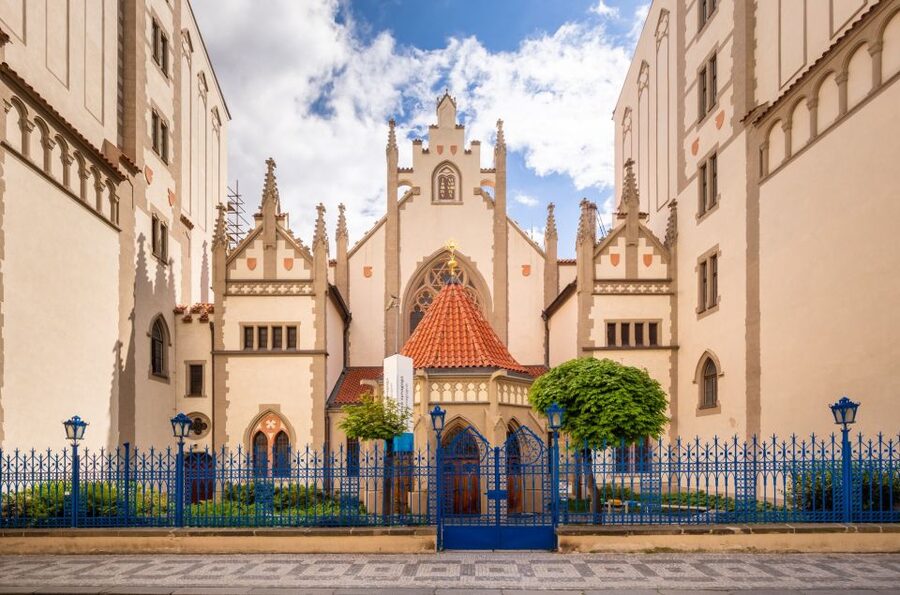
The tour starts in Josefov, one of Europe’s best-preserved Jewish quarters. The first stops include the Maisel Synagogue and the Spanish Synagogue, two important landmarks that frame the opening part of the story.
The key point here is not only the architecture. Your guide explains how Czech Jews were transported to the Theresienstadt concentration camp and how the Nazis planned a museum dedicated to what they called an extinct race. That plan gives the visit a chilling focus. Objects, buildings, and records were meant to be turned into evidence of a destroyed culture.
You should expect this section to be more historical than museum-based. The tour does not list an included entry to the synagogues, so the emphasis is on seeing the buildings from the route and hearing the context from your guide. If you want to visit the interiors, ask when booking whether separate admission and extra time are needed.
This first part is valuable because it places the occupation in a human setting. You are not starting with military dates. You are standing in a neighborhood tied to families, religious life, forced transport, and Nazi racial policy.
The Old Town Square and the May 1945 Uprising

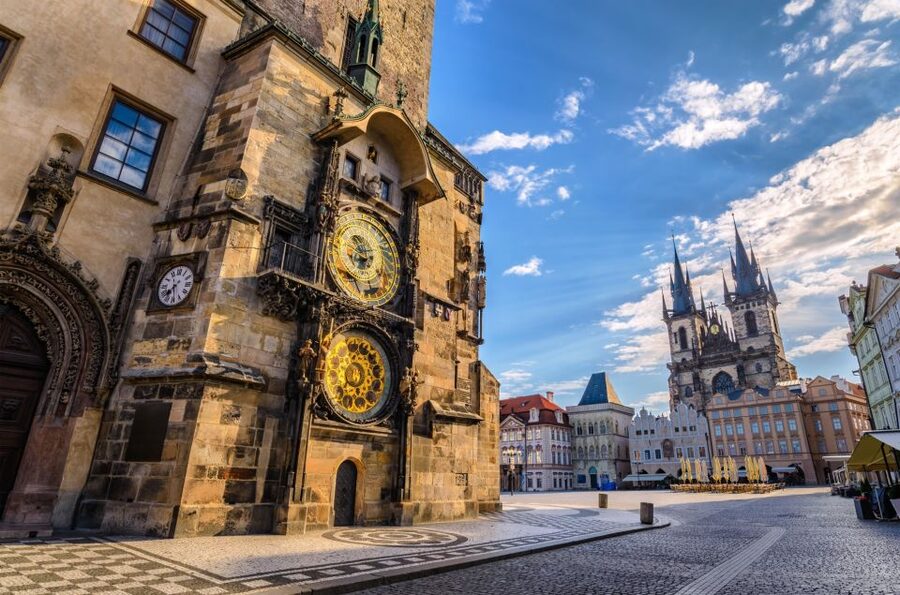
From Josefov, the route continues to the Old Town Square. This is one of Prague’s most photographed spaces, yet the tour asks you to look past the cafés and ornate façades.
The Old Town Hall and its Astronomical Clock suffered heavy damage during the fighting of May 5 to May 9, 1945. Your guide explains the Prague Uprising, when residents fought against German forces near the end of the war.
This stop helps correct a common oversimplification. Prague was not simply waiting for liberation. Local people resisted, and the fighting caused major destruction in the city center. The Old Town Square makes that story easier to picture because the buildings around you were directly tied to the conflict.
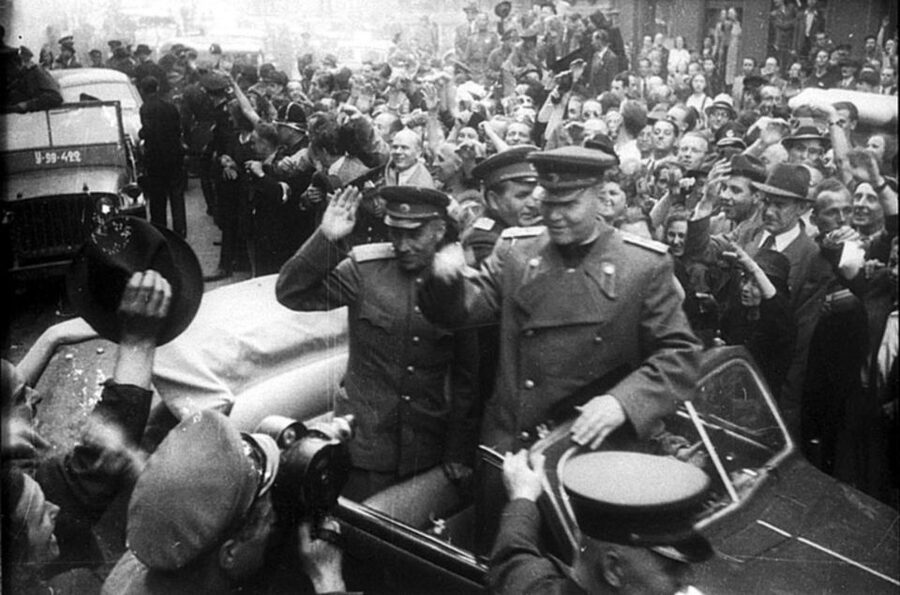
The role of the Red Army also receives attention. Soviet forces helped liberate Prague, but the Communist Party later used that involvement to build public support for communism. That political shift is one of the strongest reasons to take this tour rather than a basic World War II walk. You learn not only what happened, but how the memory and political meaning of those events were later used.
If you enjoy military history, you may want more detailed battle information than a two-hour city walk can provide. The guide’s main purpose is to connect the uprising to later Communist rule, not to recreate every movement of the fighting.
Operation Anthropoid and the occupation of Czechoslovakia
Operation Anthropoid is one of the tour’s central subjects. The guide places it within the wider story of resistance during the German occupation of Czechoslovakia.
The supplied details do not promise a separate interior visit or a dedicated memorial stop for every part of the operation. Instead, you learn about the operation as part of the occupation, resistance, and liberation narrative. This approach can work well if you want a broad understanding of the period rather than a single-event tour.
Ask questions here. The private format gives you room to request more detail about the people involved, the resistance network, or the consequences of the operation. The guide’s job is not only to recite names. It is to explain what resistance meant in a country under occupation and how German repression affected ordinary people.
This is also where the guide’s language ability matters. The tour is offered in eight languages, and the experience depends heavily on clear explanation of political and military terms. The recent praise for Sofija and Markéta suggests that the guide quality can be a major part of the experience. Sofija was praised for handling questions, adding small anecdotes, and explaining political events in an engaging way. Markéta was described as entertaining and highly informed.
More World War II tours in Prague:
- Prague: WWII Guided Tour & The Crypt of Operation Anthropoid
★ 4.7 · 1,030 reviews - WWII in Prague Tour & The Crypt of Operation Anthropoid
★ 5.0 · 817 reviews - Small-Group World War 2 & Operation Anthropoid Tour in Prague
★ 5.0 · 231 reviews - Prague: World War 2 and Operation Anthropoid Walking Tour
★ 4.8 · 193 reviews
Petschek Palace and the machinery of fear
Petschek Palace changes the mood of the walk. The building was the former headquarters of the Gestapo, and a memorial plaque on the corner honors Czech resistance members.
Here, your guide discusses interrogations and torture. It is a short stop in physical terms, but an important one in the emotional structure of the tour. You move from public resistance in the Old Town Square to the private suffering caused by occupation authorities.
The palace shows how repression worked beyond the battlefield. Resistance did not only involve dramatic acts. It also meant arrest, questioning, fear, and the risk of execution. A guide can help you understand the human cost without turning the stop into a list of grim facts.
This part may be difficult for younger children or anyone who prefers lighter sightseeing. The experience is designed for people who want a serious account of the period. You should also remember that this is a city walking tour, not a formal memorial museum visit, so the amount of detail can depend on your guide and your questions.
Wenceslas Square and the Velvet Revolution
The standard walk ends at Wenceslas Square, a long public space that has witnessed both dictatorship and democratic protest.
The Nazis used the square for mass demonstrations. Decades later, huge public demonstrations gathered here during the 1989 Velvet Revolution. The contrast is powerful. The same urban space could be used by an authoritarian government to display strength, then by citizens to demand political change.
The guide explains the events and personalities of the Velvet Revolution, helping you see why Wenceslas Square is more than a shopping and transit center. It is a place where public opinion became visible and where the Communist government faced mass opposition.
I find this a strong ending because it brings the tour into living memory. World War II can feel distant, but 1989 is recent enough that many people remember it directly or heard family stories about it. The square connects the Nazi occupation, the Communist period, and the return of democratic politics.
The tour does not promise a full political history of the revolution. You will get a focused explanation at an important location. If modern Czech politics interests you, use the private setting to ask about the people, protests, and events that shaped the transition.
What you gain from the four-hour Museum of Communism option
The extended option adds the Museum of Communism. This is the better choice if you want more than a quick overview of life under the Communist regime.
The museum covers four decades of Communist rule, including the Cold War, the Prague Spring, the Soviet invasion of 1968, Jan Palach’s suicide, and the Velvet Revolution. It also addresses propaganda, censorship, political trials, executions, and the workings of a totalitarian state.
The extra two hours make a real difference. On the short walk, your guide has to keep moving through several major periods. At the museum, you have time to sit with the evidence and see how political control affected public life.
The section on the Prague Spring and the 1968 Soviet invasion is especially important. It shows that Communist Czechoslovakia was not politically frozen for the entire period. Reform efforts created hope, and the invasion crushed that hope while leaving a lasting mark on the country.
Jan Palach’s death is another key subject. The museum helps place his protest within the larger struggle against Soviet-backed rule. Your guide can connect his story to the demonstrations and public reaction that followed.
The museum ticket is included only with the four-hour option. If you choose the two-hour tour, admission is not included, and you would need to handle that separately. Read the option carefully when booking, since the number of attractions changes with the duration.
Guide quality, language, and private pacing

This tour depends on the guide more than a simple sightseeing route does. Names such as Sofija and Markéta have received particularly strong praise. Sofija was noted for her youth, broad command of Czech history, ability to answer unexpected questions, and use of personal or local anecdotes. Markéta was praised for combining entertainment with serious historical detail.
Those comments point to what you should hope for from the experience: a clear timeline, room for questions, and explanations that connect places to people. The tour is available in English, French, German, Italian, Polish, Russian, Spanish, and Czech.
A private group gives you more control than a large public walk. You can ask for more detail about Operation Anthropoid, the Prague Uprising, the Communist period, or the Velvet Revolution. You can also tell the guide if you need a slower walking pace, although the supplied information does not specify the exact route length or number of participants.
The tour is wheelchair accessible. Since the route moves through central Prague and includes several outdoor stops, you should still check the practical details with the provider if you have specific mobility needs.
Price, timing, and who gets the best value
The price is listed at $104 per person, with a duration of two to four hours. That is a significant cost for a walking tour, but the private format and specialist subject make the value different from a standard group stroll.
I think the price makes the most sense for a couple, family, or small group that wants a focused history lesson without sharing the guide with strangers. For one person, the cost may feel high unless this period is a major reason for your visit.
Choose the two-hour option if you want the main route through Josefov, the Old Town Square, Petschek Palace, and Wenceslas Square. Choose four hours if you want the Museum of Communism and prefer to leave Prague with a fuller understanding of the Communist era.
The tour offers free cancellation up to 24 hours before the start, and you can reserve now and pay later. Starting times vary, so you need to check availability. The meeting point is in front of the World of Franz Kafka at Náměstí Franze Kafky 16/1 in Staré Město.
Check your email the day before. Important tour information is sent then, and central Prague meeting points can be easy to confuse if you are rushing.
Is this WWII and Communism tour worth booking?
Book it if you want Prague’s major sights to make political and human sense. The route covers Jewish persecution, resistance, the 1945 Uprising, Gestapo repression, Soviet influence, Communist rule, and the Velvet Revolution without requiring public transport.
I would choose the four-hour option for a first serious visit to Prague, especially if you have never studied Czechoslovak history. The museum gives the Communist period enough room to breathe, and the private guide lets you ask questions that a large group tour may not have time for.
Choose the two-hour walk if your schedule is tight or you mainly want the city-center landmarks explained. Just know that the subjects are heavy and the pace may be brisk.
The strongest reason to book is the guide-led connection between places. You will not only see the Astronomical Clock, Wenceslas Square, and Josefov. You will understand how occupation, liberation, dictatorship, and public resistance shaped the streets around you.
FAQ
How long does the tour last?
The tour lasts either two or four hours, depending on the option you choose.
What does the two-hour tour include?
The two-hour walking tour covers Josefov, the Old Town Square, Petschek Palace, and Wenceslas Square, with a focus on World War II and the Communist era.
Is the Museum of Communism included?
Museum admission is included only with the four-hour option. It is not included with the basic two-hour tour.
What does the Museum of Communism cover?
The museum covers four decades of Communist rule, including the Cold War, Prague Spring, the 1968 Soviet invasion, Jan Palach, the Velvet Revolution, propaganda, censorship, political trials, and executions.
Where does the tour meet?
You meet the guide in front of the World of Franz Kafka at Náměstí Franze Kafky 16/1, 110 00 Staré Město, Czechia.
Is this a private tour?
Yes. The experience is offered for a private group.
What languages are available?
The live guide is available in English, French, German, Italian, Polish, Russian, Spanish, and Czech.
Is the tour wheelchair accessible?
Yes, the activity is listed as wheelchair accessible.
Can I cancel the tour?
You can cancel up to 24 hours in advance for a full refund. You can also reserve now and pay later.
More History Tours in Prague
- Prague: Oldtown, Medieval Underground & Dungeon History Tour
★ 4.2 · 8,244 reviews - Prague Old Town, Medieval Underground and Dungeon Historical Tour
★ 4.5 · 3,227 reviews - Prague: Historic City Center Bus Tour with Top Sights
★ 4.4 · 2,360 reviews - Prague Historic Pub Tour with Drinks Included
★ 5.0 · 2,084 reviews
Newest listings in Prague
- World War II 4WD Tour from Prague with Lunch★ 4.4 · 3 reviews
- Prague: Historical Walking Tour with Focus on World War 2★ 4.3 · 12 reviews
- Wroclaw: Giant Mountains & Valley of Palaces Day Tour★ 4.8 · 36 reviews
- Walking tour of Prague in french: Old Town & Charles Bridge★ 4.9 · 62 reviews
- Vltava River Cruise and Private Tour of Prague’ Old Town★ 5.0 · 1 review
- Walking tour of Prague in French : Nové Město★ 4.9 · 16 reviews
- Ultimate Unlimited Beer Pong with Czech Beer★ 4.6 · 5 reviews
- Unique salt cave in Prague★ 4.9 · 10 reviews
Communism History Tours, compared.
Communism History and Nuclear Bunker Guided Tour
Read our review →
Prague Communism History and Nuclear Bunker Tour
Read our review →
Communism & Nuclear Bunker Tour + 70s Canteen Lunch (own expense)
Read our review →
Communism and Bunker Tour with 70s Canteen Lunch
Read our review →
Second World War & Communism (Tip-based 3 hour tour)
Read our review →
Skip the Line: 10-Z Bunker Entrance Ticket in Brno
Read our review →Browse the lists this tour appears in