

REVIEW · COMMUNISM HISTORY TOURS
Prague Communism and World War II Walking Tour
Prague’s streets still carry 20th-century scars. This two-hour walk links the Nazi occupation, Soviet control, Prague Spring, and the Velvet Revolution to places you can see today. I like the clear chronological story and the chance to hear local memories from guides such as Tomas and Martin. The main drawback is that the tour gives only limited attention to the Jewish Quarter and may not satisfy you if you want detailed WWII sites such as hideouts and tunnels.
I also like the compact central route, which begins beside the Old Town Bridge Tower and finishes in Prague city centre. At $30.12, it is fair value if you want context, conversation, and orientation rather than museum admission. Expect plenty of walking, little time indoors, and a history lesson shaped by the guide’s interests and experience.
In This Review
- Key points to know before you book
- Why this tour adds something to a first day in Prague
- Starting beside the Old Town Bridge Tower
- New Town and the road from democracy to dictatorship
- Wenceslas Square and the shocks of 1968
- The guides make or break the experience
- What the tour does not cover in depth
- Is $30.12 a good price?
- Who should take this Prague history walk?
- Practical advice for making the most of it
- Should you book the Prague Communism and World War II Walking Tour?
- FAQ
- Where does the tour start?
- Where does the tour end?
- What time does the tour begin?
- How long does the tour last?
- What language is the tour offered in?
- What does the price include?
- What historical periods does the tour cover?
- Does the tour visit Prague Castle?
- Is the tour suitable for children?
- What is the cancellation policy?
Key points to know before you book
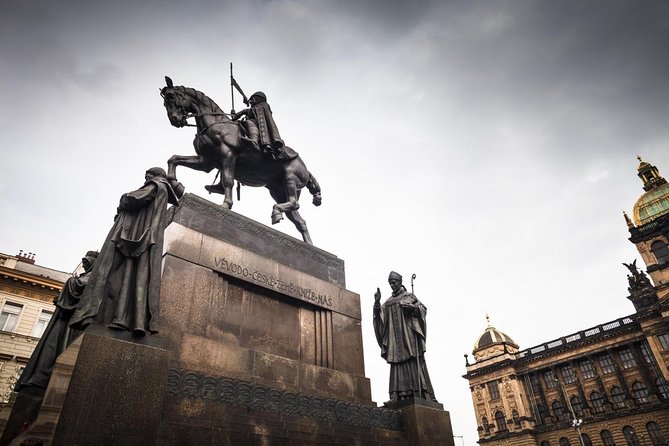
- The route connects three major areas: Křižovnické náměstí, New Town, and Wenceslas Square.
- The focus is 20th-century Prague: Nazi rule, the postwar Soviet takeover, communism, Prague Spring, and 1989.
- Personal stories are a major strength: Some guides have shared family memories of communist life, while one guide had taken part in the Velvet Revolution as a student.
- You get an excellent city orientation: The walk begins with Prague Castle views and moves through central streets often missed on standard sightseeing walks.
- The group can have up to 25 people: Smaller departures may become intimate, and some outings have operated with only two guests.
- Comfortable shoes matter: The route covers a good stretch of central Prague and can run longer than two hours when questions and conversation take over.
Why this tour adds something to a first day in Prague
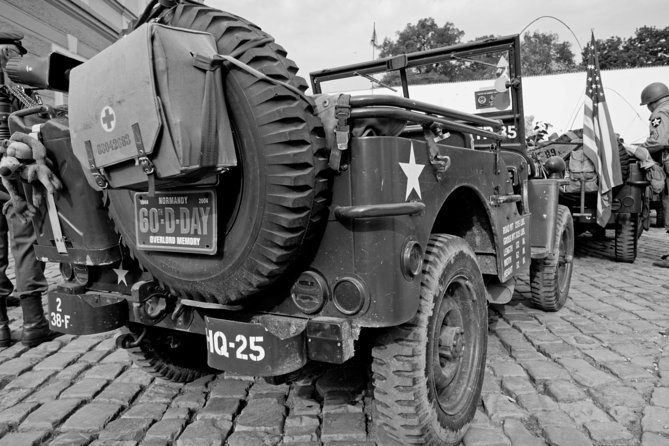
Prague is easy to admire and surprisingly easy to misunderstand. Its Gothic towers, Baroque churches, and castle views can make the city seem untouched by the last century. This walk shifts your attention from old stone to modern memory.
You will learn how Czechs moved from the Austrian monarchy to an independent Czechoslovak state, then endured Nazi occupation, postwar Soviet influence, communist dictatorship, and the return of democracy. The guide’s job is not simply to recite dates. The best part is seeing how those events affected ordinary streets, public buildings, students, families, and daily routines.
I would use this tour early in a Prague visit. It helps you understand why Wenceslas Square matters far beyond shopping, why the National Museum carries political scars, and why a quiet street can hold the memory of protest or repression.
The experience is offered in English and includes a professional guide. Food, drinks, and attraction tickets are not included, so this is a walking and storytelling experience rather than a paid-entry sightseeing tour.
More communism history tours in Prague:
- Prague: Communism History and Nuclear Bunker Guided Tour
★ 4.7 · 2,417 reviews - Prague Communism History and Nuclear Bunker Tour
★ 5.0 · 1,742 reviews - Communism & Nuclear Bunker Tour + 70s Canteen Lunch (own expense)
★ 5.0 · 1,036 reviews
Starting beside the Old Town Bridge Tower
The meeting point is Křižovnické náměstí, in the Old Town near the threshold of the Old Town Bridge Tower. This is a convenient central location, close to public transportation and one of Prague’s most recognizable sights.
The opening view looks across the river toward Prague Castle, the seat of Czech rulers and presidents. That view gives the guide a useful way to explain the power held by the castle, then contrast it with a very different symbol of power: the enormous statue of Joseph Stalin that once stood on Letná Hill.
The Stalin statue was the largest of its kind in the world. It is gone now, but its memory helps explain the scale of Soviet influence and the political imagery imposed on postwar Prague. This is one of the tour’s better early details because it turns a familiar skyline into a lesson about ideology.
The first portion lasts about 15 minutes. Do not expect a long stop or a castle visit. You are getting an introduction, a view, and the first pieces of the larger story before moving into the city.
New Town and the road from democracy to dictatorship
The New Town section covers roughly 30 minutes and supplies the political background needed for the later stops. You will hear how the Czech nation moved out of the Austrian monarchy and helped form an independent Czechoslovak democratic state.
The guide also explains why Czechoslovakia was considered one of the strongest economies of its time and, after 1933, the last functioning democracy in Eastern and Central Europe. That context matters. It shows that the communist takeover did not replace a weak or empty political system. It destroyed a working democratic one.
The story then turns to World War II and the Nazi Protectorate of Bohemia and Moravia. You will learn about the pressure and suffering of occupation, along with Operation Anthropoid, the successful assassination of senior Nazi leader Reinhard Heydrich.
This is an important subject, but you should set your expectations carefully. The advertised tour discusses Operation Anthropoid as part of a wider historical walk. It is not presented as a dedicated visit to the parachutists’ hideouts, tunnels, or the Church of St. Cyril and St. Methodius. If those places are your main reason for visiting Prague, choose a specialized WWII tour instead.
The New Town section also introduces the communist seizure of power and the methods used to turn a democratic country into a dictatorship. The best guides connect the political story to ordinary life, explaining how the Soviet Union shaped the country and how the value placed on human life changed under repression.
A number of departures have benefited from guides who add personal or family memories. Tomas, for example, has been praised for combining political history with stories of growing up in Prague during the communist period. Martin has also shared memories of life behind the Iron Curtain, including childhood atomic drills. These details can make abstract terms such as Soviet influence and communist control feel real.
Wenceslas Square and the shocks of 1968
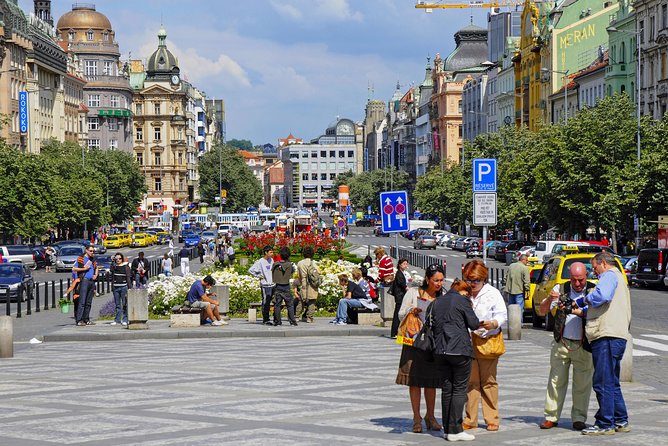
The longest part of the walk, about one hour, centers on Wenceslas Square. This is where the tour’s political story becomes especially visual.
You will hear about the excitement of the Prague Spring, the reform movement that raised hopes for a freer form of socialism, and the Soviet-led invasion of 1968. Soviet tanks entered Prague, and the National Museum on Wenceslas Square was hit by gunfire. The building still gives you a physical reference point for an event that can otherwise feel distant.
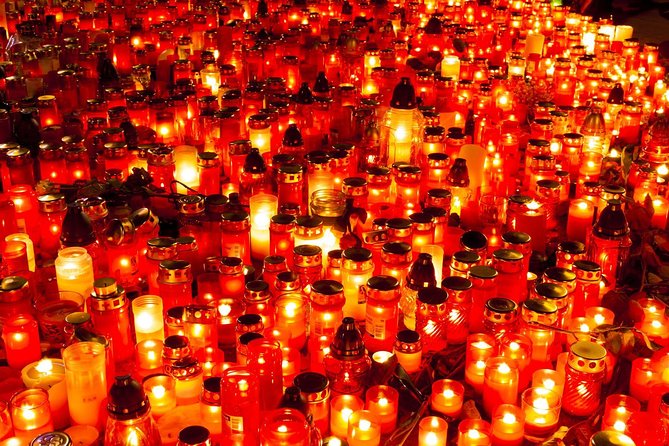
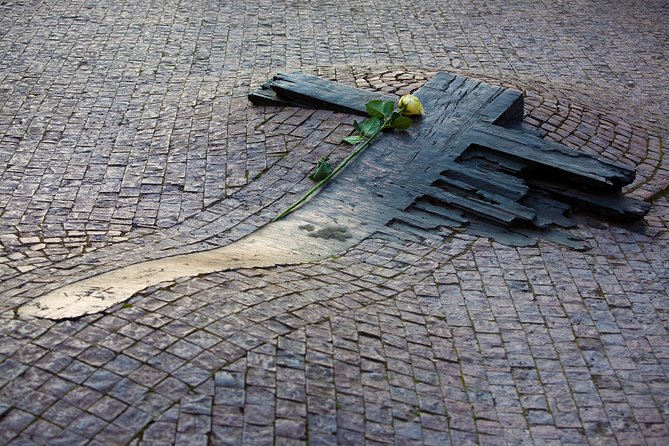
The guide then discusses Jan Palach and Jan Zajíc, young students who set themselves on fire in 1969 in protest against the occupation and the loss of hope after the Prague Spring. This is difficult material, and the guide should handle it with care. The square is not just a grand urban space here. It becomes a place of grief, protest, and national memory.
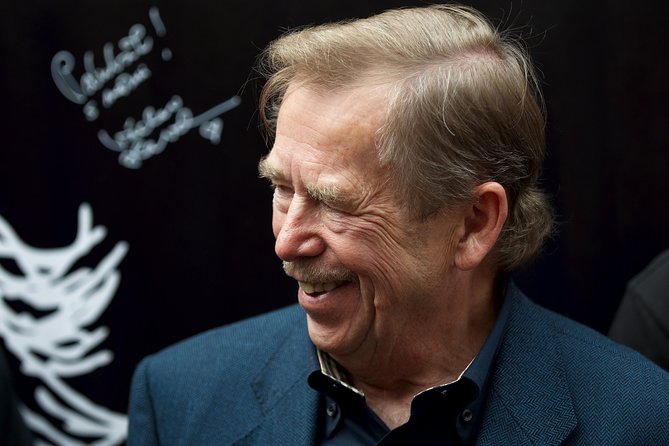
The walk continues through the 1970s and 1980s, explaining the political pressure and social conditions that helped shape the long road to the Velvet Revolution. You will hear about Václav Havel, student activists, police violence, and the clashes on Národní třída in November 1989.
The Velvet Revolution is one of the tour’s strongest subjects. One guide had been a student demonstrator during the events of 1989, giving the story a first-hand perspective that a textbook cannot provide. That kind of personal account is a major reason to choose a live walking tour instead of reading a guidebook in your hotel room.
The final section also reaches beyond the fall of communism. Guides may discuss the humor, confusion, and odd stories of newly gained freedom. This lighter material is useful. It shows that political change did not instantly make life simple. A society had to adjust after more than 40 years of communist rule.
More World War II tours in Prague:
- Prague: WWII Guided Tour & The Crypt of Operation Anthropoid
★ 4.7 · 1,030 reviews - WWII in Prague Tour & The Crypt of Operation Anthropoid
★ 5.0 · 817 reviews - Small-Group World War 2 & Operation Anthropoid Tour in Prague
★ 5.0 · 231 reviews - Prague: World War 2 and Operation Anthropoid Walking Tour
★ 4.8 · 193 reviews
The guides make or break the experience
The operator uses several guides, so the tone will not be identical every morning. Tomas, Martin, Dominick, Maria, and others have received praise for clear explanations, strong English, and an easy willingness to answer questions.
That variety can work in your favor. Several guides have extended the walk beyond the planned two hours when the group was small and interested. One outing lasted more than three hours because the guide had time and the conversation was flowing. Another small departure became almost a private lesson.
You should not count on a private tour or a longer route, though. The published group limit is 25 people, and the official duration is about two hours. Treat extra time as a pleasant possibility, not part of the promise.
The personal element is especially valuable for the communist period. A local guide can explain what schoolchildren were taught, how families experienced official ideology, and how daily life felt under Soviet influence. Some guides also offer suggestions for food, beer, and other things to do after the walk.
At the same time, a guide’s style shapes the balance between facts and conversation. If you want a tightly scripted lecture with every major date and building included, the experience may feel loose. If you enjoy asking questions and following a story through local streets, that flexibility is a strength.
What the tour does not cover in depth
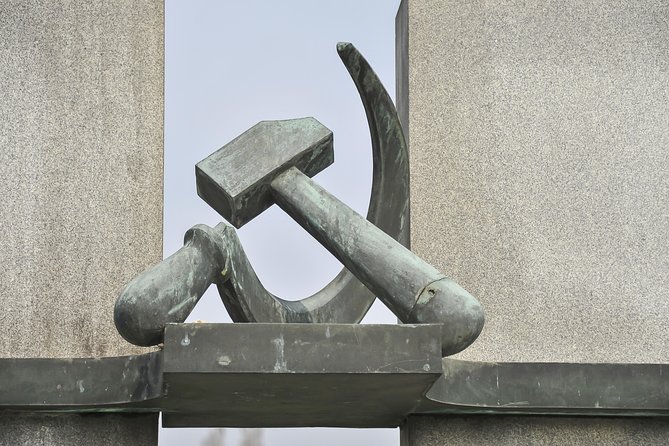
The most important limitation is its WWII coverage. The tour includes the Nazi Protectorate and Operation Anthropoid, but it is not a full account of the Holocaust, the Jewish Quarter, or wartime resistance sites.
If your main interest is Jewish Prague, you may find the pass through the Jewish Quarter too brief. The walk is designed around the Nazi and communist periods as part of a larger 20th-century story, not around Jewish history alone. Plan a separate visit to the Jewish Museum sites if that subject is central to your trip.
The tour also does not include museum admission. The Museum of Communism is a useful follow-up, especially after hearing the political timeline on the walk, but its ticket is not part of this experience.
Another point is physical effort. This is a genuine city walk, not a short stroll between monuments. One description calls the route manageable but emphasizes that it covers a broad stretch of Prague. Wear comfortable shoes and allow room in your morning for a tour that may run over.
Is $30.12 a good price?
At $30.12 per person, the value depends on what you want from a guided walk. You are not paying for entry to a castle, museum, or memorial. You are paying for a local English-speaking guide who interprets the streets and links events that are otherwise scattered across the city.
That is a reasonable price for a focused two-hour history lesson, especially if you are new to Prague. The value improves when the group is small, the guide welcomes questions, or personal stories add depth. A longer conversation over coffee or a beer has even happened on an especially relaxed private departure, though you should not expect that every time.
The value drops if you already know the political history well and want access to specific interiors or wartime sites. In that case, a museum or specialist tour may give you more detail for your money.
The tour is generally booked about 28 days ahead, which suggests you should reserve early if the 10:00 a.m. start fits your plans. Free cancellation is available if you cancel at least 24 hours before the start time. Cancellations or changes made inside that window are not refunded.
Who should take this Prague history walk?
I would recommend it most strongly to:
- First-time visitors who want a useful orientation to central Prague.
- History-focused visitors interested in Nazism, communism, the Cold War, and the Velvet Revolution.
- People who value local voices, especially personal memories of life under communism.
- Couples and small groups who enjoy questions and conversation.
- Visitors with one free morning who want more than a standard castle-and-bridge introduction.
I would be more cautious if you want a detailed Jewish Quarter tour, a dedicated Operation Anthropoid route, or a museum-based experience. The tour gives you a broad political framework, not a complete account of every wartime subject.
Children can participate when accompanied by an adult, but the material includes occupation, dictatorship, violence, death, and suicide. Parents should decide if that subject matter suits their child.
Practical advice for making the most of it
Arrive at Křižovnické náměstí ready to walk at 10:00 a.m. The meeting point is in central Prague, near public transportation, but the square can be busy, so allow enough time to locate the guide beside the Old Town Bridge Tower.
Wear comfortable shoes. Bring water if you need it, since food and drinks are not included. Keep your schedule flexible after the official end time, since a guide may spend longer on questions when the group is small.
Ask about daily life, not just political leaders. Questions about school, family routines, censorship, military service, and the transition after 1989 can bring out the most useful local detail.
I would also pair the walk with the Museum of Communism or a dedicated Jewish history visit. The walk gives you the sequence of events and the city setting. A museum can then fill in objects, photographs, documents, and personal accounts.
Should you book the Prague Communism and World War II Walking Tour?
Book it if you want a broad, human explanation of modern Prague and enjoy learning outdoors. The route gives you castle views, New Town streets, Wenceslas Square, political landmarks, and a clear path from democracy to occupation, dictatorship, protest, and freedom.
Skip it if you need a specialist WWII tour or expect extensive Jewish Quarter coverage. For most history-minded visitors, though, $30.12 is a sensible price for a focused introduction, especially when you get a guide such as Tomas or Martin who can add local memories to the dates and events.
FAQ
Where does the tour start?
It starts at Křižovnické náměstí in central Prague, beside the Old Town Bridge Tower.
Where does the tour end?
The published end point is Prague city centre.
What time does the tour begin?
The start time is 10:00 a.m.
How long does the tour last?
The planned duration is approximately two hours, although some departures have lasted longer when the group had many questions or the guide had time to continue.
What language is the tour offered in?
The tour is offered in English.
What does the price include?
The price includes a professional guide. Food, drinks, and admission tickets are not included.
What historical periods does the tour cover?
It covers the Nazi period and World War II, the postwar communist takeover, Soviet influence, the Prague Spring, the 1968 invasion, the 1970s and 1980s, and the Velvet Revolution of 1989.
Does the tour visit Prague Castle?
The route begins with a panoramic view of Prague Castle, but the experience does not include a Prague Castle admission ticket.
Is the tour suitable for children?
Children may participate, but they must be accompanied by an adult. The tour deals with serious subjects including occupation, political violence, dictatorship, and suicide.
What is the cancellation policy?
You can cancel for a full refund up to 24 hours before the experience start time. Cancellations or changes made less than 24 hours in advance are not accepted for a refund.
More Walking Tours in Prague
- Prague: 3-Hour Walking Tour of Old Town & Prague Castle
★ 4.7 · 5,696 reviews - Prague: Ghost Walking Tour Where Legends Come To Life
★ 4.4 · 5,253 reviews - Prague: Jewish Quarter Walking Tour with Admission Tickets
★ 4.7 · 3,729 reviews - Prague Guided Walking Tour and Cruise with Authentic Czech Lunch
★ 5.0 · 3,627 reviews
Newest listings in Prague
- World War II 4WD Tour from Prague with Lunch★ 4.4 · 3 reviews
- Prague: Historical Walking Tour with Focus on World War 2★ 4.3 · 12 reviews
- WWII and Communism History in Prague’s Old Town Private Tour★ 5.0 · 4 reviews
- Wroclaw: Giant Mountains & Valley of Palaces Day Tour★ 4.8 · 36 reviews
- Walking tour of Prague in French : Nové Město★ 4.9 · 16 reviews
- Walking tour of Prague in french: Old Town & Charles Bridge★ 4.9 · 62 reviews
- Vltava River Cruise and Private Tour of Prague’ Old Town★ 5.0 · 1 review
- Ultimate Unlimited Beer Pong with Czech Beer★ 4.6 · 5 reviews
Communism History Tours, compared.
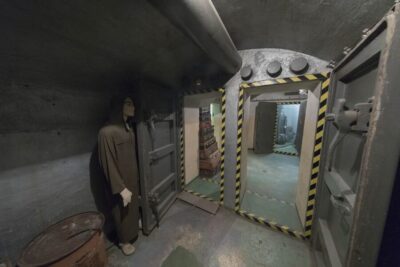
Communism History and Nuclear Bunker Guided Tour
Read our review →
Prague Communism History and Nuclear Bunker Tour
Read our review →
Communism & Nuclear Bunker Tour + 70s Canteen Lunch (own expense)
Read our review →
Communism and Bunker Tour with 70s Canteen Lunch
Read our review →
Second World War & Communism (Tip-based 3 hour tour)
Read our review →
Skip the Line: 10-Z Bunker Entrance Ticket in Brno
Read our review →Browse the lists this tour appears in