
REVIEW · COMMUNISM HISTORY TOURS
Private Prague Cold War Walking Tour
Cold War Prague still speaks clearly. This private three-hour walk links the former Klement Gottwald mausoleum, Soviet memorials, bomb-shelter corridors, and the protest sites that helped end communist rule. I especially like the private format, which gives you room to ask questions, and the way the route connects public monuments with ordinary life under state socialism. The view from Vitkov Hill is another strong point, especially near sunset.
The main catch is the steep 20-minute climb to Vitkov Hill. The tour also covers a lot of ground and relies on a guide to explain places that may look ordinary at first glance. Alzbeta and Vadim have both received warm praise for making the politics personal and engaging, but you should tell the company ahead of time if the hill is not suitable for you.
In This Review
- Key points to know before you book
- Why this private Prague tour feels different
- Starting at the Karlin-Zizkov tunnel
- Climbing Vitkov Hill to the National Monument
- Viewing the Zizkov Television Tower
- Reading the symbols at Letna Hill
- The John Lennon Wall and protest by paint
- Wenceslas Square, from military force to mass protest
- The upside-down King Wenceslas statue
- What the guide adds to the experience
- Timing, transport, and physical demands
- Is $390.37 good value for your group?
- Who should book this Cold War walk?
- Should you book it?
- FAQ
- How long does the private Prague Cold War Walking Tour last?
- What language is the tour offered in?
- Is this a private activity?
- How many people can join the group?
- Does the tour include hotel pickup?
- Are tram tickets included?
- Is the tour suitable for people with mobility issues?
- What is the cancellation policy?
Key points to know before you book
- A private history lesson for your group: Only your party takes part, with a historian guide and time for questions.
- The former Gottwald mausoleum: See the old laboratory and temperature-control rooms used to preserve the communist leader’s embalmed body.
- A real Cold War shelter entrance: Walk through the Karlin-Zizkov pedestrian tunnel and see locked doors leading to maintained nuclear-shelter corridors.
- The best views come with a climb: Vitkov Hill offers broad views toward Prague’s Old Town and the Zizkov Television Tower.
- Wenceslas Square tells three political stories: The square links the Prague Spring of 1968, Soviet military force, and the Velvet Revolution of 1989.
- A useful private-tour price: The listed cost is $390.37 per group, with pricing described for six or fewer people, so larger groups should confirm the exact rate.
Why this private Prague tour feels different
Prague has plenty of walking tours that focus on medieval lanes, castles, and ornate churches. This one turns your attention to the years many visitors find harder to read: communist rule from 1948 to 1989, Soviet control, censorship, state ceremonies, and public resistance.
I like that the route does not treat the Cold War as a string of dates. You see places built to project power, places designed to protect the population from war, and places where people pushed back through graffiti, demonstrations, and quiet acts of defiance.
Because the tour is private, you are not tied to the pace of a large group. You can ask how a monument worked as political theater, stop for a closer look, or spend more time on a subject that matters to you. Guides such as Vadim have been praised for asking questions and drawing students into the discussion instead of simply pointing at buildings.
That personal approach matters here. Much of communist Prague is not immediately obvious. A locked door, an empty platform, or a broad square can seem unremarkable until someone explains what happened there.
More communism history tours in Prague:
- Prague: Communism History and Nuclear Bunker Guided Tour
★ 4.7 · 2,417 reviews - Prague Communism History and Nuclear Bunker Tour
★ 5.0 · 1,742 reviews - Communism & Nuclear Bunker Tour + 70s Canteen Lunch (own expense)
★ 5.0 · 1,036 reviews
Starting at the Karlin-Zizkov tunnel
The first stop is the pedestrian tunnel between Karlin and Zizkov. You walk through it and see locked doors connected to nuclear-bomb-shelter corridors built during the Cold War and still maintained.
You do not enter the shelter corridors, but the doors give you a physical sense of the era’s fears. Cold War planning was not only about speeches and military alliances. It also shaped everyday public works and emergency systems.
This is a short stop, about 10 minutes, but it sets the tone well. You are not beginning with a grand statue or famous square. You are starting with infrastructure, the kind of place people might pass without knowing what lies behind it.
The tunnel is also a good reminder that this is a walking tour with several different kinds of stops. Some are major monuments. Others are small clues that need explanation.
Climbing Vitkov Hill to the National Monument
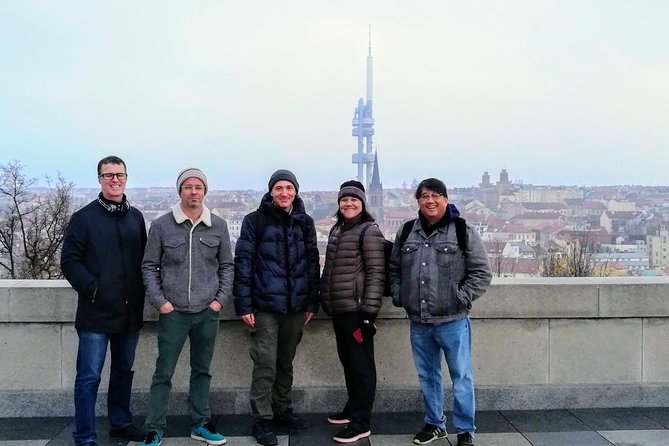
The National Monument at Vitkov is the tour’s most substantial stop. The climb takes about 20 minutes and is steep, so wear firm shoes and be realistic about your energy. The effort pays off with wide views over Prague, including the Old Town and the Zizkov Television Tower.
The monument itself commemorates Czech and Slovak warriors of World War I. Its political meaning became more complicated during the communist period, when parts of the site were used to honor Soviet soldiers and communist leaders.
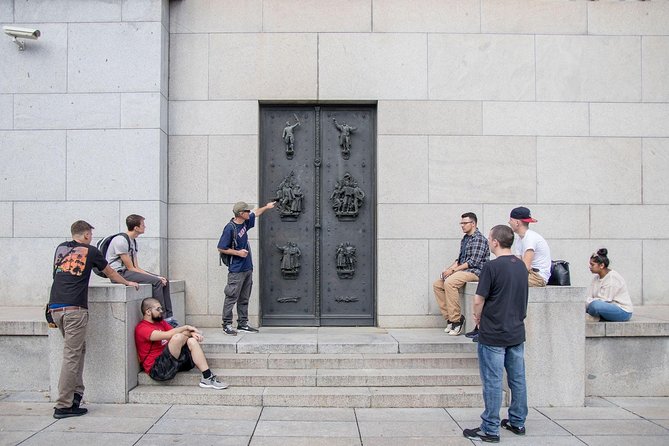
Inside, you see the Hall of the Soviet Soldier, with statues and decorative friezes honoring Red Army troops killed during World War II in Eastern Europe. The imagery is formal and imposing. It was designed to present the Soviet Union as liberator, ally, and source of political legitimacy.
The former mausoleum of Klement Gottwald is the most unusual part. Gottwald served as Czechoslovakia’s president from 1948 to 1953 and was a leading figure in the communist takeover. His embalmed body was once displayed here in the manner of other communist leaders whose public image was carefully managed after death.
You can look into the laboratory and temperature-control center where staff worked to preserve the body. These rooms shift the story from grand ideology to practical, unsettling detail. You see the equipment and working spaces behind the ceremony.
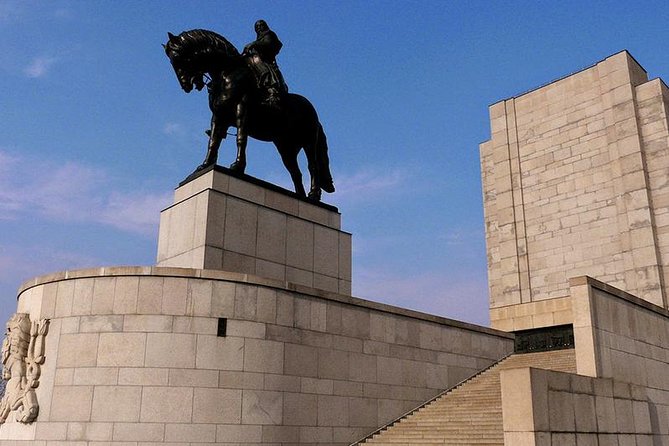
The monument also features the statue of Jan Zizka, described as the third-largest bronze equestrian statue in the world. It is a powerful sight, but the guide’s explanation is what gives the stop its Cold War focus. You learn how older national symbols and newer communist messages shared the same site.
I would plan this part of the tour carefully. The hill is not a minor slope, and the route may be uncomfortable for anyone with mobility issues. The company says it can leave out Vitkov Hill and concentrate on other Cold War locations if you notify them in advance.
Viewing the Zizkov Television Tower
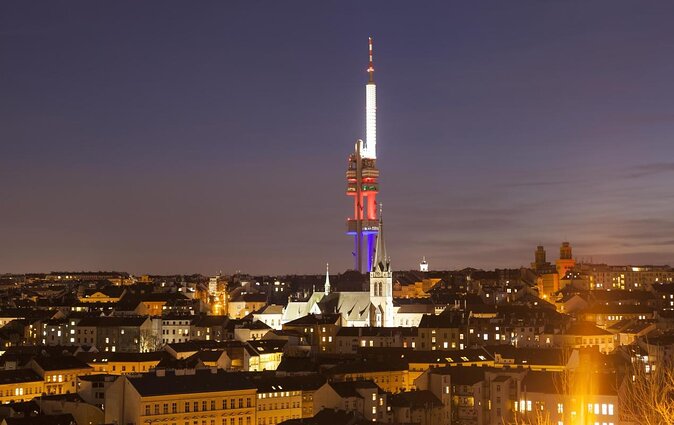
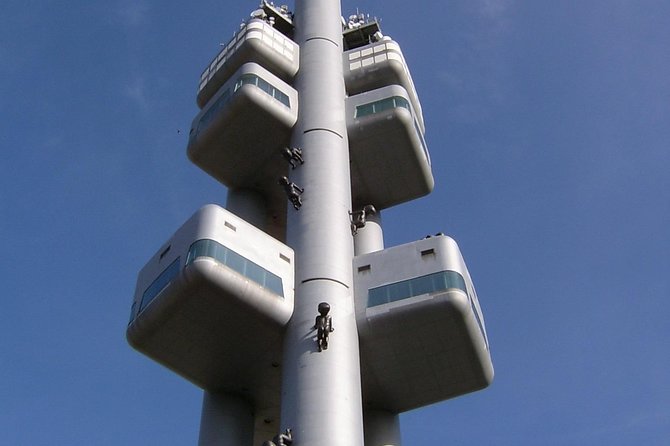
The stop at the Zizkov Television Tower lasts only about five minutes and is mainly a viewing point rather than a tower visit. You get a good look at the Brutalist structure, a design often linked with the stark visual language of the communist era.
The tower is one of Prague’s most recognizable modern buildings. Its shape is very different from the historic center, and that contrast helps you see how the city changed during the 20th century.
Do not expect a long architectural presentation here. This is a brief pause to view the tower and take in the surrounding city. Its value comes from the larger route, where the monument, hill, tower, and political history begin to fit together.
More Walking Tours in Prague:
- Prague: 3-Hour Walking Tour of Old Town & Prague Castle
★ 4.7 · 5,696 reviews - Prague: Ghost Walking Tour Where Legends Come To Life
★ 4.4 · 5,253 reviews - Prague: Jewish Quarter Walking Tour with Admission Tickets
★ 4.7 · 3,729 reviews - Prague Guided Walking Tour and Cruise with Authentic Czech Lunch
★ 5.0 · 3,627 reviews
Reading the symbols at Letna Hill
The tour also includes a look at Letna Hill, where one of the world’s largest statues of Josef Stalin once towered over Prague. The statue is gone, but the site remains useful for understanding how power was displayed in public space.
A huge Stalin monument would have changed the way people encountered the city. It was not a discreet government office or a distant military base. It was a public image placed above the capital, designed to be seen.
The stop helps you think about absence as well as presence. A removed statue can tell you that the official story changed, even if the site itself still carries traces of the old message.
The John Lennon Wall and protest by paint
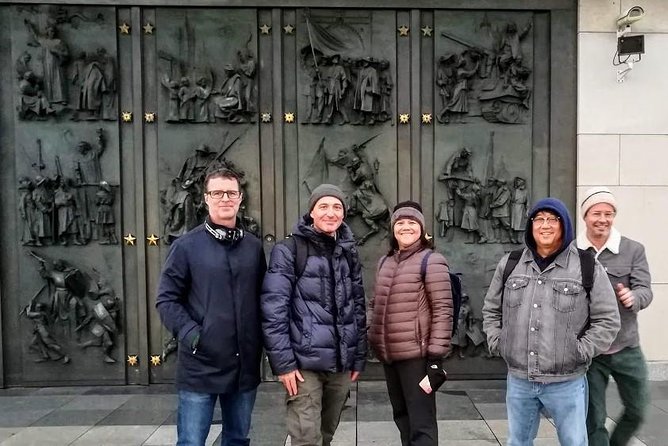
The John Lennon Wall offers a different kind of political story. During the Cold War, people painted messages of hope, peace, and Western-style freedom here. Authorities attempted to suppress the graffiti, but the wall continued to serve as a place for protest and expression.
This stop works because it shows resistance in a form that feels personal. There are no tanks or official ceremonies. There are words, images, and repeated attempts to make them disappear.
The wall is also more symbolic than preserved museum exhibit. Its appearance changes, and the meaning comes from the tradition of using the surface for public expression. Your guide can explain why this site mattered in a city where open criticism of the government could carry serious consequences.
I like this contrast with Vitkov. The National Monument shows power from above. The Lennon Wall shows ordinary people trying to claim a small part of public space.
Wenceslas Square, from military force to mass protest
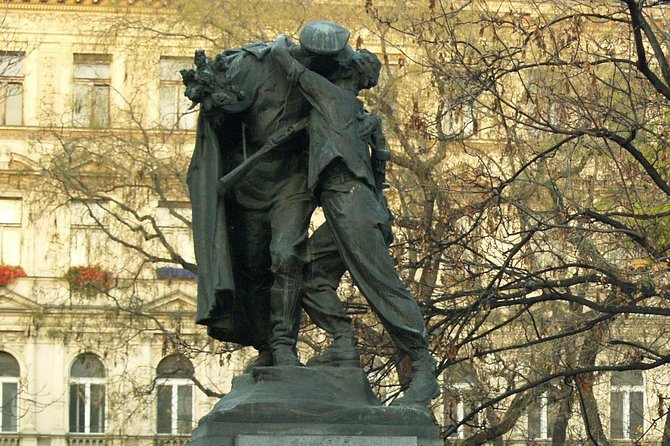
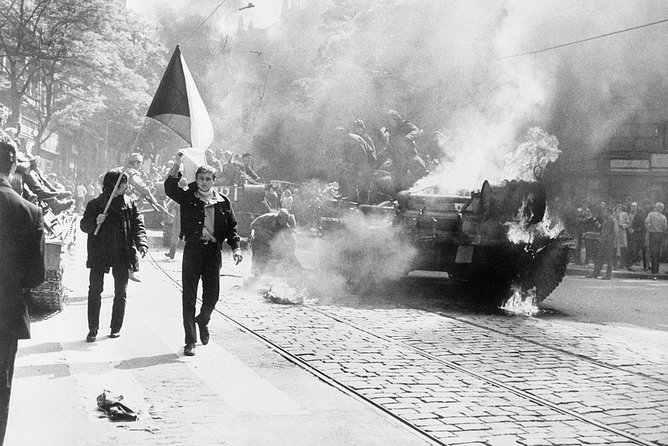
Wenceslas Square is the tour’s central political stage. You walk through the square and consider its long history, including military parades by occupying powers, the Prague Spring, and the Velvet Revolution.
The Prague Spring began in 1968, when an eight-month period of greater freedom of speech and a more independent press took shape. Warsaw Pact tanks entered Prague and crushed the reform movement. Wenceslas Square became one of the places where that conflict was felt most sharply.
The square makes the event easier to picture. It is broad, public, and built for large gatherings. Tanks and demonstrations here were not remote events. They were part of daily city life, visible to people living and working nearby.
You also learn about the demonstrations of 1989. Those protests helped bring down communist rule in what became known as the Velvet Revolution. The story is not only about political leaders. It is also about people gathering in public, demanding change, and discovering that the government could no longer control the streets as it once had.
The square can be busy with modern city life, which is part of its value. You are standing in a working urban space, not a sealed historical site. The guide’s narration helps you connect the present-day setting with the fear, hope, and uncertainty of the earlier events.
The upside-down King Wenceslas statue
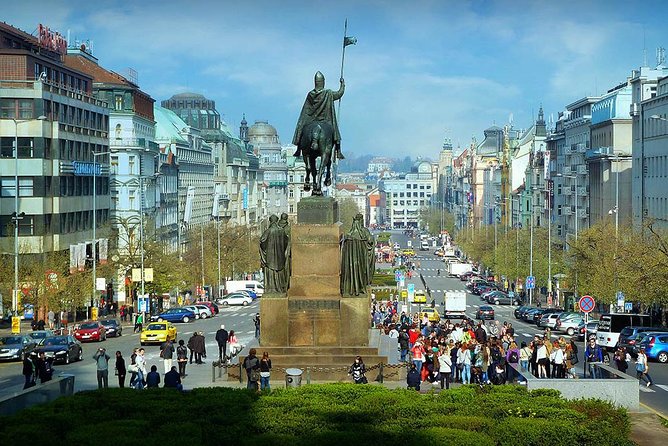
The final listed stop is the upside-down statue of King Wenceslas riding a dead horse. This ironic sculpture adds a contemporary artistic note after the heavier political subjects of the day.
Its placement and design invite you to question traditional national symbols and the way public figures are used. The statue is not a straightforward monument. It plays with expectation and asks you to think about the political mood of Central Europe today.
At about five minutes, this is a compact stop. It works best as a closing thought rather than a major attraction. After hearing about official monuments and public protest, you finish with an artwork that questions the symbols people inherit.
What the guide adds to the experience
The quality of this tour depends heavily on the guide. The most praised guides connected dates and political ideas with family experiences and everyday life. Alzbeta has been singled out for weaving buildings, locations, and personal stories into one clear account.
Vadim has also been praised for his friendly manner and for making students part of the discussion. He is described as someone who asks questions, relates the subject to the places around you, and offers restaurant and bar suggestions at the end.
That is useful in Prague, where the best Cold War sites are not always self-explanatory. A guide who can explain the difference between official propaganda, public memory, and private experience will give you far more than a list of names.
The tour is offered in English and includes a historian guide. Since it is private, you can tell the guide what interests you most, though the exact balance of stops may depend on the day and the agreed route.
Timing, transport, and physical demands
The tour lasts about three hours, with morning and afternoon departure options. Tram tickets are included, which matters because the route links areas that are not all within a short, level walk of one another.
The meeting point is Kostel Svaty Josef at Náměstí Republiky 1077/2 in central Prague. Unless hotel pickup has been arranged, arrive 15 minutes before the start time. Hotel pickup and drop-off are not included by default.
The route is near public transportation, but you should still expect active walking. The hill climb is the main physical challenge, and a moderate fitness level is recommended. If you have mobility concerns, contact the provider before booking so the Vitkov section can be removed.
The tour ends in Prague, but the supplied details do not name a specific final street or attraction. Plan your next activity with some flexibility rather than scheduling a timed entry immediately afterward.
Is $390.37 good value for your group?
The listed price is $390.37 per group, rather than a per-person fee. The tour is described as covering up to 10 people, while the pricing note says it is based on six people or fewer. If your party has seven to 10 people, confirm the exact price before paying.
For six people, the listed amount works out to roughly $65 per person. For a smaller group, the per-person cost rises, but you are paying for a private historian guide, not a seat in a large public walk. That can be worthwhile if you want to ask detailed questions or shape the conversation around family history, political change, architecture, or student study.
Tram tickets are included. Food and drinks are not, so plan to eat before or after the tour. The private format also gives this experience more value for a family, study group, or group of friends than for a solo visitor.
You can cancel for a full refund up to 24 hours before the start time. Changes or cancellations made less than 24 hours in advance are not accepted for a refund.
Who should book this Cold War walk?
I would recommend it most strongly if you already know Prague’s famous old-town sights and want a more serious look at the 20th century. It also suits students, teachers, and anyone trying to understand how Soviet influence shaped daily life in Czechoslovakia.
It is a good match for people who prefer discussion to quick photo stops. The route includes several brief visits, but the guide’s explanation turns them into a connected story.
You may want another tour if your main goal is a relaxed stroll through picturesque streets. This route includes modern architecture, political memorials, a tunnel, and a steep hill. It is thoughtful and sometimes unsettling rather than light entertainment.
Should you book it?
Book this tour if you want Prague’s Cold War past explained by a strong guide, with the freedom to ask questions and move at your group’s pace. The former mausoleum, shelter corridors, Lennon Wall, and Wenceslas Square offer a useful mix of official power and personal resistance.
Skip it if the Vitkov climb would be difficult and you do not want to arrange a modified route. For most history-minded visitors, though, this private walk gives you a clearer sense of why Prague’s public spaces still carry such political weight.
FAQ
How long does the private Prague Cold War Walking Tour last?
The tour lasts approximately three hours.
What language is the tour offered in?
The tour is offered in English.
Is this a private activity?
Yes. Only your group participates in the tour.
How many people can join the group?
The tour information lists groups of up to 10 people. The pricing note describes the price as based on six people or fewer, so confirm the rate for groups larger than six.
Does the tour include hotel pickup?
Pickup may be offered if arranged, but hotel pickup and drop-off are not included by default. Without an arranged pickup, meet at Kostel Svaty Josef, Náměstí Republiky 1077/2, 15 minutes before departure.
Are tram tickets included?
Yes. Tram tickets are included in the tour price.
Is the tour suitable for people with mobility issues?
The tour involves a steep climb of about 20 minutes up Vitkov Hill. If that is not suitable, tell the provider in advance so the hill section can be left out.
What is the cancellation policy?
You can cancel up to 24 hours before the start time for a full refund. Cancellations or changes made less than 24 hours before the start time are not accepted for a refund.
Newest listings in Prague
- World War II 4WD Tour from Prague with Lunch★ 4.4 · 3 reviews
- Prague: Historical Walking Tour with Focus on World War 2★ 4.3 · 12 reviews
- WWII and Communism History in Prague’s Old Town Private Tour★ 5.0 · 4 reviews
- Wroclaw: Giant Mountains & Valley of Palaces Day Tour★ 4.8 · 36 reviews
- Walking tour of Prague in French : Nové Město★ 4.9 · 16 reviews
- Walking tour of Prague in french: Old Town & Charles Bridge★ 4.9 · 62 reviews
- Vltava River Cruise and Private Tour of Prague’ Old Town★ 5.0 · 1 review
- Ultimate Unlimited Beer Pong with Czech Beer★ 4.6 · 5 reviews
Communism History Tours, compared.
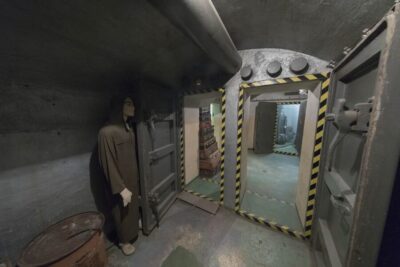
Communism History and Nuclear Bunker Guided Tour
Read our review →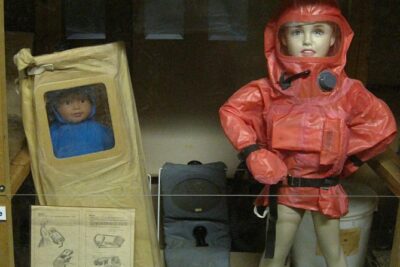
Prague Communism History and Nuclear Bunker Tour
Read our review →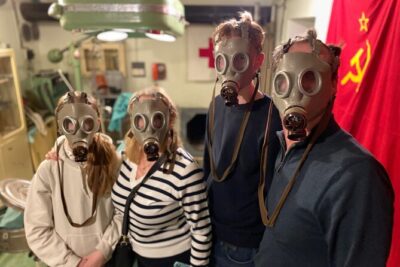
Communism & Nuclear Bunker Tour + 70s Canteen Lunch (own expense)
Read our review →
Communism and Bunker Tour with 70s Canteen Lunch
Read our review →
Second World War & Communism (Tip-based 3 hour tour)
Read our review →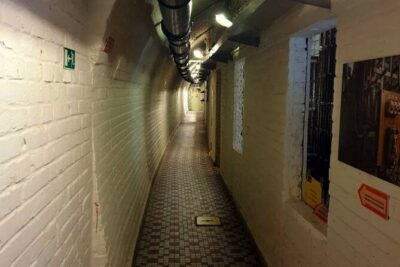
Skip the Line: 10-Z Bunker Entrance Ticket in Brno
Read our review →Browse the lists this tour appears in