
REVIEW · COMMUNISM HISTORY TOURS
Prague Private Tour and Museum of Communism with transfer
Prague remembers Communism in plain sight. This private tour makes that past easier to grasp by pairing the Museum of Communism with key streets and squares tied to the Prague Spring and Velvet Revolution. I like the hotel pickup in a private Mercedes-Benz, and I like having a guide who can connect museum displays with real places outside. The main drawback is the price: at $221.60 per person, it is a splurge, especially for solo visitors.
The four-hour format is useful if you want a focused history lesson without spending a full day on it. I would book it for a first visit, for anyone especially interested in twentieth-century Europe, or for families who want a guide to make difficult events understandable. You should expect a moderate amount of walking and dress for the weather.
In This Review
- Key points to know before booking
- Why this four-hour Prague tour works
- Albertov and the start of the Velvet Revolution
- Wenceslas Square, the National Museum, and the Jalta Hotel
- Narodni Trida and the violence of November 1989
- Inside the Museum of Communism
- Letna Park and the former Stalin monument
- The private Mercedes-Benz and the value of the price
- Walking, weather, and who should book
- Should you book this Prague Communist history tour?
- FAQ
- How long is the Prague Private Tour and Museum of Communism experience?
- Is hotel pickup included?
- Where does the tour end?
- Is transportation private?
- Is Museum of Communism admission included?
- What language is the tour offered in?
- How much walking is involved?
- Does the tour operate in bad weather?
- Can I request certain places or subjects?
Key points to know before booking
- Personal accounts can shape the tour: Guides such as Iva, Hanna, and Pavel have shared family or personal memories of life under Communism.
- The private car saves time: Hotel pickup, transport between scattered sites, and a central drop-off make the half-day easy to manage.
- The Museum of Communism covers daily life: Expect exhibits on school, work, propaganda, censorship, the secret police, show trials, and political labor camps.
- Wenceslas Square carries the biggest political weight: You see the National Museum, preserved bullet holes, the Jalta Hotel, and the setting of the 1989 protests.
- Letna Park adds a fine city view: The former Stalin monument site now has a metronome and a broad outlook over Prague.
- You can shape the private route: Special interests should be listed at booking so the guide can prepare for your group.
Why this four-hour Prague tour works
Prague has enough Communist-era sites to fill a day, but they are spread across the city. This experience handles the awkward parts for you. You are picked up at your hotel or another chosen place in Prague, taken to the museum, then driven and guided through several locations before returning to your hotel or a convenient central spot.
That arrangement matters. You do not have to work out which tram reaches Albertov, how to connect it with Wenceslas Square, or how to fit Letna Park into the same morning. Your guide and driver handle the movement while you focus on the story.
The tour is private, so only your group participates. That gives you room to ask direct questions and request a little more time on subjects that interest you. The route is also described as flexible. If you care most about political repression, daily life, the Velvet Revolution, or related World War II sites, put that in your booking notes.
The strongest part of the experience is likely to be the human explanation. Guides including Iva, Hanna, and Pavel have been praised for connecting the public story with personal experience. Pavel, in particular, has shared stories about his family living under Communist rule from 1948 to 1990. Hanna has brought the perspective of a local educator who lived through decades of political change.
That kind of voice can make a display about rationing, censorship, or secret police surveillance easier to understand. A guide cannot replace your own reading, but a good one can help you notice what matters and explain why a particular square still carries emotional weight.
More communism history tours in Prague:
- Prague: Communism History and Nuclear Bunker Guided Tour
★ 4.7 · 2,417 reviews - Prague Communism History and Nuclear Bunker Tour
★ 5.0 · 1,742 reviews - Communism & Nuclear Bunker Tour + 70s Canteen Lunch (own expense)
★ 5.0 · 1,036 reviews
Albertov and the start of the Velvet Revolution
The first listed stop is Albertov, where peaceful student demonstrations connected with the Velvet Revolution began in 1989. You spend about 10 minutes here, and there is no separate admission fee.
This is a short stop, but it gives the day a clear starting point. The story begins with students and peaceful protest rather than with a museum label. Your guide can explain how a demonstration became part of the wider movement that brought down Communist rule in Czechoslovakia.
Do not expect Albertov to be a long sightseeing stop. Ten minutes is enough for an introduction and perhaps a few questions, but not for an extended walk around the area. Its value is mainly historical context. You are seeing a place connected with the first steps of a political turning point.
If you are more interested in architecture or ordinary neighborhood life, this may feel brief. If you want to understand the sequence of events leading to 1989, it is a useful opening.
Wenceslas Square, the National Museum, and the Jalta Hotel
Wenceslas Square receives about 30 minutes, making it one of the most important outdoor stops. The square began as a horse market and now has hotels, restaurants, shops, clubs, and the large equestrian statue of St. Wenceslas at its upper end.
Its modern role is political. During the Prague Spring in 1968, Soviet armored units clashed with protesters here. Bullet holes from that period remain visible on the walls of the National Museum, preserved during its renovation. The marks are small physical details, but they help you picture how a grand public square became a place of confrontation.
The square was also central to the Velvet Revolution. In November 1989, a rally protesting police brutality helped set off the movement that ended Communist rule. Your guide can place those events on the same broad avenue where people now shop, eat, and catch up with friends.
The Jalta Hotel adds a more secretive layer. The State Security service, known as the StB, monitored foreign diplomats and businesspeople who often stayed there. The detail shows how surveillance could operate in ordinary-looking places, not only behind the walls of a prison or government office.
I like this section because it joins several subjects in one walk: Soviet occupation, public protest, surveillance, national symbols, and the changing use of urban space. You should keep your eyes on the museum walls and listen for the guide’s explanation. Without context, Wenceslas Square can look like just another busy commercial avenue.
There is one practical limitation. The square is a working part of central Prague, not a quiet memorial. Shops, traffic, and pedestrians remain part of the scene. That can make it harder to concentrate, but it also shows how completely the area has returned to daily life.
Narodni Trida and the violence of November 1989
The stop at Narodni Trida lasts about 20 minutes and focuses on the worst police beating associated with the Velvet Revolution. Police formed a narrow cordon and blocked the side streets, leaving people who tried to get out exposed to heavy blows.
This stop gives the 1989 story a human scale. Wenceslas Square shows mass protest and public symbolism. Narodni Trida shows what happened when the authorities tried to crush the movement in the street.
The title attached to the stop refers to hands reaching out of a wall. That image points to the trapped protesters and the violence they faced. Your guide can explain how news of the beating helped fuel public anger and widen support for the demonstrations.
I would pay close attention here if you want to understand why the Velvet Revolution moved so quickly after years of Communist rule. A short visit cannot cover every political detail, but it can clarify the chain of protest, police violence, public reaction, and political change.
As with Wenceslas Square, this is an urban location rather than a formal museum. You are not entering a large memorial complex. The meaning comes from the explanation, the place itself, and the questions you ask.
More Museum Tours in Prague:
- Prague: Museum of Fantastic Illusions Entry Ticket
★ 4.3 · 4,337 reviews - IAM Illusion Art Museum Entry Ticket
★ 4.2 · 1,664 reviews - Prague: Museum of Senses Admission Ticket
★ 4.0 · 1,445 reviews - IAM Illusion Art Museum Prague Fast Pass Ticket
★ 5.0 · 957 reviews
Inside the Museum of Communism
The museum visit lasts about one hour, with admission included and skip-the-line entry provided. That is the central teaching portion of the tour, and it gives structure to what you have seen outside.
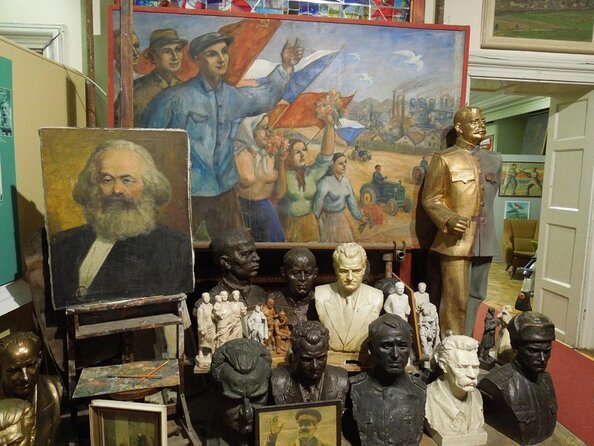
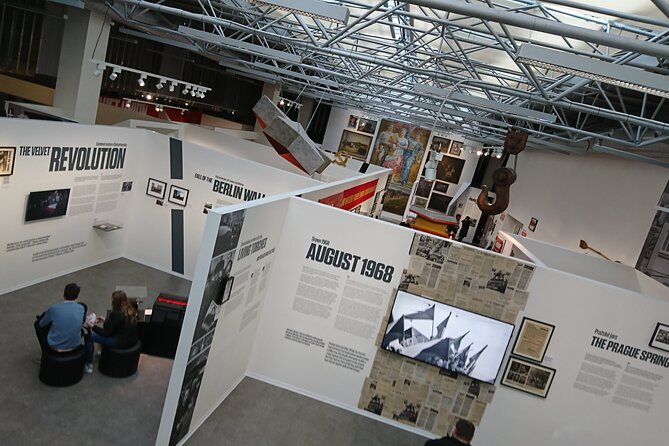
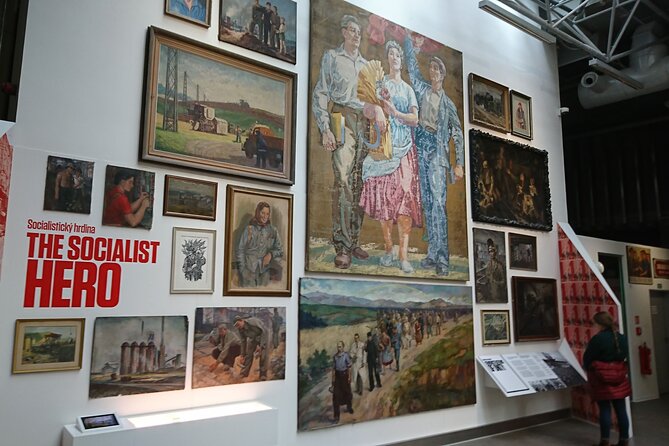
The exhibits focus on Communist-era Czechoslovakia from the February 1948 putsch through the Velvet Revolution in 1989. The museum covers far more than leaders and dates. It looks at ordinary life, politics, economics, education, sports, art, media propaganda, the army, the People’s Militias, the police, the StB secret police, censorship, courts, show trials, and political labor camps during the Stalinist period.
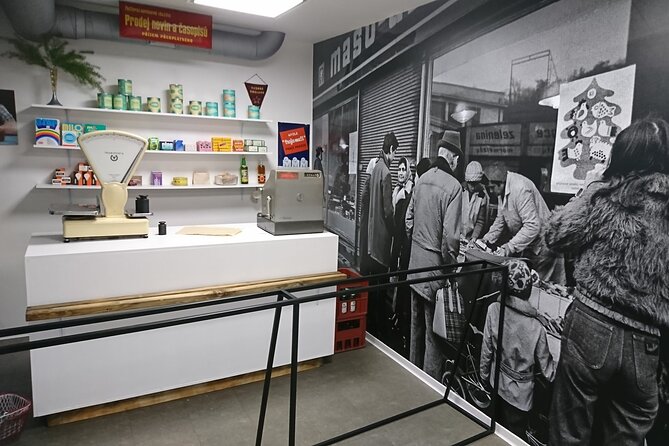
The recreated spaces are especially helpful. An old classroom, factory, and interrogation room let you picture how state control reached into education, work, and policing. These settings can be easier to understand than a row of documents because they show the atmosphere of institutions people encountered in daily life.
I also value the museum’s attention to Socialist Realism and propaganda. A political system does not rely only on arrests and prison camps. It also shapes what people see, read, learn, and are encouraged to admire. The displays help you connect public messaging with the wider system of censorship and control.
One hour is enough for a guided overview, but not enough for every exhibit. That is where a private guide helps. You can ask why one display matters, request more detail about a subject, or relate an exhibit to a site you have just visited.
The guide quality makes a major difference here. A guide with family memories of the period can explain the gap between official slogans and ordinary experience. Iva has been described as someone who lived in the Czech lands during Communism and could add personal detail to the political account. Hanna’s experience as a local educator gives the material an especially clear teaching style. Pavel is noted for family stories covering the period from 1948 to 1990.
Those names are not a guarantee that one particular guide will lead your tour, so I would not book expecting a specific person unless the operator confirms it. Still, you can see why personal memory is a major strength of this experience.
Letna Park and the former Stalin monument
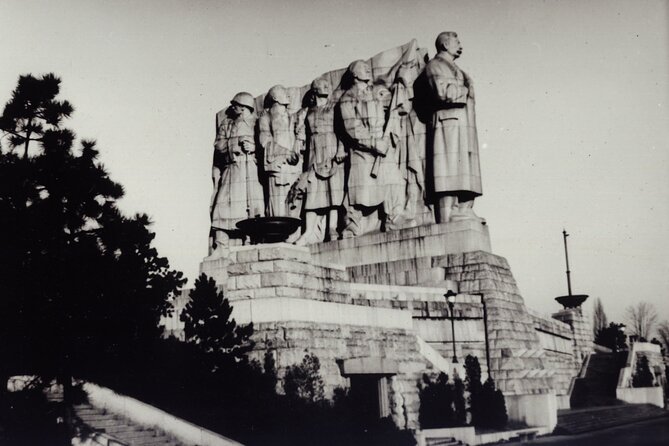
The final listed stop is Letna Park, with about 30 minutes for views and explanation. The location once held a giant statue of Joseph Stalin, placed where it could look over Prague and its people. The monument was later removed after Nikita Khrushchev exposed Stalin’s crimes, and the base is all that remains.
A large metronome now occupies the site. The area has become popular with young people, couples, and skateboarders, which gives the former monument site a striking change of purpose. The tour uses that contrast well: a space built to project political power now serves as a public viewpoint and leisure spot.
You get a wide panorama of Prague from Letna. The view is a welcome change after the museum’s interior and the more serious city-center stops. It also gives you a chance to think about how public spaces can be renamed, repurposed, and reclaimed.
Letna is not only a photo stop. The story of the Stalin monument shows how quickly official symbols can lose their authority. I find that idea useful because it links the physical city with the political changes discussed throughout the morning.
The park is outdoors, so weather matters. The tour operates in all weather conditions, and you should wear suitable clothing and comfortable walking shoes. If rain is likely, bring protection rather than assuming the car will cover every part of the route.
The private Mercedes-Benz and the value of the price
At $221.60 per person, this is not a low-cost way to see Prague. The price includes a professional guide, museum admission, a private Mercedes-Benz with driver, bottled water in the car, hotel pickup, and drop-off.
The value depends heavily on your group size and priorities. For one person, the cost is difficult to justify unless this subject is a major reason for your visit. For a couple, family, or small group, the private format becomes easier to defend because you are paying for transport, time saved, and a guide focused only on your interests.
The car is more than a comfort feature. Albertov, central Prague, the museum, and Letna Park are not one compact walking route. Private transport lets you cover the sites in roughly four hours without spending part of the morning waiting for public transport or working out connections.
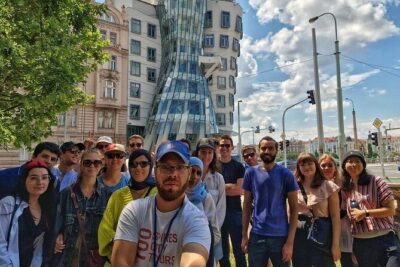
The drop-off is flexible within central Prague. You can return to your hotel, or ask to finish somewhere useful for lunch and further sightseeing. One family used that flexibility to continue exploring rather than going straight back to the hotel. Their guide and driver also added extra stops, including the memorial connected with the assassination of Reinhard Heydrich, the Church of Saints Cyril and Methodius with its crypt, the Dancing Buildings, and the television tower, when time allowed.
Those extras are not promised as part of every tour, so treat them as examples of possible flexibility rather than fixed inclusions. Ask about your priorities when booking. The private setup gives you a better chance of shaping the route than a standard group excursion.
Food and drinks are not included, although bottled water is provided in the car. Plan to eat before or after the tour. The operating hours listed are 8:00 a.m. to 2:00 p.m., Monday through Sunday, during the stated operating period, so this is mainly a morning or early afternoon activity.
Walking, weather, and who should book
You need a reasonable level of walking ability for this tour. The walking is described as moderate, and comfortable shoes are recommended. You will move through public streets, museum spaces, and Letna Park, so this is not a vehicle-only sightseeing ride.
Most people can participate, but the exact comfort level will depend on your group. If someone in your party has trouble walking, mention it when arranging the tour and ask how the route can be adjusted. The supplied details do not promise a specific accessibility arrangement, so it is best to confirm rather than guess.
I would recommend this tour for:
- People with a strong interest in Communist Europe, the Prague Spring, or the Velvet Revolution
- Families who want a private guide and a flexible pace
- First-time visitors who want hotel pickup and an organized route
- Small groups willing to pay more for direct attention
- Anyone who values personal stories alongside political facts
I would choose something else if you want a broad introduction to Prague’s castles, churches, and medieval center. This experience is tightly focused on the Communist period and related events. You will see some city scenery, especially from Letna, but the main purpose is historical understanding.
The tour also works well for visitors who have already seen Old Town Square and Charles Bridge. It takes you away from the usual postcard route and shows the political Prague that shaped the twentieth century.
Should you book this Prague Communist history tour?
Book it if you want more than dates on a museum label. The best reason to choose this experience is the combination of a private guide, personal accounts, an included museum visit, and real locations connected with 1968 and 1989.
The cost is high, but the private Mercedes-Benz, hotel service, flexible drop-off, and time saved make the price easier to understand for a family or small group. I especially like the chance to list your interests in advance and ask for added context, such as World War II sites, if time permits.
Skip it if your budget is tight or if you prefer to explore Prague slowly on foot. You can see Wenceslas Square and Letna Park without a private tour. The extra money here pays for interpretation, transport, and attention, not simply admission tickets.
If you do book, wear good shoes, dress for changing weather, and prepare a few questions about daily life under Communism. That is where this four-hour experience can move from a sightseeing outing to a meaningful lesson about how Prague changed.
FAQ
How long is the Prague Private Tour and Museum of Communism experience?
The tour lasts approximately four hours.
Is hotel pickup included?
Yes. Your private guide can pick you up from your hotel lobby or another chosen location in Prague.
Where does the tour end?
You can be dropped back at your hotel or at another convenient place in central Prague.
Is transportation private?
Yes. Transport is provided in a private Mercedes-Benz vehicle with a driver.
Is Museum of Communism admission included?
Yes. Museum admission is included, along with skip-the-line entry.
What language is the tour offered in?
The tour is offered in English.
How much walking is involved?
A moderate amount of walking is involved. Comfortable walking shoes are recommended.
Does the tour operate in bad weather?
Yes. It operates in all weather conditions, so you should dress appropriately.
Can I request certain places or subjects?
Yes. You should list special interests when booking so the guide can prepare for your private tour.
Newest listings in Prague
- World War II 4WD Tour from Prague with Lunch★ 4.4 · 3 reviews
- Prague: Historical Walking Tour with Focus on World War 2★ 4.3 · 12 reviews
- WWII and Communism History in Prague’s Old Town Private Tour★ 5.0 · 4 reviews
- Wroclaw: Giant Mountains & Valley of Palaces Day Tour★ 4.8 · 36 reviews
- Walking tour of Prague in French : Nové Město★ 4.9 · 16 reviews
- Walking tour of Prague in french: Old Town & Charles Bridge★ 4.9 · 62 reviews
- Vltava River Cruise and Private Tour of Prague’ Old Town★ 5.0 · 1 review
- Ultimate Unlimited Beer Pong with Czech Beer★ 4.6 · 5 reviews
Communism History Tours, compared.
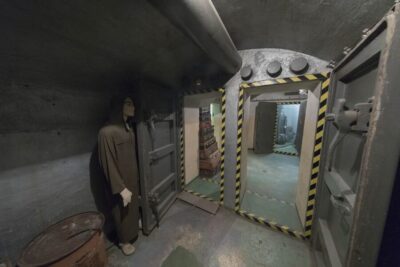
Communism History and Nuclear Bunker Guided Tour
Read our review →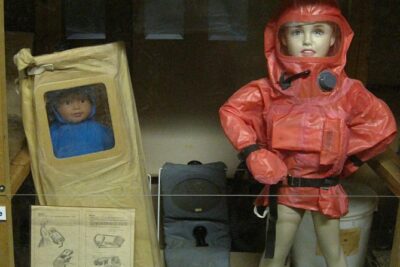
Prague Communism History and Nuclear Bunker Tour
Read our review →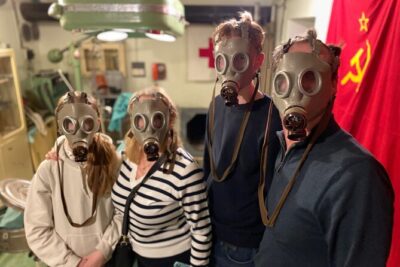
Communism & Nuclear Bunker Tour + 70s Canteen Lunch (own expense)
Read our review →
Communism and Bunker Tour with 70s Canteen Lunch
Read our review →
Second World War & Communism (Tip-based 3 hour tour)
Read our review →
Skip the Line: 10-Z Bunker Entrance Ticket in Brno
Read our review →Browse the lists this tour appears in