
REVIEW · WORLD WAR II TOURS
Prague: Communists and World War II Tour
Prague’s pretty streets carry a difficult story. This two-hour walk connects World War I, the rise of Czechoslovakia, Nazi rule, Soviet occupation, and the fall of Communism in a way that makes the city’s monuments and squares easier to understand. I especially like the focus on real streets and public squares, rather than a history lesson kept inside a lecture room. I also like the chance to ask questions about daily life under Communism, a subject guides such as Martin, Barbara, Otakar, and Inna have handled with warmth and detail.
The main consideration is simple: this is a history-first walking tour, not a sightseeing route packed with famous buildings. Some stops are more about the story attached to a place than a dramatic object in front of you. The shared orange umbrellas can also make it tricky to find the correct guide among several groups at Charles Bridge, so arrive ready to look carefully.
In This Review
- Key points to know before booking
- Why Prague’s modern history needs a walking tour
- Meeting at Křižovnické Square beside Charles Bridge
- Národní Street and the making of Czechoslovakia
- New Town and the streets of Nazi occupation
- Wenceslas Square and the weight of political protest
- The Communist Revolution, censorship, and life behind the Iron Curtain
- The Stalin monument and Prague’s political symbols
- Republic Square and the close of the route
- Should you add the Museum of Communism?
- Guide quality makes the biggest difference
- Is $29 a fair price?
- Who will enjoy this tour most?
- Final verdict: book it for context, not spectacle
- FAQ
- How long is the Prague Communists and World War II Tour?
- Where does the tour meet?
- Which public transport station is closest to the meeting point?
- What languages are available?
- Is entry to the Museum of Communism included?
- Can I cancel the booking for a full refund?
Key points to know before booking
- A 20th-century history walk: Follow the links between World War I, the birth of Czechoslovakia, World War II, the Cold War, and the Velvet Revolution.
- Starts beside Charles Bridge: Meet at Křižovnické Square, next to the statue of Charles IV, with an orange umbrella marking the guide.
- Important Prague locations: The route includes Národní Street, New Town, Wenceslas Square, and Republic Square.
- Strong guide-led experience: Guides including Barbara, Martin, Otakar, Inna, Dana, and others have been praised for clear explanations and thoughtful answers.
- Museum option available: You can add entry to the Museum of Communism, with a 10 percent discount coupon included when the museum entry option is not selected.
- Good value at $29: For two hours with a local guide, the price is reasonable, especially if you want context that ordinary sightseeing does not provide.
Why Prague’s modern history needs a walking tour
Many first-time visitors see Prague as a city of Gothic towers, Baroque churches, and castle views. That picture is accurate, but incomplete. The city also carries the marks of dictatorship, occupation, protest, censorship, and political change.
This tour gives you a useful timeline. It begins with World War I and the collapse of the Austro-Hungarian Empire, then explains how Czechoslovakia came into being. From there, the story moves toward the political pressures that helped create the conditions for World War II.
You then follow the Nazi occupation, the role of the Gestapo, and the difficult years after liberation. The second half turns to the Communist Revolution, Soviet influence, the Iron Curtain, and the protests that finally led to the Velvet Revolution.
I like this structure because it helps you see cause and effect. Instead of treating each event as a separate chapter, your guide explains how one political crisis fed the next. That makes the walk useful early in a Prague visit, when you still have time to notice the symbols and memorials around town.
More World War II tours in Prague:
- Prague: WWII Guided Tour & The Crypt of Operation Anthropoid
★ 4.7 · 1,030 reviews - WWII in Prague Tour & The Crypt of Operation Anthropoid
★ 5.0 · 817 reviews - Small-Group World War 2 & Operation Anthropoid Tour in Prague
★ 5.0 · 231 reviews
Meeting at Křižovnické Square beside Charles Bridge
The meeting point is in front of Charles Bridge at Křižovnické Square, next to the statue of Charles IV. Staroměstská is the closest tram or subway station, which makes the starting point fairly easy to reach from central Prague.
Look for the guide holding an orange umbrella. This is the one practical nuisance worth taking seriously. Several tour groups may gather near Charles Bridge with similar umbrellas, and one visitor suggested putting the tour name on the umbrella to make identification easier. I would arrive a few minutes early and check the guide’s details rather than simply joining the first orange umbrella you see.
The location itself is a fine place to begin. Charles Bridge represents Prague’s medieval and imperial past, while the tour quickly shifts your attention to the political upheavals of the 20th century. That contrast is useful. It reminds you that Prague is not only an old European showpiece, but also a city shaped by modern power struggles.
Národní Street and the making of Czechoslovakia
The route moves toward Národní, one of the key central streets in the modern history of Prague. Here, the guide places the creation of Czechoslovakia within the wider collapse of old European empires after World War I.
This part matters because the country did not appear out of nowhere. The end of World War I created a new political map, and Czech and Slovak leaders then faced the hard work of building a new state. Your guide uses the city streets to explain those changes rather than presenting them as distant diplomatic events.
You may find this opening section more political than visual. There is not always a single grand monument that tells the whole story. The value comes from the guide’s explanation, and this is where guide quality makes a major difference. Barbara, Otakar, and Martin have all been praised for making complicated history understandable, while Inna was especially appreciated for answering questions about the effects of World War II and Communism on Czechoslovakia.
New Town and the streets of Nazi occupation
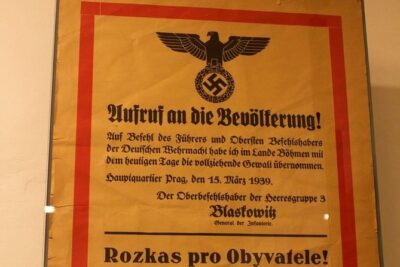
The walk continues through New Town, where the focus turns to World War II and the Nazi occupation. You hear about streets once controlled by the Gestapo and the pressure placed on ordinary people living under occupation.
This is one of the strongest reasons to take the tour on foot. You are not only hearing about the occupation in a museum display. You are moving through the same central parts of Prague where political power was enforced and resistance carried real danger.
The guide also discusses Reinhard Heydrich, the Nazi official known as the Butcher of Prague. His role helps explain the harsh nature of Nazi rule in the Czech lands. The story is disturbing, but it gives useful context for understanding why Czech resistance and later political memory remain so important.
The route does not promise a long list of surviving wartime structures. One visitor noted that there was not always much to point at physically, but the guide’s answers made the walk worthwhile. That is a fair warning. You are paying for interpretation, connections, and conversation as much as for visible remains.
A few more Prague options to compare
- Prague: 50-Minute Sightseeing Evening Cruise
★ 4.2 · 33,780 reviews - Prague: Medieval Dinner with Unlimited Drinks
★ 4.4 · 19,847 reviews - Prague: Skip-the-line Castle Ticket and Optional AudioGuide
★ 4.3 · 11,121 reviews - Prague: Castle Tour with Local Guide and Entry Ticket
★ 4.6 · 10,422 reviews
Wenceslas Square and the weight of political protest
Wenceslas Square is one of the most meaningful stops on the route. It is a huge urban space, but its importance comes from what happened there. The guide connects it to Communist rule, public demonstrations, Soviet influence, student protest, and the Velvet Revolution.
You learn why student Jan Palach set himself on fire in 1969, after the Soviet-led invasion and the crushing of hopes for political reform. This is not treated as a curious footnote. It forms part of the larger story of how individuals resisted a system that controlled speech, education, publishing, and public life.
The tour also discusses Milada Horáková, whose opposition to Communism led to her execution after a politically driven trial. Her story gives a personal face to the Communist period and helps you understand that repression did not only affect politicians at the top. It reached into careers, families, books, schools, and everyday choices.
Wenceslas Square is also where the story of the Velvet Revolution becomes easier to grasp. The square’s open scale helps you picture mass demonstrations and the pressure created when people gathered publicly against the regime. I would pay close attention here, because this is one of the moments when Prague’s modern history feels most immediate.
The Communist Revolution, censorship, and life behind the Iron Curtain
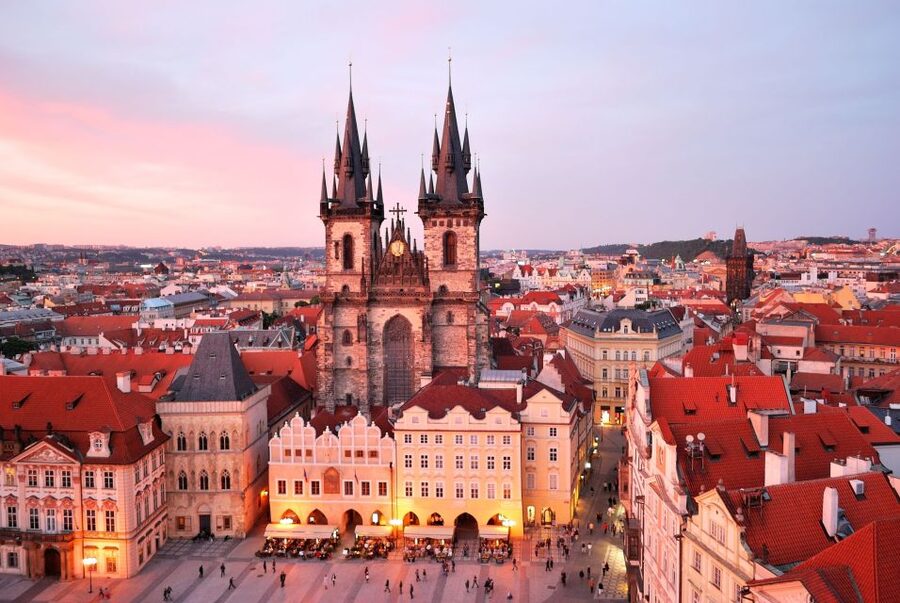
The Communist period can be hard to understand if you only focus on dates and leaders. This tour aims to explain daily life as well as political events. Your guide may discuss censorship, black-listed books, limits on public expression, and the lasting effects of Soviet control.
The detail about books being burned is especially striking because it shows how political control reaches into private thought. A government does not need to remove every person from a public square if it can restrict what people read, teach, publish, and discuss.
The discussion also covers the Russian Occupation and the Cold War division known as the Iron Curtain. You are encouraged to ask questions, and this is where the tour becomes more than a fixed speech. Several guides have been praised for welcoming questions about life during Communist rule and the changes that followed its collapse.
I would not expect a complete social history of the Czech Republic in two hours. You will receive a well-shaped introduction, not a university course. If you want more detail about economics, family life, or the experience of specific groups, use the walk to identify questions for later reading or a museum visit.
The Stalin monument and Prague’s political symbols
One highlight is the dramatic 30-meter-tall Stalin statue, presented as part of the Communist period and its public symbolism. The story of the monument shows how regimes use huge public works to project authority and shape the city’s identity.
This is a useful stop because it turns an abstract political system into something physical. A massive statue is not merely decoration. It tells you who held power, what image the state wanted to create, and how public space could be used for political messaging.
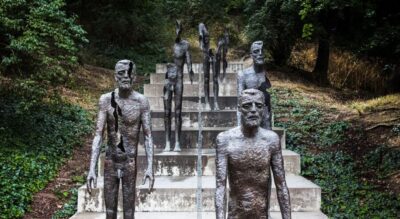
The tour’s wider theme is that Prague is full of symbols connected to its past. Some honor victims. Others mark protest. Still others show how political authority once presented itself. The guide helps separate these meanings, which is difficult to do from a self-guided stroll.
Republic Square and the close of the route
Republic Square is included near the end of the walk, before the tour finishes in Prague. By this point, the route has moved from imperial collapse to national independence, Nazi occupation, Communist control, Soviet influence, and popular resistance.
The ending gives you a chance to pull the timeline together. I like tours that finish with a clear sense of how the pieces connect, and this route is designed for that. You should leave with a better grasp of why the Czech Republic developed as it did during the 20th century.
The itinerary is not built around long interior visits, so you should not expect to enter major historic buildings along the way. Instead, the city itself acts as the classroom. Wear comfortable shoes, since the full two hours are spent walking and listening.
Should you add the Museum of Communism?
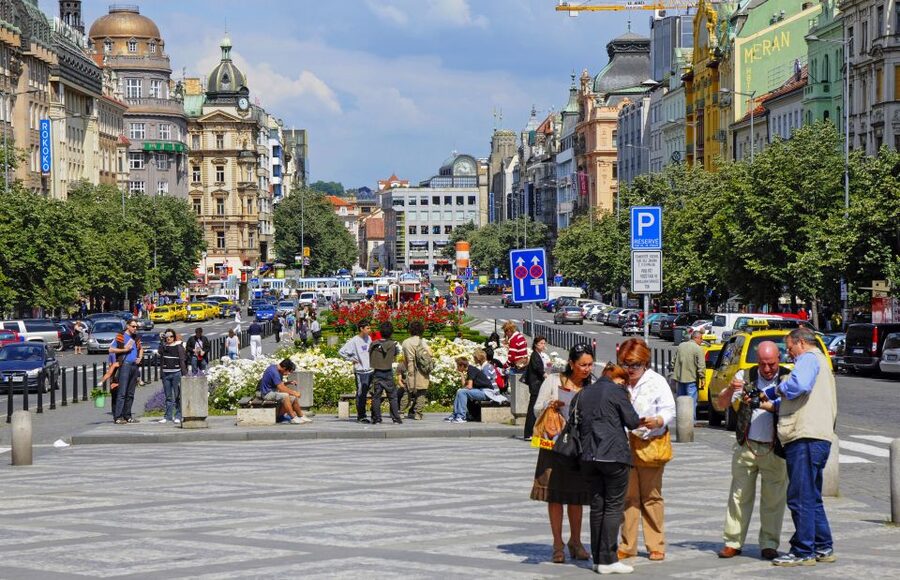
You can choose an option that includes entry to the Museum of Communism. The experience also includes a 10 percent discount coupon for the museum, depending on the booking option you choose.
The museum can make a sensible follow-up because the walking tour gives you the basic framework first. Afterward, displays and personal accounts may have more meaning because you already understand the major political stages.
One point to keep in mind is that the museum film may feel repetitive after a strong guide’s explanation. Dana’s explanations were considered clear enough that one visitor found the film less useful and somewhat repetitive. That does not make the museum a poor choice, but it suggests that the guided walk may be the stronger part of the experience for people who prefer conversation and interpretation.
If you enjoy exhibits and want extra time with the Communist period, add the museum. If you have limited time or prefer walking and discussion, the two-hour tour may be enough.
Guide quality makes the biggest difference
The strongest part of this experience is the local guide. Barbara has been praised for being engaging and for pointing out sights that are easy to miss. Martin has been singled out for detailed explanations, personal interest, and thoughtful discussion about life during and after Communism.
Otakar has been described as energetic, well informed, and ready for questions. Inna received similar praise for her ability to discuss the political effects of World War II and Communism. Other guides, including Dana and Ilene, have also been appreciated for making the material clear and responding to a wide range of questions.
The tour can work well with a small group. One booking had only two people, which made the discussion more personal. Group size can vary, so I would not assume you will receive a private tour, but the format allows questions when the group is manageable.
The guides speak English, German, or Russian. Check the language when you book, since the quality of the experience depends heavily on understanding the historical detail.
Is $29 a fair price?
At $29 per person, I consider this good value for a two-hour guided walk in central Prague. You are not simply paying for movement between landmarks. You are getting a chronological explanation of some of the most difficult parts of Czech history, plus the opportunity to ask questions that a guidebook cannot answer in real time.
The value is highest if you are interested in World War II, the Cold War, Communist Europe, or the political story behind Prague’s public spaces. It is less compelling if your priority is castles, churches, architecture, or panoramic views.
Free cancellation up to 24 hours before the start and the option to reserve now and pay later add useful flexibility. You still need to check the available start times, since the tour lasts two hours and schedules can change.
Who will enjoy this tour most?
I would recommend it to adults, students, and curious older children who can follow a serious historical discussion. It is especially useful for anyone visiting Prague from another country and wanting a clear explanation of how the city fits into European history.
Families should think about the subject matter and format. The tour is more about political history and conversation than visual entertainment. One parent chose to leave the children behind because it was a knowledge-focused experience.
You should also choose sturdy, comfortable shoes. Prague’s central streets are easy to explore, but two hours of walking is still two hours of walking. Alcohol and drugs are not allowed, which is hardly surprising for a serious public tour.
Final verdict: book it for context, not spectacle
I would book the Prague Communists and World War II Tour if I wanted to understand the city beyond its medieval center. The route gives you a clear path through the creation of Czechoslovakia, Nazi occupation, Communist rule, Soviet pressure, Jan Palach’s protest, and the Velvet Revolution.
Book it early in your stay if possible. The stories you hear at Národní, Wenceslas Square, and the other stops can sharpen your view of Prague for the rest of your visit. Skip it if you want a tour built mainly around grand interiors, photographs, or architectural detail.
At $29, with a strong local guide and an optional museum visit, this is a sensible choice for history-minded visitors. Just arrive early, find the correct orange umbrella, and expect a thoughtful walk rather than a parade of spectacular sights.
FAQ
How long is the Prague Communists and World War II Tour?
The walking tour lasts two hours.
Where does the tour meet?
It meets in front of Charles Bridge at Křižovnické Square, next to the statue of Charles IV. The guide holds an orange umbrella.
Which public transport station is closest to the meeting point?
Staroměstská is the closest tram or subway station.
What languages are available?
The tour is available in English, German, and Russian.
Is entry to the Museum of Communism included?
Museum entry is included only if you select the option that includes it. A 10 percent discount coupon for the museum is also available.
Can I cancel the booking for a full refund?
Yes. You can cancel up to 24 hours before the tour for a full refund. You can also reserve now and pay later.
Newest listings in Prague
- World War II 4WD Tour from Prague with Lunch★ 4.4 · 3 reviews
- Prague: Historical Walking Tour with Focus on World War 2★ 4.3 · 12 reviews
- WWII and Communism History in Prague’s Old Town Private Tour★ 5.0 · 4 reviews
- Wroclaw: Giant Mountains & Valley of Palaces Day Tour★ 4.8 · 36 reviews
- Walking tour of Prague in French : Nové Město★ 4.9 · 16 reviews
- Walking tour of Prague in french: Old Town & Charles Bridge★ 4.9 · 62 reviews
- Vltava River Cruise and Private Tour of Prague’ Old Town★ 5.0 · 1 review
- Ultimate Unlimited Beer Pong with Czech Beer★ 4.6 · 5 reviews
World War II Tours, compared.
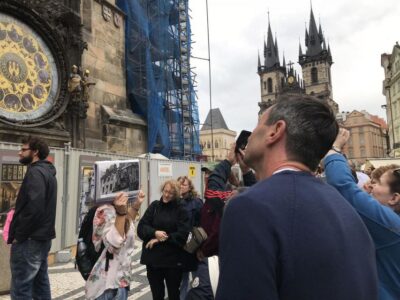
WWII Guided Tour & The Crypt of Operation Anthropoid
Read our review →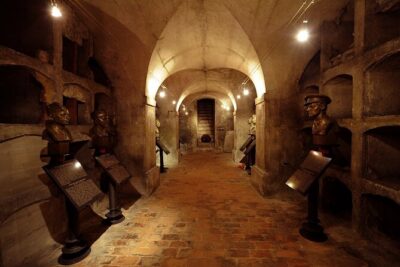
WWII in Prague Tour & The Crypt of Operation Anthropoid
Read our review →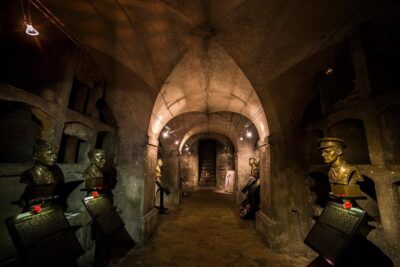
Small-Group World War 2 & Operation Anthropoid Tour in Prague
Read our review →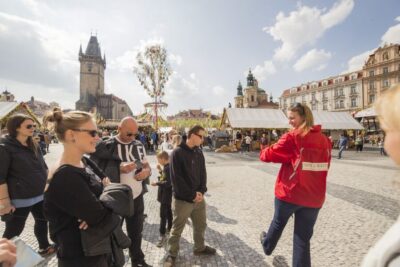
World War 2 and Operation Anthropoid Walking Tour
Read our review →
Terezin In-Depth Holocaust Tour From Prague’s Center (max 7 pax)
Read our review →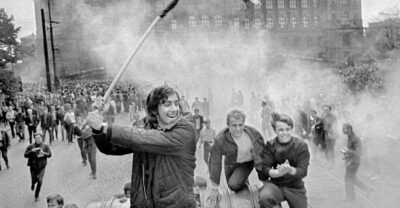
Browse the lists this tour appears in