
REVIEW · HISTORICAL TOURS
Unusual and historical tour of Prague with French guide
Prague rewards curious walkers. This three-hour tour links historic landmarks with unusual details, local politics, architecture, and everyday Czech life, all led in French by Mathieu, a longtime Prague resident, blogger, journalist, and guidebook author. I like the route’s range: you move from New Town to Malá Strana and Old Town without treating Prague as one grand postcard. I also like the small group, capped at 10 people, which should make questions and conversation easier.
The main consideration is pace. Three hours covers a lot of ground, and the tour visits many sights from the outside rather than offering admission to them. If you want long interior visits, this is not the right format. If you want a friendly overview with local context, it offers strong value at $46.30 per person.
In This Review
- Key points at a glance
- Why this Prague walk feels different
- New Town: monuments, memory, and modern Prague
- Malá Strana: water, protest art, and Charles Bridge
- Old Town: the city’s grandest concentration of sights
- What the $46.30 price gets you
- Who should choose this experience
- Booking, cancellation, and timing advice
- Should you book Mathieu’s Prague tour?
- FAQ
- How long does the Prague tour last?
- Where does the tour begin?
- Where does the tour end?
- How many people can join the tour?
- Is the tour offered with a mobile ticket?
- Can I cancel for a full refund?
Key points at a glance
- Mathieu leads in French, drawing on more than 15 years connected with Prague and his work as a journalist and guidebook author.
- Three major districts fit into three hours: New Town, Malá Strana, and Old Town.
- The route mixes famous sights and odd surprises, from Charles Bridge and the Astronomical Clock to Kafka’s moving head and Prague’s Art Nouveau passages.
- The group maximum is 10 people, a useful size for a walking tour built around questions and conversation.
- The focus goes beyond monuments, with attention to political, economic, social, and cultural life in the Czech capital.
- The price includes a mobile ticket and free cancellation up to 24 hours before the start time.
Why this Prague walk feels different
Many city walks give you a quick parade of dates and façades. This one aims for a broader picture. You still see the landmarks you came to Prague for, but Mathieu also brings in the forces that shape the city: politics, money, society, art, and the way local people live.
That promise matters in Prague, where a single street can show several eras at once. A grand museum, an Art Nouveau passage, a medieval square, and a modern public artwork may all appear within a short walk. A guide who can connect those pieces helps you read the city instead of simply photographing it.
Mathieu’s background is a useful part of the experience. He has lived with Prague for more than 15 years and writes as a blogger, journalist, and author of tourist guides for major publishers. That does not guarantee a particular style, but it suggests a guide who works with both research and firsthand familiarity.
The language is French. For French-speaking visitors, that is a major advantage. You can ask about details without having to translate your question first, and historical or political explanations can be easier to follow in your strongest language.
The group limit of 10 also suits the subject. Prague’s central streets can be busy, and a huge group would make it harder to hear or stop at small points of interest. With a smaller party, you have a better chance to ask about a building, a memorial, or a local custom as it comes up.
More History Tours in Prague:
- Prague: Oldtown, Medieval Underground & Dungeon History Tour
★ 4.2 · 8,244 reviews - Prague Old Town, Medieval Underground and Dungeon Historical Tour
★ 4.5 · 3,227 reviews - Prague: Communism History and Nuclear Bunker Guided Tour
★ 4.7 · 2,417 reviews
New Town: monuments, memory, and modern Prague
The walk begins at Václavské nám. 806/62 in Prague 1, New Town. The district is not truly new in the modern sense. Its name comes from the medieval expansion of Prague, but its present appearance includes grand nineteenth-century buildings, commercial passages, memorials, and major cultural institutions.
The National Museum gives the opening a strong visual anchor. Its large historic building looks down over Wenceslas Square, one of the city’s most important public spaces. You can expect the guide to use this area to explain more than architecture. It has also played a role in public gatherings and political life, making it a natural place to discuss how Czech history reaches into the present.
The Jan Palach memorial adds a more personal and solemn note. Palach became a symbol of protest and sacrifice, and the memorial asks you to think about the human cost behind political events. This is one reason I like the route’s mix. You are not simply moving from one pretty building to the next.
New Town also introduces Prague’s design history. The route includes Art Nouveau and Rondocubist passages, two styles that help explain the city’s unusual architectural character. Art Nouveau is known for flowing lines and decorative detail. Rondocubism, associated especially with Czech design, uses rounded forms and bold geometric patterns. Passages can be easy to miss when you walk alone, so having them included gives the tour a useful eye for detail.
Kafka’s head brings the route into modern public art. The large rotating sculpture is one of Prague’s more unexpected sights, and it shifts the mood after the memorials and older façades. It also suits a tour that promises unusual as well as historic stops. You may not need a long lecture to appreciate it, but a guide can help place this contemporary work within Prague’s habit of mixing old symbols with new ideas.
The Franciscan Garden offers a quieter pause. In a city center packed with traffic, shops, and landmark buildings, a garden changes the rhythm. The stop is free, and you can expect it to provide a calmer setting for a little context before the route continues.
National Street and the National Theater round out this section. National Street carries cultural and civic weight, while the theater represents the Czech national revival and the importance of language and culture in Czech identity. These stops help connect Prague’s buildings with the country’s story rather than leaving them as isolated sights.
A practical note: this first hour has many names and themes. If you want to remember them, take brief notes or mark places on your phone as you go. The route is designed to introduce the city, not give you a long museum-style lecture at every stop.
Malá Strana: water, protest art, and Charles Bridge
The second hour shifts to Malá Strana, Prague’s Little Quarter. The atmosphere changes quickly. Here, the route includes Kampa Island and its museum, the John Lennon Wall, and Charles Bridge.
Kampa Island is one of the most appealing parts of central Prague because water and narrow streets soften the city’s grand scale. The area has its own character, and the Kampa Museum gives the stop an art connection. Admission to the tour stops is listed as free, so the experience is focused on seeing the area and learning from the guide rather than paying for a museum entry.
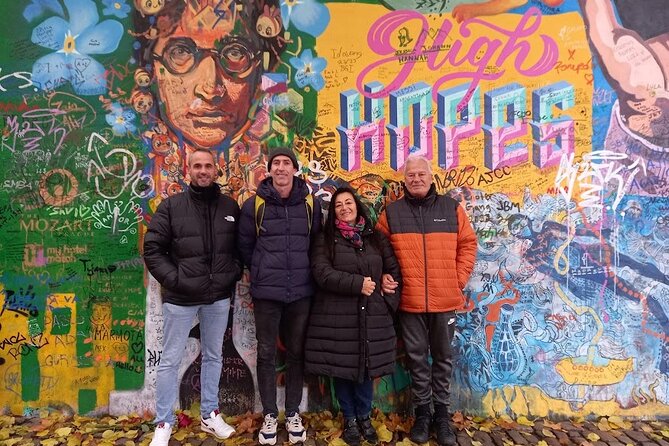
The John Lennon Wall adds a modern layer of protest and public expression. Its painted messages and changing surface have become part of Prague’s visual identity. The important point is not only the name. The wall reflects how public spaces can carry political feeling, idealism, and personal expression. It also gives Mathieu room to discuss social life and recent history in a way that a royal palace or church cannot.
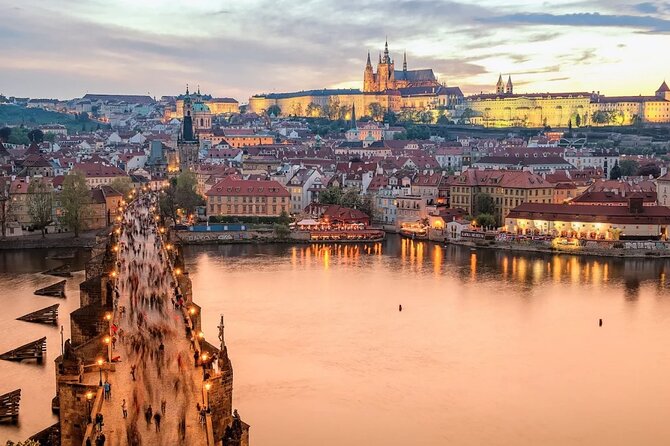
Charles Bridge is the headline stop in this section. The bridge joins Malá Strana with the Old Town and is one of Prague’s defining views. Statues line the bridge, towers frame its approaches, and the river opens up around you. It is also a place where timing and crowds matter. The tour lasts about an hour in this district, so you should expect an orientation and explanation rather than a leisurely pause at every statue.
I would pay close attention to how Mathieu handles the bridge. A basic account might list its construction and statues. A stronger explanation connects the bridge to Prague’s geography, trade, religion, rulers, and modern tourism. The tour’s stated interest in political, economic, social, and cultural life suggests that the bridge is treated as part of the city’s story, not just as a photo stop.
This section may be the most scenic part of the walk, but it can also be the least quiet. The information provided does not promise a particular start time or crowd level, so you should be ready for a busy public route. Comfortable shoes will help, especially since the full experience is on foot and covers three districts.
Old Town: the city’s grandest concentration of sights
The final hour takes you into Staré Město, or Old Town, where the stops arrive in close succession. The Clementinum, Little Square, Old Town Square, the Astronomical Clock, Týn Court, the House of the Black Madonna, Municipal House, Powder Tower, and Republic Square all appear in this section.
The Clementinum gives you a chance to consider Prague as a center of learning, religion, and culture. Its large complex can feel overwhelming when seen without context. A guide can help you understand why it occupies such an important place in the city and how it relates to the surrounding streets.
Little Square leads naturally toward Old Town Square. The square is one of Prague’s most famous open spaces, framed by historic buildings and dominated by the Astronomical Clock. The clock is easy to appreciate as a photograph, but its meaning is better understood when someone explains the figures, astronomical displays, and long tradition behind it.
The Astronomical Clock is also a good example of the tour’s limitation. You will see and discuss it, but the information does not include a special clock performance or timed entry. If watching the hourly display matters to you, ask Mathieu or check the timing before the walk begins. Do not assume the tour will pause for it.
Týn Court adds another layer to Old Town’s commercial past. The name points to the district’s long role in trade and urban life. This is the kind of stop that can disappear into the background when you walk alone, yet it helps explain why the Old Town developed as it did.
The House of the Black Madonna changes the visual vocabulary again. It is associated with Czech Cubist architecture, a style that makes Prague particularly interesting for anyone who enjoys design. Alongside the Art Nouveau and Rondocubist passages from New Town, it gives the day a clear architectural thread.
Municipal House brings you back to decorative design and civic culture. The Powder Tower then marks an older ceremonial entrance into the city, while Republic Square ties together transportation, public space, historic walls, and newer urban activity. The route covers a lot here, so I would think of the final hour as a guided survey rather than a series of full stops.
That can be a strength. By the end, you have a mental map of Prague’s central districts and several places to revisit on your own. It can also feel fast if you want every building explained in depth. The guide’s role is to help you choose what deserves a second look later.
A few more Prague options to compare
- Prague: 50-Minute Sightseeing Evening Cruise
★ 4.2 · 33,780 reviews - Prague: Medieval Dinner with Unlimited Drinks
★ 4.4 · 19,847 reviews - Prague: Skip-the-line Castle Ticket and Optional AudioGuide
★ 4.3 · 11,121 reviews - Prague: Castle Tour with Local Guide and Entry Ticket
★ 4.6 · 10,422 reviews
What the $46.30 price gets you
At $46.30 per person, this is not the cheapest way to walk around Prague. You can see many exterior landmarks for free. The value lies in the guide’s language, route planning, interpretation, and ability to connect famous sights with less obvious ones.
The tour covers about three hours and three central districts. That works out to a reasonable cost if you want a structured first look at Prague and prefer learning in French. A group maximum of 10 is another part of the value. You are not paying only for directions from one square to another. You are paying for access to a guide who can respond to questions and shape the walk around the group’s interests.
The price does not appear to include admissions to paid attractions. The listed stops show free admission, and the experience is built around walking through public areas. Budget separately if you want to return to a museum, tower, or interior after the tour.
I would book this early if your dates are fixed. The experience is often reserved about 28 days ahead, which points to steady demand even though the available rating comes from only two written evaluations. Both recorded ratings are five stars, and the praise focuses on Mathieu’s details, discoveries, explanations, and ability to make the group want to return to Prague. That is encouraging, but the small number means I would still judge the tour mainly by its format and your needs.
Who should choose this experience
I would recommend it most strongly to French-speaking visitors who want orientation on their first day or two in Prague. The route gives you a useful base for later independent walks, museum visits, and meals in the districts you have just seen.
It also suits repeat visitors who have already checked off the major monuments. The unusual stops, including the passages, Kafka’s head, and the John Lennon Wall, keep the walk from becoming a basic greatest-hits tour.
Architecture fans should find plenty to enjoy. The route touches Art Nouveau, Rondocubism, Cubism, historic civic buildings, medieval spaces, and modern sculpture. People interested in politics and society may also appreciate the Jan Palach memorial and the attention to local public life.
I would hesitate if you have difficulty walking for three hours, though the supplied details say most people can participate. I would also hesitate if your main goal is entering monuments or spending long periods inside museums. This experience is about seeing a broad section of central Prague and hearing the city explained as you move through it.
The tour is listed as suitable for service animals and near public transportation. It uses a mobile ticket, which keeps the arrival process simple. The meeting point is clearly given at Václavské nám. 806/62, but the walk ends somewhere different, so check the confirmation for the final location before planning your next appointment.
Booking, cancellation, and timing advice
You receive confirmation at booking, and free cancellation is available up to 24 hours before the scheduled start time. If you cancel inside that 24-hour window, the payment is not refunded, and changes are not accepted. The cut-off uses Prague local time.
Because the route has a fixed three-hour shape, arrive ready to walk rather than expecting a slow café-style outing. Wear practical shoes and keep your phone charged for the mobile ticket. If you have a strong interest in one subject, such as Czech political history, architecture, or contemporary art, tell Mathieu early so he can spend more time where possible.
Should you book Mathieu’s Prague tour?
Book it if you want a French-language introduction that mixes famous sights with lesser-known details. Mathieu’s long connection with Prague and his work as a writer give the experience a promising local and cultural focus, while the small group should keep it personal.
Skip it if you want extensive interior access, a slow photography walk, or a tour limited to one neighborhood. For most French-speaking visitors seeking a well-shaped first look at Prague, the combination of New Town, Malá Strana, and Old Town offers good value. The strongest reason to choose it is not simply the number of monuments. It is the chance to understand how Prague’s architecture, memories, politics, and daily life fit together.
FAQ
How long does the Prague tour last?
The tour lasts approximately three hours, with about one hour in New Town, one hour in Malá Strana, and one hour in Old Town.
Where does the tour begin?
It begins at Václavské nám. 806/62, 110 00 Praha 1-Nové Město, Czechia.
Where does the tour end?
The activity ends at a different location from the starting point. The final location is provided in the booking details.
How many people can join the tour?
The group can have a maximum of 10 participants.
Is the tour offered with a mobile ticket?
Yes. A mobile ticket is available, and confirmation is received at the time of booking.
Can I cancel for a full refund?
Yes, if you cancel at least 24 hours before the experience start time. Cancellations made less than 24 hours in advance are not refunded, and changes within that period are not accepted.
Newest listings in Prague
- World War II 4WD Tour from Prague with Lunch★ 4.4 · 3 reviews
- Prague: Historical Walking Tour with Focus on World War 2★ 4.3 · 12 reviews
- WWII and Communism History in Prague’s Old Town Private Tour★ 5.0 · 4 reviews
- Wroclaw: Giant Mountains & Valley of Palaces Day Tour★ 4.8 · 36 reviews
- Walking tour of Prague in French : Nové Město★ 4.9 · 16 reviews
- Walking tour of Prague in french: Old Town & Charles Bridge★ 4.9 · 62 reviews
- Vltava River Cruise and Private Tour of Prague’ Old Town★ 5.0 · 1 review
- Ultimate Unlimited Beer Pong with Czech Beer★ 4.6 · 5 reviews
Historical Tours, compared.
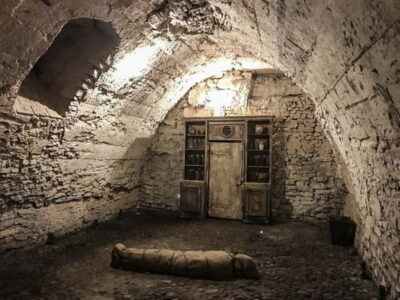
Oldtown, Medieval Underground & Dungeon History Tour
Read our review →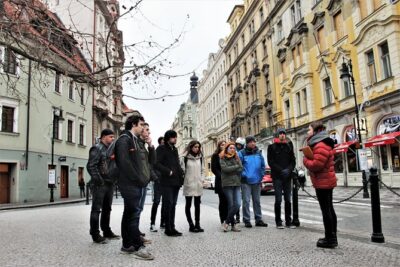
Prague Old Town, Medieval Underground and Dungeon Historical Tour
Read our review →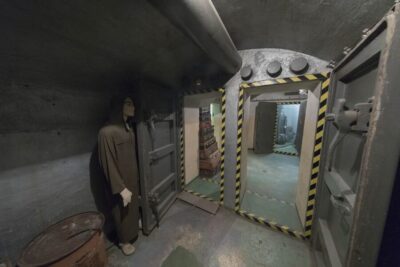
Communism History and Nuclear Bunker Guided Tour
Read our review →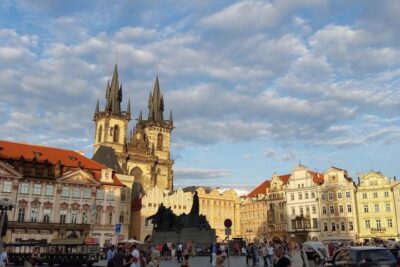
Historic City Center Bus Tour with Top Sights
Read our review →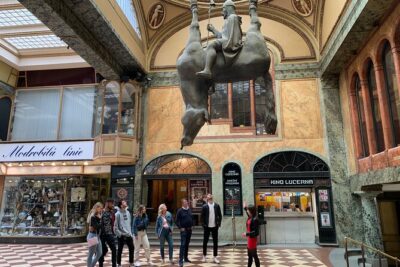
Prague Historic Pub Tour with Drinks Included
Read our review →
Prague Communism History and Nuclear Bunker Tour
Read our review →
Hop-on Hop-Off Historical Tram Ticket for Line 42
Read our review →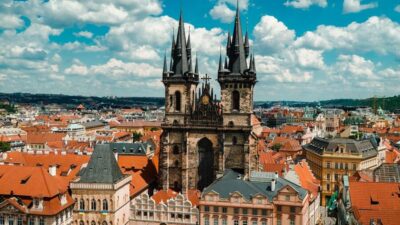
Top Sights and Historic Center Introduction Tour
Read our review →Browse the lists this tour appears in