
REVIEW · HISTORICAL TOURS
The Ultimate Prague History Tour
Prague reveals itself best on foot. This seven-hour private tour links quiet lanes, grand churches, political landmarks, and overlooked corners in one long route through the city. I especially like the smart start in Nový Svět, beyond Prague Castle’s main crowds, and the guide’s ability to adjust the day around your interests, energy, and questions.
The strongest feature is Günther, a passionate historian who connects architecture with religion, politics, art, and daily life. I also like the route’s range, from medieval Prague to the Lennon Wall and modern art. The tradeoff is clear: seven hours is a serious walking day, and admission fees for Loreta, Nerudova, and Museum Kampa are extra.
In This Review
- Key points to know before booking
- Why this seven-hour Prague tour feels different
- Nový Svět, Prague Castle’s quieter doorway
- Loreta and the sacred world of Hradčany
- Prague Castle and the Gothic story
- Nerudova and the Italian artists of St. John’s Hill
- Malostranské náměstí and Lesser Town’s power struggles
- Maltese Square, the Lennon Wall, and Kampa Island
- Museum Kampa and František Kupka
- Legions’ Bridge and the National Theatre
- Old Town beyond the usual postcard stops
- Municipal House and Prague’s Art Nouveau finale
- Walking demands, pickup, and private pacing
- Who should book the Ultimate Prague History Tour?
- Final verdict: a strong choice for serious first-time explorers
- FAQ
- How long does the Ultimate Prague History Tour last?
- Where does the tour take place?
- Is hotel pickup available?
- Is this a private tour?
- What language is the tour offered in?
- Is food included?
- Are admission fees included?
- How much walking is involved?
- Can the route change during the day?
- What happens if the weather is poor?
Key points to know before booking
- Nový Svět provides a quiet entrance to Prague Castle: You approach the castle through a picturesque quarter that is usually calmer than the main route.
- Günther builds the day around your interests: He can adjust the pace and focus instead of delivering a fixed speech at every stop.
- The tour connects architecture to power: Gothic design, Catholic devotion, Czech independence, Baroque politics, and Art Nouveau all fit into one story.
- You cross Prague by tram and on foot: Pickup is offered, and the route can use the Legions’ Bridge if Charles Bridge is too crowded.
- Several admissions cost extra: Loreta, Nerudova, and Museum Kampa are not included, so allow room in your budget.
- This is a private experience for your group: That makes questions, pauses, and changes much easier than on a large group tour.
Why this seven-hour Prague tour feels different
Many city tours race from one famous sight to another. This one tries to explain how Prague became Prague. You move through neighborhoods, squares, bridges, churches, museums, and streets while Günther links them to the forces that shaped the city.
That approach suits me. A cathedral becomes more interesting when you understand why it was built in that location. A pretty square gains weight when you learn about religious conflict, diplomacy, or espionage tied to it. The day is not only about checking off sights.
The tour costs $216.25 per person, which is a substantial price. The value depends on your group size and your appetite for history. Since it is private, your party receives personal attention rather than a standard group presentation. For a couple or small group that wants a flexible day with a specialist guide, the price can make sense. For someone seeking a quick introduction or a low-cost overview, it may feel steep.
Günther is the guide named in the experience details, and his strengths are clear. He speaks several languages, including English, Italian, German, and Czech, and has been praised for helping with practical problems as well as explaining the city. His assistance has included finding a pharmacy, communicating with staff, helping with police and embassy matters, and offering restaurant and shopping suggestions.
That personal care matters, though you should still book this mainly for the history and route. The day is not a sightseeing bus ride. You will walk, use some public transportation, and spend much of your time outdoors.
More History Tours in Prague:
- Prague: Oldtown, Medieval Underground & Dungeon History Tour
★ 4.2 · 8,244 reviews - Prague Old Town, Medieval Underground and Dungeon Historical Tour
★ 4.5 · 3,227 reviews - Prague: Communism History and Nuclear Bunker Guided Tour
★ 4.7 · 2,417 reviews
Nový Svět, Prague Castle’s quieter doorway
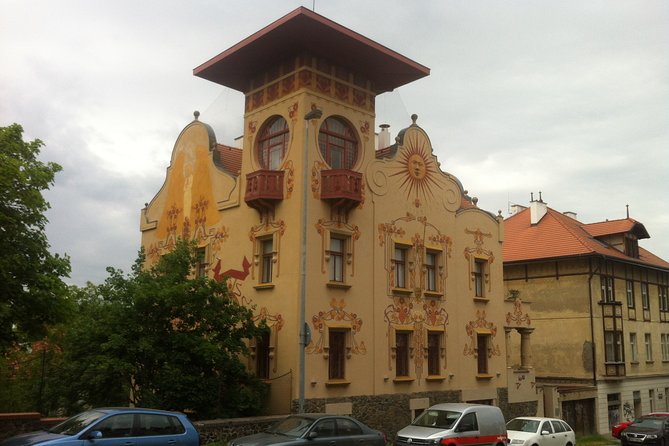
The tour begins at Nový Svět, a small quarter beyond Prague Castle. Instead of getting off the tram at the busiest castle stop, you continue past it and enter this picturesque neighborhood first.
This is an excellent tactical choice. Prague Castle is one of the city’s top sights, so the main approaches can be crowded. Nový Svět offers a calmer start and gives you a chance to see a more intimate side of the castle district before reaching its grand monuments.
You spend about 30 minutes here, with no admission charge. Expect a short walk through an attractive quarter rather than a long historical lecture at one single building. The value is in the mood and the contrast. You begin with quiet streets, then move toward the political and religious center of Prague.
Wear comfortable shoes from the start. The route later continues downhill and across the city, so this first gentle section should not fool you into expecting an easy day.
Loreta and the sacred world of Hradčany
Loreta takes about an hour. Admission is not included, so check the extra cost when planning your budget.
This sanctuary dedicated to the Virgin Mary sits in a monastery-like setting and is known for its church and treasury. The stop adds a strong religious layer to the day. It is not simply another ornate building. It helps explain how Catholic belief, pilgrimage, ceremony, and power shaped Prague after the religious upheavals of earlier centuries.
The guide also presents Loreta’s unusual legends and the research connected with them. That can make the visit more engaging than a quick look at the facade. I would ask questions here, especially if you are interested in the way religious stories become part of a city’s identity.
The practical drawback is time. An hour is enough for a focused visit, but not for lingering over every room and object. Since the admission fee is extra, you should decide before the tour how much you want to spend on interior visits.
Prague Castle and the Gothic story
Prague Castle receives about 90 minutes. The guide decides on the day how much of the complex to enter, based on crowd levels and your interests. The itinerary marks the admission as free, but the exact interior access and any required tickets should be clarified when booking.
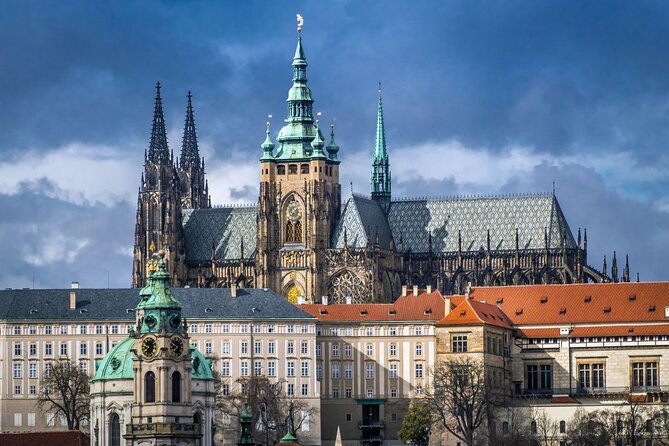
The cathedral is the main prize. Its location is not treated as a random choice. Günther explains the religious and political reasons behind it, then uses the building to introduce the development of Gothic architecture.
That is one of the tour’s most distinctive promises. Instead of pointing out arches and stained glass as isolated features, the guide explains how the Gothic style developed and why it mattered. You get a way to read the building, not just photograph it.
Prague Castle can be crowded, so flexibility helps. If the complex is packed, you may spend more time understanding the setting and less time moving through every interior. That is not a flaw in the tour. It is a sensible response to Prague’s busiest attraction.
Still, if entering the cathedral is your top priority, tell Günther before the day begins. The route is designed to adapt, but clear priorities help the guide use the available time well.
A few more Prague options to compare
- Prague: 50-Minute Sightseeing Evening Cruise
★ 4.2 · 33,780 reviews - Prague: Medieval Dinner with Unlimited Drinks
★ 4.4 · 19,847 reviews - Prague: Skip-the-line Castle Ticket and Optional AudioGuide
★ 4.3 · 11,121 reviews - Prague: Castle Tour with Local Guide and Entry Ticket
★ 4.6 · 10,422 reviews
Nerudova and the Italian artists of St. John’s Hill
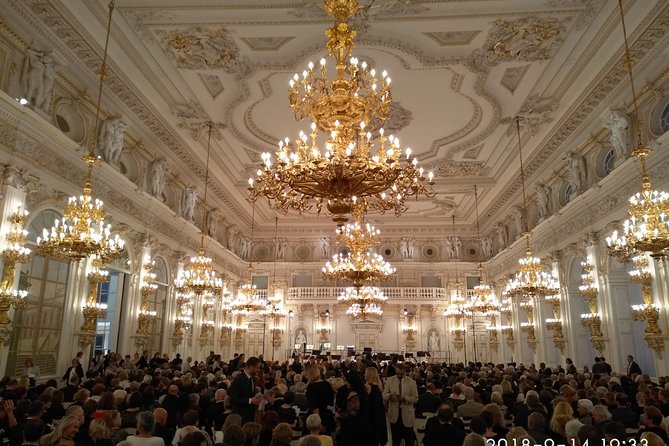
From the castle area, the route continues toward Nerudova. The famous street is handsome and heavily visited, so the tour does not linger only on its most crowded stretch. Instead, it turns toward St. John’s Hill, a quieter neighborhood once associated with Italian artists.
This is where the tour’s wider method becomes useful. The story links art, religion, and politics, showing how people and institutions shaped the neighborhood. You are not simply walking downhill through a photogenic street.
The stop lasts about an hour. Admission is not included. Since the route is mainly about streets and urban history, the extra cost may apply to an interior visit rather than the walk itself, so ask exactly what is planned.
Nerudova is also a good place to notice the physical effort of the day. Prague’s historic center has hills, slopes, and uneven walking surfaces. A moderate level of fitness is required, and I would not schedule a demanding evening plan after this tour.
Malostranské náměstí and Lesser Town’s power struggles
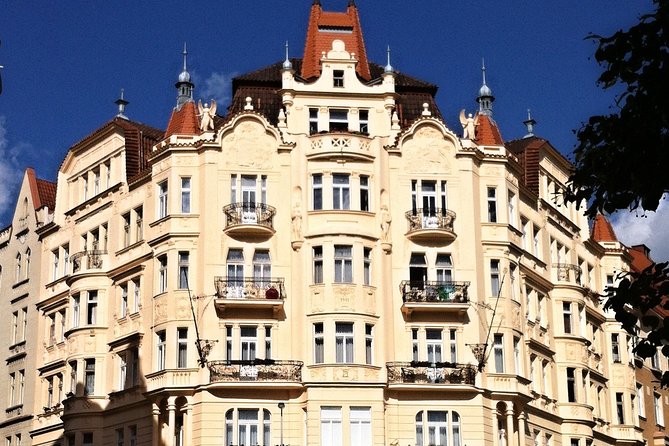
Malostranské náměstí is the central square of Prague’s Lesser Town. You spend about 30 minutes here, with no admission charge.
The square brings together architecture, Baroque decoration, religious conflict, and stories of espionage during the First World War. That mix keeps the stop from becoming a simple architecture lesson. The buildings show beauty and wealth, but the stories explain who controlled them and why the area mattered.
I like this kind of context because it gives you a better sense of Prague as a contested city. Religion was not only a private matter. It affected public space, politics, art, and the identity of the country.
The short time here works well as a pause between longer walks. You can take in the square, ask questions, and continue toward the river without feeling stuck in one place.
Maltese Square, the Lennon Wall, and Kampa Island
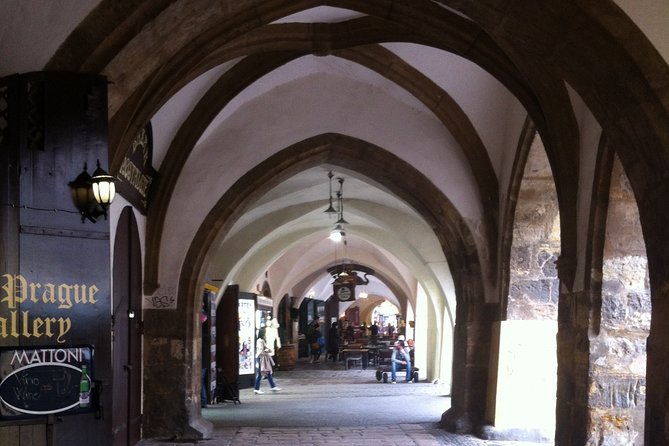
The walk continues toward the Vltava and Maltese Square. This small, attractive square brings you to the church and embassy of the Knights of Malta. You also pass the French embassy palace, which might be available to visit with a prior request.
Do not assume that the embassy visit is part of every tour. It depends on advance arrangements. If this interests you, raise it before booking rather than treating it as a guaranteed stop.
The route then reaches the Lennon Wall. The description is unusually candid: the wall is now only a sad remnant of what it once was. That honesty is useful. You get the cultural landmark without a forced claim that it remains exactly as it was during its most important period.
Kampa Island follows, offering a green break beside the river and several attractions. The tour allows about 30 minutes for this section. That is enough to get a feel for the island and its setting, but not enough for an extended visit to every point of interest.
Museum Kampa and František Kupka
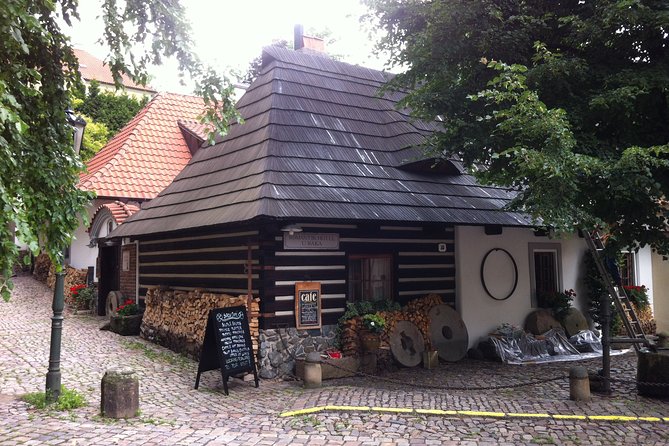
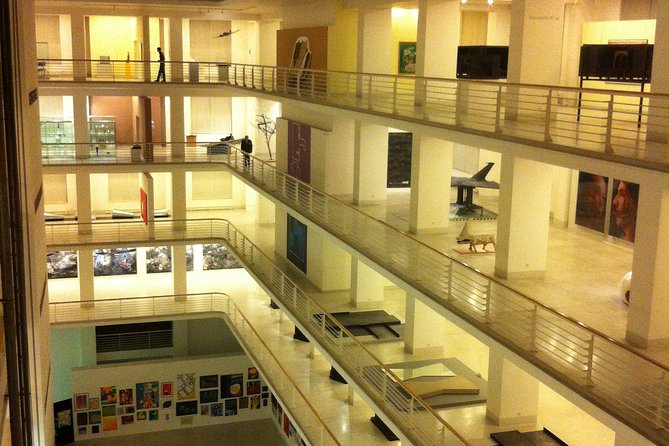
Museum Kampa occupies a former mill and displays contemporary art, including the largest collection of František Kupka, an early figure in abstract painting. Admission is not included, and the planned time is about 30 minutes.
This stop gives the day a welcome change of pace. After churches, palaces, medieval streets, and political stories, you reach modern art. Kupka’s work also links Prague to the broader development of European abstraction.
Günther connects the museum with the woman who initiated it and tells the story of her career. That personal angle can make the museum more memorable than a standard list of artists and dates.
Thirty minutes is a brief visit. You will need to keep moving and focus on selected works. If contemporary art is a major reason for your visit, you may want to return independently for more time. If you mainly want a taste of Kampa’s art and setting, the short stop fits the larger route well.
Legions’ Bridge and the National Theatre
If Charles Bridge is too crowded, the route crosses the Vltava on the Legions’ Bridge. This is a practical choice, not a consolation prize.
The bridge leads toward Old Town and the National Theatre, which played an important role in the Czech fight for independence during the 19th century. You spend around 30 minutes in this section.
The National Theatre helps shift the story from royal and religious power to national identity. Language, culture, and public performance became important tools in the effort to define the Czech nation. Günther provides a detailed introduction rather than treating the building as just another grand facade.
If you have dreamed of crossing Charles Bridge, you may feel disappointed if crowds make that impractical. On the other hand, the Legions’ Bridge offers a calmer crossing and a different view of the river. You can also see how the route values the experience of the city over a rigid checklist.
Old Town beyond the usual postcard stops
The Old Town section lasts about 30 minutes. The walk crosses through the area according to what you have already seen, with an emphasis on less familiar attractions.
The central idea is how medieval villages became cities over roughly a thousand years. Prague’s old streets still show traces of that process. The route helps you notice the relationship between early settlement, urban growth, and the buildings that remain.
This is a short stop, so the guide cannot cover every corner. Its purpose is to tie earlier sections together and give you a framework for exploring Old Town later on your own.
I especially like this part for a first visit. Once you understand how the city developed, wandering without a guide becomes more rewarding. You begin to see the historic center as a layered place, not just a collection of famous squares.
Municipal House and Prague’s Art Nouveau finale
If there is enough time, the tour finishes at Municipal House. The building is one of Prague’s finest examples of Art Nouveau and includes a concert hall, exhibition space, restaurants, and a striking cafe.
The planned time is about 30 minutes, with no admission charge listed. The guide uses the building to explain how Art Nouveau developed. That provides a strong final chapter because the style reflects a later Prague, one looking toward modernity while still surrounded by older traditions.
The coffee stop is also a practical ending. After seven hours of walking, sitting down matters. Dinner is not included, but you can use the final conversation to ask about restaurants, cafes, tourist traps, and places to visit during the rest of your stay.
The stop is not guaranteed if the earlier parts run long. That is another reason to decide what matters most to you before starting.
Walking demands, pickup, and private pacing
Pickup is offered personally within the defined service area. The tour operates in English and is available daily from 10:00 a.m. to 5:00 p.m. The listed duration is approximately seven hours.
You use some public transportation, including the tram at the beginning, but this is chiefly a walking experience. You should have moderate physical fitness and good walking shoes. Bottled water is included, while dinner is not.
The private format is a major advantage. Only your group participates, so you can ask for more architecture, more politics, more art, or more modern Czech history. You can also slow down if someone needs a break or move on when a site is too crowded.
The guide has shown a strong willingness to help in difficult situations. That includes assisting with illness, finding medication, helping with police reports after a stolen wallet, and accompanying people toward embassy assistance. You should not book expecting an emergency service, but this level of care is reassuring, especially for people traveling alone.
Free cancellation is available up to 24 hours before the start time. The experience requires good weather, and poor weather may lead to a new date or a full refund.
Who should book the Ultimate Prague History Tour?
Book it if you want Prague explained rather than simply displayed. It suits people who enjoy history, architecture, religion, art, and politics, especially those who like asking questions and changing the plan as the day unfolds.
It also suits a small private group that wants personal attention. Families with older children, couples, solo visitors, and friends traveling together can all benefit from the flexible pace, provided everyone can manage a long walking day.
Think twice if you want a short, light sightseeing outing. The route is intensive, admissions cost extra, and the amount of information may be more than casual sightseers want. You should also raise any strong interest in 20th-century history before the tour, since the planned material gives considerable attention to earlier periods. One experience was less satisfying because the guest wanted more modern history than the day provided.
Final verdict: a strong choice for serious first-time explorers
The Ultimate Prague History Tour earns its high 4.9 out of 5 rating from 29 ratings for good reason. Its best qualities are the thoughtful route, the crowd-avoiding start, and Günther’s ability to connect buildings with the forces behind them.
At $216.25 per person, it is not a bargain tour. But a private seven-hour day with pickup, public transportation, flexible pacing, and a guide who can offer both cultural explanation and practical help may be good value for the right group.
Book it if you want a personal introduction to Prague that moves beyond the standard postcard route. Skip it if you prefer a quick overview, dislike long walks, or want a tour focused mainly on 20th-century events.
FAQ
How long does the Ultimate Prague History Tour last?
The tour lasts approximately seven hours.
Where does the tour take place?
It takes place in Prague, Czech Republic, and includes Prague Castle, Lesser Town, Kampa, the Vltava river area, Old Town, and Municipal House if time allows.
Is hotel pickup available?
Personal pickup is offered anywhere within the tour’s defined service area.
Is this a private tour?
Yes. Only your group participates in the activity.
What language is the tour offered in?
The tour is offered in English.
Is food included?
Bottled water is included. Dinner is not included.
Are admission fees included?
Admission is not included for Loreta, Nerudova, or Museum Kampa. The listed information marks Prague Castle and several outdoor stops as free, but you should confirm any planned interior access when booking.
How much walking is involved?
The experience is primarily a walking tour with some public transportation. A moderate level of physical fitness is recommended.
Can the route change during the day?
Yes. The guide may adjust the route according to crowd levels, what you have already seen, your interests, and the time available.
What happens if the weather is poor?
The experience requires good weather. If it is canceled because of poor weather, you will be offered another date or a full refund. You can cancel for a full refund up to 24 hours before the start time.
Newest listings in Prague
- World War II 4WD Tour from Prague with Lunch★ 4.4 · 3 reviews
- WWII and Communism History in Prague’s Old Town Private Tour★ 5.0 · 4 reviews
- Wroclaw: Giant Mountains & Valley of Palaces Day Tour★ 4.8 · 36 reviews
- Prague: Historical Walking Tour with Focus on World War 2★ 4.3 · 12 reviews
- Walking tour of Prague in French : Nové Město★ 4.9 · 16 reviews
- Walking tour of Prague in french: Old Town & Charles Bridge★ 4.9 · 62 reviews
- Vltava River Cruise and Private Tour of Prague’ Old Town★ 5.0 · 1 review
- Ultimate Unlimited Beer Pong with Czech Beer★ 4.6 · 5 reviews
Historical Tours, compared.
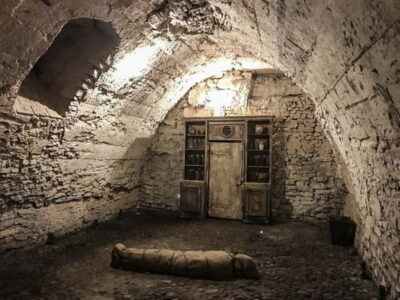
Oldtown, Medieval Underground & Dungeon History Tour
Read our review →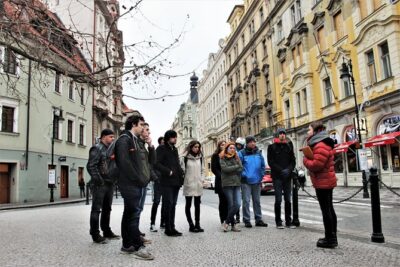
Prague Old Town, Medieval Underground and Dungeon Historical Tour
Read our review →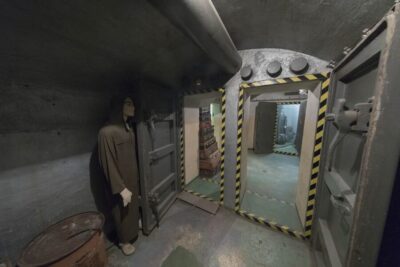
Communism History and Nuclear Bunker Guided Tour
Read our review →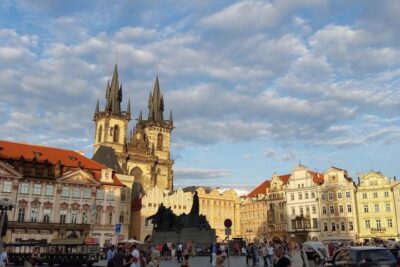
Historic City Center Bus Tour with Top Sights
Read our review →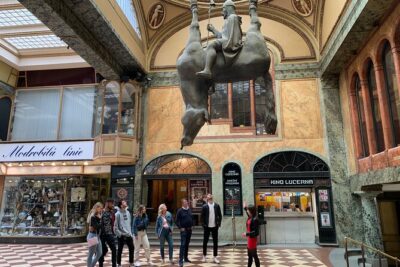
Prague Historic Pub Tour with Drinks Included
Read our review →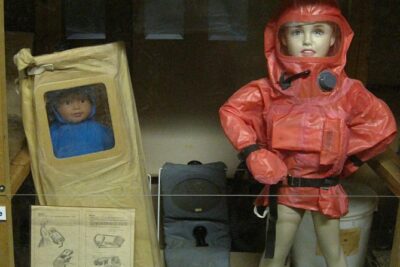
Prague Communism History and Nuclear Bunker Tour
Read our review →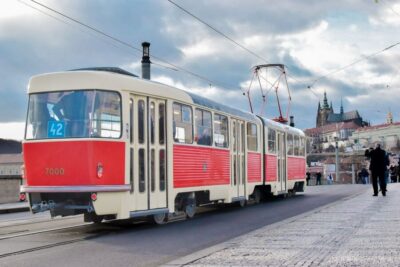
Hop-on Hop-Off Historical Tram Ticket for Line 42
Read our review →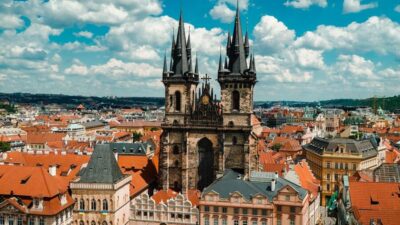
Top Sights and Historic Center Introduction Tour
Read our review →Browse the lists this tour appears in