REVIEW · PRAGUE TOURS
Taste, Cook and Dine Traditional Czech
Prague tastes better from a kitchen table. I like the hands-on cooking, especially making Czech potato pancakes and bread dumplings, and I like how Bret connects each dish to local farming, family habits, and Czech history. The small group, limited to eight people, gives the evening a friendly, personal feel.
I also appreciate the generous range of food: cheeses, sausages, pickles, jams, seasonal produce, three Czech wines, and fruit brandy before the main meal. The main consideration is the price, $167.75 per person, which is a serious splurge for a three-and-a-half-hour activity, especially if you are mainly looking for a quick cooking lesson.
In This Review
- Key points at a glance
- A Czech evening built around food, not sightseeing
- Meeting Bret in Prague’s Karlín district
- The first course is a tour of Czech pantry staples
- Making a traditional starter with your own hands
- Czech wine and a little fruit brandy
- The main course shows the heart of Czech home cooking
- Bread dumplings are the evening’s practical lesson
- Dessert brings in fruit, poppy seeds, and quark
- Why the small group changes the experience
- Is $167.75 good value?
- Who should book this Czech food experience?
- Should you book Taste, Cook and Dine Traditional Czech?
- FAQ
- How long does the experience last?
- Where does the activity start and end?
- How many people can join the experience?
- Is the experience offered in English?
- What food and drinks are included?
- What is the cancellation policy?
Key points at a glance
- A small group of no more than eight makes it easier for you to cook, ask questions, and chat with the hosts.
- Traditional dishes change with the season, but may include potato pancakes, bread dumplings, fruit dumplings, svíčková, goulash, roasted duck, or rabbit with vegetables.
- The evening is part cooking class and part Czech food introduction, with snacks, wine, stories, and cultural context throughout.
- Bret leads the experience, sometimes with his sister Svetlana, and the relaxed hosting is a major part of the appeal.
- You taste three Czech wines and Czech fruit brandy, alongside local cheeses, sausages, preserves, bread, and vegetables.
- The meeting point is in Karlín, at Křižíkova 70/67, with public transportation nearby.
A Czech evening built around food, not sightseeing
This is not a cooking class where you stand at a counter for three hours and then rush home with a recipe card. It is a seated food experience with cooking woven through it.
You begin with a spread of Czech delicacies. The exact selection can vary, but expect items such as sausages, cheeses, homemade jams, pickles, bread, seasonal vegetables, and fruit. These early tastings matter because Czech food is often described too narrowly through heavy sauces and dumplings. Here, you get a broader picture of the everyday pantry.
The hosts also use food to explain how people in the region ate, what was grown locally, and why certain ingredients became household staples. That context gives the dishes more meaning. A potato pancake is not just a crispy snack. It points to the importance of practical, filling foods in Czech home cooking.
I like this format because it gives you time to settle in. You are not trying to learn a recipe while also figuring out whether you like an unfamiliar ingredient. You can taste first, listen, and then take part.
A few more Prague options to compare
- Prague: 50-Minute Sightseeing Evening Cruise
★ 4.2 · 33,780 reviews - Prague: Medieval Dinner with Unlimited Drinks
★ 4.4 · 19,847 reviews - Prague: Skip-the-line Castle Ticket and Optional AudioGuide
★ 4.3 · 11,121 reviews
Meeting Bret in Prague’s Karlín district
The experience starts at Křižíkova 70/67 in Prague 8-Karlín and ends at the same place. Public transportation is nearby, which makes the location useful for an evening activity. You should still allow enough time to arrive without rushing, since the cooking and conversation begin at the meeting point.
Bret is the main host named in the experience. He may lead the class alone or be joined by his sister Svetlana. The hosting style is informal and warm. Bret is described as funny, welcoming, and eager to involve everyone rather than simply demonstrate from across the room.
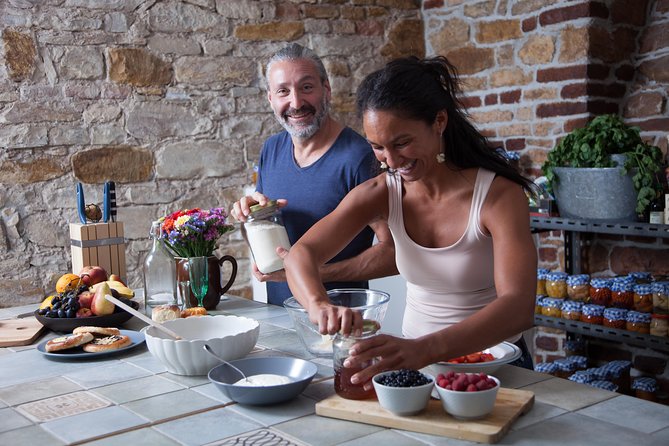
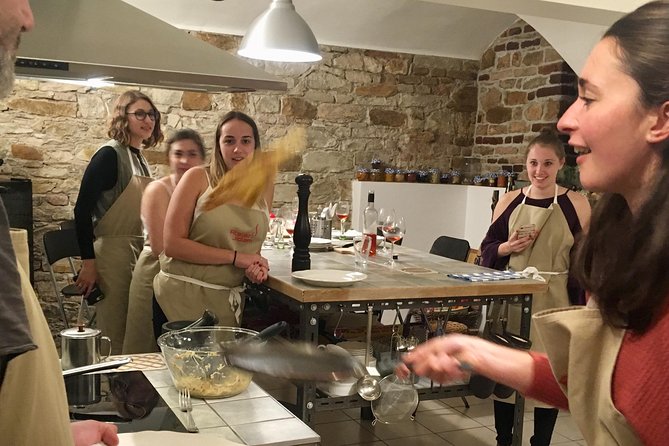
That distinction matters. A large cooking school can leave you watching an instructor do most of the work. This experience is designed for participation. You may grate cheese, flip a potato pancake, prepare dough, shape dumplings, or help with other steps as the meal comes together.
The setting has also been described as a cozy historical basement space. That gives the evening a homey character rather than the feel of a polished restaurant classroom. The tradeoff is that a basement setting may not suit you if you prefer a bright, modern cooking studio.
The first course is a tour of Czech pantry staples
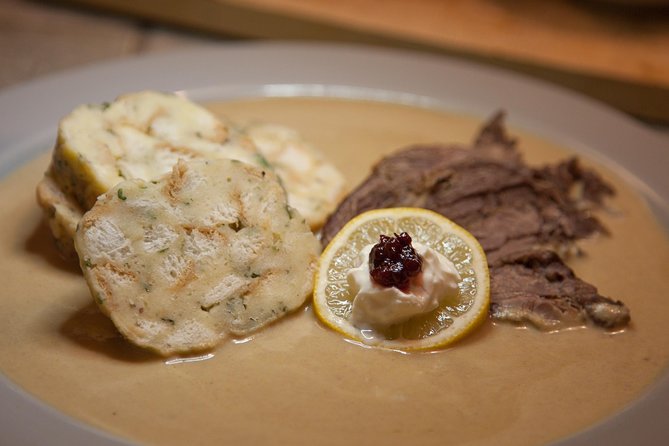
The opening tasting is one of the strongest parts of the evening. Instead of starting with a single plated dish, you sample a collection of foods that help explain Czech eating habits.
You might taste:
- Local cheeses
- Smoked sausages
- Homemade jams
- Pickles
- Fresh bread
- Seasonal vegetables and fruit
- Other homemade products
This is a useful introduction if you are new to Czech food. Pickles and preserves show how people stored food for later use. Bread and cheese offer a simple look at everyday eating. Sausages show the importance of cured and smoked meats in the local food tradition.
The selection is not presented as a formal tasting with strict notes and scores. It is more relaxed. You eat, ask questions, and hear where ingredients fit into Czech cooking. That makes it easier to connect the food to daily life.
You should arrive hungry, but not starving. The evening includes steady snacking before the main course, and the complete meal can be substantial.
Making a traditional starter with your own hands
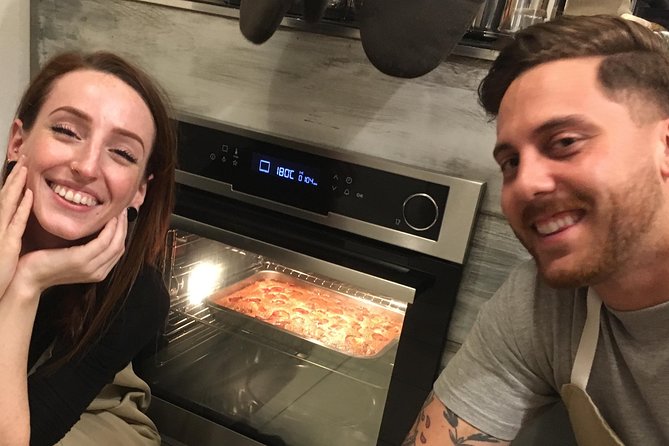
The hands-on portion changes with the season. One possible dish is a potato and sauerkraut pancake. Other options include a quark cheese spread or a carrot and kohlrabi salad.
The potato and sauerkraut pancake is especially appealing for visitors who want an active cooking task. You help combine familiar ingredients in a distinctly Czech way, then work with the mixture as it cooks. One account of the class specifically recalls grating cheese and flipping a potato pancake, which gives you a sense of the practical, social nature of the activity.
The quark spread offers a different lesson. Quark is a fresh dairy product used in many Central European dishes, and tasting it in a savory spread helps you understand how versatile it can be. The carrot and kohlrabi salad brings a lighter option and shows that Czech food is not limited to meat, gravy, and dumplings.
You are not promised one fixed starter, so do not book this expecting a precise menu. The changing selection is part of the design, but it means you should see the dishes listed as examples rather than guarantees.
Or spend the afternoon on something completely different:
- Prague: Castle Tour with Local Guide and Entry Ticket
★ 4.6 · 10,422 reviews - Prague Castle 2.5-Hour Tour Including Admission Ticket
★ 4.7 · 8,927 reviews - Prague: Oldtown, Medieval Underground & Dungeon History Tour
★ 4.2 · 8,244 reviews - Prague: Vltava River Night Cruise with Buffet
★ 4.3 · 7,338 reviews
Czech wine and a little fruit brandy
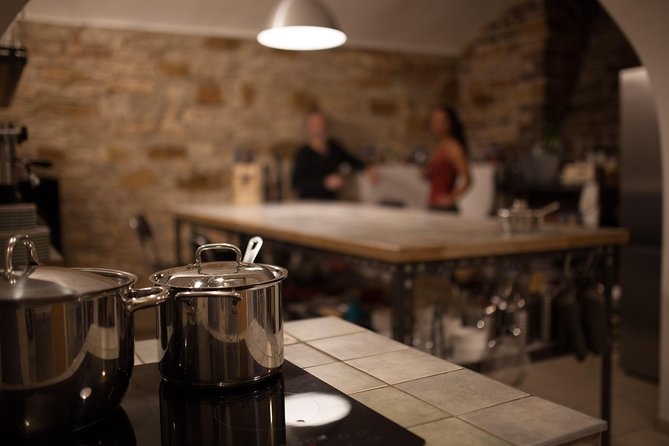
Three Czech wines are included, with the focus on Moravian wine. This is a welcome part of the experience because visitors often know Czech beer but have less familiarity with the country’s wine regions.
The wine is served alongside the food rather than treated as a separate lecture. You taste, compare, and continue talking while the meal is prepared. That makes the pairing feel natural and keeps the mood social.
You also sample Czech fruit brandy. The portion is described as a sample, so this is more of a cultural taste than a drinking session. If you do not drink alcohol, the provided details do not specify nonalcoholic alternatives, so you may want to ask the provider before booking.
The wine and brandy add value to the evening, but they also help explain the price. You are paying for a full food-and-drink experience, not just instruction in three recipes.
The main course shows the heart of Czech home cooking
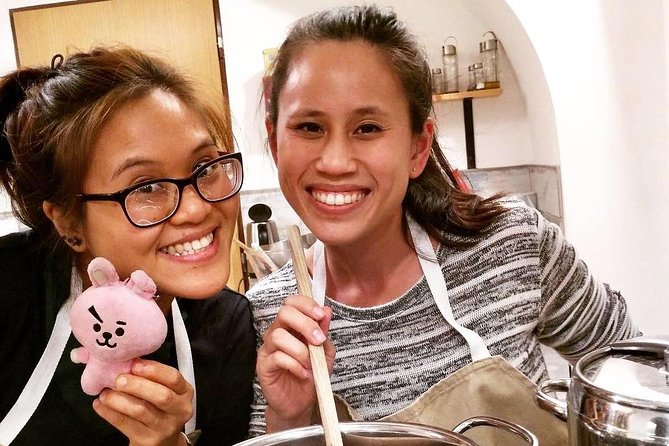
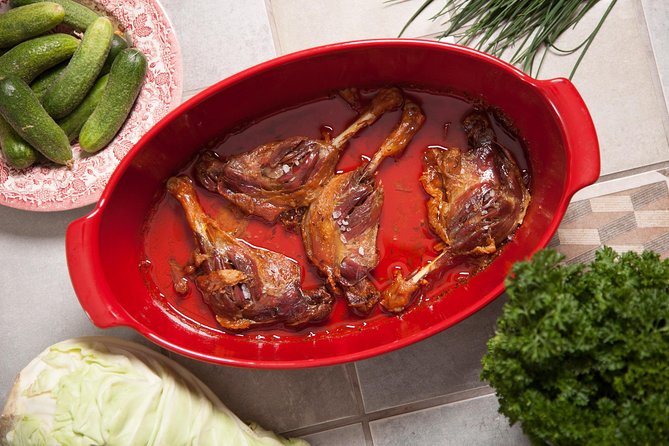
The host prepares the main dish in advance, so this part is more about tasting and explanation than cooking. Depending on the season and menu, the main course may be svíčková, beef goulash, Spanish bird, roasted duck, rabbit with vegetables, or beef with mushrooms.
Svíčková is one of the best-known Czech dishes on the list. It combines beef with a creamy vegetable sauce and is usually served as a comforting, formal home-style meal. Goulash offers a more robust, slow-cooked style of Czech cooking.
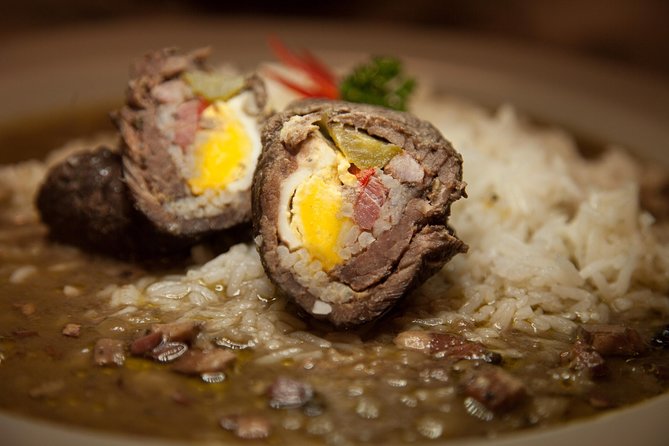
Spanish bird is a stuffed beef roll, despite its name. Roasted duck, rabbit, and beef with mushrooms provide other examples of traditional meat-centered cooking. The range gives you a better understanding of Czech cuisine than a single fixed dish would.
Because the host prepares the main course beforehand, you should not expect to cook every part of dinner. That is a reasonable choice. Long-cooked meats and sauces require time, and preparing them in advance lets you eat a properly finished dish during the three-and-a-half-hour session.
The drawback is that anyone seeking a full technical cooking course may find the main course less hands-on. The class is really about learning several methods, tasting a complete Czech meal, and enjoying the company.
Bread dumplings are the evening’s practical lesson
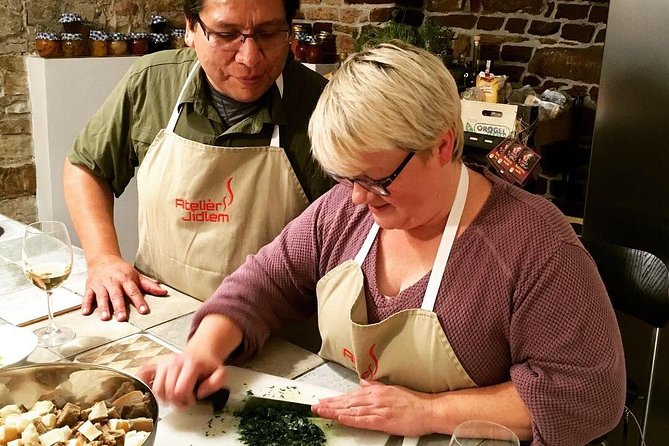
Bread dumplings are prepared together as a side dish. This is a particularly useful part of the class because dumplings are central to many Czech meals, especially those served with sauces and roasted meats.
You get to see how a simple bread-based side becomes a key part of a meal. It also helps you understand why Czech dishes are often served as a combination of sauce, meat, and something substantial to absorb the sauce.
Dumplings are the kind of food that benefits from watching an experienced cook. Texture and handling can be hard to judge from a recipe alone. Bret’s guidance and the group setting give you a chance to ask questions as you work.
The class does not promise that you will leave with a complete set of written recipes, so you should take notes if you want to recreate the dishes at home. Paying attention during the preparation will be more useful than expecting a formal culinary certificate.
Dessert brings in fruit, poppy seeds, and quark
Dessert may be fruit dumplings or kremrole. The fruit dumplings are filled with fresh seasonal fruit and served with poppy seeds and or quark. Kremrole is a delicate pastry filled with sweet meringue.
Fruit dumplings offer a good reminder that Czech dumplings are not always savory. Their soft dough, seasonal filling, and poppy seed or quark topping make them different from the bread dumplings served with the main course.
Kremrole gives you a lighter, pastry-based finish. It also adds a bit of visual contrast after the heavier main meal. Since the dessert depends on the menu, you should not assume that both options will be served.
By this point, the class has moved from tasting to preparation to a full meal. That gradual rhythm is one reason the experience feels like a dinner with a cooking lesson attached, rather than a standard class followed by a small sample.
Why the small group changes the experience
The maximum group size is eight. That is small enough for you to take an active role without needing to compete for counter space or attention.
A small group also helps if you are traveling alone. One solo participant described an evening with just one other couple, which allowed everyone to participate fully and chat easily. The experience can also work well for a family pair, such as an adult and a grandchild, or for couples who want a shared activity.
The social side is not a minor extra. You cook, drink wine, listen to music, and swap stories. The tone can feel more like being welcomed into a Czech home than attending a formal lesson.
That intimacy has one possible downside. If you prefer to keep to yourself, dislike group conversation, or want a quiet restaurant meal, this may feel too social. You are buying time with the hosts and other participants as much as you are buying food.
Is $167.75 good value?
At $167.75 per person, this is not a budget food tour. You can eat a Czech meal for far less in Prague, and a basic cooking class may cost less as well.
The value comes from the combination. Your price covers a tasting menu, several cooking tasks, a main dish, dessert, three Czech wines, fruit brandy, cultural explanation, and roughly three and a half hours with a host. The group size is also limited to eight, which gives the session a more personal feel.
I would consider the price fair for someone who treats food as a central part of travel. It is less compelling if you mainly want to learn one recipe or sample a few bites before moving on.
Booking is often made about 50 days in advance, so you should plan this early if it is important to your Prague schedule. Confirmation is provided when you book, and the experience is offered in English.
Free cancellation is available if you cancel at least 24 hours before the start time. Changes or cancellations inside that window are not accepted for a refund. The activity also requires a minimum number of participants, and if the provider cancels because that number is not reached, you are offered another date or experience, or a full refund.
Who should book this Czech food experience?
I would choose this for you if you want more than restaurant meals during your Prague visit. It suits food-focused visitors, curious home cooks, solo visitors who enjoy meeting people, and families looking for an evening activity that works across generations.
It is also a good fit if you want cultural context without sitting through a formal lecture. The explanations come while you are eating and preparing food, so the history stays connected to something you can see, smell, and taste.
You may want to skip it if you have strict dietary restrictions, do not drink alcohol, or dislike meat-heavy meals. The provided menu includes beef, duck, rabbit, sausages, cheese, and dairy-based ingredients, and no dietary adaptations are specified.
This is also not the best choice for someone who wants a market tour, a walk through Prague, or a cooking class built around a single detailed recipe. The whole activity takes place at the meeting point, and the focus is food, conversation, and Czech home cooking.
Should you book Taste, Cook and Dine Traditional Czech?
I would book it if you have the budget and want one evening that connects Czech food with Czech family life. The best parts are the small group, Bret’s friendly hosting, the hands-on dumpling and pancake work, and the generous range of tastings and drinks.
Go in expecting a social dinner with cooking, not a professional chef course. If that sounds right, this could become one of the most memorable evenings of your Prague stay. If you only want an inexpensive meal or a quick demonstration, spend your money elsewhere.
FAQ
How long does the experience last?
The experience lasts approximately 3 hours and 30 minutes.
Where does the activity start and end?
It starts at Křižíkova 70/67, 186 00 Praha 8-Karlín, Czechia, and ends back at the same meeting point.
How many people can join the experience?
The activity has a maximum of eight participants.
Is the experience offered in English?
Yes. The experience is offered in English.
What food and drinks are included?
You taste Czech delicacies such as cheeses, sausages, jams, pickles, bread, seasonal produce, and other homemade products. The menu also includes a starter, a traditional main dish, a side dish, dessert, three Czech wines, and a sample of Czech fruit brandy.
What is the cancellation policy?
You can cancel at least 24 hours before the start time for a full refund. Cancellations or changes made less than 24 hours before the start time are not accepted for a refund.
Newest listings in Prague
- World War II 4WD Tour from Prague with Lunch★ 4.4 · 3 reviews
- Prague: Historical Walking Tour with Focus on World War 2★ 4.3 · 12 reviews
- WWII and Communism History in Prague’s Old Town Private Tour★ 5.0 · 4 reviews
- Wroclaw: Giant Mountains & Valley of Palaces Day Tour★ 4.8 · 36 reviews
- Walking tour of Prague in French : Nové Město★ 4.9 · 16 reviews
- Walking tour of Prague in french: Old Town & Charles Bridge★ 4.9 · 62 reviews
- Vltava River Cruise and Private Tour of Prague’ Old Town★ 5.0 · 1 review
- Ultimate Unlimited Beer Pong with Czech Beer★ 4.6 · 5 reviews
Prague Tours, compared.


Castle Tour with Local Guide and Entry Ticket
Read our review →
Prague Castle 2.5-Hour Tour Including Admission Ticket
Read our review →
Oldtown, Medieval Underground & Dungeon History Tour
Read our review →