
REVIEW · JEWISH QUARTER TOURS
Small Group Prague Old Town and Jewish Quarter Walking Tour
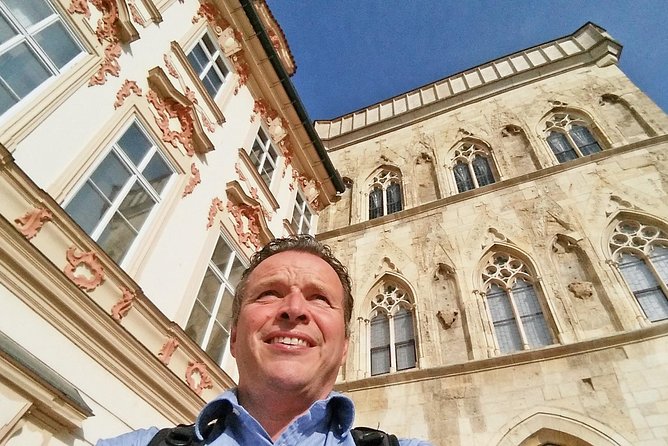
Prague reveals itself through side streets. This small-group walk moves beyond the postcard views, using courtyards, passageways, building signs, and quiet corners to explain how the Old Town and Jewish Quarter fit together. I especially like the maximum group size of six and Jason’s long local experience, which help turn a standard sightseeing walk into a real conversation. The one drawback is that two and a half hours of history, architecture, religion, and local advice can feel like a lot to absorb.
I also like the practical touches: learning how to watch the Astronomical Clock, finding the right way into certain churches, understanding Stolpersteine, and getting tips on Czech food and drink. Guide Jason has lived in Prague for about 27 years, while other guides, including Jans and James, have also led the tour. If you prefer a grand tour inside every synagogue and church, this may feel too focused on orientation and explanation.
In This Review
- Key points about this Prague walking tour
- Why this two-and-a-half-hour walk works so well
- Starting at Old Town Square
- Reading Prague through alleys and building signs
- The Jewish Quarter, from synagogues to the cemetery
- Churches, reformers, and changing Prague
- Havelska Street Market and the old commercial city
- The chimney cake question, with a Czech answer
- What the guides do best
- Timing, comfort, and practical details
- Who should book this Prague walk?
- Should you book the Old Town and Jewish Quarter tour?
- FAQ
- How much does the Prague Old Town and Jewish Quarter tour cost?
- How long does the walking tour last?
- Where does the tour begin?
- Where does the tour end?
- What language is the tour offered in?
- How many people can join the tour?
- Which Jewish Quarter sights are covered?
- Does the tour include the Old Town Hall and Astronomical Clock?
- Is the tour suitable for most people?
- Are service animals allowed?
- Can I cancel for a full refund?
Key points about this Prague walking tour
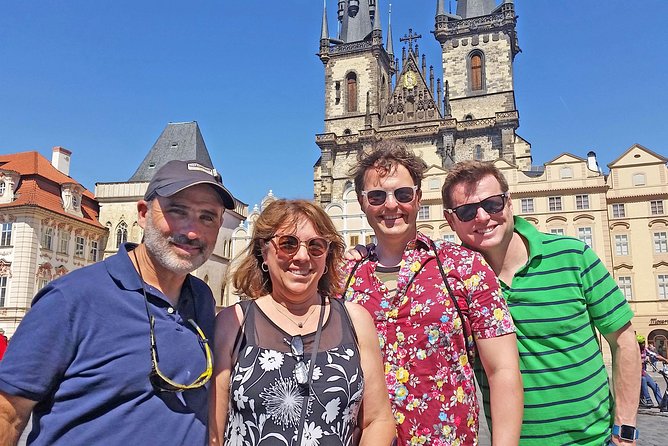
- Six-person limit: The small group makes it easy to hear Jason, ask questions, and adjust the discussion to your interests.
- More than famous squares: You walk through alleyways, courtyards, passageways, and smaller streets that explain Prague’s layout.
- Jewish Quarter overview: Pinkas Synagogue, the Old Jewish Cemetery, the Ceremonial Hall, Klausen Synagogue, the Old-New Synagogue, and Spanish Synagogue all receive attention.
- Clock-watching advice: You learn how the Old Town Hall and Astronomical Clock work, plus where to stand for the apostle procession.
- Local Prague guidance: The tour includes Czech words, food and beer suggestions, building identifiers, architectural clues, and directions to a popular beer garden.
- Good first-day choice: The information helps you make better choices for the rest of your stay.
Why this two-and-a-half-hour walk works so well
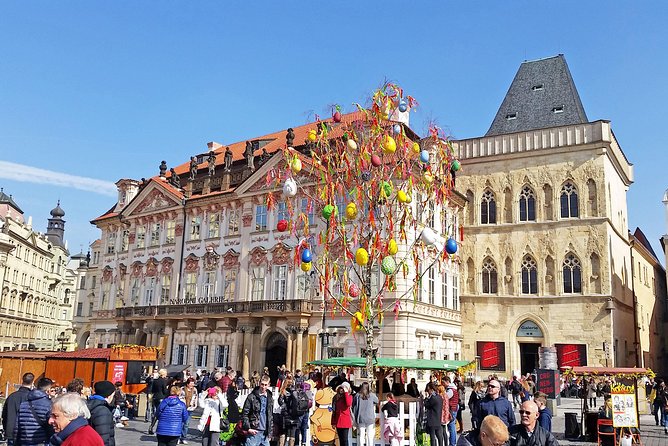
Prague’s center can look easy to understand. There is Old Town Square, the Astronomical Clock, the river, and a cluster of grand churches. Yet the city’s story sits in the less obvious details: colored building numbers, narrow links between streets, old markets, religious symbols, and buildings that changed use over time.
This tour gives you that framework. You are not simply led from one famous façade to the next. You are shown why the streets are narrow, why courtyards appear behind grand fronts, and how to read the clues built into Prague’s architecture.
The pace is relaxed. Several people describe the walk as slow enough to stop, listen, and ask questions. That matters in an old city where uneven paving and crowded public squares can make a fast-moving tour tiring.
The group limit is listed as six, although one booking reached seven when a couple joined a group of five. That is still unusually small for a scheduled city walk. On some weekdays, the tour may go ahead with only one or two people, creating something close to a private walk without the usual private-tour price.
At $22.99 per person, I consider that good value. You receive 150 minutes with a guide who can explain the city’s past and answer practical questions about the present. The value is strongest if you use the walk as your introduction to Prague, then follow up by visiting the places that catch your interest.
More Jewish Quarter walks:
- Prague: Jewish Quarter Walking Tour with Admission Tickets
★ 4.7 · 3,729 reviews - Prague: Old Town and Jewish Quarter Guided Tour in German
★ 4.8 · 3,143 reviews - Prague: Old Town and Jewish Quarter Guided Walking Tour
★ 4.6 · 2,847 reviews
Starting at Old Town Square
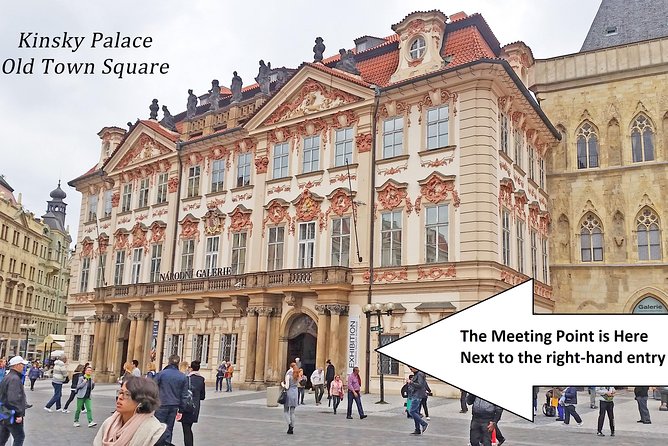
The meeting point is Staroměstské náměstí 12, at the heart of Prague’s Old Town. This puts you beside the city’s most famous sights, but the tour does not simply linger in the middle of the square.
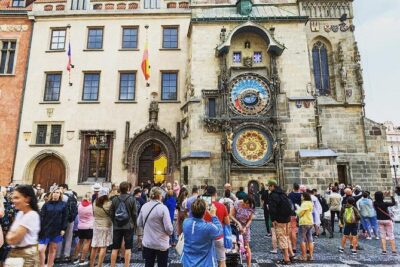
The Old Town Hall and Astronomical Clock receive a careful explanation. You learn when the hall first opened, how the clock came to be installed, who built it, and how its moving display works. Just as useful, you get advice on where to watch the procession of the apostles.
That last detail is practical. The clock draws a crowd, and the best viewing position is not always obvious when you arrive. A guide’s advice can save you from standing behind a forest of raised phones and seeing very little.
The tour also explains the history of Old Town Square itself. The Jan Hus Monument opens a discussion of Jan Hus, the Hussite movement, and the Czech reform tradition. You also hear about the Marian Column that once stood on the square, what it represented, and why it disappeared.
This is a good example of the tour’s approach. A statue or column is not treated as decoration. You get the political and religious argument behind it, which helps you understand why Prague’s public spaces can carry several layers of meaning at once.
Reading Prague through alleys and building signs
The most distinctive part of the walk may be the attention given to streets that are not usually treated as attractions. Passageways, courtyards, and small lanes show how the Old Town developed behind its grand façades.
You learn how to interpret Prague’s building identifiers, recognize different design styles, and notice how the city’s architecture changed over time. These details may seem small, but they give you a useful skill for the rest of your visit. After the tour, you can look at a building and ask what period it belongs to, what it replaced, and why it faces the street in that particular way.
The walk also introduces the Stolpersteine project, known in English as Stumble Stones. These small plaques set into pavements remember people persecuted and killed under the Nazi regime. They are easy to pass without noticing, so learning what they mean adds a quiet human layer to your walk through the city.
There is some language instruction too. You learn a little Czech, enough to make signs and local encounters less mysterious. You also receive suggestions for Czech food and drink. The advice is not presented as a separate restaurant crawl, but it can help you make better choices after the tour.
The Jewish Quarter, from synagogues to the cemetery
The Jewish Quarter section is an overview rather than a full museum visit. You are introduced to the Pinkas Synagogue, Old Jewish Cemetery, Ceremonial Hall, Klausen Synagogue, Old-New Synagogue, and Spanish Synagogue.
For each place, the guide covers its history, present-day role, and details worth looking for. You also get suggestions for skipping lines. That is useful because the Jewish Museum area can involve several separate buildings and a ticketing system that is easier to understand before you arrive.
The Old Jewish Cemetery is especially important to view with context. Its crowded appearance is not accidental, and a short explanation helps you understand why the graves occupy the site in such a distinctive way. The surrounding synagogues then make more sense as parts of a wider community story rather than isolated monuments.
The Spanish Synagogue gives you a chance to consider style and later changes in use. The Old-New Synagogue brings a different set of associations and architectural details. Pinkas Synagogue carries especially serious historical weight, and the guide’s role here is to explain the site clearly and respectfully.
If your main goal is to spend a long time inside each synagogue, you will need to return on your own. The walk gives you orientation and context, but it is not presented as an admission-based tour of every interior. I see that as a strength for a first visit, though a specialist museum tour may suit you better if you want extended detail about Jewish art, religious objects, or wartime records.
The tour also avoids reducing the Jewish Quarter to one period of suffering. It deals with religious history, buildings, changing functions, and the modern city. That wider frame makes the district easier to understand.
More Walking Tours in Prague:
- Prague: 3-Hour Walking Tour of Old Town & Prague Castle
★ 4.7 · 5,696 reviews - Prague: Ghost Walking Tour Where Legends Come To Life
★ 4.4 · 5,253 reviews - Prague Guided Walking Tour and Cruise with Authentic Czech Lunch
★ 5.0 · 3,627 reviews - Prague Ghost and Legend of Old Town Walking Tour
★ 4.5 · 2,630 reviews
Churches, reformers, and changing Prague
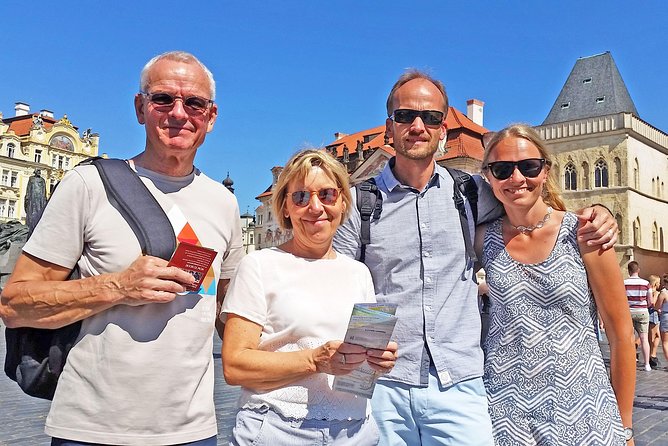
Several churches appear along the route, each with a different lesson. You learn about a church’s style, why it was built in that location, and how its denomination changed over time. One stop includes a first look at the last census data, linking the building’s religious past with the city’s modern population.
Another church offers Gothic details to watch for, along with information about how to enter and when it is open. That is exactly the kind of advice that can prevent a wasted walk across town when a door is closed.
The route also includes a church whose history involves different names, a specific builder, and restrictions on Czech-language performances. Its claim to fame adds a cultural angle beyond the usual architecture lesson.
These stops are valuable because Prague’s religious buildings do not tell only one story. Catholic, reformist, Hussite, and other traditions have shaped the city, and buildings have changed denomination or function as power shifted. Jason explains those changes in plain language, with enough dates and names to give the story structure without turning the walk into a lecture.
One note for history fans: Jason sometimes gives a large number of dates and details. Some people will enjoy that precision. If you prefer a lighter narrative, you may need to tell him which subjects interest you most. The small group makes that easy.
Havelska Street Market and the old commercial city
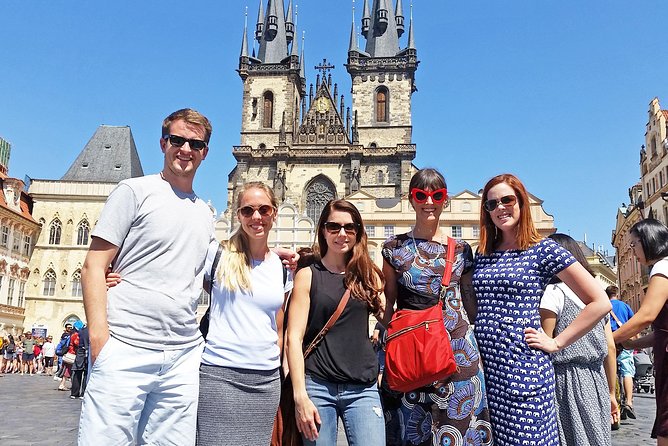
Between the larger sights, the route passes Havelska Street Market, described as one of Europe’s oldest markets. You learn when it opened, why it is worth returning to, and how much smaller it is today than in its earlier form.
This stop adds useful texture. Old Town was not only a place of churches, councils, kings, and monuments. It was also a working commercial district, shaped by trade and everyday shopping.
The market can be a good place to revisit later, but expectations matter. The present market occupies only about 10 percent of its original size, so this is not an enormous historic bazaar. The value lies in understanding what the street once meant and knowing where it fits into the modern center.
The walk also explains why a particular building or public space was created, what stood there before, and how it is used now. You then receive directions to a popular beer garden. Those small practical details are part of the appeal for someone who wants more than a list of monuments.
The chimney cake question, with a Czech answer
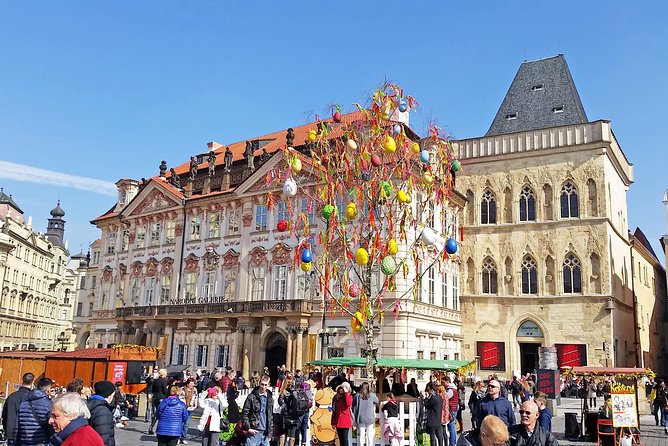
At one point, you will likely encounter trdelník, the pastry often called chimney cake. The tour explains not only what it is, but how Czechs prefer to eat it.
That distinction is useful. Prague’s center is full of food marketed toward sightseers, and some dishes are presented as more traditionally Czech than they really are. A local explanation helps you separate a popular street snack from the broader Czech food culture.
This is a small stop, but it fits the tour’s wider purpose. You are learning how to look at Prague as a lived-in city, not just a collection of photogenic buildings.
What the guides do best
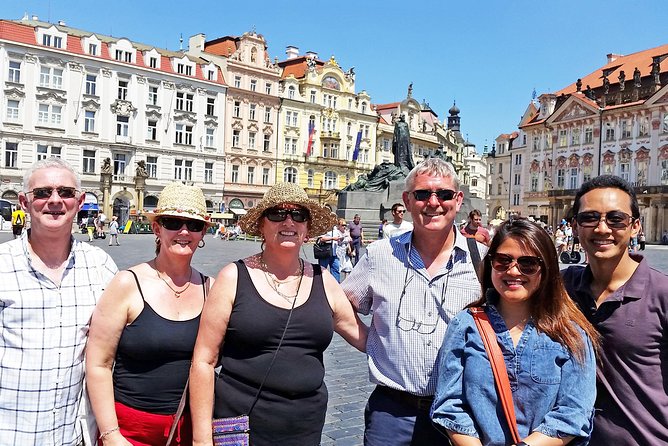
The strongest part of this experience is the guide. Jason is repeatedly described as warm, funny, easy to understand, and deeply familiar with Prague after roughly 27 years in the city. His British background is also useful for English-speaking visitors who want clear explanations without struggling with an unfamiliar accent.
Jans and James are also named as guides, and the feedback about them is similarly positive. Jans is praised for clear English and a friendly manner. James is described as welcoming and engaging, with enough cultural background to inspire further reading about Prague, including the work of Franz Kafka.
Jason’s best quality is his ability to shift between formal history and useful local advice. You can ask about a monument, then move to food, beer, opening hours, or what to see next. The result feels personal without losing the main route.
The small group supports that style. You can hear the guide while walking, stop for questions, and ask for more detail about a particular subject. If you are the only person booked, the tour may still run, particularly on weekdays. That is a strong benefit for solo visitors or couples.
Timing, comfort, and practical details
The tour lasts about two hours and 30 minutes and begins and ends at the stated meeting point in Old Town. It is near public transportation, and most people can take part. Service animals are allowed.
You should expect a walking experience, even though the pace is not described as strenuous. Wear shoes suited to city streets and check the weather before setting out. The tour has been conducted in very cold conditions, and a short coffee warm-up has sometimes been possible when the group is tiny, but you should not treat that as a guaranteed part of the itinerary.
The activity is offered in English and uses a mobile ticket. Confirmation arrives when you book. Free cancellation is available if you cancel at least 24 hours before the start time. Changes or cancellations inside that window are not accepted for a refund.
The tour is often booked around 50 days ahead. That suggests you should reserve early if you want a particular date, especially because the group is so small.
Who should book this Prague walk?
I would choose this tour for a first morning or first afternoon in Prague. It gives you the basic map, explains the major sights, and sends you off with ideas for food, beer, churches, markets, and museums.
It suits you especially well if you:
- Like history explained through buildings and public spaces
- Want a small group rather than a crowd
- Prefer a relaxed walking pace
- Enjoy asking questions
- Want context before visiting the Jewish Museum sites
- Appreciate local food and drink suggestions
- Are visiting Prague for the first time
- Want a guide who can discuss modern life as well as older events
It may not be the best choice if you want long interior visits, a specialist treatment of Jewish art, or a fast list of every major attraction. The Jewish Quarter is covered in a broad, thoughtful way, but the main purpose is to help you understand the area and decide what deserves a closer visit later.
Should you book the Old Town and Jewish Quarter tour?
Yes, if you want a clear introduction to central Prague with real room for questions. At $22.99, the price is modest for 150 minutes, and the six-person limit gives it a personal feel that many larger city walks cannot match.
Book it early if you can, and consider placing it near the start of your stay. You will get more from Old Town Square, the Astronomical Clock, the Jewish Quarter, Havelska Market, and the surrounding lanes once you know what you are seeing. If you prefer to explore quietly on your own, use the tour as a short orientation rather than expecting a full museum visit.
FAQ
How much does the Prague Old Town and Jewish Quarter tour cost?
The tour costs $22.99 per person.
How long does the walking tour last?
The experience lasts approximately two hours and 30 minutes.
Where does the tour begin?
It begins at Staroměstské náměstí 12, 110 00 Praha 1-Staré Město, Czechia.
Where does the tour end?
The tour ends back at the meeting point.
What language is the tour offered in?
The tour is offered in English.
How many people can join the tour?
The stated maximum is six people. On one occasion, a group reached seven when two additional people joined a group of five.
Which Jewish Quarter sights are covered?
The tour gives overviews of Pinkas Synagogue, the Old Jewish Cemetery, the Ceremonial Hall, Klausen Synagogue, the Old-New Synagogue, and the Spanish Synagogue.
Does the tour include the Old Town Hall and Astronomical Clock?
Yes. You learn about the hall’s origins, the clock’s construction and operation, and where to watch the apostle procession.
Is the tour suitable for most people?
The activity states that most people can participate. It is a walking tour at a relaxed pace and is near public transportation.
Are service animals allowed?
Yes, service animals are allowed.
Can I cancel for a full refund?
Yes, if you cancel at least 24 hours before the experience start time. Cancellations made less than 24 hours in advance are not refunded.
Newest listings in Prague
- World War II 4WD Tour from Prague with Lunch★ 4.4 · 3 reviews
- Wroclaw: Giant Mountains & Valley of Palaces Day Tour★ 4.8 · 36 reviews
- Prague: Historical Walking Tour with Focus on World War 2★ 4.3 · 12 reviews
- WWII and Communism History in Prague’s Old Town Private Tour★ 5.0 · 4 reviews
- Walking tour of Prague in French : Nové Město★ 4.9 · 16 reviews
- Walking tour of Prague in french: Old Town & Charles Bridge★ 4.9 · 62 reviews
- Vltava River Cruise and Private Tour of Prague’ Old Town★ 5.0 · 1 review
- Ultimate Unlimited Beer Pong with Czech Beer★ 4.6 · 5 reviews
Jewish Quarter Tours, compared.
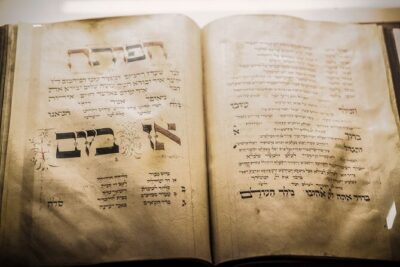
Jewish Quarter Walking Tour with Admission Tickets
Read our review →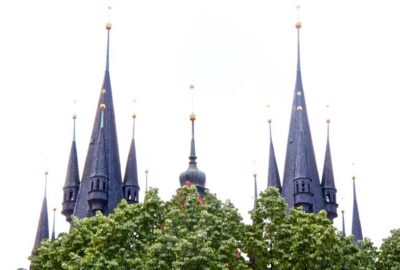
Old Town and Jewish Quarter Guided Walking Tour
Read our review →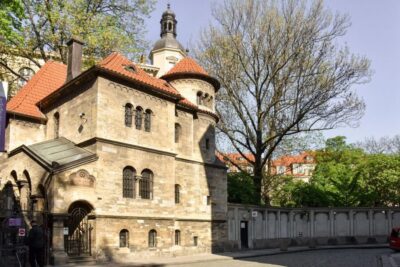
Jewish Quarter Ticket with optional Audio Guide
Read our review →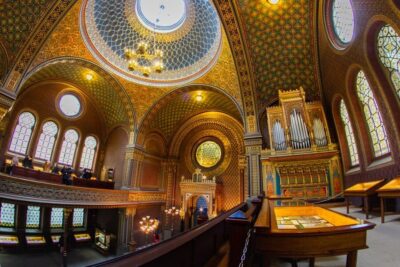
Prague’s TOP Sights – Old Town, Jewish Quarter, Charles Bridge (Tip-based tour)
Read our review →
Prague Old Town New Town and Jewish Quarter Morning Tour
Read our review →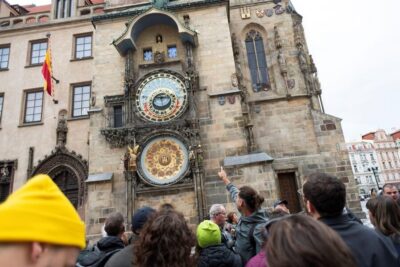
Old Town, Jewish Quarter & Astro Clock Walking Tour
Read our review →
Prague Essential Tour Old Town and Jewish Quarter
Read our review →Browse the lists this tour appears in