
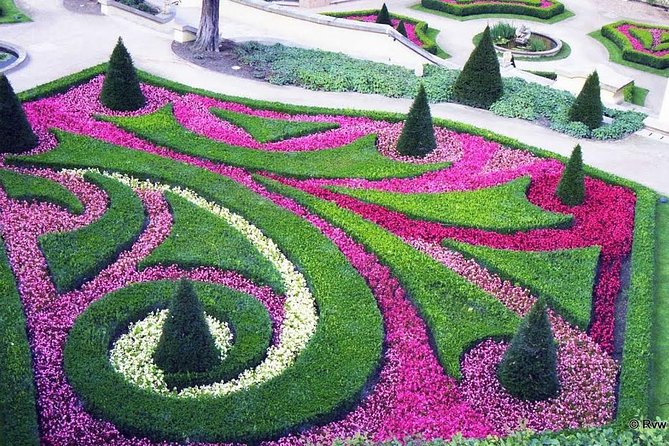
REVIEW · WALKING TOURS
Prague Renaissance & Baroque Gardens Walking Tour
Prague hides its best stories behind garden walls. I like the way this three-hour small-group walk connects palace gardens, political symbols, sculpture, and city views rather than treating flowers as mere decoration. I also like the practical tram ride to Prague Castle and the chance to see Vrtbovská Garden, a quiet Baroque retreat that many independent visitors miss. The main drawback is the extra admission cost, plus steep stairs at Vrtbovská Garden.
This tour suits you if you want Prague explained through art and power, not just photographed from a bridge. Bonita and Vadim have earned praise for lively storytelling and fresh perspectives, even from people who live in Prague. Still, you should know that the pace includes walking, stairs, and several outdoor stops, so comfortable shoes and a little stamina matter.
In This Review
- Key details before you book
- Why Prague’s gardens deserve three hours
- Meeting at Malostranská and riding tram 22
- The Royal Garden and Queen Anne’s Summer Palace
- Figs, citrus, tulips, and royal curiosity
- Wallenstein Garden’s statues, grotto, and peacocks
- Vrtbovská Garden and the best city views
- What the price includes, and what it does not
- Morning or afternoon?
- Who should book this garden walk?
- Practical tips for a better visit
- Should you book the Prague garden tour?
- FAQ
- How long does the Prague Renaissance and Baroque Gardens Walking Tour last?
- Where does the tour begin?
- What departure times are available?
- Is admission to all the gardens included?
- How large is the group?
- Can I cancel for a full refund?
Key details before you book
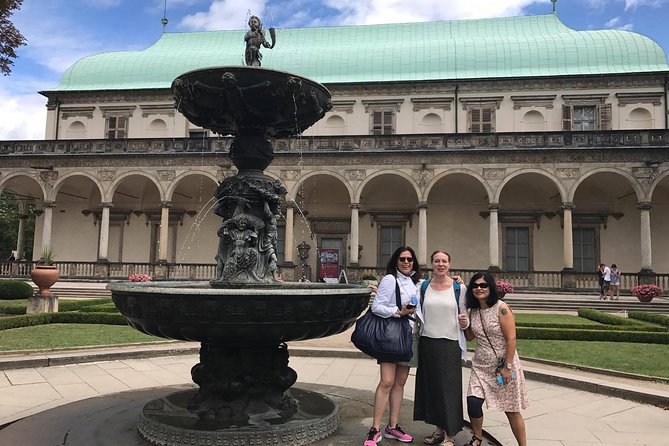
- Only eight people maximum: The small group gives your guide room to answer questions and adjust the discussion to your interests.
- Three historic garden settings: You visit the Royal Garden at Prague Castle, Wallenstein Garden, and Vrtbovská Garden.
- A tram ride is part of the route: The group takes tram 22 from Malostranská toward the castle gardens.
- The statues have political meaning: Mythological figures, fountains, and ornamental details help explain how rulers presented power.
- Vrtbovská Garden costs extra: Admission is CZK 130 for an individual, or CZK 100 for students and seniors.
- Two departure choices: You can select a 10 a.m. or 2 p.m. start.
Why Prague’s gardens deserve three hours
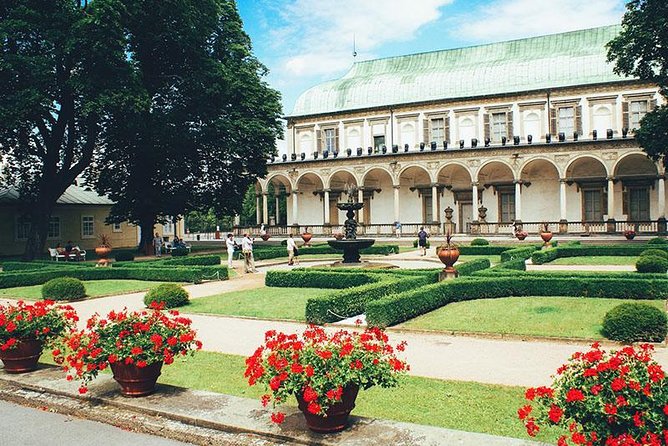
Prague is famous for its castle, church towers, and medieval lanes. Its gardens are easier to overlook, even though they reveal how the city’s rulers lived, competed, and displayed taste.
This walk focuses on the Renaissance and Baroque periods, when gardens became carefully planned statements. A fountain was not simply a fountain. A statue of a Roman god could suggest military strength, royal authority, or the wisdom of a particular ruler.
That is where a guide adds real value. Without explanation, you may notice a grotto, peacock, or line of statues. With an art and history guide, you have a better chance of understanding why it is there and what it was meant to say.
The small group matters, too. With no more than eight people, the outing should feel more like a thoughtful walk with a specialist than a large procession. The strongest praise for the experience centers on this personal approach, especially the way Bonita adapts her stories to the group and brings mythology into the discussion.
The tour is offered in English and lasts about three hours. You can choose between morning and afternoon, which makes it easy to fit around a castle visit, lunch, or another central Prague activity.
More Walking Tours in Prague:
- Prague: 3-Hour Walking Tour of Old Town & Prague Castle
★ 4.7 · 5,696 reviews - Prague: Ghost Walking Tour Where Legends Come To Life
★ 4.4 · 5,253 reviews - Prague: Jewish Quarter Walking Tour with Admission Tickets
★ 4.7 · 3,729 reviews
Meeting at Malostranská and riding tram 22
You meet your guide and group at Bagel Lounge Malostranská, at Letenská 118/1 in Malá Strana, near Malostranská Metro station. This is a useful starting point because the group then takes tram 22 together to reach the castle gardens.
The tram is not just a transfer. It reduces the need to find the correct entrance on your own and lets the guide begin setting the scene for the castle district. Tram 22 also connects several important parts of Prague, so the ride helps place the gardens within the wider city.
Allow yourself enough time to reach the meeting point. The tour description says the group meets at the metro station area, while the specific meeting address is Bagel Lounge Malostranská. Check the final booking instructions so you go to the exact spot.
The route involves ordinary city walking and some steep stairs. You should have a moderate level of fitness. If stairs are difficult, the guide can let you wait on the second terrace at Vrtbovská Garden while the group reaches the top and returns about ten minutes later.
The Royal Garden and Queen Anne’s Summer Palace
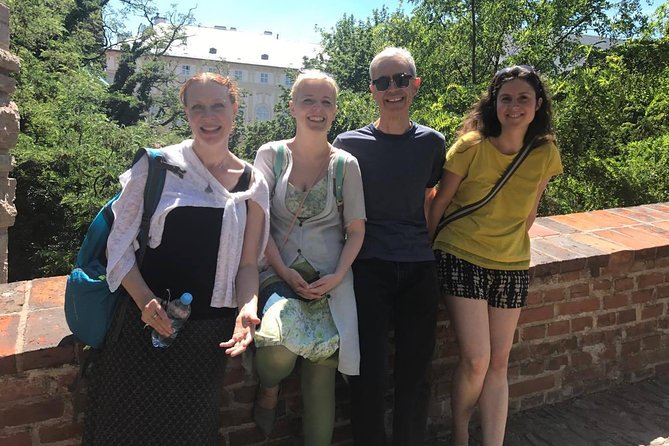
The first major section takes you through the Royal Garden at Prague Castle. This garden was created in the 1500s on ground that had previously held medieval vineyards. It later became known for rare plants and specimens brought from distant parts of the world.
That botanical story gives the garden more character than a simple palace lawn. Renaissance courts used gardens to display wealth, curiosity, and access to faraway places. Plants that seemed unusual in central Europe carried a sense of discovery and status.
Near the Belvedere Summer Palace, also called Queen Anne’s Summer Palace, you see one of the clearest Renaissance buildings in Prague. The palace was completed in the middle of the 16th century and is often described as one of the finest examples of pure Renaissance architecture outside Italy.
Look closely at the exterior. The building has ornamental and figurative friezes, arcades with decorated Tuscan capitals, and reliefs showing mythology, hunting, and warfare. One detail links the building directly to its royal founders: Ferdinand I appears with the Order of the Golden Fleece, offering Queen Anna a fig-tree blossom.
Your guide can help you read these details instead of letting them blur into general decoration. This is one of the tour’s strongest features. The architecture is graceful, but the stories explain why each image was chosen.
The garden around the Belvedere is also a good place for photographs. You get a formal Renaissance setting, palace architecture, and views toward Prague’s historic center. The experience is calmer than many of the city’s best-known squares, though the exact atmosphere will depend on the season and opening conditions.
Figs, citrus, tulips, and royal curiosity

The route continues to the Fig House and Orangery. These structures recall an ambitious period of gardening in central Europe, when court gardeners worked to grow plants that normally belonged in warmer climates.
Figs, almonds, oranges, and lemons were among the unusual plants associated with this part of the estate. The point is not simply that exotic fruit grew here. It shows how royal gardens functioned as living collections, places where rulers could display wealth, scientific interest, and connections beyond Bohemia.
You also hear about the arrival of tulips in Prague. A story about a flower can sound small beside palaces and dynasties, but it helps make the past more tangible. Gardens were not static works of art. Plants, gardening methods, and tastes moved across borders.
This section should appeal to you if you enjoy social history. You learn what people wanted to grow, what required special care, and how gardens reflected changing fashions. It also gives plant lovers something more specific than a list of species.
The route passes the South Gardens as well. These spaces add another perspective on Prague Castle and its relationship to the city below. The tour is not limited to one perfectly preserved garden. It uses several spaces to show how royal grounds changed over time.
A few more Prague options to compare
- Prague: 50-Minute Sightseeing Evening Cruise
★ 4.2 · 33,780 reviews - Prague: Medieval Dinner with Unlimited Drinks
★ 4.4 · 19,847 reviews - Prague: Skip-the-line Castle Ticket and Optional AudioGuide
★ 4.3 · 11,121 reviews - Prague: Castle Tour with Local Guide and Entry Ticket
★ 4.6 · 10,422 reviews
Wallenstein Garden’s statues, grotto, and peacocks
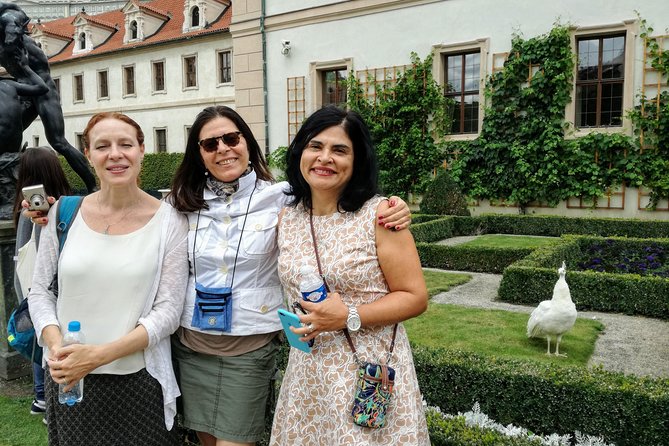
Wallenstein Garden offers a different mood. Built in the 1600s for Wallenstein Palace, it now serves as the public garden of the Senate of the Czech Republic.
The Italian-style design includes an aviary, an artificial grotto, a sculptural gallery of mythological heroes, and a fountain by Adrian de Vries. You may also see the garden’s brightly colored peacocks, which add a touch of living theater to an otherwise carefully controlled setting.
The statuary is the real reason to pay attention here. The figures are not random ornaments scattered among the paths. They create a program of mythology and authority, showing how the garden’s owner wanted power and learning to appear.
This is where Bonita’s interest in Greek and Roman mythology becomes especially useful. She has been praised for explaining how ancient gods and heroes were selected to serve modern political messages. You do not need a background in classical mythology to follow the discussion. The guide’s job is to connect the names and poses with the ambitions of the people who commissioned them.
The garden itself is relatively compact, and the listed visit lasts about 25 minutes. That is enough time to appreciate the main features, but not enough for a leisurely, unstructured stroll. If you like sitting quietly in gardens, you may wish you had extra time after the guided portion.
Vrtbovská Garden and the best city views
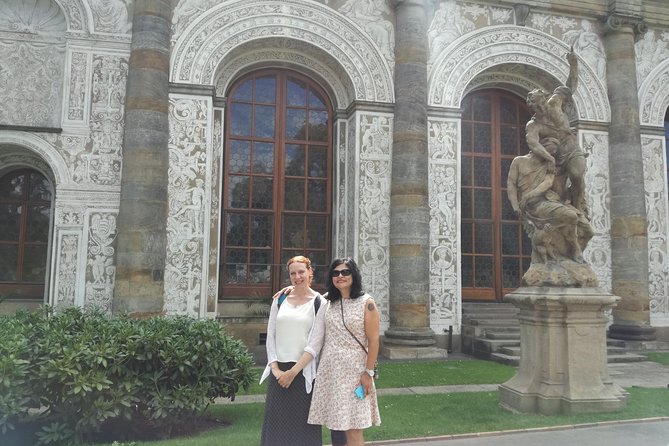
The final stop is Vrtbovská Garden, usually called Vrtba Garden in English. This walled Baroque garden dates from around 1720 and is one of the tour’s most distinctive stops.
Its design rises up the slope in terraces. You walk past original statuary and sculptural decoration, then climb toward the highest terrace for views over Prague and Prague Castle. The views are a major reward, but the garden’s symbolism matters just as much. Baroque gardens were built to guide the eye, control movement, and create a sense of order.
The listed visit lasts about 25 minutes. That is a short window, especially if you want photographs or need to take the stairs slowly. The guide’s explanations help you use the time well, but this is not a long garden picnic.
Admission is not included. The fee is CZK 130 for an individual, or CZK 100 for students and seniors. The additional charge is modest compared with the total tour price, but you should still budget for it.
The steep stairs are the main physical issue. If you have trouble climbing, you can wait on the second terrace while the group goes to the top and returns. The tour also offers a private option that can modify this part for a personal group, though the information provided does not give that option’s price.
Vrtbovská Garden is especially good for you if you want a quieter setting and strong views. It also gives the tour a satisfying finish: you end above the city, looking back at the places and ideas discussed along the way.
What the price includes, and what it does not
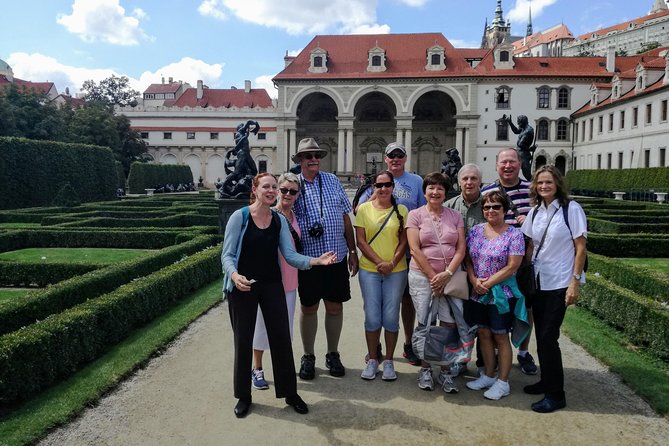
The listed price is $126.03 per person. That is not a bargain-priced walking tour, so the value depends on what you want from your time in Prague.
You are paying for about three hours with a professional scholar guide, a group limited to eight people, the guided history walk, and admission to most gardens. The garden admission under Prague Castle is listed separately at CZK 90 for an individual, or CZK 60 for students and seniors. Vrtbovská Garden is also extra.
Because the tour covers several sites and uses an expert guide to interpret art, architecture, botany, and political symbolism, it offers more than basic orientation. I would consider it good value for someone who enjoys history and wants a focused look at places that are easy to pass without understanding.
It is less attractive if you simply want a free stroll through green spaces. You will pay more than you would for visiting public gardens independently, and the schedule keeps you moving from one stop to the next.
The small group improves the calculation. A large tour might deliver the same names and dates but leave little room for questions. Here, the guide can respond to your interests, whether that means palace architecture, gardening, mythology, or Prague’s political past.
Morning or afternoon?
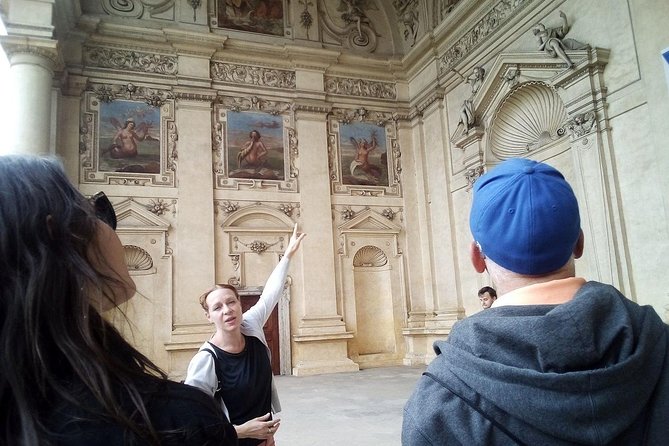
The 10 a.m. departure gives you a useful start to the day. Afterward, you can continue exploring Prague Castle or return toward Malá Strana for lunch and more sightseeing.
The 2 p.m. option works well if you prefer a slower morning or want to pair the tour with an earlier castle visit. It finishes later in the day, and the light may be appealing for photographs, though the exact look will depend on the season.
The gardens are seasonal places, so their appearance will change across the year. One guide response notes that the gardens close for part of the winter and reopen later, so check the operating dates before you make firm plans.
At the end, the information gives two slightly different impressions. The meeting details say the activity ends back at the meeting point, while the route description says the guide leaves you at Vrtbovská Garden. Confirm the final end point when booking, especially if you have a timed reservation afterward.
Who should book this garden walk?
I would recommend it most strongly to first-time visitors who want a calmer side of Prague, repeat visitors who have already seen the main sights, and local residents who enjoy finding new meaning in familiar places.
It is also a good choice for anyone interested in:
- Renaissance architecture
- Baroque garden design
- Greek and Roman mythology
- Royal botany and exotic plants
- Prague Castle beyond its main interiors
- Photography and elevated city views
The walk is not aimed at people seeking only quick facts. The praise for the guides centers on storytelling, art, and the way the details connect. You should enjoy asking questions and looking closely at statues, friezes, fountains, and layouts.
Families may appreciate the peacocks and open-air setting, but the tour’s intellectual focus and stair sections may not suit every child. The group size is friendly, but the pace is still that of a guided history walk.
Practical tips for a better visit
Wear shoes that handle pavement and stairs comfortably. Vrtbovská Garden includes a steep climb, and the route covers several garden areas rather than one short loop.
Bring water and a camera, but leave room to listen. The most valuable part of Wallenstein Garden is not just the fountain or grotto. It is understanding how the objects work together.
If you have visited Prague before, do not dismiss this as a basic sightseeing walk. One local participant described gaining a new view of the city after decades in the historic center, which says a lot about the tour’s depth.
Book at least 24 hours ahead if your plans may change. Free cancellation is available until that point, while changes or cancellations made less than 24 hours before the start are not accepted for a refund.
Should you book the Prague garden tour?
Book it if you want Prague’s gardens interpreted as works of art and political theater, and if you value a small group with a guide who can tell the story behind the stone. The combination of the Royal Garden, Wallenstein Garden, and Vrtbovská Garden gives you three distinct settings in one afternoon or morning.
Skip it if you want a cheap, unhurried garden visit, or if steep stairs and outdoor walking are poor matches for you. For everyone else, the price is justified by the limited group size, the specialist guide, and the access to views and details you could easily miss on your own.
FAQ
How long does the Prague Renaissance and Baroque Gardens Walking Tour last?
The tour lasts approximately three hours.
Where does the tour begin?
You meet at Bagel Lounge Malostránská, Letenská 118/1, in Prague’s Malá Strana, near Malostranská Metro station.
What departure times are available?
You can choose a 10 a.m. or 2 p.m. departure.
Is admission to all the gardens included?
No. Admission to Vrtbovská Garden is not included and costs CZK 130 for an individual, or CZK 100 for students and seniors. Admission to the gardens under Prague Castle is also listed separately at CZK 90 for an individual, or CZK 60 for students and seniors.
How large is the group?
The tour has a maximum of eight people.
Can I cancel for a full refund?
Yes. You can cancel at least 24 hours before the experience’s start time for a full refund. Cancellations or changes made less than 24 hours before the start are not accepted for a refund.
Newest listings in Prague
- World War II 4WD Tour from Prague with Lunch★ 4.4 · 3 reviews
- Wroclaw: Giant Mountains & Valley of Palaces Day Tour★ 4.8 · 36 reviews
- Prague: Historical Walking Tour with Focus on World War 2★ 4.3 · 12 reviews
- WWII and Communism History in Prague’s Old Town Private Tour★ 5.0 · 4 reviews
- Walking tour of Prague in French : Nové Město★ 4.9 · 16 reviews
- Walking tour of Prague in french: Old Town & Charles Bridge★ 4.9 · 62 reviews
- Vltava River Cruise and Private Tour of Prague’ Old Town★ 5.0 · 1 review
- Ultimate Unlimited Beer Pong with Czech Beer★ 4.6 · 5 reviews
Walking Tours, compared.

3-Hour Walking Tour of Old Town & Prague Castle
Read our review →
Ghost Walking Tour Where Legends Come To Life
Read our review →
Jewish Quarter Walking Tour with Admission Tickets
Read our review →
Prague Guided Walking Tour and Cruise with Authentic Czech Lunch
Read our review →
Old Town and Jewish Quarter Guided Walking Tour
Read our review →
Prague Ghost and Legend of Old Town Walking Tour
Read our review →
Prague 3-hour Afternoon Walking Tour including Prague Castle
Read our review →
Ghosts and Legends Nighttime Guided Walking Tour
Read our review →Browse the lists this tour appears in