
REVIEW · WALKING TOURS
Prague Renaissance and Baroque Gardens Walking Tour
Prague’s grandest stories grow in gardens. This three-hour walk links royal courtyards, Italian-style terraces, a singing fountain, and two remarkable noble gardens. I especially like the focus on Ferdinand I’s Italian gardeners and the chance to see the Fig House and Orangery, where Mediterranean fruit was first grown in Central Europe. The route also gives you a better sense of how Prague’s rulers used gardens to display wealth, taste, and power.
I also like the contrast between the broad Prague Castle grounds and the intimate Vrtba Garden. Miriam, praised for an informative yet relaxed approach, sounds like the sort of guide who keeps a history walk friendly rather than stiff. The main concern is practical: steep slopes, stairs, and narrow passages are part of the regular route, and admission to the castle gardens and Vrtba Garden costs extra.
In This Review
- Key details before you book
- Why this Prague garden walk is worth your time
- Meeting at Malostranska and setting the theme
- Belvedere Summer Palace and the Singing Fountain
- The Fig House, Orangery, and early exotic plants
- Stag Moat, castle courtyards, and the South Gardens
- Wallenstein Garden and the drama of noble power
- Vrtba Garden, terraces, and the best final view
- Guide style, group size, and the right pace
- Practical value at $123 per person
- Should you book this garden tour?
- FAQ
- How long does the Prague Renaissance and Baroque Gardens Walking Tour last?
- Where does the tour meet?
- What language is the tour conducted in?
- Is the tour private or shared?
- Is a historian guide included?
- Are garden admission fees included?
- Is the tour suitable for people with mobility issues?
- Can I cancel the tour for a refund?
- Can I reserve now and pay later?
Key details before you book
- Hear how Ferdinand I brought Italian garden design north of the Alps, changing Prague’s royal style in the 1500s.
- See the Belvedere Summer Palace and Singing Fountain, including the clever water effect that makes the bronze bowl resonate.
- Visit the Fig House and Orangery, connected with the early cultivation of figs, almonds, oranges, and lemons in Central Europe.
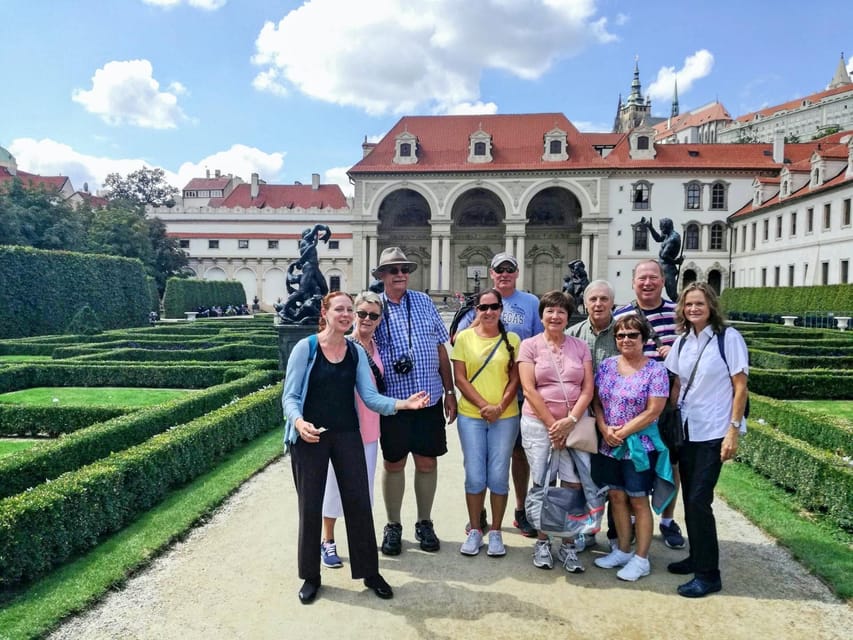
- Look for albino peacocks, Mannerist statues, and mythical fountains in Wallenstein Garden.
- Climb through Vrtba Garden’s terraces for a marine-themed grotto and fine views across Prague.
- Expect stairs and hills, with a private option available if you need a slower or shorter route.
Why this Prague garden walk is worth your time
This is not simply a stroll between pretty flower beds. The gardens provide a clear way to read Prague’s changing political and artistic tastes. Medieval gardens served practical needs, especially herbs for food and medicine. By the Renaissance, a royal garden could announce that its owner had money, international contacts, and refined taste.
The three-hour route follows that change from useful cultivation to formal display. You hear about Renaissance classicism, then see how Baroque designers favored drama, movement, sculpture, and carefully framed views. I like this approach because it gives each garden a purpose in the story rather than treating the sites as unrelated photo stops.
The tour is conducted in English by a historian guide, and private or small-group formats are available. That matters here. Gardens reward questions, and a smaller group should make it easier to pause at a fountain or sculpture without feeling rushed.
At $123 per person, this is not a bargain sightseeing walk. The price makes more sense if you want interpretation rather than a quick look at public spaces. Since the two main garden admission fees are not included, you should budget for those separately. The value is strongest for anyone who cares about architecture, royal life, horticulture, or the link between art and politics.
More Walking Tours in Prague:
- Prague: 3-Hour Walking Tour of Old Town & Prague Castle
★ 4.7 · 5,696 reviews - Prague: Ghost Walking Tour Where Legends Come To Life
★ 4.4 · 5,253 reviews - Prague: Jewish Quarter Walking Tour with Admission Tickets
★ 4.7 · 3,729 reviews
Meeting at Malostranska and setting the theme
The meeting point is at the door of Bagel Lounge Malostranska. This places you in the Lesser Town area, close to the route toward Prague Castle and several historic gardens.
Your guide begins with the broad story of Prague’s garden culture. Before grand palace grounds appeared, medieval communities used enclosed gardens mainly for herbs and useful plants. Some of these early traditions survive in Gothic cloisters, while vineyards on the hills around Prague reach back to the period before Charles IV.
The important change came in the 1500s. Emperor Ferdinand I wanted gardens that reflected the Italian Renaissance, with order, symmetry, architecture, water, and exotic plants. He hired Italian gardeners and architects to bring that style to Bohemia. That decision gives the whole walk a strong thread: Prague’s gardens became part of a wider European exchange.
You will also hear about the religious and social meaning of gardens. A private noble garden was not just a place to grow food. It could serve as a setting for leisure, ceremony, conversation, and political display. The best moments of the tour should come when your guide links a physical detail, such as a fountain or grotto, to the values of the people who commissioned it.
Belvedere Summer Palace and the Singing Fountain
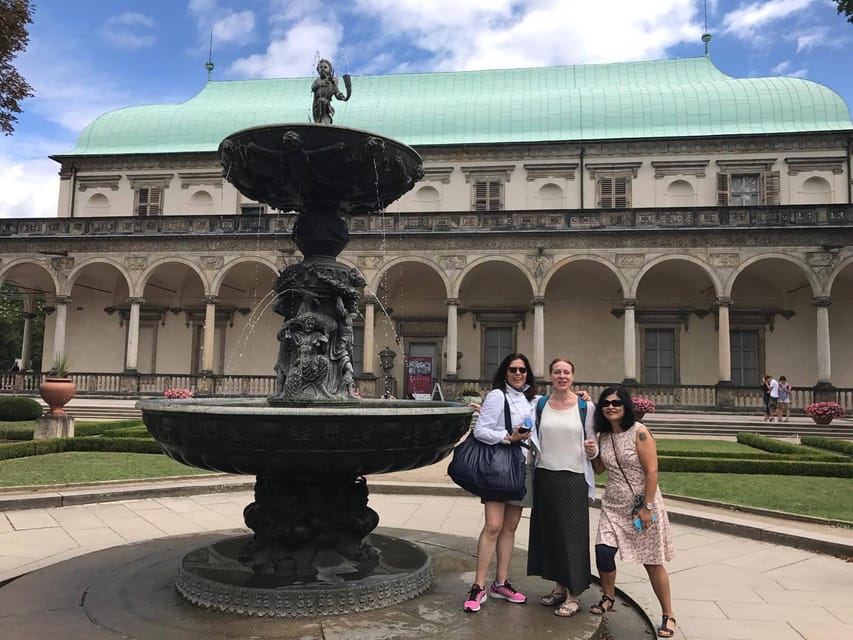
The Prague Castle Gardens offer the grand opening. Among the major sights is the Belvedere Summer Palace, commissioned by Ferdinand I as a gift for his wife, Queen Anne. She died before the building was finished, which gives the project a poignant edge. One relief shows Ferdinand presenting her with a flower from the Royal Gardens.
The palace was designed by Paola della Stella and is often described as the finest Renaissance building outside Italy. That claim is easy to understand once you consider its purpose. This was not a defensive castle tower. It was a pleasure building, made for beauty and courtly life.
In front of the palace sits a small formal garden, or Giardinetto, with the Singing Fountain. Cast in 1564 from bell bronze, the fountain produces a resonant sound as water drops into its basin. It is a small but memorable piece of Renaissance engineering. You are not just looking at decoration. You are seeing water turned into music.
Your guide can help you notice how the palace and garden work together. The building gives the garden a focal point, while the formal planting and fountain make the setting feel ordered and controlled. It is a good place to understand Ferdinand’s wish to introduce Italian classicism north of the Alps.
The admission fee for the gardens is extra, so check the total cost when you plan your day. If you are watching your budget, that additional expense is worth considering before booking.
The Fig House, Orangery, and early exotic plants

The route continues to the Fig House and Orangery. These buildings point to a less obvious side of royal gardening: the desire to grow plants that did not naturally belong to Prague’s climate.
Figs, almonds, oranges, and lemons were grown here for the first time in Central Europe. That detail changes the way you see the structures. They were not merely attractive garden buildings. They were working spaces that required care, skill, and a controlled growing environment.
I find this one of the most useful parts of the tour because it connects horticulture with trade and status. Exotic fruit showed that the royal court had access to plants, ideas, and techniques from far beyond Bohemia. A garden could be both a scientific experiment and a display of privilege.
Tulips also enter the story. They were not known in Europe until they arrived as an exotic gift from the Sultan of Constantinople. The Royal Gardens became part of this early exchange in fashionable plants. Your guide will explain how a flower now common in Europe once carried the excitement of something rare and foreign.
These details are easy to miss if you walk through the gardens alone. A visitor may notice a pleasant formal setting, but a guide can explain why an orangery mattered and how a single plant could signal international connections.
A few more Prague options to compare
- Prague: 50-Minute Sightseeing Evening Cruise
★ 4.2 · 33,780 reviews - Prague: Medieval Dinner with Unlimited Drinks
★ 4.4 · 19,847 reviews - Prague: Skip-the-line Castle Ticket and Optional AudioGuide
★ 4.3 · 11,121 reviews - Prague: Castle Tour with Local Guide and Entry Ticket
★ 4.6 · 10,422 reviews
Stag Moat, castle courtyards, and the South Gardens
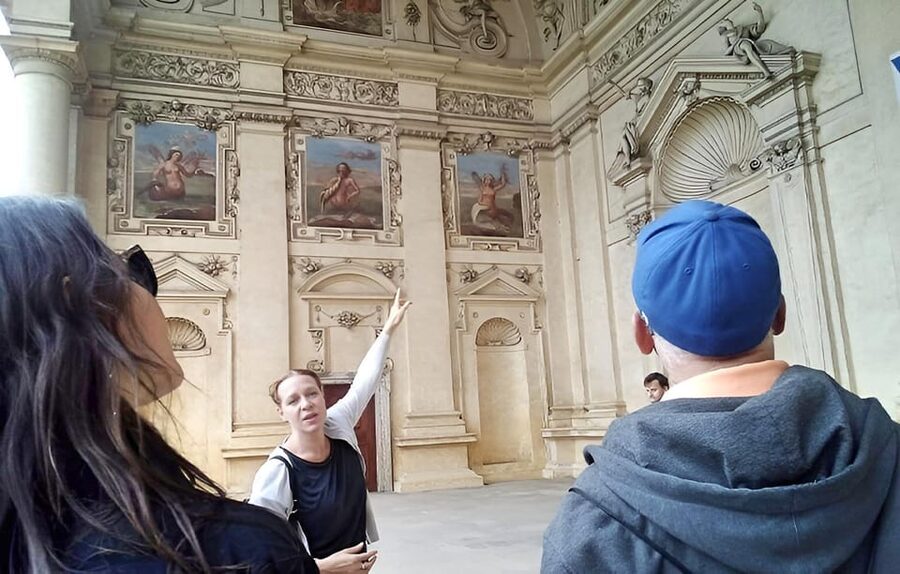
The route then brings you toward the stag moat before crossing a castle courtyard. You descend the Bull Stairs to the South Gardens, followed by the Garden of Paradise and the Garden on the Bulwark.
This section is physically more demanding than a level city walk. The route includes stairs and changes in elevation, and some stairways can be narrow or steep. Wear shoes with a secure grip and avoid bringing anything that makes climbing awkward.
The reward is a set of gardens with different positions and viewpoints around the castle. You see how terraces below a palace can shape the way the building is experienced. A garden might frame the castle, open a view toward the city, or create a quieter setting away from formal court spaces.
The names of the gardens also hint at their intended mood. The Garden of Paradise suggests pleasure and retreat, while the Garden on the Bulwark connects beauty with the castle’s defensive structure. The tour does not treat these places as isolated flower beds. It explains how leisure gardens could exist beside military and political buildings.
Because the route descends through several terraces, the experience is not equally easy for everyone. If stairs cause you trouble, consider the private option. The guide can adjust the pace, skip certain sites, and focus on sections that suit your limits.
Wallenstein Garden and the drama of noble power
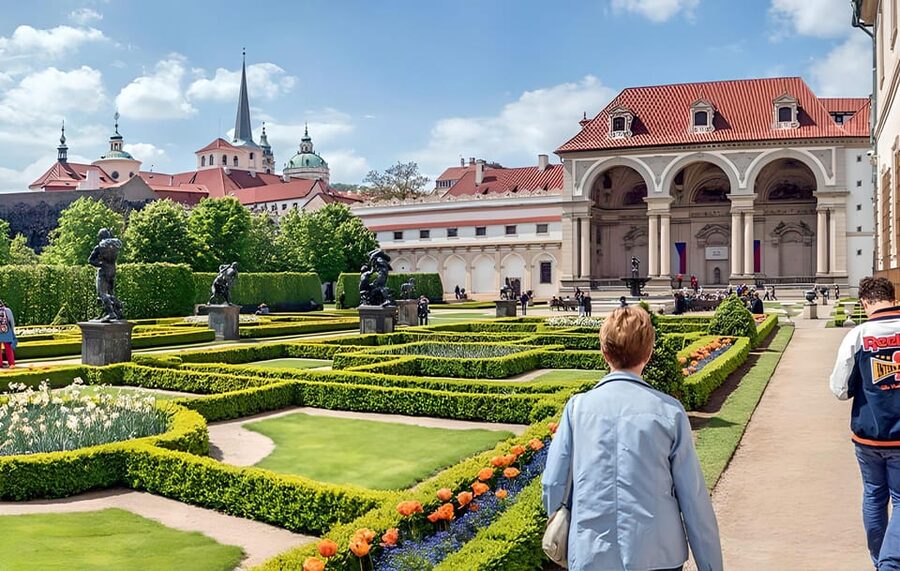
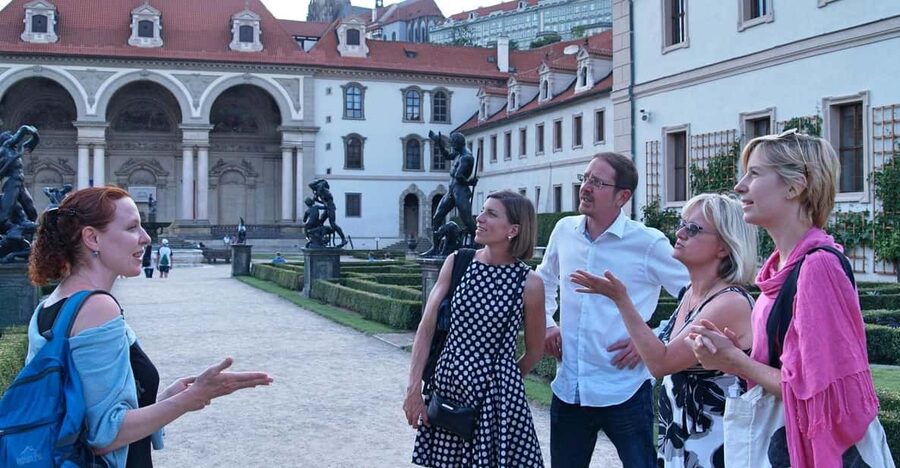
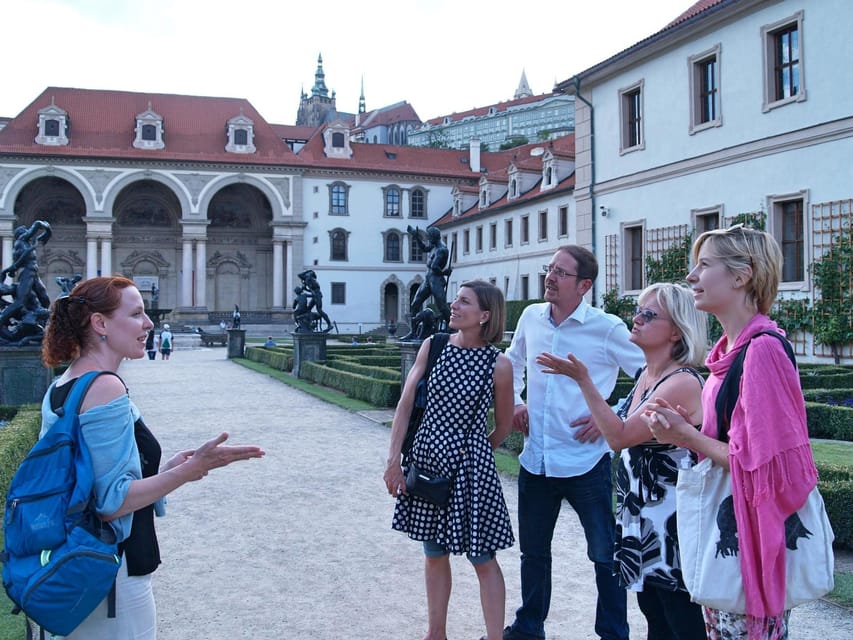
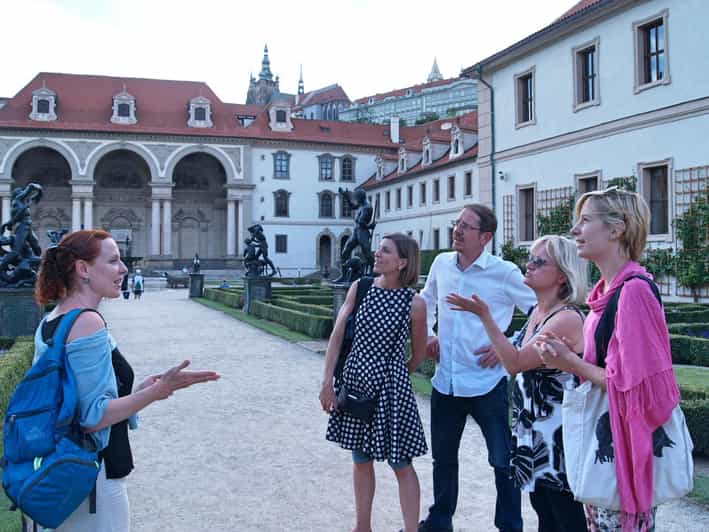
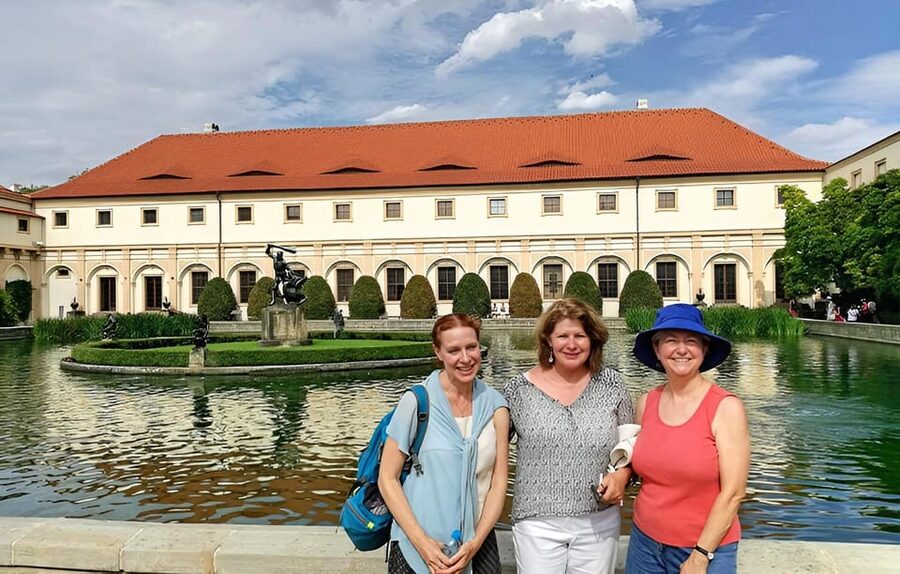
At the bottom of the hill, the mood changes dramatically in Wallenstein Garden. This is one of the walk’s strongest stops, with albino peacocks, Mannerist statues, a grotto wall, and fountains drawn from mythology.
The garden was commissioned by Albrecht von Wallenstein, a powerful and controversial figure. His story gives the setting extra force. Wallenstein’s garden was designed to impress, and its theatrical elements reflect the ambition of the man behind it.
The albino peacocks are an especially memorable detail. They make the garden feel slightly unreal, while the statues and fountains add a similar touch of staged fantasy. The grotto wall uses rough, artificial forms to create a contrast with the garden’s more controlled geometry.
Here you learn about the move from Renaissance classicism to Baroque ideas. Renaissance design favored proportion, balance, and references to the ancient world. Baroque design often aimed for surprise, movement, theatrical views, and emotional impact. Wallenstein Garden helps you see that shift rather than simply memorize it.
I would allow yourself time to look closely at the statues and water features. The garden rewards attention to small details. At the same time, it is worth remembering that this was a noble setting, not a democratic public park. Its beauty was tied to rank, money, and power.
Vrtba Garden, terraces, and the best final view
The final major stop is Vrtba Garden in Mala Strana. Dating from 1720, this walled Baroque garden offers a more intimate experience than the open grounds around Prague Castle.
Vrtba is arranged in rising terraces. As you climb, the garden changes in scale and outlook. The formal design leads you upward to a top courtyard with a marine-themed grotto. From there, you receive striking views across Prague’s cityscape.
This is a fine ending because it combines the main ideas of the walk. You have seen gardens used for royal pleasure, plant cultivation, noble display, and dramatic staging. Vrtba adds the idea of a private urban garden hidden behind walls, a space made for an aristocratic household rather than a large public crowd.
Admission to Vrtba Garden is extra. Since it is a separate charge from the Prague Castle garden fee, include both when deciding if the $123 price fits your plans.
The climb through Vrtba also adds to the physical demands of the route. The reward is the view, but you should not expect a flat, easy stroll. If you want the garden without rushing, a private tour gives the guide more room to adjust the pace.
Guide style, group size, and the right pace
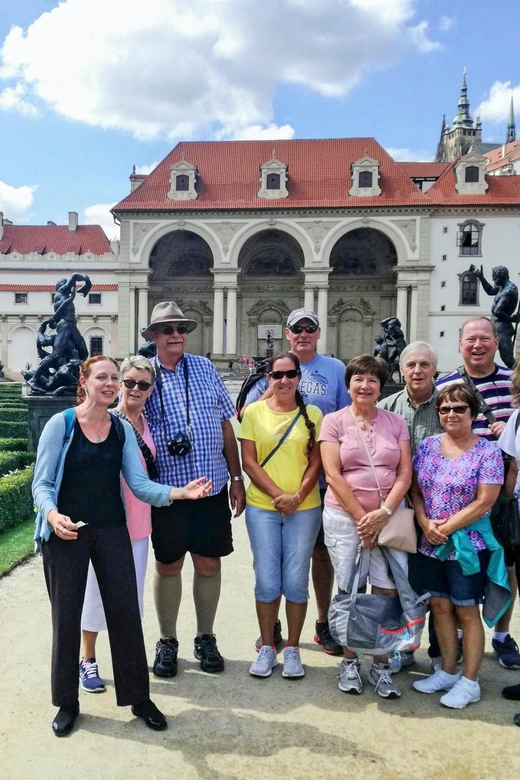
The strongest praise attached to this experience centers on the guide’s manner. Miriam was described as excellent, informative, and relaxed, which is exactly the right combination for a three-hour history walk. You want enough explanation to understand the gardens, but not so much formal lecturing that you stop noticing the places themselves.
Other strong feedback came from international participants, including comments in French and Italian praising the guide as engaging and excellent. The overall rating is 5 out of 5 from five reviews, so the sample is small, but the positive pattern is clear: the human side of the tour is a major part of its appeal.
Private and small-group formats are available. I would favor a small group if you want the value of a shared tour but still hope to hear the guide clearly and ask occasional questions. Choose private if you have mobility concerns, a strong interest in garden design, or a preferred pace.
The walk lasts three hours. That is enough time to connect several sites, but it also means the guide must keep moving. If you like lingering at every fountain, taking many photographs, or reading every plaque, you may feel the schedule is brisk.
Practical value at $123 per person
The $123 price buys a three-hour guided history walk with a historian guide. It does not cover admission to the gardens under Prague Castle or Vrtba Garden. Those extra costs should be part of your calculation from the start.
For a casual visitor who only wants attractive gardens, the total may feel high. You can see some public areas independently, and Prague offers plenty of beautiful streets and viewpoints without a paid guide.
For you, the price has better value if you want the connections explained. Ferdinand I’s Italian team, the royal cultivation of exotic fruit, the introduction of tulips, the rise of Baroque design, and Wallenstein’s ambition form a coherent lesson in Prague’s development.
The flexible booking terms help if your schedule is uncertain. You can cancel up to 24 hours before the tour for a full refund, and you can reserve now while paying later. Starting times vary, so check availability for the day you want.
Should you book this garden tour?
Book it if you want Prague’s gardens to make sense, not just look pretty. The walk suits history-minded visitors, architecture fans, garden enthusiasts, and anyone who has already seen the main castle interiors and wants a quieter, more specialized view of Prague.
I would also recommend it if you enjoy stories about people and choices. Ferdinand I’s Italian influence, Queen Anne’s unfinished gift, Wallenstein’s theatrical garden, and the court’s fascination with exotic plants give the route plenty of human interest.
Skip it if steep stairs are a serious problem and you do not want to arrange a private version. Also think twice if your budget is tight, since the $123 fee does not include both garden admissions.
For most suitable visitors, the best choice is a small group or private booking, sturdy shoes, and enough time afterward to enjoy Mala Strana. The gardens are the subject, but the real payoff is learning how power, fashion, science, and art took root in Prague.
FAQ
How long does the Prague Renaissance and Baroque Gardens Walking Tour last?
The tour lasts three hours.
Where does the tour meet?
You meet at the door of Bagel Lounge Malostranska.
What language is the tour conducted in?
The live guided tour is conducted in English.
Is the tour private or shared?
Private and small-group options are available.
Is a historian guide included?
Yes. The tour includes a three-hour guided history walk led by a historian guide.
Are garden admission fees included?
No. Admission to the gardens under Prague Castle and Vrtba Garden is not included.
Is the tour suitable for people with mobility issues?
The regular route includes stairs that can be narrow or steep, along with walking up and down hills. A private tour can be tailored by adjusting the route, pace, or number of sites.
Can I cancel the tour for a refund?
You can cancel up to 24 hours in advance for a full refund.
Can I reserve now and pay later?
Yes. You can reserve your place and pay nothing at the time of booking.
Newest listings in Prague
- World War II 4WD Tour from Prague with Lunch★ 4.4 · 3 reviews
- Prague: Historical Walking Tour with Focus on World War 2★ 4.3 · 12 reviews
- WWII and Communism History in Prague’s Old Town Private Tour★ 5.0 · 4 reviews
- Wroclaw: Giant Mountains & Valley of Palaces Day Tour★ 4.8 · 36 reviews
- Walking tour of Prague in French : Nové Město★ 4.9 · 16 reviews
- Walking tour of Prague in french: Old Town & Charles Bridge★ 4.9 · 62 reviews
- Vltava River Cruise and Private Tour of Prague’ Old Town★ 5.0 · 1 review
- Ultimate Unlimited Beer Pong with Czech Beer★ 4.6 · 5 reviews
Walking Tours, compared.

3-Hour Walking Tour of Old Town & Prague Castle
Read our review →
Ghost Walking Tour Where Legends Come To Life
Read our review →
Jewish Quarter Walking Tour with Admission Tickets
Read our review →
Prague Guided Walking Tour and Cruise with Authentic Czech Lunch
Read our review →
Old Town and Jewish Quarter Guided Walking Tour
Read our review →
Prague Ghost and Legend of Old Town Walking Tour
Read our review →
Prague 3-hour Afternoon Walking Tour including Prague Castle
Read our review →
Ghosts and Legends Nighttime Guided Walking Tour
Read our review →Browse the lists this tour appears in