
REVIEW · JEWISH QUARTER TOURS
Prague: Old Town and Jewish Quarter Small-Group Tour
Prague makes a strong first impression. This compact walking tour gives you Old Town Square, the Astronomical Clock, Josefov, and Prague Castle views in one well-planned introduction. I like the small maximum of 10 people, which should make it easier to hear the guide and ask questions. I also like the mix of famous landmarks and useful city advice about food, beer, fun, and less obvious places.
The main drawback is that the tour lasts only about two and a half to three hours, so several stops are quick looks from outside. No hotel pickup is included, and the walk follows cobblestone streets, so you need comfortable shoes and a meeting point you can reach on your own.
In This Review
- Key points at a glance
- Why this is a smart first walk in Prague
- Starting at Obecní dům near Republic Square
- Old Town Square: Prague in one frame
- The Astronomical Clock, explained at last
- Mozart’s Prague at the Estates Theatre
- Powder Gate and the move into New Town
- Wenceslas Square and Prague’s public life
- Josefov: the most serious part of the walk
- Finishing beside the Rudolfinum
- The guide can make or break this experience
- Is $103.03 a fair price?
- Who should book this Prague walk?
- Booking and cancellation details that matter
- FAQ
- Where does the tour start?
- Where does the tour end?
- How long does the tour last?
- What language is the tour conducted in?
- How large is the group?
- Is hotel pickup included?
- Does the tour include admission tickets?
- Is the tour suitable for most people?
- Can I use a mobile ticket?
- What happens if the weather is poor?
- Should you book it?
Key points at a glance
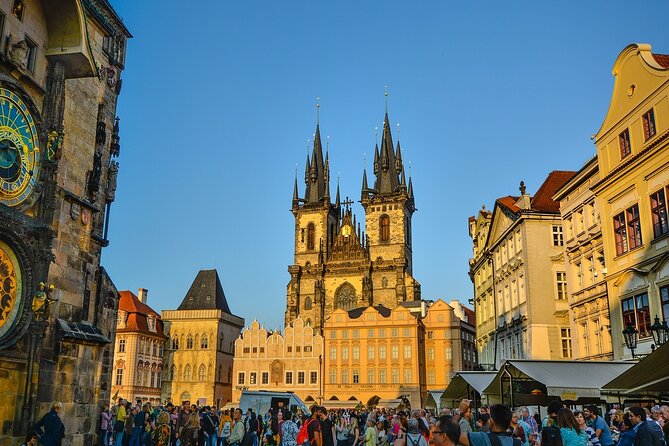
- Old Town Square sets the stage: You begin among Prague’s most famous landmarks, including Týn Church, the Jan Hus monument, and the Marian Column.
- The Astronomical Clock makes more sense: Your guide explains what to look for instead of leaving you to stare at its figures in confusion.
- The route connects several districts: You move from Old Town through part of New Town and into Josefov, giving you a useful sense of Prague’s central layout.
- A maximum of 10 people matters: This is a much more personal format than a large walking group.
- Ian receives especially warm praise: His English is described as excellent, and he speaks five languages, with humor and personal stories adding to the tour.
- The finish has a fine view: The walk ends by the Rudolfinum, with Prague Castle visible across the river.
Why this is a smart first walk in Prague
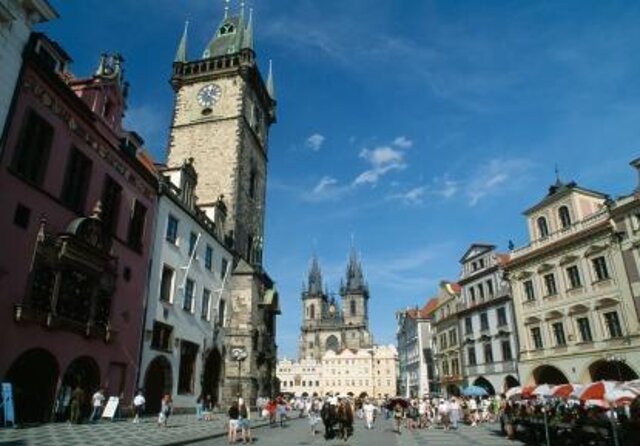
I like this tour because it deals with the basic problem of arriving in Prague: the center is packed with impressive buildings, but the connections between them are not always clear at first. In a few hours, you get a simple mental map of Old Town, New Town, and Josefov.
The route also gives you names and stories to carry into the rest of your stay. You hear about major events, important people, architecture, religion, music, and Jewish Prague without committing to a full-day program.
This is a walking orientation, not a museum tour. The admission tickets listed for the stops are free because the tour focuses on exterior views and commentary. If you want to enter the Old Town Hall, Jewish museums, churches, or the Powder Gate, you would need to arrange that separately.
That distinction matters. You get a broad introduction at a reasonable pace, but you do not spend long inside individual sights. I would use this tour to decide which buildings deserve a closer visit later.
More Jewish Quarter walks:
- Prague: Jewish Quarter Walking Tour with Admission Tickets
★ 4.7 · 3,729 reviews - Prague: Old Town and Jewish Quarter Guided Tour in German
★ 4.8 · 3,143 reviews - Prague: Old Town and Jewish Quarter Guided Walking Tour
★ 4.6 · 2,847 reviews
Starting at Obecní dům near Republic Square
The meeting point is Kavárna Obecní dům, at Obecní dům on Náměstí Republiky. This places you near the Municipal House and Republic Square, a useful central starting point for a first walk.
You then move toward the Old Town. The precise opening section is not listed as a separate stop, but the route soon reaches the city’s main square. Since no hotel pickup is offered, plan your route to the café before the start time. The meeting point is near public transportation, which helps if you are staying outside the center.
The small-group format is one of the strongest practical features. With no more than 10 people, you should have a better chance of staying close to the guide, hearing explanations in crowded areas, and getting an answer when something catches your attention.
Still, a small group does not remove the normal Old Town conditions. Cobblestones, pedestrians, and busy public spaces are part of the setting. Wear shoes with good support, and leave enough time to reach the starting point without rushing.
Old Town Square: Prague in one frame
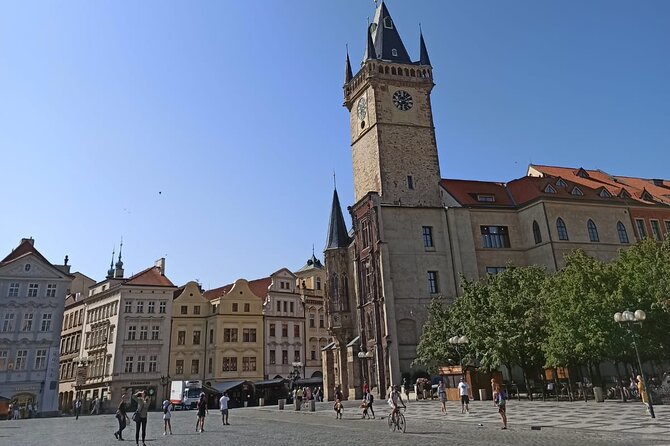
The first major stop is Staroměstské náměstí, or Old Town Square. This is the natural place to begin understanding Prague because several different parts of the city’s story meet here.
The guide points out Týn Church, the Jan Hus monument, and the Marian Column. Each gives the square a different character: grand church architecture, a major religious reformer, and a landmark connected to the changing political and religious life of the city.
You should expect about 20 minutes here. That is enough time for an organized introduction and a few good questions, but not enough for a detailed architectural lecture on every façade. Keep your camera ready, but pay attention to the guide’s orientation first. The value of the stop is not simply the view. It is learning what you are looking at.
The square can feel like a stage set because so many famous buildings face it. A guide helps separate the real story from the postcard image. I especially like starting here because it gives you a reference point for later walks through Prague.
The Astronomical Clock, explained at last
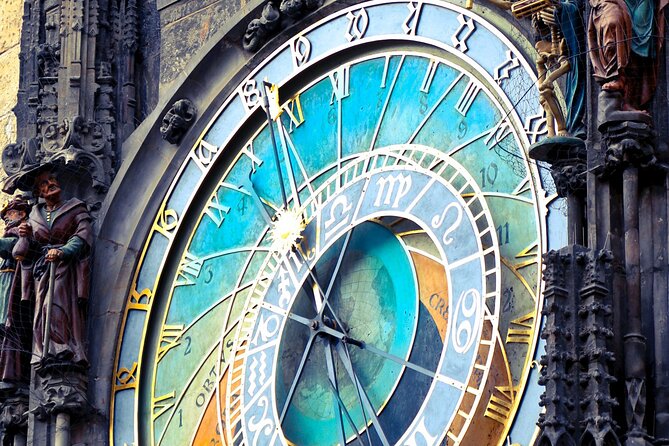
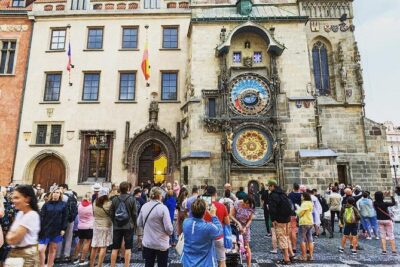
The Old Town Hall and its Astronomical Clock receive a short 10-minute stop. That may seem brief, but the guide’s explanation is the key part of this visit.
Many people watch the clock’s moving figures and wonder what they are supposed to notice. The tour is designed to explain how the clock works and why its details matter. Once you understand what you are seeing, the display becomes more than a brief mechanical performance.
The clock is described as the oldest still-active astronomical clock in the world. The tour does not include entry to the Old Town Hall, so you should not expect to climb the tower or explore the interior as part of this walk.
Because the stop is short, listen closely and ask questions while you are there. If the clock is crowded, the guide’s ability to keep a small group together becomes useful.
A few more Prague options to compare
- Prague: 50-Minute Sightseeing Evening Cruise
★ 4.2 · 33,780 reviews - Prague: Medieval Dinner with Unlimited Drinks
★ 4.4 · 19,847 reviews - Prague: Skip-the-line Castle Ticket and Optional AudioGuide
★ 4.3 · 11,121 reviews - Prague: Castle Tour with Local Guide and Entry Ticket
★ 4.6 · 10,422 reviews
Mozart’s Prague at the Estates Theatre
The next stop is the Estates Theatre, one of Prague’s oldest still-active theaters and a favorite of Mozart. You spend about 10 minutes here.
This stop adds a welcome cultural change after the square and clock. Instead of focusing only on medieval streets or political events, the guide connects Prague with opera, theater, and Mozart’s time in the city.
The theater is best understood from the outside during this tour. The stop is not an admission visit, and there is no promise of a performance. Still, the building helps show that Prague’s identity is not limited to castles and church towers.
If classical music interests you, make a note of the theater and ask the guide for practical suggestions. The overview says the guides share personal tips about food, beer, fun, and less obvious places, so this is a good point to ask what else fits your schedule.
Powder Gate and the move into New Town
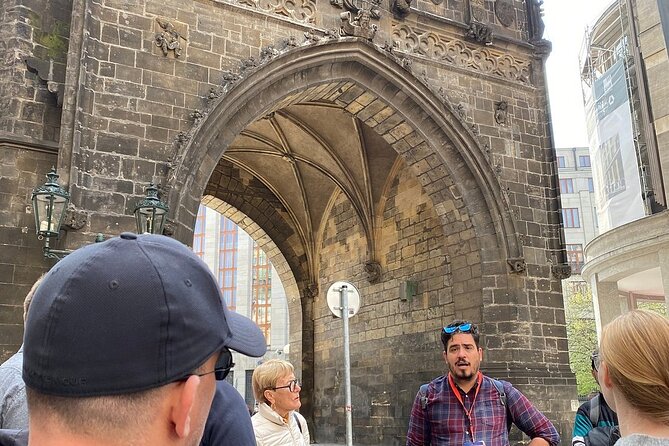
The Powder Gate, or Prašná brána, is one of only two surviving gates into the Old Town. The tour allows about 10 minutes here, enough to admire its Gothic design and hear why it mattered as an entrance to the city.
A gate gives you a clear sense of Prague as a once-defended urban center. It is also a useful transition point in the walk, as the route moves through the central city toward Wenceslas Square.
Again, this is an exterior stop. If you want to go inside or climb any tower, that would require a separate visit. The short visit works well for orientation, but you should not expect a detailed examination of the stonework.
Wenceslas Square and Prague’s public life
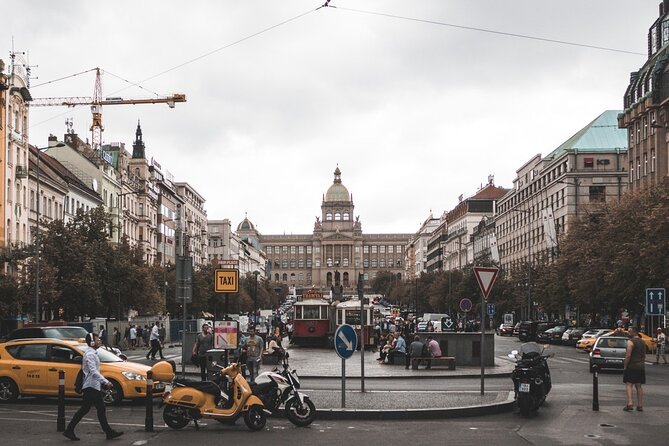
Wenceslas Square is described as Prague’s largest square and a place where many important events took place. The stop lasts about 10 minutes.
Despite its name, this is not a traditional enclosed square like Old Town Square. It is a long urban space, and its scale helps explain its role in public gatherings and major moments in Czech history.
The guide’s commentary is especially valuable here because the square’s importance is not always obvious from its shape. You are not simply looking at another attractive street. You are hearing how a central public place became tied to national events.
This is also a point where the route gives you a better sense of Prague beyond the oldest lanes. The walk does not linger, but it introduces New Town as part of the capital’s wider story.
Josefov: the most serious part of the walk
The Jewish Quarter, Josefov, receives about 30 minutes, the longest single stop on the route. That is appropriate. The area requires more care and context than a quick photo stop.
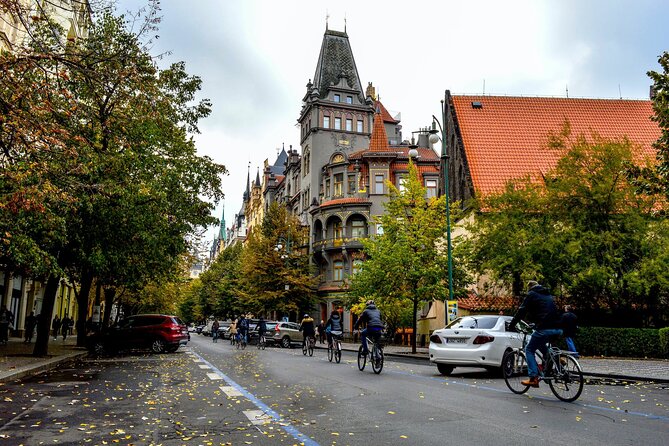
Josefov was formerly Prague’s ghetto and is also associated with Franz Kafka’s birthplace. The guide discusses the area as part of Prague’s past, rather than treating it as just another attractive neighborhood.
This part of the walk may be the most meaningful, but it also deserves realistic expectations. The tour does not include admission to the Jewish Museum sites or synagogues. You see the district and receive an introduction, then you can decide if you want to return for a longer visit.
I would not try to rush through Josefov after the tour. If its history interests you, reserve extra time on another day for the museums and religious buildings. The walking tour gives you a frame of reference, but a short outdoor visit cannot cover every painful and complex chapter.
The small group helps here. A guide can explain sensitive subjects with more room for questions than a large group usually allows. Ian is particularly praised for combining historical facts with anecdotes and related stories, which is useful in a district where dry dates alone would not tell the whole story.
Finishing beside the Rudolfinum
The tour ends at the Rudolfinum, the concert hall associated with the Czech Philharmonic. You spend about 10 minutes here, with a view toward Prague Castle.
This is a graceful ending. After the narrow Old Town streets and dense Jewish Quarter, the final view gives you a broader sense of the city. You finish beside an important music venue, facing one of Prague’s most recognizable sights.
The endpoint on náměstí Jana Palacha is also practical. You are still in central Prague, so you can continue sightseeing, find a meal, or make your own way back to your hotel.
The tour does not include a return transfer. That is not a serious problem for most people because the route ends in the center, but check your plans before booking if you need to be back at a hotel by a fixed time.
The guide can make or break this experience
A walking tour is only as good as its guide. The strongest praise here goes to Ian, who is described as personable, humorous, and highly skilled in English. He speaks five languages, and his English is specifically praised as excellent.
That detail matters because the route covers many subjects in a short period. Clear English and a good sense of timing help keep the information useful rather than rushed.
Ian is also praised for using anecdotes and connected stories, not just reciting facts. That style suits Prague, where a building, monument, or street often makes more sense once you know the person or event tied to it.
You cannot assume Ian will lead every departure, so I would not book solely on the expectation of one particular guide. Still, his performance gives you a clear idea of the standard to hope for: accurate explanation, humor, and a willingness to answer questions.
Is $103.03 a fair price?
At $103.03 per person, this is not the cheapest way to see Prague’s center. You can walk through Old Town Square and view many landmarks without paying for a tour.
The price makes more sense if you value interpretation and structure. You are paying for an English-speaking certified guide, a route that links several districts, a maximum group of 10, and practical suggestions for the rest of your stay.
The tour lasts roughly two and a half to three hours. That makes the cost easier to assess: it is a focused orientation rather than a full-day sightseeing program. You do not receive museum admission, hotel pickup, food, drinks, or transportation.
Group discounts may be available, and the tour is booked on average 22 days ahead. That suggests you should not leave it until the last moment if your dates are fixed, especially if you want a small group.
I see the best value for first-time visitors who want context quickly. If you already know Prague well or prefer exploring independently, the price may feel high for an outdoor walk.
Who should book this Prague walk?
I would recommend it to you if:
- You are visiting Prague for the first time.
- You want a clear introduction before choosing museums and interior visits.
- You prefer a small group to a large organized walk.
- You enjoy history, architecture, music, and personal stories.
- You want practical advice about food, beer, entertainment, and local places.
- You can walk on cobblestones for up to three hours.
Families and most people who can participate in a normal walking tour should be able to take part. Service animals are allowed. The tour requires good weather, so keep some flexibility in your schedule if rain or poor conditions are likely.
I would choose a different format if your main goal is extended time inside the Old Town Hall, the Jewish Museum, the Estates Theatre, or the Powder Gate. This tour introduces those places from the outside rather than replacing dedicated visits.
Booking and cancellation details that matter
Confirmation is provided at booking, and the ticket is mobile, so you do not need a printed voucher. The walk begins at Kavárna Obecní dům and ends at the Rudolfinum, with no hotel pickup.
You can cancel for a full refund up to 24 hours before the start time. Cancellations or changes made within 24 hours are not refunded or accepted. If poor weather causes cancellation, you are offered another date or a full refund.
The experience also requires a minimum number of participants. If that minimum is not reached, you are offered another date or experience, or a full refund.
FAQ
Where does the tour start?
It starts at Kavárna Obecní dům, Obecní dům, Náměstí Republiky 1090, Staré Město, Prague.
Where does the tour end?
It ends at náměstí Jana Palacha, beside the Rudolfinum in Prague’s Old Town.
How long does the tour last?
The tour lasts approximately two hours and 30 minutes to three hours.
What language is the tour conducted in?
The tour includes an English-speaking certified guide.
How large is the group?
The maximum group size is 10 people.
Is hotel pickup included?
No. Hotel pickup is not included, so you must reach the meeting point yourself.
Does the tour include admission tickets?
The listed stops have no admission ticket included or required as part of this walking route. The tour focuses on viewing the landmarks and hearing the guide’s explanations.
Is the tour suitable for most people?
Yes. Most people can participate, and service animals are allowed. The route takes place on city streets and cobblestones.
Can I use a mobile ticket?
Yes. A mobile ticket is available.
What happens if the weather is poor?
If poor weather causes the experience to be canceled, you are offered a different date or a full refund.
Should you book it?
I would book this tour as a first-day introduction to Prague, especially if you want the main sights put into context without joining a large group. The route is efficient, the finish by the Rudolfinum is attractive, and the praise for Ian points to the value of a guide who can explain the clock, monuments, and difficult history with clarity and humor.
You should skip it if you want long interior visits or a low-cost, do-it-yourself stroll. For everyone else, the small group, central route, Josefov visit, and practical city tips make this a useful way to get your bearings before exploring Prague on your own.
Newest listings in Prague
- World War II 4WD Tour from Prague with Lunch★ 4.4 · 3 reviews
- Prague: Historical Walking Tour with Focus on World War 2★ 4.3 · 12 reviews
- WWII and Communism History in Prague’s Old Town Private Tour★ 5.0 · 4 reviews
- Wroclaw: Giant Mountains & Valley of Palaces Day Tour★ 4.8 · 36 reviews
- Walking tour of Prague in French : Nové Město★ 4.9 · 16 reviews
- Walking tour of Prague in french: Old Town & Charles Bridge★ 4.9 · 62 reviews
- Vltava River Cruise and Private Tour of Prague’ Old Town★ 5.0 · 1 review
- Ultimate Unlimited Beer Pong with Czech Beer★ 4.6 · 5 reviews
Jewish Quarter Tours, compared.
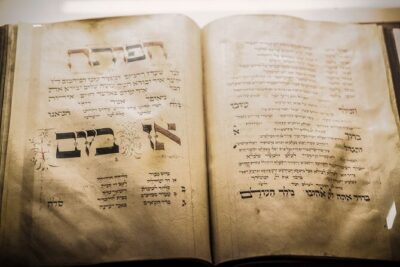
Jewish Quarter Walking Tour with Admission Tickets
Read our review →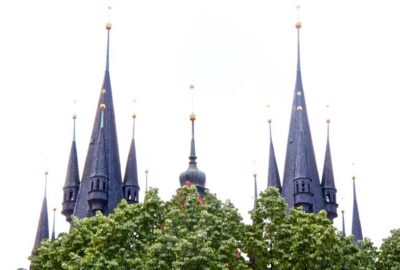
Old Town and Jewish Quarter Guided Walking Tour
Read our review →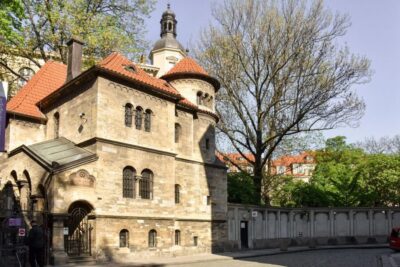
Jewish Quarter Ticket with optional Audio Guide
Read our review →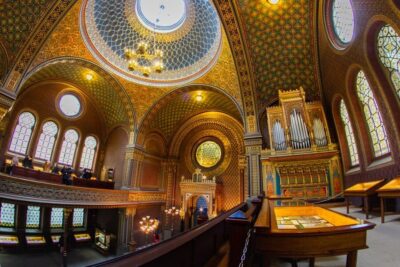
Prague’s TOP Sights – Old Town, Jewish Quarter, Charles Bridge (Tip-based tour)
Read our review →
Prague Old Town New Town and Jewish Quarter Morning Tour
Read our review →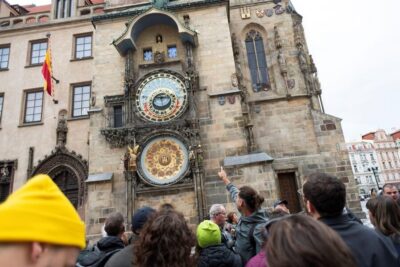
Old Town, Jewish Quarter & Astro Clock Walking Tour
Read our review →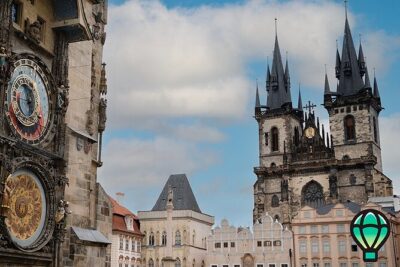
Prague Essential Tour Old Town and Jewish Quarter
Read our review →Browse the lists this tour appears in