
REVIEW · MUSEUMS
Prague: National Technical Museum Entry Ticket w/ Intro Tour
Machines tell Czech stories. Prague’s National Technical Museum gives you a clear look at planes, trains, cars, clocks, cameras, mining, printing, and everyday inventions, with a short English introduction to help you get oriented. I like the freedom to explore at your own speed, and I like that one ticket covers 15 permanent exhibitions plus temporary displays.
The main drawback is the ticket arrangement. A serious payment problem has been reported when museum staff did not accept a voucher bought through an outside booking platform, forcing a second purchase. Check the current ticket rules carefully before you pay, and keep your smartphone voucher ready at the meeting point.
In This Review
- Key points to know before you go
- Meeting the host beneath the yellow umbrella
- Why the self-guided format works here
- Transportation takes center stage
- Architecture, design, and the built world
- Time, astronomy, and measurement
- From mines and metal to chemistry at home
- Cameras, printing, television, and the technology of daily life
- A playful stop for children
- Sugar and chocolate, a tasty piece of industry
- How much value do you get for $22?
- Timing, opening hours, and practical planning
- Who should book this experience?
- Should you book the National Technical Museum ticket?
- FAQ
- How long is the introduction?
- Is the museum visit guided?
- How many permanent exhibitions are included?
- What are the museum’s opening hours?
- Is there somewhere to buy food or drinks?
- Where do I meet the host?
Key points to know before you go
- A 20-minute English briefing: You meet a host with a yellow umbrella outside the museum for a short introduction, then continue independently.
- Fifteen permanent exhibitions: The ticket covers subjects from transportation and astronomy to toys, television, mining, and technology at home.
- About three hours inside: That is enough time for a solid visit, though families and technology fans may want longer if the schedule allows.
- A strong family stop: Large vehicles, aircraft, trains, mechanical devices, and the Merkur playroom give children plenty to notice.
- A central caution about payment: Confirm that your voucher will be accepted before purchase, since one reported problem involved paying twice.
- Closed on Mondays: The museum is open from 9 AM to 6 PM on the other days of the week.
Meeting the host beneath the yellow umbrella
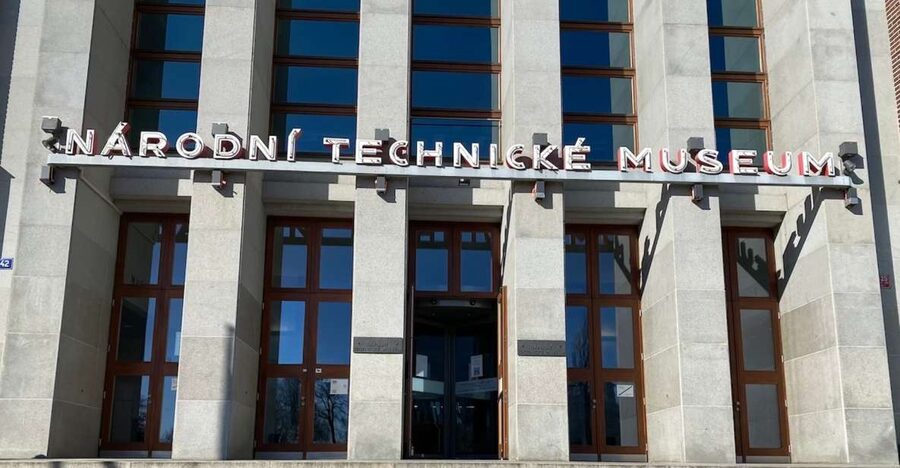
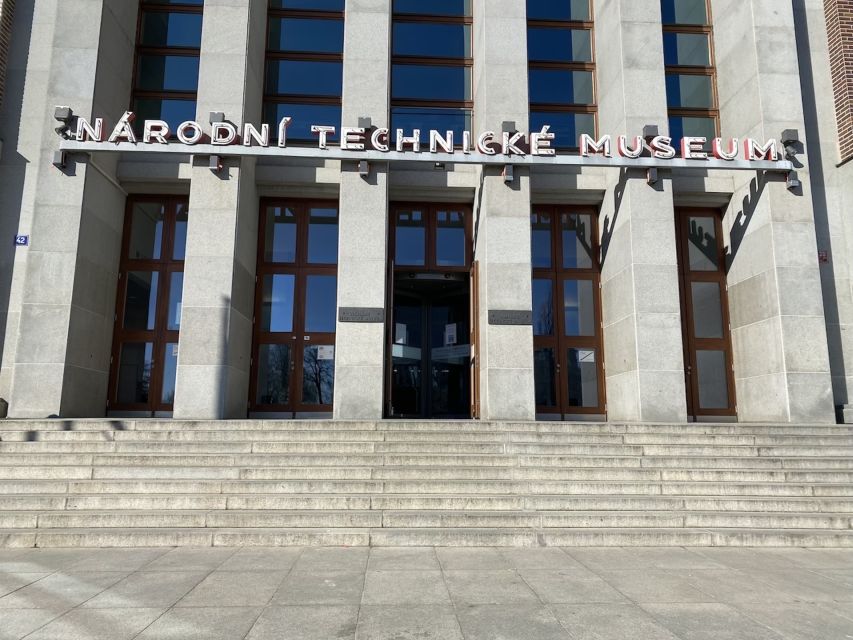
The meeting point is outside the National Technical Museum. Show your smartphone ticket to the Discover Prague Tours guide, who will be holding a yellow umbrella. The group is limited to 10 people, so the introduction should be fairly focused rather than a large crowd gathering on the pavement.
The included briefing lasts 20 minutes and is in English. Think of it as a useful orientation, not a museum tour. You learn what the collections cover and what to watch for, then enter and explore without a guide beside you.
I like this setup for visitors who want context but dislike being hurried from one case to the next. A short explanation can help you understand why the museum matters, especially if you do not know much about Czech engineering or industrial development.
The limitation is just as clear: the host does not lead you through the galleries. If you want detailed stories at each exhibit, this ticket will not provide them. You will need to read the bilingual Czech and English explanations and set your own route.
More Museum Tours in Prague:
- Prague: Museum of Fantastic Illusions Entry Ticket
★ 4.3 · 4,337 reviews - IAM Illusion Art Museum Entry Ticket
★ 4.2 · 1,664 reviews - Prague: Museum of Senses Admission Ticket
★ 4.0 · 1,445 reviews
Why the self-guided format works here
The museum covers a wide range of subjects, and they do not all appeal to the same person. You may care about old aircraft and cars but have little patience for printing equipment. Someone in your family may be fascinated by clocks while another person heads straight for the toy displays.
A self-guided visit lets you divide your time sensibly. You can spend longer in transportation and move quickly through areas that do not catch your eye. That flexibility is the main reason to choose this format over a fixed museum tour.
The ticket is valid for one day, not just a short entry window. That matters if you want to break up the visit, though the practical value depends on the current admission rules and your schedule. The stated average visit is about three hours, so most people will probably treat this as one substantial museum stop rather than a quick hour indoors.
The bilingual labels are another useful feature. You can read the Czech and English descriptions without relying on a guide to translate each display. Still, the 20-minute briefing is worthwhile because it gives you a starting point before you face a large building full of technical subjects.
Transportation takes center stage
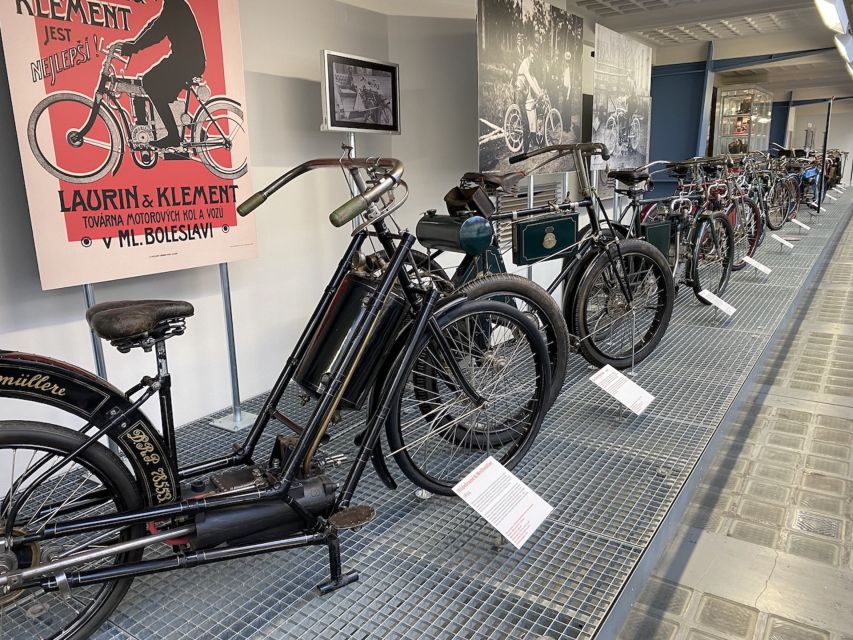
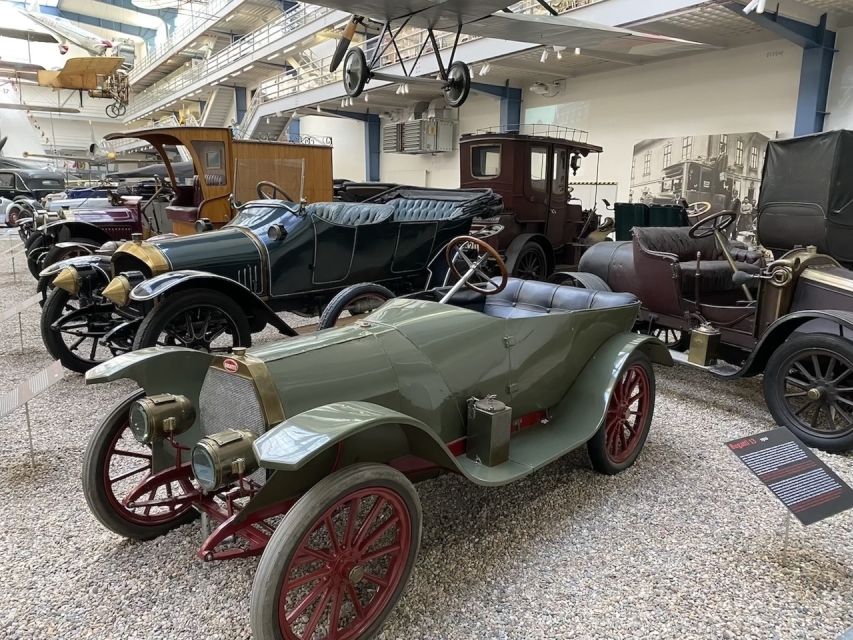
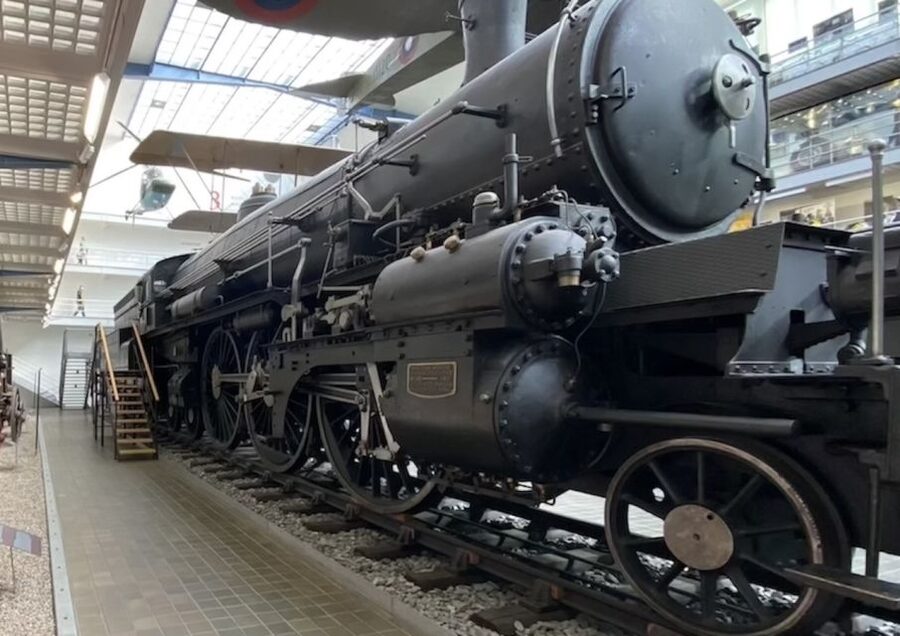
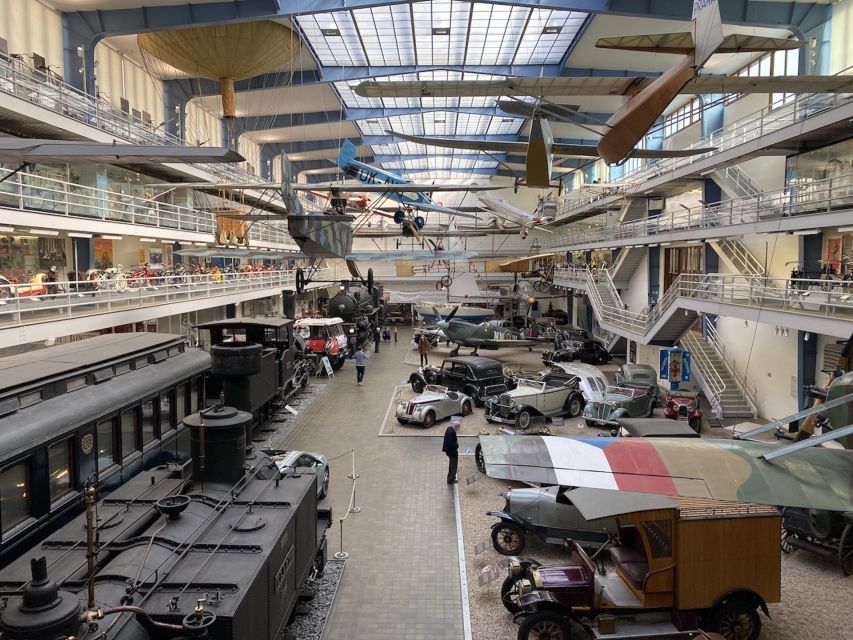
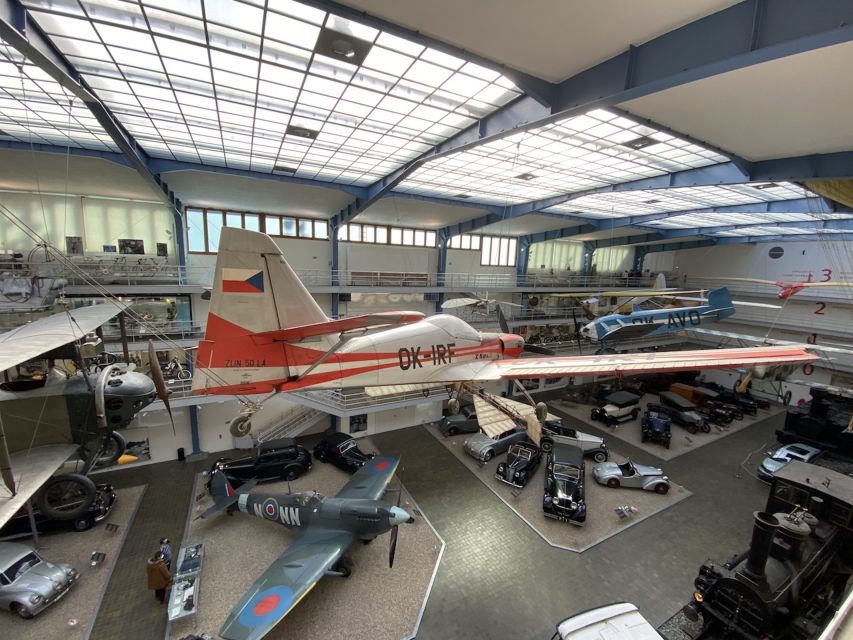
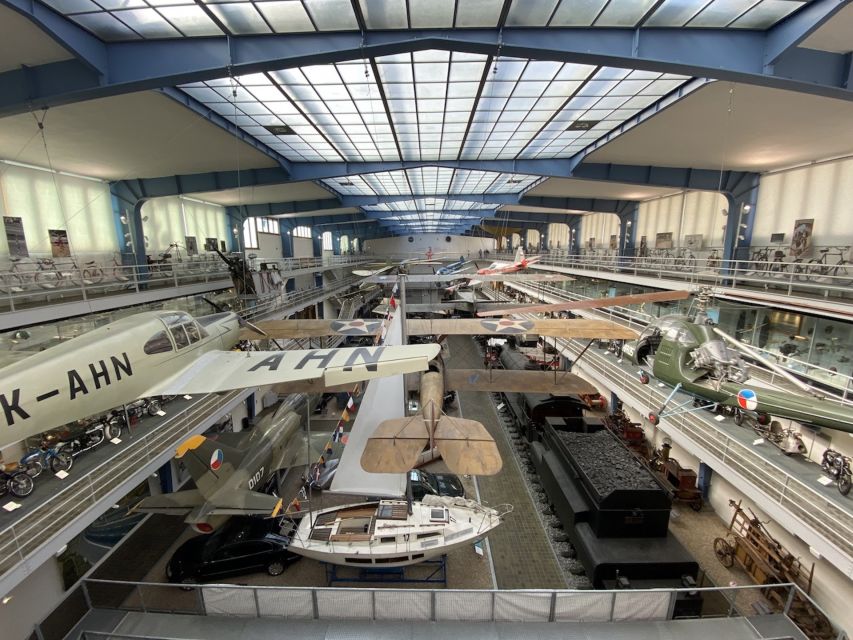
The transportation collection is likely to be the first major draw for many people. The museum includes planes, trains, and automobiles, making this a good choice if you want to see large machines rather than only small objects behind glass.
These exhibits also give the museum its broad appeal. Children can react to the size and shape of the vehicles, while adults may spend more time thinking about design, engineering, and the changes these machines brought to Czech life.
You should not expect a guided explanation of every vehicle. The attraction here is the chance to move freely among the displays and decide which machines deserve your attention. If transportation is your priority, go early enough to give this section the time it deserves.
Temporary exhibitions have also included railway and electrical engineering, as well as interwar Czechoslovak motor sport. Those subjects fit naturally beside the permanent transportation displays, but temporary exhibits change. Check what is showing for your date rather than planning your visit around an old exhibition title.
Architecture, design, and the built world
The architecture, construction, and design exhibition broadens the visit beyond engines and vehicles. It connects technical achievement with the places and objects people use every day.
This section may suit you if you enjoy the practical side of design. You can consider how materials, construction methods, and visual choices work together, rather than looking only at speed or mechanical power.
A temporary exhibition has also focused on Jan Tatoušek, described as an artist in engineering and architect in design. Another has examined Bedřich Feuerstein and his work between Prague, Paris, and Tokyo. These examples show how the museum can connect technical subjects with architecture and art, though the dates provided for those displays have already passed.
A few more Prague options to compare
- Prague: 50-Minute Sightseeing Evening Cruise
★ 4.2 · 33,780 reviews - Prague: Medieval Dinner with Unlimited Drinks
★ 4.4 · 19,847 reviews - Prague: Skip-the-line Castle Ticket and Optional AudioGuide
★ 4.3 · 11,121 reviews - Prague: Castle Tour with Local Guide and Entry Ticket
★ 4.6 · 10,422 reviews
Time, astronomy, and measurement
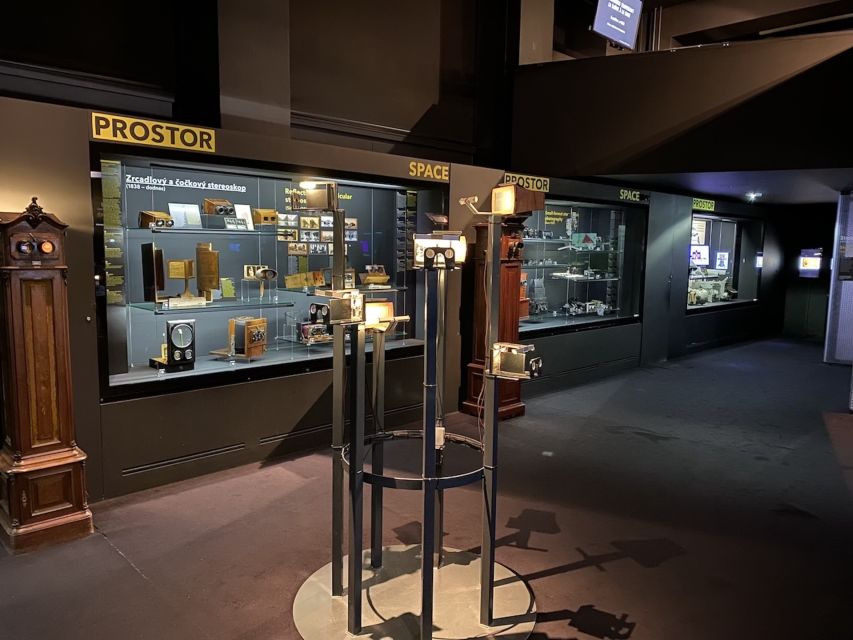
The astronomy and measurement of time exhibitions offer a different pace from the vehicle halls. Here, the focus shifts toward observation, calculation, instruments, and the human effort to measure the world accurately.
You may want to slow down in these galleries. A clock or scientific instrument can look simple until you consider the problem it was built to solve. The museum’s format lets you read at your own speed, which helps with displays that require more thought than a quick glance.
The exact objects and displays can change, so I would avoid planning around one particular instrument unless you confirm it is currently on view. The useful promise is the subject range: astronomy and time measurement are permanent parts of the museum’s program.
From mines and metal to chemistry at home
Mining, metallurgy, and chemistry around us show the industrial side of Czech technology. These areas can be less instantly exciting than a full-size train, but they explain the systems behind industry and daily life.
Mining and metallurgy are especially useful if you want more than a collection of attractive machines. They point toward raw materials, metal production, and the work needed before finished technology reaches the public.
Chemistry around us makes the subject more familiar. It connects science with ordinary life instead of keeping it inside a laboratory. You might find this section most rewarding if you enjoy understanding how technical processes affect the objects and materials around you.
The museum’s broad subject mix is a strength, but it can also feel uneven. A visitor interested only in transport may move quickly through these galleries. That is fine. You are not required to give every exhibition equal time.
Cameras, printing, television, and the technology of daily life
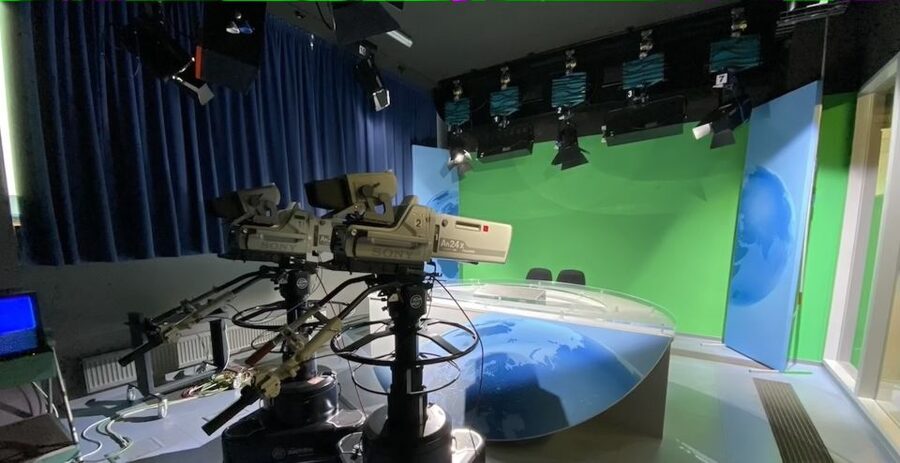
The photographic studio, Intercamera, printing, television studio, and technology in the home exhibitions bring technology closer to personal experience. These are the sections where you can see how communication, images, entertainment, and household tasks changed over time.
A photographic studio offers a chance to think about how pictures were made before modern digital habits. Printing shows another side of communication, where machines helped reproduce words and images for wider audiences.
The television studio should appeal to anyone curious about how broadcasts were created. Technology in the home is more familiar and personal, since it deals with the devices and systems that shape domestic routines.
These galleries help prevent the museum from becoming only a parade of industrial hardware. You get a fuller picture of technology as something used at work, in the home, in entertainment, and in public communication.
A playful stop for children
The Merkur playroom is one of the clearest reasons to bring children. The museum is not only about reading labels and examining old equipment. A dedicated playroom gives younger visitors a change of pace.
The technology in toys exhibition adds another child-friendly angle. Toys can make engineering easier to grasp because the subject begins with something familiar and fun.
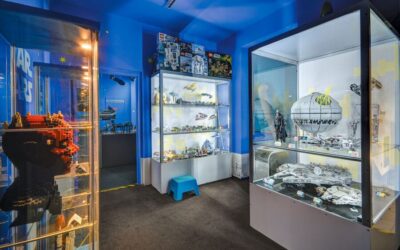
The museum is a good family choice if your group includes different ages and interests. One child can focus on large vehicles, another can enjoy toys, and adults can spend time with architecture, astronomy, or industrial displays.
I would still plan for breaks. Three hours is a long indoor visit for a young child, and the museum has a cafe where you can buy snacks and drinks. The cafe gives you a practical way to reset without leaving the building.
Sugar and chocolate, a tasty piece of industry
The sugar and chocolate exhibition adds an appealing human touch. Food production is technology too, and this subject makes the industrial story easier to connect with everyday life.
It also gives the museum some variety. After machinery, transportation, and scientific instruments, a display linked to familiar food can feel like a welcome change. Children may respond to this section more readily than to a technical display about metallurgy.
Do not assume this is a tasting stop. The information provided confirms a cafe for snacks and drinks, but it does not promise chocolate samples or food demonstrations. Treat the exhibition as a museum display, not a dessert break.
How much value do you get for $22?
At $22 per person, the ticket is not a bargain admission in the way a small local museum might be. Its value depends on how much of the building you use.
I think the price makes more sense if you plan to spend around three hours inside and care about several subjects. The ticket includes 15 permanent exhibitions, any temporary exhibitions available during your visit, and a 20-minute English introduction. That is a substantial amount to see for one admission.
The price is harder to justify if you only want a brief look at the famous vehicles. In that case, you may spend much of the ticket value on galleries you barely visit. Families should also calculate the total carefully, since the cost applies per person.
The most important value question is not only the admission fee. It is whether the ticket will be accepted at the entrance. A reported voucher issue led to a visitor paying twice after museum staff did not accept a ticket from an outside platform. Before booking, confirm the current policy with the provider or museum, and do not assume every digital voucher works automatically.
Timing, opening hours, and practical planning
The museum is open from 9 AM to 6 PM every day except Monday. That makes a morning visit a sensible choice, especially if you want to see several exhibitions before taking a cafe break.
The start time depends on availability, so check the available options before booking. Arrive at the stated meeting point with your smartphone ticket ready and allow enough time to find the host with the yellow umbrella.
Since the activity is valid for one day, you have some flexibility after the introduction. Still, do not mistake that for an all-day guided program. The host’s role ends after the briefing, and the rest is self-guided.
The museum explanations are in Czech and English. If you read English comfortably, you can explore without needing translation help. If you prefer detailed spoken commentary, bring realistic expectations because inside-the-museum guiding is not included.
Free cancellation is available up to 24 hours before the activity for a full refund, and the reserve-now, pay-later option can help if your schedule is still moving. These features are useful, but the ticket acceptance issue deserves more attention than the cancellation terms.
Who should book this experience?
I would recommend it to families, museum fans, and anyone who likes choosing their own route. It is also a good fit if you want a short English introduction but do not want to spend several hours following a guide.
It suits you especially well if you are interested in transportation, mechanical history, industrial processes, household technology, or design. The mix of full-size machines and smaller technical objects gives you plenty of variety.
I would be more cautious if you want an intimate guided tour with stories at every stop. That is not what this product provides. I would also be cautious if your schedule is tight and you only have an hour, since the museum’s range deserves more time.
Should you book the National Technical Museum ticket?
Book it if you can give the museum about three hours and want freedom to focus on the subjects you enjoy. The 20-minute English briefing is useful, the small group keeps the start manageable, and the collection reaches far beyond planes and cars.
Before committing, verify the ticket acceptance policy. The reported double-payment problem is a real reason to pause, even though the museum itself offers a broad and worthwhile visit.
For families and technology fans, this is a practical Prague stop with plenty to see. For a quick visit or a fully guided museum experience, choose another plan or confirm that a standard museum ticket purchased directly from the museum is the safer option.
FAQ
How long is the introduction?
The introduction lasts 20 minutes and is provided in English by a host outside the museum.
Is the museum visit guided?
No. The ticket includes the short introduction only. You explore the museum independently after the briefing.
How many permanent exhibitions are included?
The ticket includes access to 15 permanent exhibitions, along with temporary exhibitions available during your visit.
What are the museum’s opening hours?
The museum is open from 9 AM to 6 PM every day except Monday.
Is there somewhere to buy food or drinks?
Yes. The museum has a cafe where you can buy snacks and drinks.
Where do I meet the host?
Meet the Discover Prague Tours guide in front of the National Technical Museum. Show your smartphone ticket to the guide holding a yellow umbrella.
Newest listings in Prague
- World War II 4WD Tour from Prague with Lunch★ 4.4 · 3 reviews
- WWII and Communism History in Prague’s Old Town Private Tour★ 5.0 · 4 reviews
- Wroclaw: Giant Mountains & Valley of Palaces Day Tour★ 4.8 · 36 reviews
- Prague: Historical Walking Tour with Focus on World War 2★ 4.3 · 12 reviews
- Walking tour of Prague in French : Nové Město★ 4.9 · 16 reviews
- Walking tour of Prague in french: Old Town & Charles Bridge★ 4.9 · 62 reviews
- Vltava River Cruise and Private Tour of Prague’ Old Town★ 5.0 · 1 review
- Ultimate Unlimited Beer Pong with Czech Beer★ 4.6 · 5 reviews
Museums, compared.


IAM Illusion Art Museum Prague Fast Pass Ticket
Read our review →
Ticket to Audiovisual Light Art at Lumia Gallery
Read our review →
Browse the lists this tour appears in