
REVIEW · MUSEUMS
Prague: Museum of Torture Entry Ticket
Prague keeps its darkest secrets underground. The Museum of Torture and Torture Law turns reconstructed cellars on Celetná Street into a compact lesson in medieval and early modern justice. I like the central location and the chance to see about 100 instruments, engravings, documents, wax figures, and recreated scenes in one 400-square-meter exhibition.
I also like that the museum explains more than how each device worked. Its texts connect torture instruments to legal systems, forced confessions, and punishment. The main drawback is the graphic, gloomy presentation. It is not a good fit for young children or sensitive visitors, and a verified February 2026 comment reported a strong black mold smell and peeling walls in parts of the cellar.
In This Review
- Key points to know before entering
- Entering Prague’s cellar museum on Celetná Street
- What the collection shows about torture law
- Seeing the iron maiden, Spanish boot, and rack
- Period engravings and recreated scenes
- The atmosphere: effective, but not for everyone
- Is the $9 ticket good value?
- How to fit it into a day in Prague
- Who should visit, and who should skip it?
- My booking advice
- FAQ
- Where is the Museum of Torture located?
- How much does admission cost?
- How long is the ticket valid?
- What can I see inside the museum?
- Which torture instruments are displayed?
- Is the museum suitable for children?
- Is the museum available in English?
Key points to know before entering
- About 100 exhibits fill 400 square meters, including replicas of the iron maiden, Spanish boot, rack, and pear.
- Celetná Street puts the museum in central Prague, making it easy to pair with other Old Town sights.
- Period engravings and legal documents add context, so the visit is not only a display of grim machinery.
- Wax figures, sound effects, and audiovisual scenes create a theatrical cellar atmosphere.
- The $9 price is modest, especially for visitors interested in unusual museums and European legal history.
- Graphic content limits its audience, with the museum specifically advising against bringing young children or highly sensitive people.
Entering Prague’s cellar museum on Celetná Street
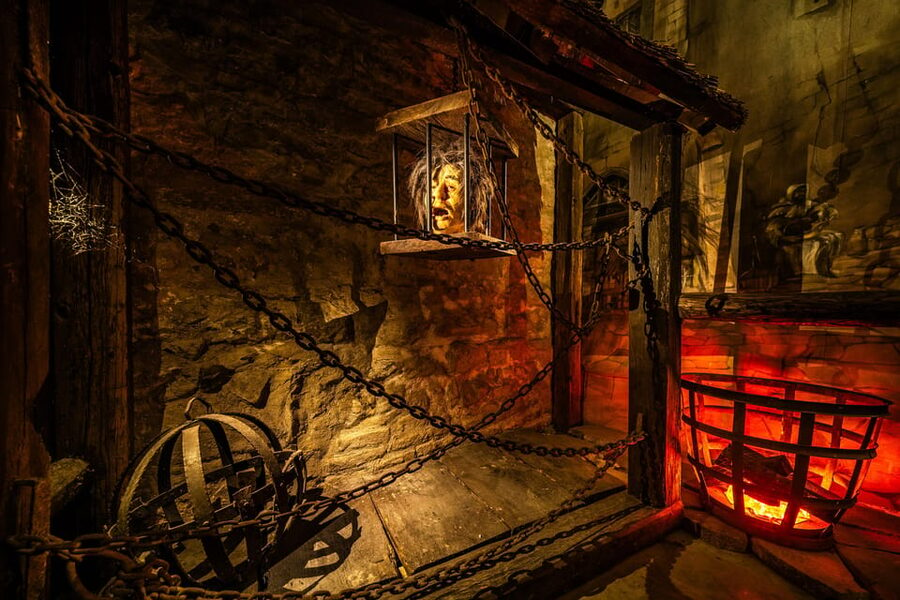
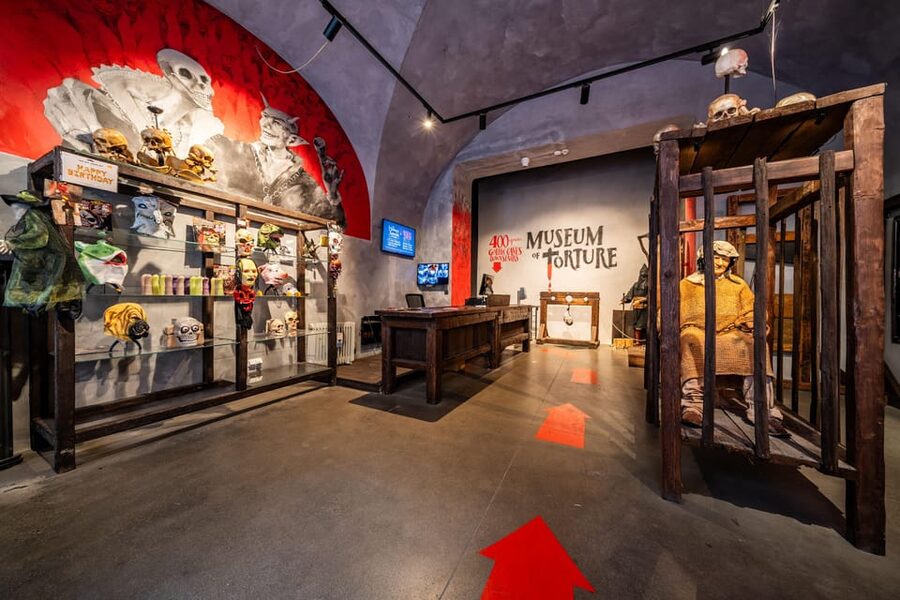
The experience begins in reconstructed cellar spaces beneath Celetná Street, one of central Prague’s historic routes. The location matters. You are not entering a modern gallery with bright walls and a polished science-center feel. The setting is part of the presentation, with low cellar rooms helping the displays feel tied to the city’s older layers.
The museum covers about 400 square meters. That is large enough for a substantial collection, but still compact enough to visit without giving up half a day. The ticket is valid for one day, and the advertised price is $9 per person.
No fixed visit length is provided, so I would treat this as a flexible stop rather than a scheduled major attraction. You can fit it around your Old Town plans, but the dark setting and large number of displays may make the visit feel more intense than its modest size suggests.
English is listed for the host or greeter. The exhibition also includes written information and documents that explain the legal background of torture. Since the format is centered on self-guided displays rather than a detailed walking itinerary, read the text panels carefully if you want the historical meaning behind the objects.
More Museum Tours in Prague:
- Prague: Museum of Fantastic Illusions Entry Ticket
★ 4.3 · 4,337 reviews - IAM Illusion Art Museum Entry Ticket
★ 4.2 · 1,664 reviews - Prague: Museum of Senses Admission Ticket
★ 4.0 · 1,445 reviews
What the collection shows about torture law
The museum’s useful feature is its focus on torture law, not just torture devices. Across Europe, torture was once connected to judicial procedure. Authorities used it to obtain confessions, punish offenders, and enforce a legal system that viewed confession as a central part of proving guilt.
That context changes the way you look at the objects. A replica of the rack is not simply a frightening machine. It represents a legal process in which physical suffering could be treated as a legitimate way to obtain evidence. The exhibition aims to show how such laws were applied across the centuries and what their use meant for society.
The legal documents and explanatory texts help prevent the collection from becoming a simple parade of gruesome objects. You can consider who had authority, how confessions were extracted, and how punishment was presented as justice. For me, that is the strongest reason to visit. The museum is more useful when you pay attention to the system around the instruments.
You should not expect a broad survey of every period of Czech history. The information provided describes a focused look at torture law, instruments, and their use in judicial proceedings. It is best approached as a dark historical exhibit, not as a complete account of Prague’s past.
Seeing the iron maiden, Spanish boot, and rack
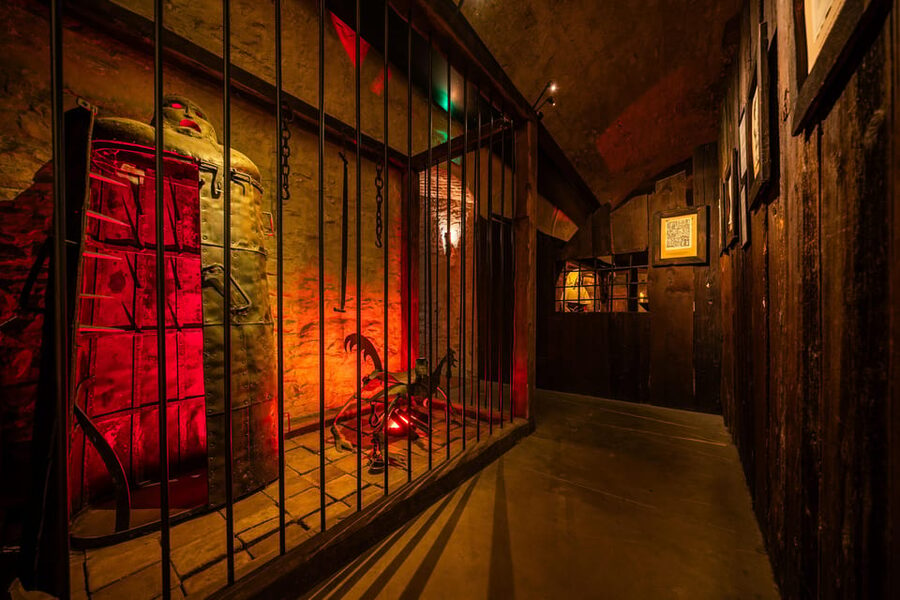
The collection includes detailed replicas of well-known instruments such as the iron maiden, Spanish boot, rack, and pear. These names may be familiar from films, books, or other museums, but seeing them arranged in a physical setting gives you a clearer sense of their scale and design.
The replicas are important to understand. The description identifies them as authentic and detailed replicas, not necessarily original devices used in historical trials. That distinction is worth keeping in mind. You are looking at reconstructions intended to show how the instruments were built and used, alongside the period imagery and written material that explain their role.
The displays cover different forms of physical pressure and punishment. Some instruments were associated with extracting confessions, while others were intended to punish or intimidate. The museum encourages you to consider the difference between those purposes, even though both can look equally shocking at first glance.
The pear is one of the smaller and more infamous objects in the collection, while the rack is large and immediately recognizable. The Spanish boot shows how a device could target a particular part of the body. The variety helps you see that torture was not one single method. It was a set of practices built around fear, pain, confession, and control.
The exhibition does not make these objects pleasant. That is not the aim. If you have already seen similar devices in historical museums, the replicas alone may not feel new. Their value comes from the surrounding explanations and the way they are placed within the reconstructed rooms.
Period engravings and recreated scenes
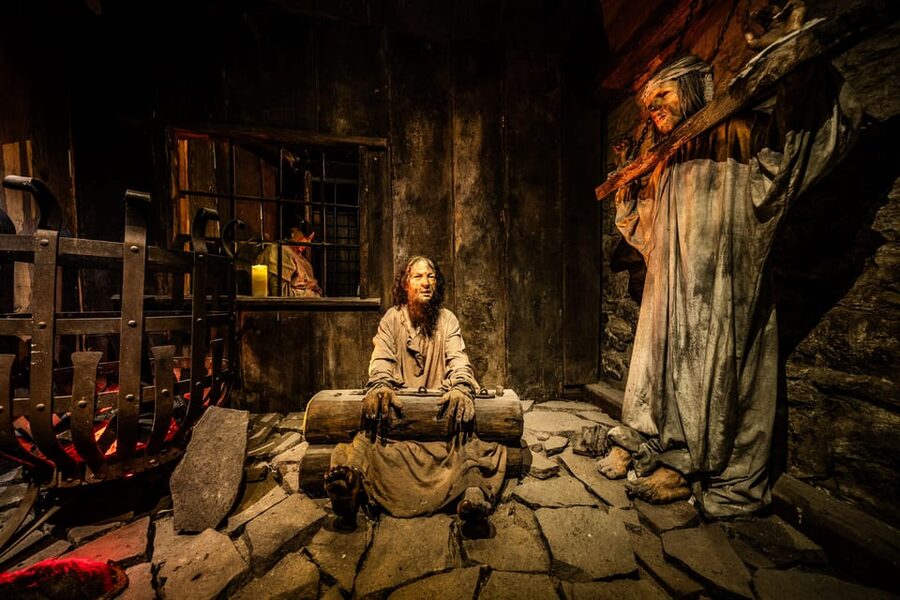
Dozens of period engravings add another layer to the collection. They show how torture and punishment were represented in earlier centuries, giving you visual evidence of the attitudes surrounding these practices. The engravings help connect the physical objects to the culture and legal thinking that produced them.
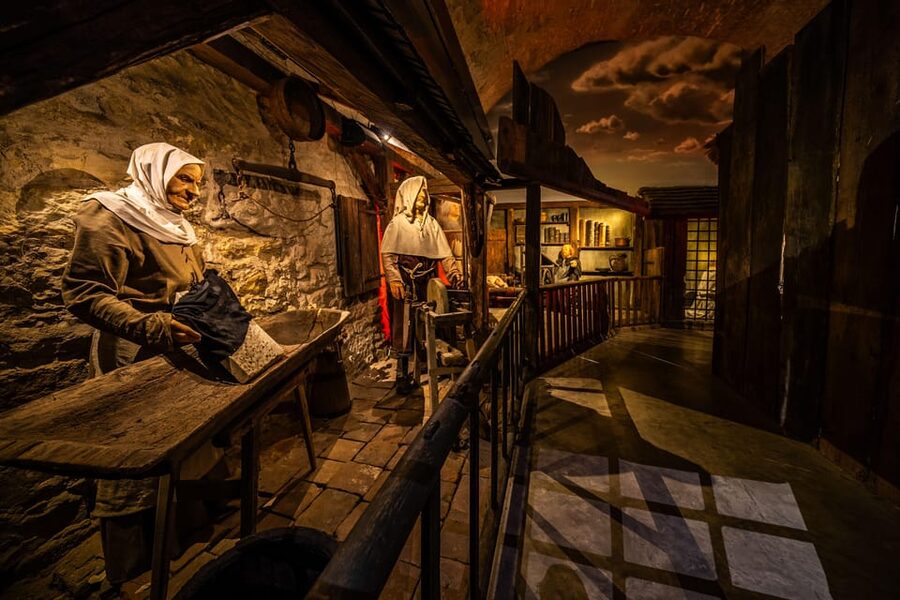
Wax figures appear in authentic settings throughout the exhibition. They make the rooms feel more like staged historical scenes than a standard case-and-label museum. That theatrical approach can help you understand how a device might have been positioned and how a punishment was presented to an audience or authority.
It can also make the museum more disturbing. The figures and settings are meant to create a mystical atmosphere, and the exhibition uses that mood on purpose. If you prefer quiet museums with neutral displays, this presentation may feel heavy-handed. If you enjoy atmospheric historical exhibits, it adds a clear sense of place.
The sound effects and two special audiovisual effects push the experience further. They are designed to intensify the cellar tour and create a more dramatic visit. I would treat them as atmosphere rather than a substitute for historical explanation. The written material remains the part that gives the objects meaning.
A few more Prague options to compare
- Prague: 50-Minute Sightseeing Evening Cruise
★ 4.2 · 33,780 reviews - Prague: Medieval Dinner with Unlimited Drinks
★ 4.4 · 19,847 reviews - Prague: Skip-the-line Castle Ticket and Optional AudioGuide
★ 4.3 · 11,121 reviews - Prague: Castle Tour with Local Guide and Entry Ticket
★ 4.6 · 10,422 reviews
The atmosphere: effective, but not for everyone
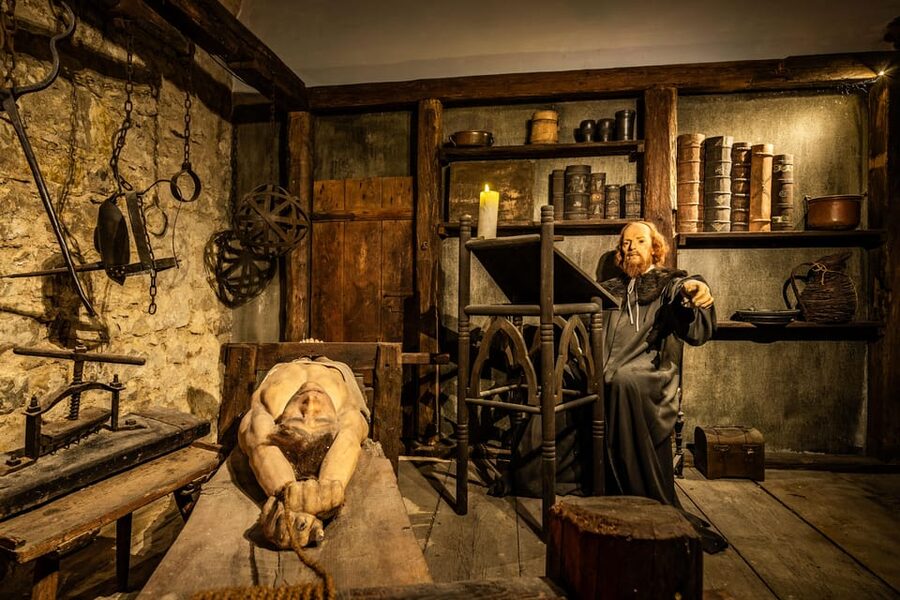
This is a museum about human suffering, and the mood is intentionally grim. Dark rooms, wax figures, sound effects, and audiovisual scenes can make the subject feel immediate. You are not simply reading that torture happened centuries ago. The presentation asks you to picture the setting and the fear surrounding it.
That approach works best if you know what you are signing up for. The museum specifically advises against visits by young children and sensitive individuals because of the graphic content. Even adults who enjoy unusual museums may find some scenes uncomfortable.
The cellar setting is a major part of the appeal, but it also deserves a practical warning. A verified comment dated February 10, 2026, described a strong black mold odor, blackened walls, and peeling surfaces in several rooms. That is a serious concern, especially for anyone sensitive to damp or poor air quality. It may reflect conditions at that time rather than every visit, but you should keep the possibility in mind.
The same atmospheric features that make the museum memorable can also make it feel claustrophobic or overly theatrical. I would not choose this as a casual stop for a family with small children. For adults interested in difficult subjects, the atmosphere may help convey the emotional weight of the displays.
Is the $9 ticket good value?
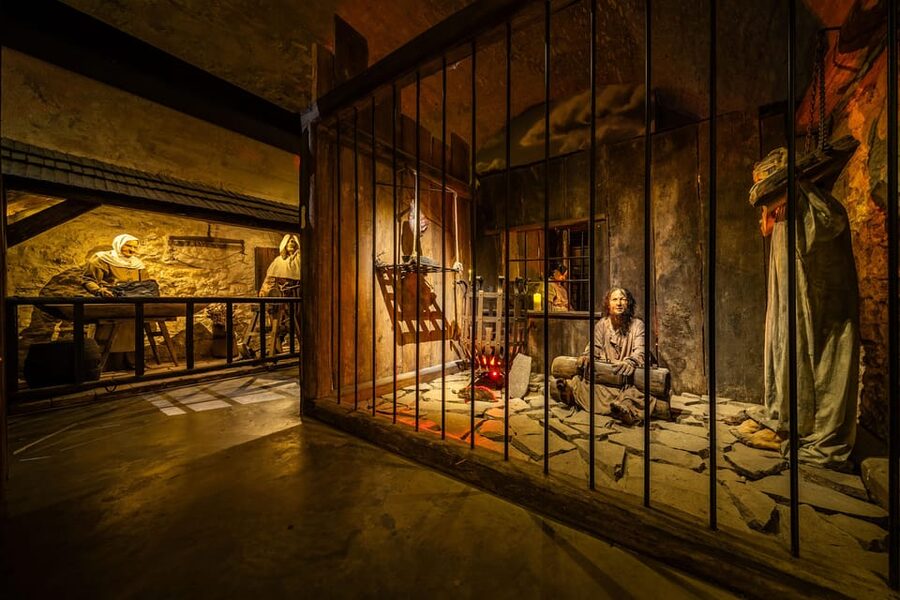
At $9 per person, the price is reasonable for a central Prague museum with around 100 exhibits, period engravings, documents, wax figures, sound effects, and audiovisual scenes. You are paying for a focused attraction rather than a full-day institution, but the low cost makes it easy to add to a day in the Old Town.
The value depends on your interest. If you enjoy legal history, unusual collections, or dark museums, you will likely find enough material to justify the ticket. The combination of instruments and historical explanation gives you more than a quick novelty stop.
If you are mainly looking for famous original artifacts or a broad historical museum, the price may feel less compelling. Many of the instruments are replicas, and the exhibition is concentrated on one disturbing subject. The theatrical effects may appeal to some people and annoy others.
The rating provided for the experience is 3.6 out of 5 from 317 reviews. That suggests a mixed response rather than universal approval. I would read the score as a reminder to set realistic expectations: this is a specialized, atmospheric museum with an unusual subject, not a polished major attraction designed for everyone.
How to fit it into a day in Prague
The museum’s central position on Celetná Street makes it simple to add between other Old Town activities. You do not need to build an entire day around it. Because the ticket is valid for one day, you can plan it around your broader sightseeing schedule rather than treating entry as a timed, standalone excursion.
A sensible approach is to visit when you already plan to be in central Prague. The location reduces the need for special transportation, and the compact exhibition lets you decide how much attention to give each room. If the atmosphere becomes too intense, you are not committed to a long outdoor tour or a distant return journey.
I would avoid scheduling it as the first experience for a child or anyone unsure about graphic historical displays. The subject can shape the mood of the rest of your day. For adults who deliberately seek difficult or unusual museums, it may be a memorable change from Prague’s churches, squares, and grand architecture.
The English host or greeter option is useful for basic arrival support, but do not assume that an English-speaking guide will lead you through every display. The information supplied confirms English as the language available, while the exhibition itself provides text and documents for context.
Who should visit, and who should skip it?
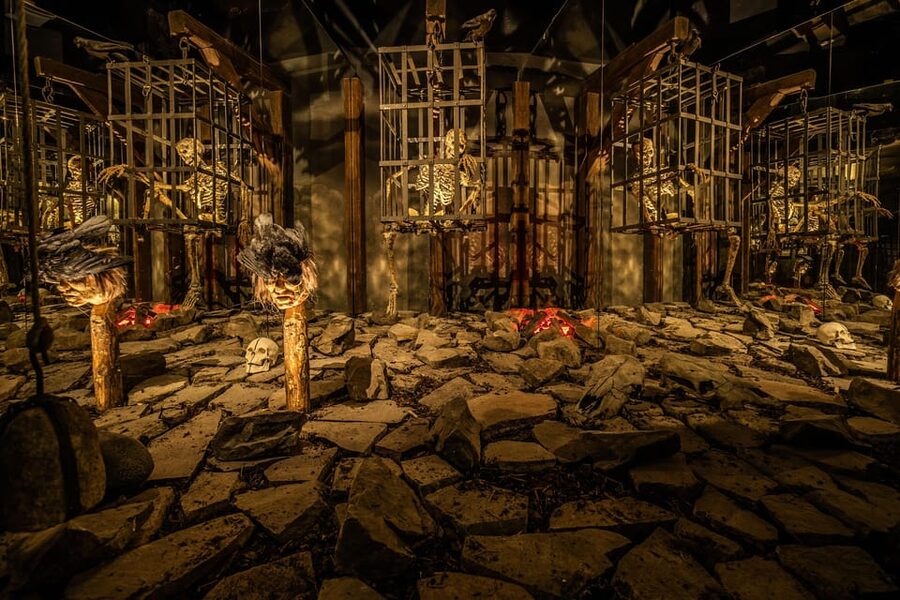
I would recommend this museum to adults who:
- Want to understand how torture was linked to law and confessions
- Enjoy small, specialized museums
- Like reconstructed rooms and theatrical displays
- Are interested in replicas of historic instruments
- Have already seen Prague’s main sights and want something different
I would skip it if you are traveling with young children, dislike graphic subjects, or want a bright, calm museum. You may also want to reconsider if strong smells or damp cellar conditions are a serious concern, given the February 2026 complaint about mold odor and peeling walls.
The museum can also suit visitors with limited time. Its central location and one-day ticket make it easy to include without sacrificing a major portion of your Prague itinerary. Just remember that a small footprint does not mean a light subject.
My booking advice
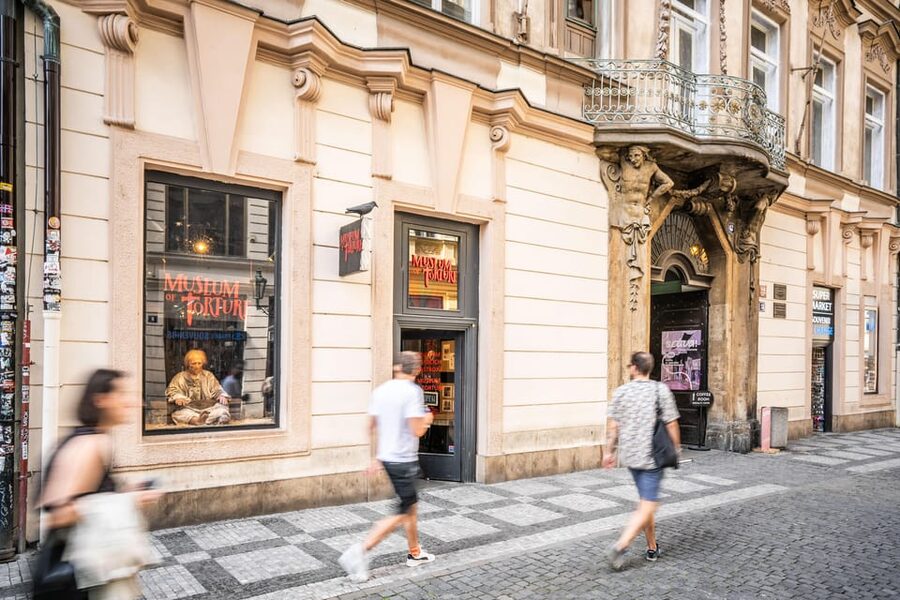
I would book this experience if you want a focused look at the legal and social history of torture, and if replicas, wax scenes, and sound effects appeal to you. At $9, the financial risk is low, and the central location makes the museum easy to reach.
I would not book it simply because the title sounds dramatic. The content is graphic, the presentation is intentionally dark, and the condition of some cellar areas may be a concern. Go with the right expectations, read the legal explanations, and treat the instruments as evidence of a harsh justice system rather than as curiosities alone.
Free cancellation up to 24 hours before the visit and reserve-now, pay-later terms make planning flexible. Those policies do not change the nature of the attraction, but they are useful if you are still arranging your Prague schedule.
FAQ
Where is the Museum of Torture located?
It is located in reconstructed cellar spaces on Celetná Street in central Prague, in the Central Bohemian Region of the Czech Republic.
How much does admission cost?
The listed price is $9 per person.
How long is the ticket valid?
The ticket is valid for one day. A specific visit duration is not provided.
What can I see inside the museum?
You can see around 100 exhibits, dozens of period engravings, legal documents, wax figures, detailed replicas of torture instruments, sound effects, and two special audiovisual effects.
Which torture instruments are displayed?
Examples include the iron maiden, Spanish boot, rack, pear, and other instruments.
Is the museum suitable for children?
The exhibition is not recommended for young children or sensitive individuals because of its graphic content.
Is the museum available in English?
English is listed as the language for the host or greeter, and the exhibition includes textual information and documents in English.
Newest listings in Prague
- World War II 4WD Tour from Prague with Lunch★ 4.4 · 3 reviews
- Prague: Historical Walking Tour with Focus on World War 2★ 4.3 · 12 reviews
- WWII and Communism History in Prague’s Old Town Private Tour★ 5.0 · 4 reviews
- Wroclaw: Giant Mountains & Valley of Palaces Day Tour★ 4.8 · 36 reviews
- Walking tour of Prague in French : Nové Město★ 4.9 · 16 reviews
- Walking tour of Prague in french: Old Town & Charles Bridge★ 4.9 · 62 reviews
- Vltava River Cruise and Private Tour of Prague’ Old Town★ 5.0 · 1 review
- Ultimate Unlimited Beer Pong with Czech Beer★ 4.6 · 5 reviews
Museums, compared.


IAM Illusion Art Museum Prague Fast Pass Ticket
Read our review →
Ticket to Audiovisual Light Art at Lumia Gallery
Read our review →
Browse the lists this tour appears in