
REVIEW · WALKING TOURS
Prague Introduction Walking Tour
Prague rewards a thoughtful first walk. I like the small group of 10 and the way this tour ties grand sights to real political and social stories. I also like the route’s variety, from Wenceslas Square and the Head of Franz Kafka to the Jewish Quarter and Municipal House. The main drawback is the $123 price, which is high for a three-hour walk unless you value expert historical and architectural commentary.
The guides are professors, doctoral students, historians, journalists, art critics, and published authors. That promise seems to matter: Greg praised Matouš for being enthusiastic and entertaining, while another participant found three hours passed quickly. Still, expect a serious walking lesson rather than a casual photo stroll, and confirm the exact finishing point because the tour description mentions both the Vltava River and a return to Cukrárna Myšák.
In This Review
- Key things to know before you book
- Why this three-hour walk works as a Prague introduction
- Wenceslas Square and Lucerna Palace: Prague’s modern turning points
- The Head of Franz Kafka and Národní třída
- Clementinum, Charles University, and Karolinum
- The Jewish Quarter: buildings, memory, and community life
- Old Town Square and the Estates Theatre
- House of the Black Madonna and the Powder Tower
- Municipal House and the hope of Czech independence
- The route, walking pace, and group size
- Is $123 a fair price?
- Who should book this Prague walk?
- Final verdict: a strong choice for history-minded visitors
- FAQ
- How long is the Prague Introduction Walking Tour?
- What is the price?
- Where does the tour begin?
- What language is the tour offered in?
- How large is the group?
- Is transportation included?
- Does the tour include entry tickets to the monuments?
- Which Jewish Quarter sights are included?
- Who leads the tour?
- Can I cancel for a full refund?
Key things to know before you book
- A compact route through major Prague eras: You move from medieval trade and royal power to Nazi-era and Communist-era history, Czech independence, Jewish life, and modern democracy.
- The Jewish Quarter is a central part of the tour: The Old New Synagogue, ancient cemetery, and Rococo Town Hall provide more than a quick pass by.
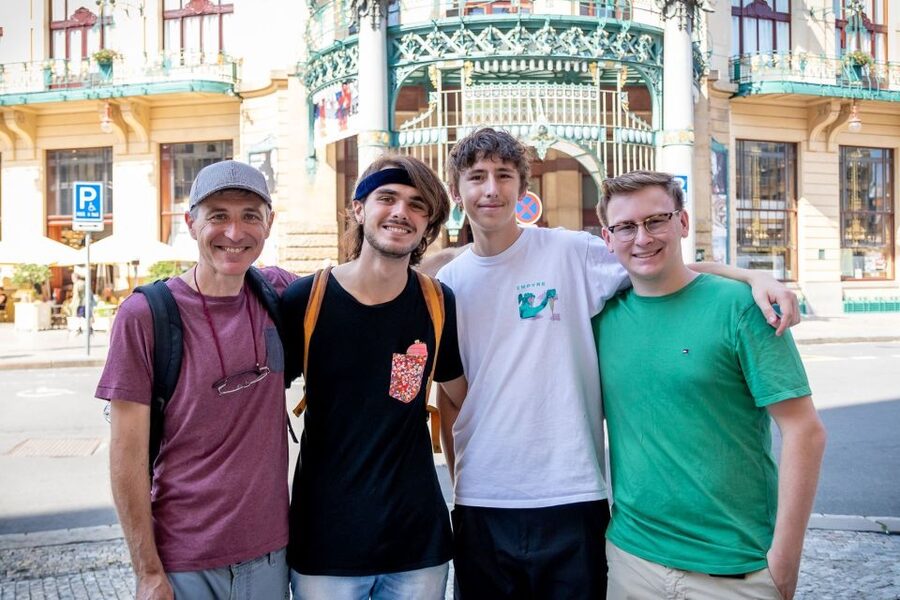
- Art Nouveau gets proper attention: Municipal House and Lucerna Palace help explain Prague’s creative side, not just its castles and church towers.
- The route includes unusual modern sights: The Head of Franz Kafka and the Franciscan Gardens break up the older monuments.
- Small-group teaching is the selling point: With no more than 10 participants, you should have a better chance to hear and ask questions.
- The price depends on your interests: At $123 per person, this makes the most sense for visitors who want serious context from a specialist guide.
Why this three-hour walk works as a Prague introduction
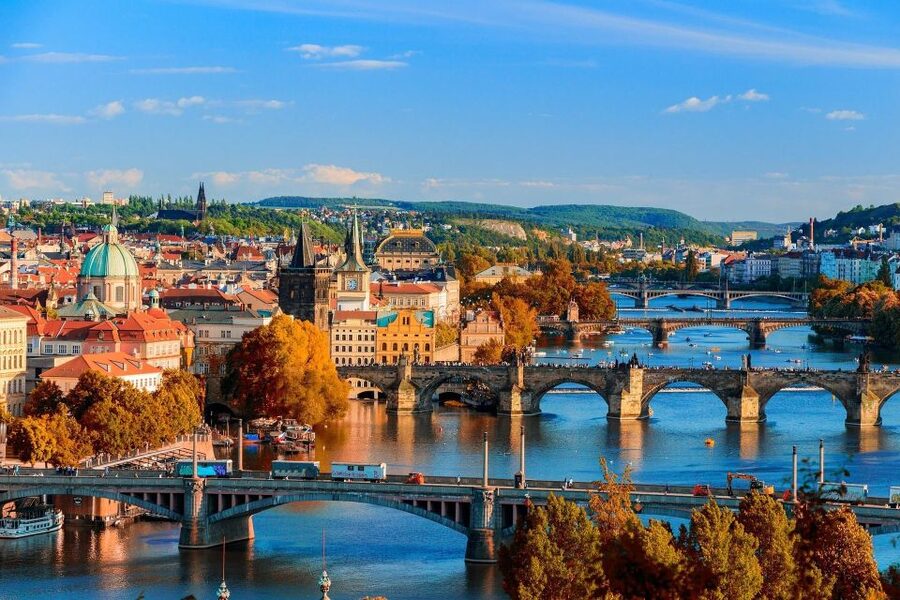
Prague can feel like a storybook city at first glance: towers, old stone lanes, grand squares, and a river cutting through the center. That pretty surface can also hide the city’s harder story. This walk is designed to connect the scenery with Prague’s long record of German, Czech, and Jewish cultural life, along with the political upheavals of the 20th century.
You begin outside Café Cukrárna Myšák on Vodičkova 710/31. This is a practical central meeting point, and the café gives you a clear landmark for finding your guide. From there, the route moves through several central neighborhoods rather than staying in one square for the entire three hours.
I would choose this tour early in a Prague visit. It gives you a map in your head, introduces the city’s major themes, and can help you decide which buildings deserve a later interior visit. The pace is still a consideration. You cover many locations in three hours, so some stops will receive explanation from the outside rather than a full indoor visit.
More Walking Tours in Prague:
- Prague: 3-Hour Walking Tour of Old Town & Prague Castle
★ 4.7 · 5,696 reviews - Prague: Ghost Walking Tour Where Legends Come To Life
★ 4.4 · 5,253 reviews - Prague: Jewish Quarter Walking Tour with Admission Tickets
★ 4.7 · 3,729 reviews
Wenceslas Square and Lucerna Palace: Prague’s modern turning points
Wenceslas Square is the first major stop, and it is a smart choice. Despite its name, this is a long city boulevard rather than a small medieval square. It has been a stage for political gatherings, public celebrations, and Prague’s 20th-century ordeals.
Here, your guide can frame modern Czech history before you encounter the older lanes. The square helps you understand that Prague is not only about emperors, churches, and medieval merchants. It is also a city shaped by protest, occupation, political change, and the difficult work of building a modern democracy.
Lucerna Palace follows with a different mood. Its inclusion adds architecture and urban culture to the historical story. You should expect to hear about the building as you walk through or around this important central complex, with the guide drawing attention to its place in Prague’s public life.
The route then reaches the Franciscan Gardens. This is a welcome change of pace. A compact garden setting gives you a breather from the broad square and busy city streets, while also showing how small pockets of calm fit into central Prague.
The Head of Franz Kafka and Národní třída
The Head of Franz Kafka is one of the route’s more unusual sights. This modern work gives the walk a sharp break from Prague’s older architecture. It also opens a door to Kafka, one of the city’s best-known writers, and to the uneasy relationship between Prague’s identity, language, bureaucracy, and memory.
I like this stop because it prevents the tour from becoming a parade of façades. You get a contemporary public artwork alongside medieval and Art Nouveau buildings. The contrast is useful: Prague’s past is not locked behind glass. It keeps being reinterpreted.
Národní třída brings the focus back to public life and politics. The street is closely tied to the modern Czech story, and your guide will use it to explain more of Prague’s 20th-century struggles. Details are not provided about a specific interior visit here, so expect a guided stop and historical interpretation rather than an admission-based attraction.
At this point, the walk has already covered a lot. If you have limited mobility or simply dislike long city walks, three hours may feel demanding. The group is small, but the tour remains a walking tour with several stops, not a bus-based overview.
Clementinum, Charles University, and Karolinum
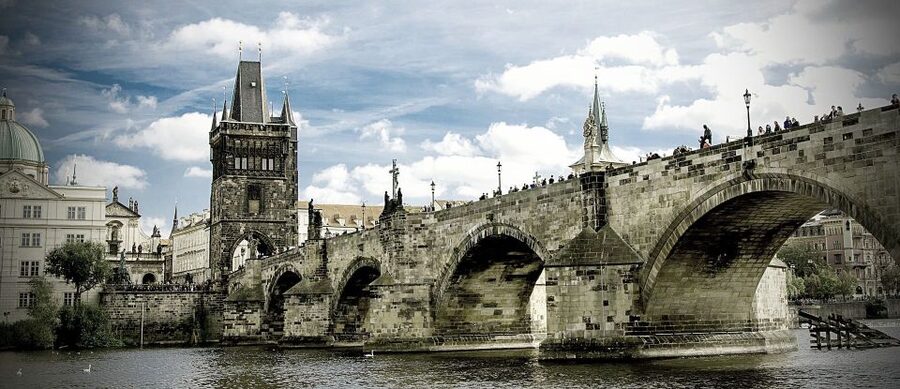
The Clementinum brings you into one of Prague’s most important institutional and architectural zones. It is a powerful reminder that the city’s story includes scholarship, religion, government, and the movement of ideas across borders.
You then pass the Faculty of Arts of Charles University. This stop adds a living academic dimension to the route. Rather than treating Prague’s institutions as old monuments only, the tour connects them with the city’s continuing intellectual life.
Karolinum carries that theme forward. As part of Charles University, it represents the long presence of higher education in Prague. For you, the value is not simply seeing another historic building. It is understanding why this city became an important center for learning and political debate.
The walk through this section should appeal to anyone who prefers context over a fast checklist. Your guide may discuss how Czech, German, and Jewish communities interacted through education, trade, government, and culture. The provided description promises that wider social picture, though the exact depth will depend on the guide and the group’s questions.
A few more Prague options to compare
- Prague: 50-Minute Sightseeing Evening Cruise
★ 4.2 · 33,780 reviews - Prague: Medieval Dinner with Unlimited Drinks
★ 4.4 · 19,847 reviews - Prague: Skip-the-line Castle Ticket and Optional AudioGuide
★ 4.3 · 11,121 reviews - Prague: Castle Tour with Local Guide and Entry Ticket
★ 4.6 · 10,422 reviews
The Jewish Quarter: buildings, memory, and community life
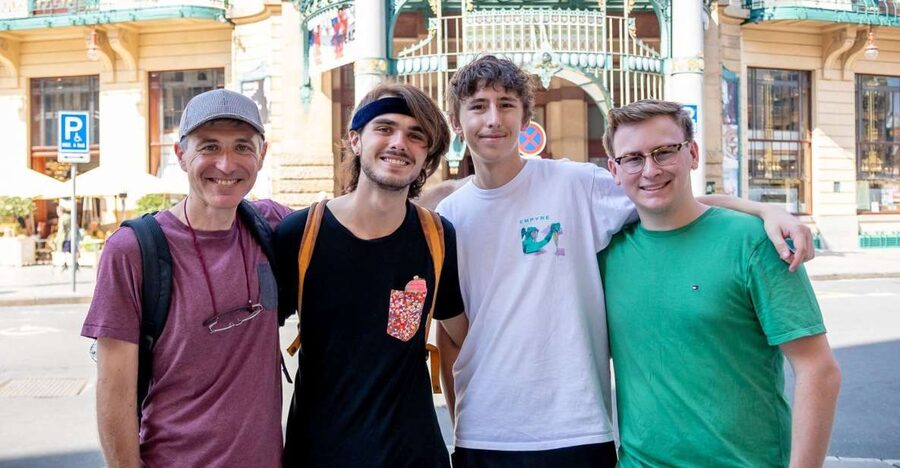
The Jewish Quarter is one of the strongest parts of the route. You will see the Old New Synagogue, described as the oldest functioning temple in Europe, along with the ancient Jewish cemetery and the Rococo Town Hall.
These are not just isolated sights. Together, they show the physical presence of Prague’s Jewish community and the pressures placed upon it over time. The guide will discuss the community’s cultural and economic relationships with German and Czech neighbors, giving you a more useful picture than a simple story of separation.
The Old New Synagogue is especially important because it remains a working place of worship. Seeing it in the context of the quarter helps you understand that Jewish life in Prague was not only a chapter from the past. It shaped the city’s trade, languages, institutions, and daily relationships.
The ancient cemetery adds a different kind of weight. You should expect a respectful historical explanation rather than a quick scenic stop. The Rococo Town Hall rounds out the visit by showing how communal institutions and civic life developed within the Jewish Quarter.
One practical point: the tour information does not say that synagogue or cemetery admission is included, nor does it promise interior access. Treat these as guided exterior and neighborhood visits unless your booking details say otherwise. If you want a full Jewish Museum circuit, you will likely need separate time and tickets.
Old Town Square and the Estates Theatre
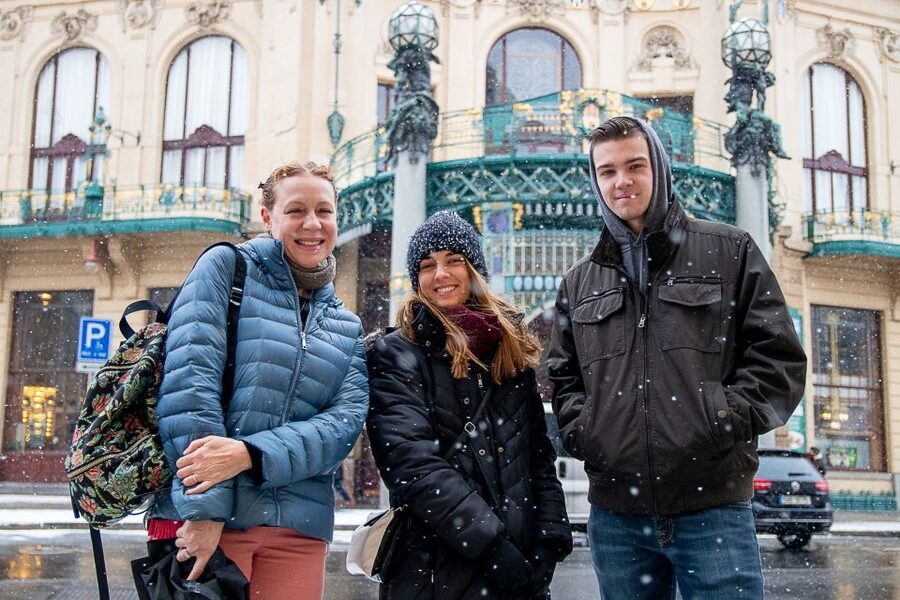
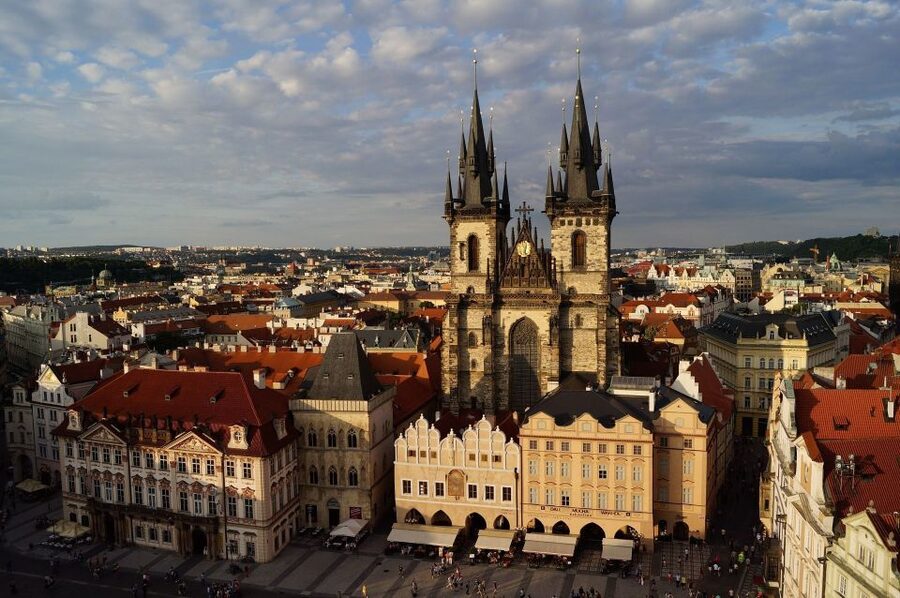
Old Town Square is the heart of the medieval story. It began as the marketplace that helped make Prague a major center of European trade. Today, it is one of the city’s most recognizable spaces, but the guide’s job is to show you what sits behind the postcard view.
From here, you can look at Prague as a meeting point of commerce, faith, language, and power. The surrounding buildings reveal the city’s changing political and social character. The winding streets leading into the square are just as important as the square itself because they show how the old city grew around trade and civic life.
The Estates Theatre adds performance and culture to the route. It is one of Prague’s major historic theaters, and its place here helps connect the city’s architecture with music, drama, and public identity. Your guide will lead a guided stop, but the experience does not include a stated performance or theater admission.
This section may be the most familiar-looking part of the walk, yet it can also be the easiest to rush. I would listen closely to the explanations of how Prague’s communities and rulers shaped the buildings around you. The details help separate this tour from simply following a map between famous squares.
House of the Black Madonna and the Powder Tower
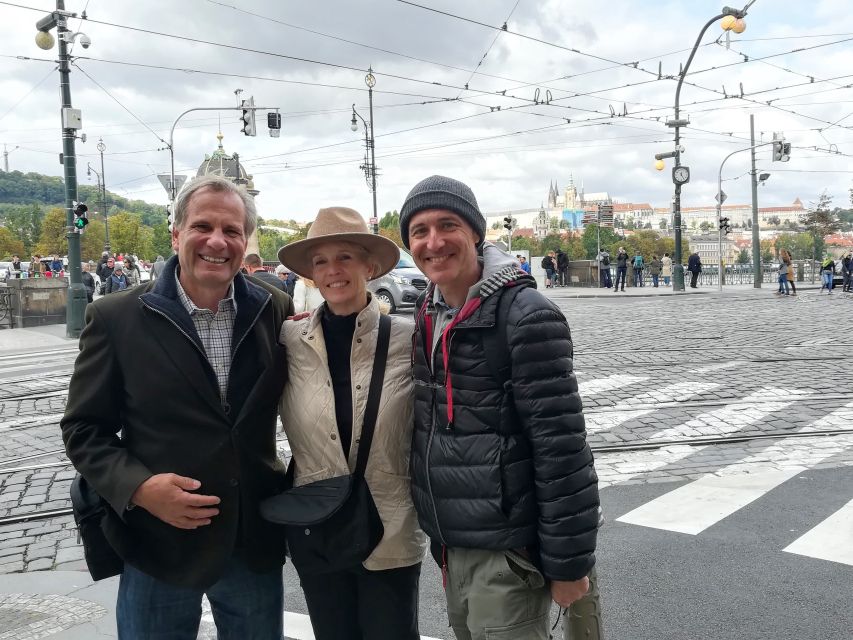
The House of the Black Madonna is a fine change of architectural mood. Its name is memorable, and the building is associated with Prague’s Cubist architecture. The stop gives your guide a chance to explain a style that is less immediately obvious than Gothic or Art Nouveau.
That makes it particularly useful for visitors who want to understand Prague beyond the Old Town’s most famous churches. You will see that the city’s artistic identity did not stop in the Middle Ages. Modern Czech designers and architects developed their own bold visual language.
The Powder Tower shifts the story back toward Prague’s historic defenses and ceremonial routes. It marks the edge between the Old Town and the former area connected with the city’s royal processions. Even without an interior visit, the tower gives the route a strong visual marker.
These two stops work well together. The House of the Black Madonna asks you to look at modern design, while the Powder Tower pulls you back toward monarchy, urban walls, and old Prague’s formal entrances.
Municipal House and the hope of Czech independence
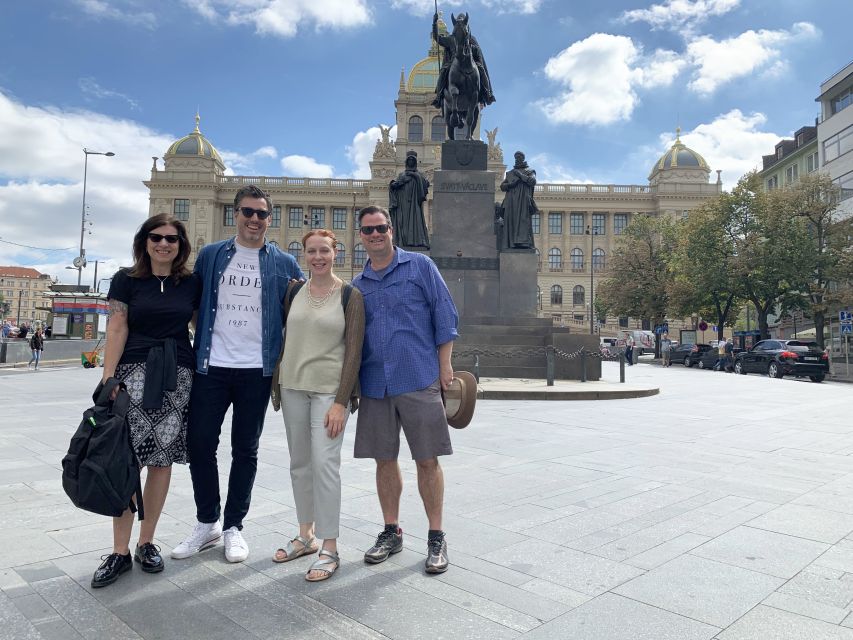
The Municipal House is the architectural high point of the tour. It is described as Prague’s greatest Art Nouveau masterpiece, and its elaborate design gives you a clear picture of the city’s confidence at the start of the 20th century.
Your guide will connect the building with what the tour calls the most optimistic moment in the 20th century, the period leading to Czech independence. That context is important. Art Nouveau here is not just decoration. It reflects civic pride, cultural ambition, and the wish to express a distinct Czech identity.
I especially like that Municipal House appears at the end of the route. After seeing Prague’s medieval market, Jewish institutions, university buildings, political squares, and modern art, you reach a building that brings art and national feeling together.
The tour description does not promise a ticket inside Municipal House. You should expect to admire it from the route and hear the guide’s explanation. If you want to see its richly decorated interiors, plan another visit and check opening details separately.
The route, walking pace, and group size
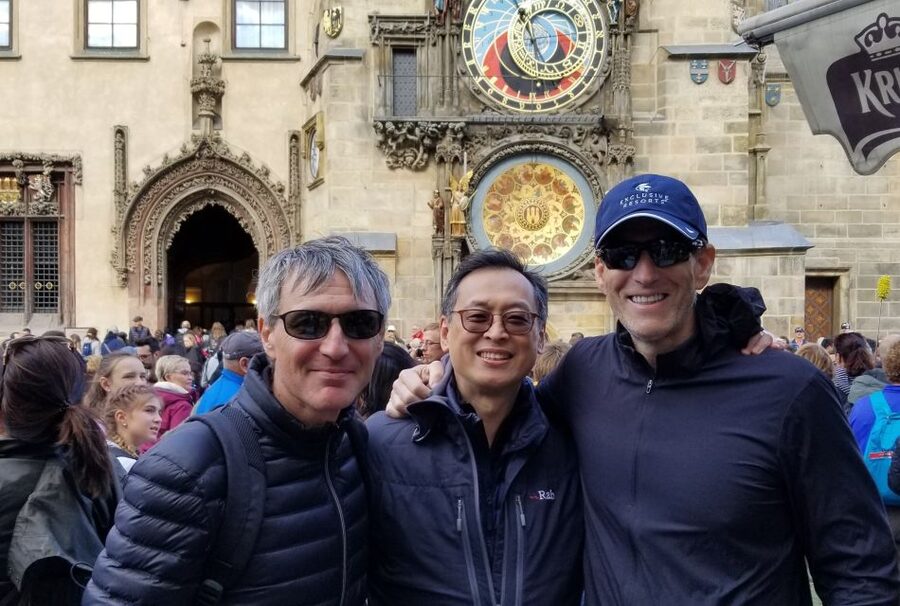
The published itinerary lists 16 points, beginning at Cukrárna Myšák and returning there after Municipal House. The narrative description says the walk ends at the Vltava River, where the guide discusses the Czech political system and the country’s post-Soviet revival. Because those details do not fully match, I would confirm the final meeting location before you set up your next activity.
A three-hour duration is long enough to give the history room to breathe, but short enough to fit into a morning or afternoon. You will move between many stops, so wear comfortable shoes and avoid planning a tightly timed museum visit immediately afterward.
The group limit of 10 is a real advantage. A specialist guide can usually speak in a more conversational way with a small group, and you have a better chance of asking about a building or historical period that catches your attention. The guide profiles are unusually strong, with academics, journalists, art critics, and authors leading the walks.
That strength also sets an expectation. This is not the best pick if you want only a light introduction with a few entertaining anecdotes. It suits you if you like history, architecture, politics, and the stories behind public spaces.
Is $123 a fair price?
At $123 per person, this is an expensive walking tour. The price is difficult to justify if you mainly want directions between Prague’s famous sights or a quick overview for photographs.
The value improves if you want a specialist-led interpretation of the city. You are paying for a small group, an English-speaking live guide, and a route that links monuments across several periods. The guides’ professional backgrounds also suggest that the tour aims for substance rather than a memorized script.
There are no stated admissions, meals, or transport included. That matters. The price is for the three-hour guided walk, so compare it with the cost of hiring a private guide or joining a larger general walking tour. For a history-minded visitor who would otherwise spend hours piecing together Prague’s story alone, the fee may be worthwhile.
The two available ratings are strong, with an overall 4.7 out of 5. Matouš received particular praise for his energy and ability to entertain, and the three-hour length felt shorter than expected to one participant. Those are encouraging signs, though the small number of ratings means you should not treat them as a complete record of every possible guide or departure.
Who should book this Prague walk?
I would recommend it to first-time visitors who want a serious orientation to central Prague. It is also a good fit for anyone interested in architecture, Czech politics, Jewish history, universities, literature, or the way different communities shaped one city.
You may enjoy it less if you want extensive interior sightseeing. The route includes many important buildings, but the information provided confirms a guided walking experience, not admission to every monument.
Families with older children and teenagers could find the mix of Kafka, political history, towers, gardens, and striking buildings more engaging than a lecture confined to one museum. The small group may also make it easier to ask questions, though the content sounds best suited to people who can stay focused during historical explanations.
Final verdict: a strong choice for history-minded visitors
Book this tour if you want Prague explained, not simply displayed. The combination of Old Town Square, Wenceslas Square, the Jewish Quarter, Charles University, the House of the Black Madonna, and Municipal House gives you a broad view of the city in only three hours.
Skip it if $123 feels too steep for a walking tour or if you prefer to explore at your own pace. Before booking, confirm the endpoint and ask whether any interior admissions are included. For the right visitor, though, the small group and specialist guides make this a thoughtful first look at Prague’s streets, buildings, and complicated past.
FAQ
How long is the Prague Introduction Walking Tour?
The tour lasts three hours.
What is the price?
The listed price is $123 per person.
Where does the tour begin?
Meet your guide outside Café Cukrárna Myšák at Vodičkova 710/31.
What language is the tour offered in?
The live guided tour is offered in English.
How large is the group?
The group is limited to 10 participants.
Is transportation included?
No transportation is listed. The experience is a guided walking tour.
Does the tour include entry tickets to the monuments?
The included service is a three-hour guided walking tour. No separate admission tickets are listed.
Which Jewish Quarter sights are included?
The route includes the Old New Synagogue, the ancient Jewish cemetery, and the Rococo Town Hall.
Who leads the tour?
Guides may include professors, doctoral students, historians, journalists, art critics, and published authors. One praised guide named in the available feedback is Matouš.
Can I cancel for a full refund?
Yes. You can cancel up to 24 hours in advance for a full refund. You can also reserve now and pay later.
Newest listings in Prague
- World War II 4WD Tour from Prague with Lunch★ 4.4 · 3 reviews
- Prague: Historical Walking Tour with Focus on World War 2★ 4.3 · 12 reviews
- WWII and Communism History in Prague’s Old Town Private Tour★ 5.0 · 4 reviews
- Wroclaw: Giant Mountains & Valley of Palaces Day Tour★ 4.8 · 36 reviews
- Walking tour of Prague in French : Nové Město★ 4.9 · 16 reviews
- Walking tour of Prague in french: Old Town & Charles Bridge★ 4.9 · 62 reviews
- Vltava River Cruise and Private Tour of Prague’ Old Town★ 5.0 · 1 review
- Ultimate Unlimited Beer Pong with Czech Beer★ 4.6 · 5 reviews
Walking Tours, compared.
3-Hour Walking Tour of Old Town & Prague Castle
Read our review →
Ghost Walking Tour Where Legends Come To Life
Read our review →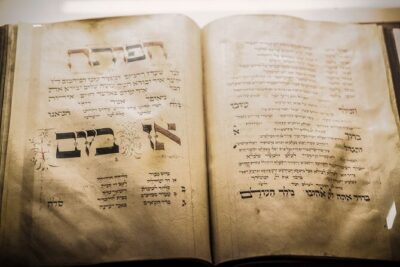
Jewish Quarter Walking Tour with Admission Tickets
Read our review →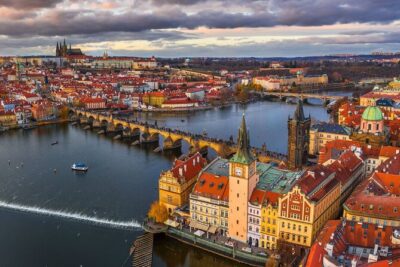
Prague Guided Walking Tour and Cruise with Authentic Czech Lunch
Read our review →
Old Town and Jewish Quarter Guided Walking Tour
Read our review →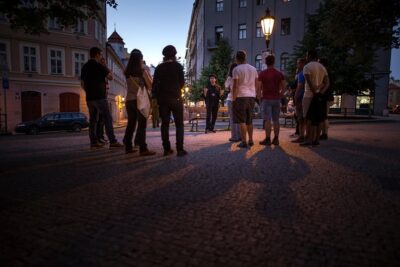
Prague Ghost and Legend of Old Town Walking Tour
Read our review →
Prague 3-hour Afternoon Walking Tour including Prague Castle
Read our review →
Ghosts and Legends Nighttime Guided Walking Tour
Read our review →Browse the lists this tour appears in