REVIEW · TICKETS
Prague: House at the Golden Ring Entry Ticket
Prague’s past comes alive here. The House at the Golden Ring combines medieval models, video mapping, original objects, and interactive displays to show how Prague changed under Charles IV and Rudolf II. I especially like the clear focus on the city itself and the unusually low $8 price. The main drawback is that the experience may feel slow or text-heavy if medieval history is not your thing.
Plan on roughly 90 minutes to two hours if you want to see the exhibits properly. The displays use English, and the museum works especially well for families, visual learners, and anyone who prefers models and film to long rows of written panels.
In This Review
- Key points at a glance
- Why the House at the Golden Ring is worth your time
- Entering medieval Prague under Charles IV
- The Charles IV models that make the city understandable
- Medieval administration, ceremony, and daily life
- Video mapping around Charles Square
- Rudolf II and the nine-metre Sadeler Prospect
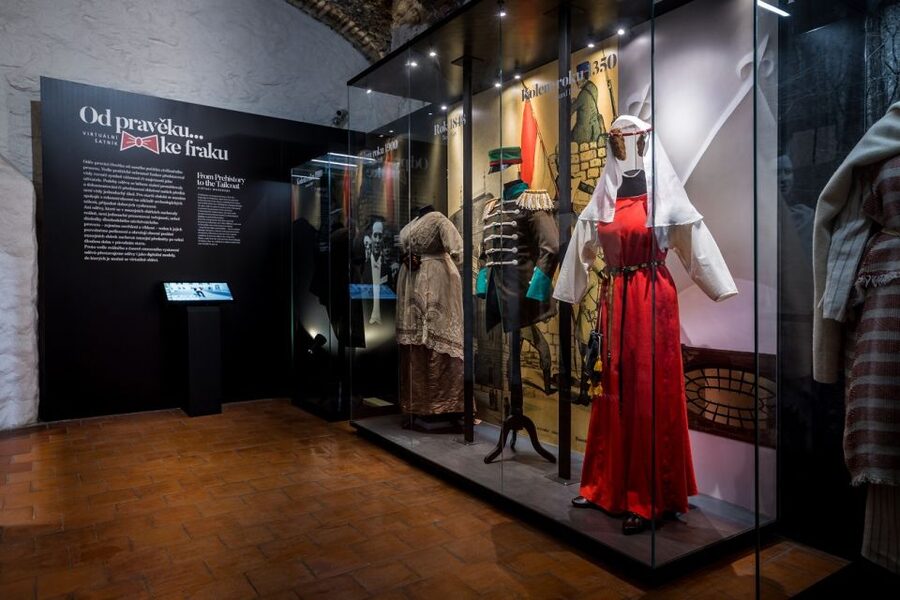
- From Prehistory to the Tailcoat
- How long to spend inside
- Is $8 good value in Prague?
- Who will enjoy this experience most?
- Booking, cancellation, and practical planning
- Should you book the House at the Golden Ring?
- FAQ
- Where is the House at the Golden Ring experience located?
- How much does entry cost?
- How long is the ticket valid?
- What exhibitions are included?
- What language is used?
- What can I see in The Medieval Town exhibition?
- Does the experience include information about medieval construction?
- What is the Rudolf II multimedia exhibition?
- Can I cancel for a refund?
- Can I reserve before paying?
Key points at a glance
- See Charles IV’s Prague in model form: Study Prague Castle, St Vitus Cathedral, Vyšehrad, the stone bridge, and other buildings linked to the Luxembourg rulers.
- Watch the city change through video mapping: A large model and projections explain urban growth around Charles Square and the wider Prague conurbation.
- Meet Rudolf II’s Prague in a nine-metre animation: The new Sadeler Prospect presents the city as a living place filled with daily work, worries, celebrations, and ceremony.
- Explore original objects alongside technology: Archaeological finds and everyday items give the digital displays a physical connection to medieval life.
- See more than one exhibition for one low price: Entry includes The Medieval Town, Multimedia View of Prague During the Rule of Rudolf II, and From Prehistory to the Tailcoat.
- Allow at least 90 minutes: A quick look is possible, but two hours makes more sense if you want to follow the films, models, and historical scenes.
Why the House at the Golden Ring is worth your time
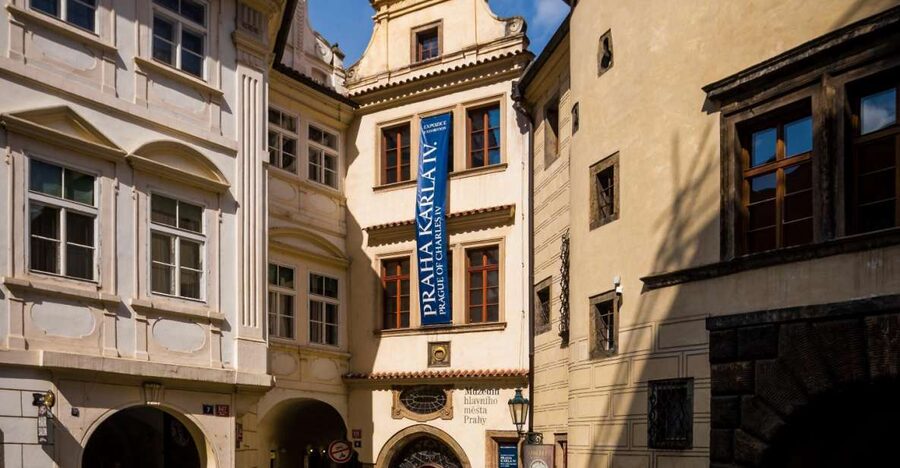
Prague has no shortage of grand churches, old lanes, and dramatic viewpoints. It can be hard to understand how all those pieces fit together. The House at the Golden Ring helps by pulling the city into one story: how Prague grew, how rulers reshaped it, and how ordinary life unfolded behind the famous monuments.
I like that this is not just a museum of isolated objects. The models give you a sense of the whole city, while the video displays explain why particular buildings mattered. You are not simply looking at St Vitus Cathedral. You are seeing it within the religious and political center created during Charles IV’s reign.
The price makes the visit easy to add to a day in central Prague. At $8 per person, you do not need to give up half a day to justify the cost. If you stay for two hours, the admission works out as excellent value. Even a shorter visit gives you several different forms of presentation rather than one repeated display style.
Still, this is a history museum first. One visitor found it boring, and that reaction is understandable if you prefer art, architecture, or scenic views without much explanation. The experience asks you to pay attention to timelines, rulers, urban planning, and historical events. The technology helps, but it does not remove the need for curiosity.
A few more Prague options to compare
- Prague: 50-Minute Sightseeing Evening Cruise
★ 4.2 · 33,780 reviews - Prague: Medieval Dinner with Unlimited Drinks
★ 4.4 · 19,847 reviews - Prague: Skip-the-line Castle Ticket and Optional AudioGuide
★ 4.3 · 11,121 reviews
Entering medieval Prague under Charles IV
The first major section, The Medieval Town, focuses on Prague during the rule of Charles IV and the House of Luxembourg. This is the heart of the experience, and it gives you a useful picture of a city being reshaped on a large scale.
Charles IV is presented not only as a king and emperor, but also as a builder. The displays show new housing areas, the expanding urban agglomeration, the stone bridge, and other structures that changed Prague’s appearance. You can follow the shift from an older medieval settlement toward a more organized metropolis.
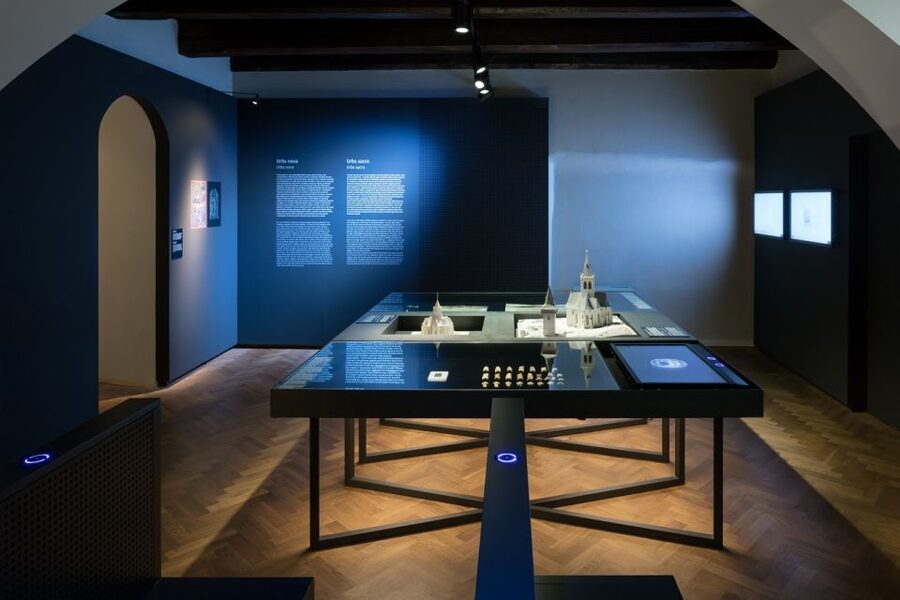
The models are particularly useful because they let you see relationships that are easy to miss on foot. Prague Castle, St Vitus Cathedral, and Vyšehrad appear as more than postcard subjects. In Charles IV’s time, these places had religious and state roles, and the models help explain how power and worship were arranged across the city.
The virtual and physical displays work together. A model gives you the shape of a building or district, while a screen or presentation supplies the story behind it. I find this combination more useful than a standard panel because you can first understand the form, then learn why it mattered.
The Charles IV models that make the city understandable
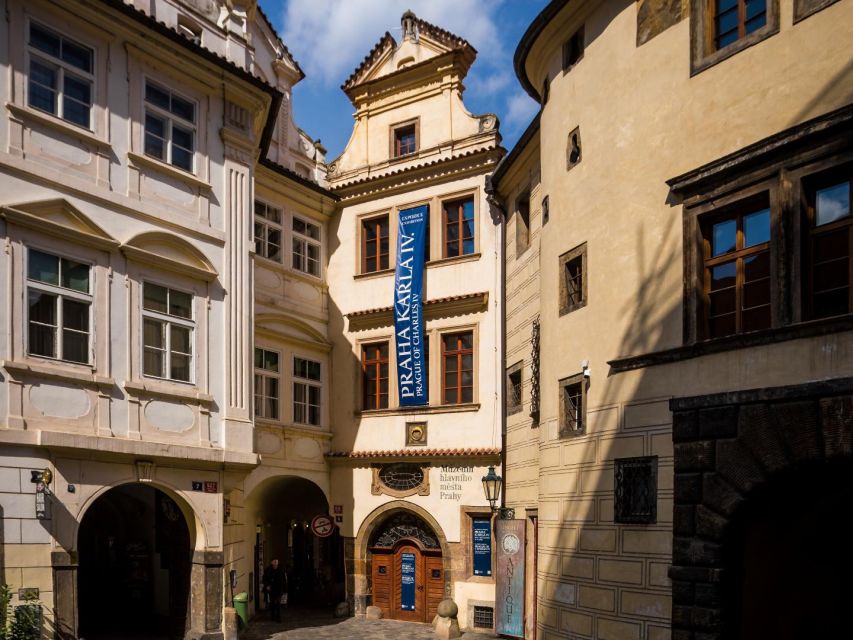
The model of Vyšehrad is one of the important stops in this section. It helps place the historic hill within Prague’s wider development and shows how religious and political functions were spread around the city.
Prague Castle and St Vitus Cathedral receive similar treatment. At street level, the castle complex can feel like a collection of courtyards and buildings added over centuries. Here, you get a broader view of its role during Charles IV’s era. The cathedral was not merely a church. It formed part of the state and religious center of the kingdom.
The stone bridge is another key subject. The presentation on medieval bridge construction shows the practical side of urban growth. A bridge is easy to admire as scenery, but this display asks how it was built and why it changed movement through the city.
You also see the development of housing within the expanding town. That detail matters because royal construction was not the whole story. A growing capital needed homes, streets, workshops, religious buildings, and systems for managing daily life. The museum connects grand projects with the less glamorous work of making a city function.
Medieval administration, ceremony, and daily life
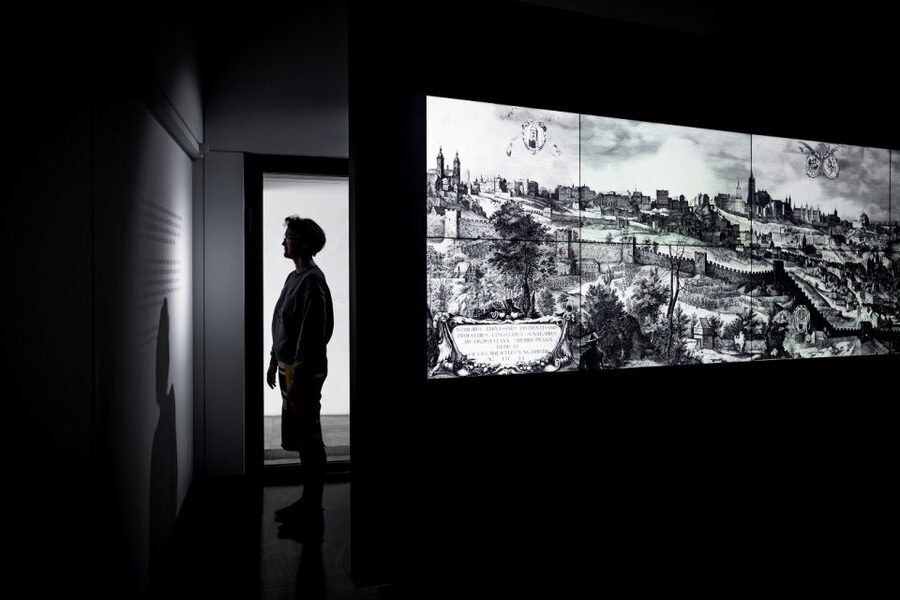
The museum uses virtual presentations to explain town administration. This gives you a glimpse of how medieval Prague was governed rather than focusing only on kings and cathedrals.
Dramatic stops recreate major moments connected with Charles IV. These include his birth, his arrival in Prague in 1333, his coronation, and his burial. The aim is not a theatrical performance with actors. Instead, the displays use sound, images, and presentation to create a sense of the city around major events.
That approach is helpful because dates alone can feel dry. A coronation becomes easier to understand when you picture the city preparing for it, while Charles’s arrival in 1333 marks a turning point in Prague’s development. The burial, at the other end of his life, brings the story back to the buildings and institutions he helped shape.
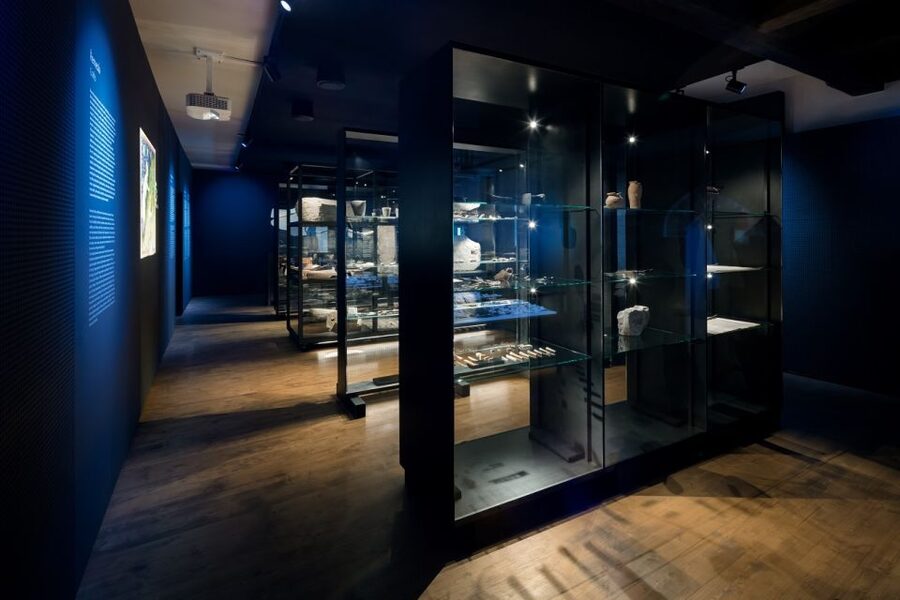
Original archaeological finds and other objects add weight to the presentation. These come from the Prague City Museum, the National Heritage Institute’s regional office in Prague, and other institutions. The objects illustrate everyday life in the town and help balance the focus on rulers.
You might find tools, household items, or other evidence of ordinary activity, although the supplied information does not specify every object on display. The key point is that the museum does not treat Prague as a city made only by monarchs. Its archaeological material connects political change with the people who lived through it.
More tickets and admissions in Prague:
- Prague: Castle Tour with Local Guide and Entry Ticket
★ 4.6 · 10,422 reviews - Prague Castle 2.5-Hour Tour Including Admission Ticket
★ 4.7 · 8,927 reviews - Prague: Old Town Hall Tower Entry Ticket
★ 4.5 · 6,749 reviews - Prague: Entry ticket to Ice Pub Prague with Nightclub Option
★ 4.1 · 5,273 reviews
Video mapping around Charles Square
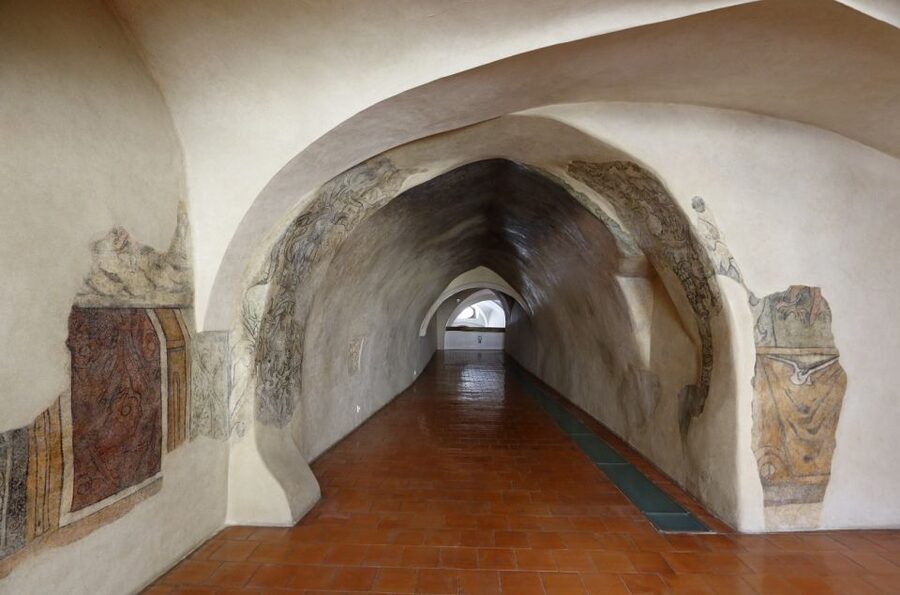
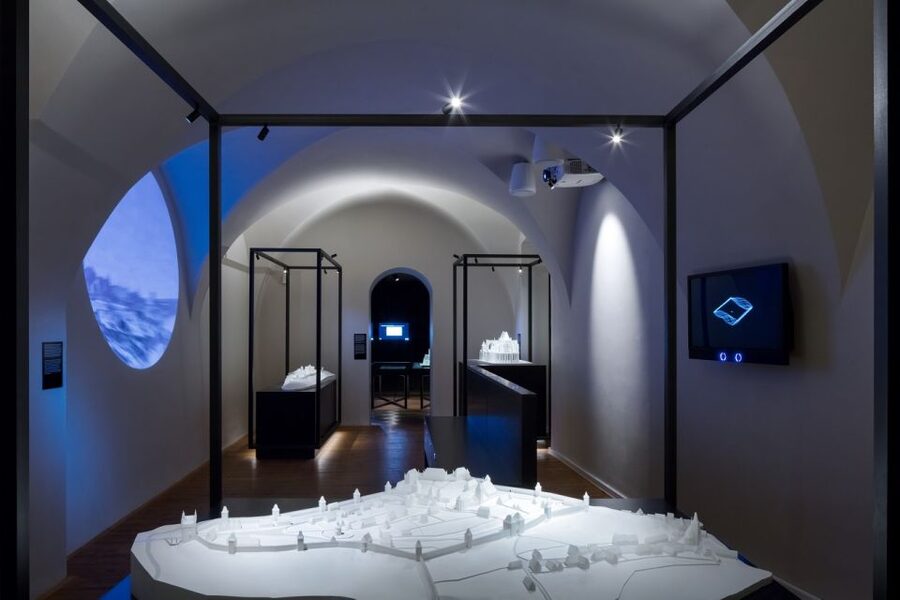
One of the more striking presentations uses video mapping on a model of Prague’s conurbation. It shows how the city and the area around Charles Square developed during the 14th century.
This is where the museum’s technology earns its keep. A static model can show streets and buildings, but projections let you watch the city change. The display turns urban planning into a process rather than a finished picture.
For you, the value is practical as well as entertaining. After seeing this presentation, it becomes easier to read Prague’s historic center as a planned royal project with layers of earlier settlement. The city’s famous buildings no longer feel like unrelated stops on a sightseeing route.
The presentation also gives a sense of scale. Individual monuments can dominate your attention when you walk around Prague. A wider model reminds you that the city was a connected urban system, with housing, administration, religious centers, bridges, and public spaces working together.
Rudolf II and the nine-metre Sadeler Prospect
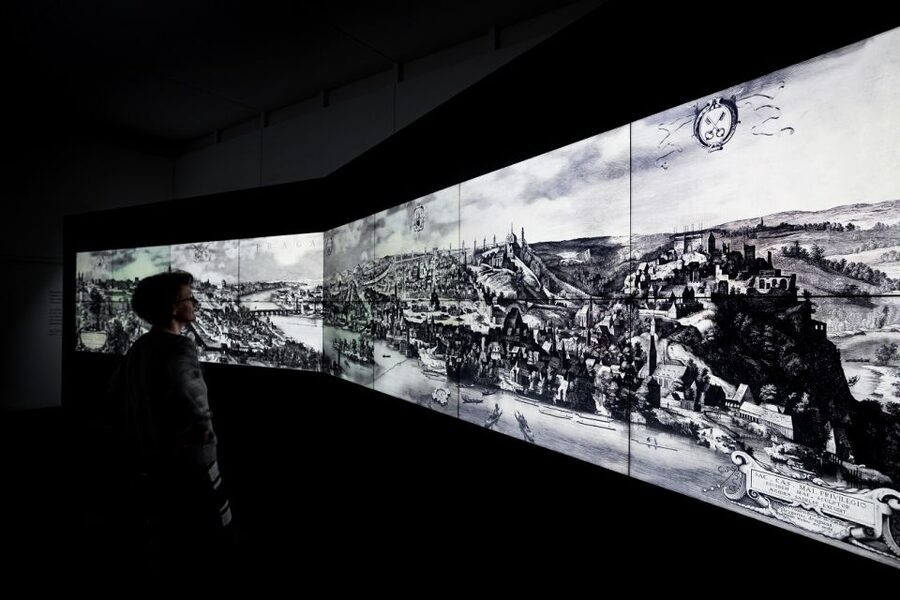
The second major attraction is the Multimedia View of Prague During the Rule of Rudolf II. Its centerpiece is a nine-metre animation based on the Sadeler Prospect.
This view presents Prague during the Rudolfine era, with people moving through the city and going about their joys and worries. It is less about one famous building and more about the feeling of a living capital.
The scale is important. A nine-metre animation gives the city room to unfold, so you can study streets, buildings, and human activity rather than glance at a small screen. The result should appeal to anyone who enjoys seeing a historic city from above or from an imagined viewpoint.
The Sadeler Prospect is also useful for comparing different periods. The Charles IV displays show a city being built and organized in the 14th century. The Rudolf II presentation shows Prague at a later stage, with its character shaped by further construction and changing political life.
The museum describes this as a new Sadeler Prospect created through cooperation between historians and modern technology specialists. You do not need specialist knowledge to follow it, but you will get more from it if you take your time and look beyond the first broad impression.
From Prehistory to the Tailcoat
Your ticket also includes From Prehistory to the Tailcoat. The title suggests a long sweep through clothing and social change, moving from early periods toward the modern age.
The available details do not describe every room or object in this exhibition, so I would not plan your visit around a specific costume or display. Still, its inclusion broadens the experience beyond Prague’s medieval buildings and royal history.
The interactive digital costume element is a useful change of pace. Instead of only studying clothing behind glass, you can explore costume history through digital media. That makes the section more approachable for children and for anyone who finds conventional museum displays too passive.
It also adds a human scale. Buildings tell you how a city was organized, but clothing shows how people presented themselves and moved through that society. This section may be a quick stop for some visitors and a longer one for others, depending on how much interest you have in dress and social history.
How long to spend inside
A fast visit could take about an hour, but I would allow 90 minutes at minimum. One detailed visit took about two hours, and that seems sensible if you watch the presentations and study the models.
The displays reward an unhurried pace. You need time to understand the layout of the models, wait for or follow the digital presentations, and notice the archaeological objects. Rushing through will reduce the museum to a few attractive images.
The museum’s official activity duration is one day, meaning the admission is valid for one day rather than requiring you to finish in a fixed short session. You should check the available starting times when booking, since the information provided does not give a set opening schedule.
The experience is described as having English instruction and English dialogue. If you need French or another language, take note: one French-speaking visitor specifically found the lack of French disappointing. The staff were described as friendly, but the language choice can affect how much you understand.
Is $8 good value in Prague?
Yes, especially if you like museums that mix objects with digital displays. Prague can be expensive around its most famous sights, so an $8 admission for three exhibitions gives you a useful indoor stop at a modest cost.
The value is strongest when you stay for two hours. You get The Medieval Town, the Rudolf II multimedia presentation, and From Prehistory to the Tailcoat rather than a single small gallery. The museum also offers several ways to learn: physical models, video mapping, virtual presentations, animation, archaeological finds, and digital costume displays.
I would not compare it only with a traditional art museum. This is closer to a city-history presentation with museum objects added to support the story. If you want paintings or silent rooms, it may not satisfy you. If you want a clear explanation of how Prague developed, it gives you plenty for the money.
The low price also makes the museum a sensible choice on a rainy day or when you want a break from walking. Because the experience lasts roughly 90 minutes to two hours for most people, it fits neatly between other central Prague plans.
Who will enjoy this experience most?
I would recommend it to you if you enjoy city history, architecture, models, or technology-based displays. It is especially useful before or after visiting Prague Castle, St Vitus Cathedral, Vyšehrad, or the historic center because it gives those places a larger story.
Families may find the mix of video, three-dimensional models, and animation easier to follow than a museum made mostly of written labels. One enthusiastic assessment described it as suitable for all ages, and I can see why. There is enough visual material to keep younger visitors interested, while the historical framework gives adults something substantial to follow.
History fans could spend two hours here without trouble. You can compare Prague under Charles IV with Prague under Rudolf II, examine urban development, and connect the displays to the buildings outside.
You may want to skip it if you strongly dislike historical explanation or prefer a quick visual attraction. One less positive experience found the museum boring, and the English-only dialogue may be a problem if you are not comfortable with English.
Booking, cancellation, and practical planning
The ticket costs $8 per person and is valid for one day. You can reserve now and pay later, which helps if your Prague schedule is still shifting.
Free cancellation is available up to 24 hours in advance for a full refund. Check availability for the starting times before you book, since the provided information does not list a single fixed entry time.
The listed instructor language is English, and the exhibition dialogue is also described as English. Plan accordingly if you want detailed explanations in another language.
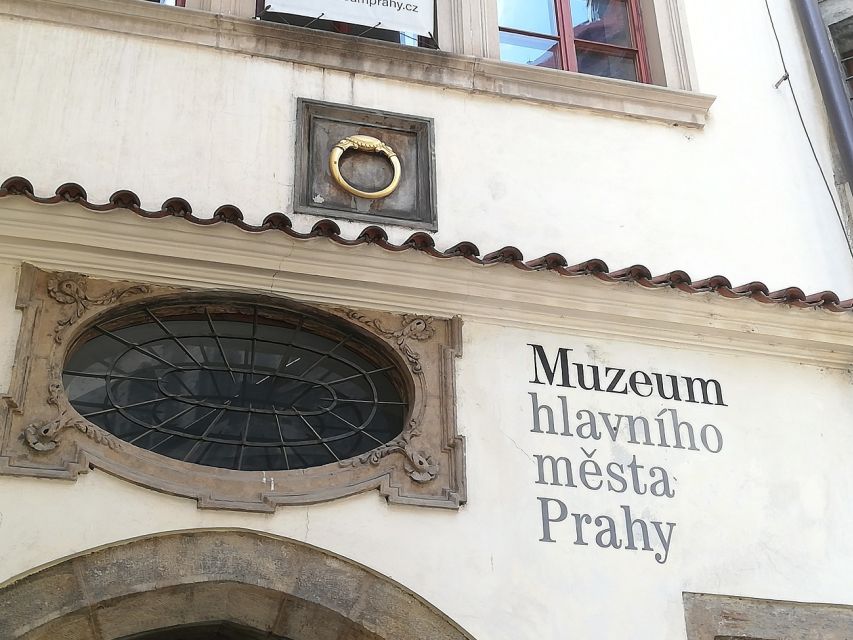
The experience is provided by Muzeum Prahy. Staff have been described as friendly, which matters in a compact museum where you may need help understanding how the multimedia sections work.
Should you book the House at the Golden Ring?
Book it if you want an affordable, visually presented explanation of Prague’s growth. The Charles IV models, the video mapping around Charles Square, and the nine-metre Rudolf II animation give you more than a standard display of old objects.
I would make this a strong choice for families, architecture fans, history enthusiasts, and anyone looking for an indoor activity that costs little and can fill 90 minutes to two hours. It is also a good companion to sightseeing because it explains the city you are already walking through.
Skip it if English presentations will be difficult for you or if medieval administration, royal ceremonies, and urban development sound dull. The museum is not a thrill ride. It is a thoughtful city-history experience with enough visual material to keep it lively, but it still asks you to care about the past.
FAQ
Where is the House at the Golden Ring experience located?
It is located in Prague, in the Central Bohemian Region of the Czech Republic.
How much does entry cost?
The listed price is $8 per person.
How long is the ticket valid?
The ticket is valid for one day.
What exhibitions are included?
Entry includes The Medieval Town, Multimedia View of Prague During the Rule of Rudolf II, and From Prehistory to the Tailcoat.
What language is used?
The listed language is English, and the exhibition dialogue is described as being in English.
What can I see in The Medieval Town exhibition?
You can see virtual and physical models connected with Charles IV’s Prague, including Vyšehrad, Prague Castle, St Vitus Cathedral, housing development, the stone bridge, and other buildings.
Does the experience include information about medieval construction?
Yes. Virtual presentations cover medieval bridge construction and the administration of the town.
What is the Rudolf II multimedia exhibition?
It is a multimedia presentation of Prague during Rudolf II’s rule, including a nine-metre animation based on a new Sadeler Prospect.
Can I cancel for a refund?
Yes. You can cancel up to 24 hours in advance for a full refund.
Can I reserve before paying?
Yes. The reserve now and pay later option lets you book while keeping payment for later.
Newest listings in Prague
- World War II 4WD Tour from Prague with Lunch★ 4.4 · 3 reviews
- Prague: Historical Walking Tour with Focus on World War 2★ 4.3 · 12 reviews
- WWII and Communism History in Prague’s Old Town Private Tour★ 5.0 · 4 reviews
- Wroclaw: Giant Mountains & Valley of Palaces Day Tour★ 4.8 · 36 reviews
- Walking tour of Prague in French : Nové Město★ 4.9 · 16 reviews
- Walking tour of Prague in french: Old Town & Charles Bridge★ 4.9 · 62 reviews
- Vltava River Cruise and Private Tour of Prague’ Old Town★ 5.0 · 1 review
- Ultimate Unlimited Beer Pong with Czech Beer★ 4.6 · 5 reviews
Tickets, compared.
Castle Tour with Local Guide and Entry Ticket
Read our review →
Prague Castle 2.5-Hour Tour Including Admission Ticket
Read our review →

Entry ticket to Ice Pub Prague with Nightclub Option
Read our review →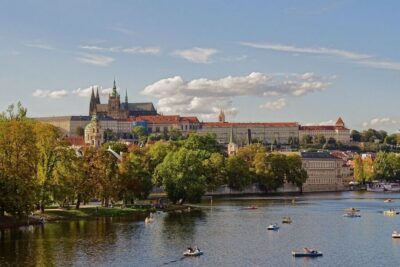
Prague Castle and Lobkowicz Palace Entry Tickets
Read our review →
Entry Ticket Classical Concert at the Mirror Chapel
Read our review →