REVIEW · TOURS
Prague Art Nouveau Tour
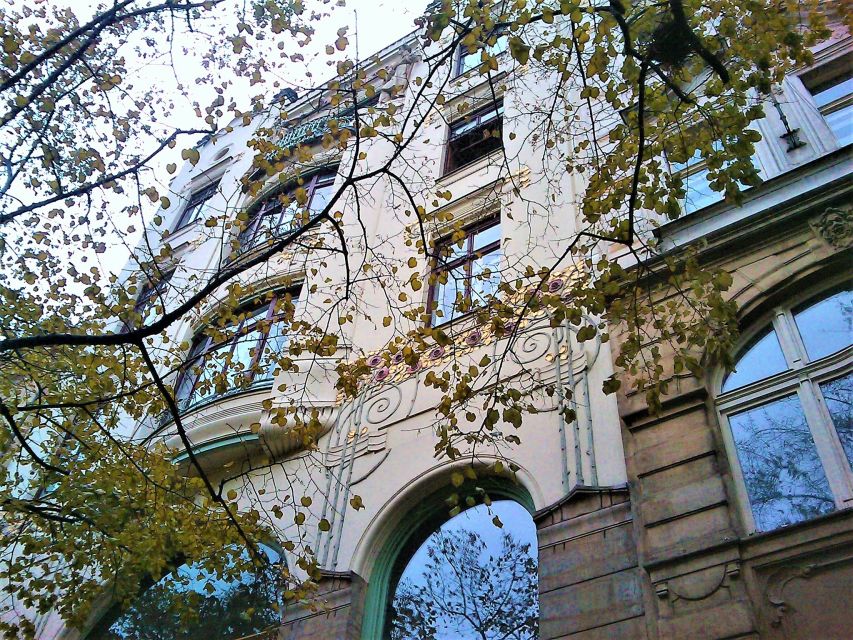
Prague’s facades reward a slower look. I like the way this private walk links Art Nouveau architecture with the wider story of Prague, and I like that the guide can collect you at your hotel before the sightseeing begins. You will focus on architects Antonín Balšánek, Osvald Polívka, and others while moving through the city center.
The main consideration is the narrow focus. If you want castle interiors, medieval lanes, or a broad survey of every Prague landmark, two hours will feel short. But for a French-speaking visitor curious about decorative architecture, this is a smart, good-value introduction, especially with a guide such as Tomas, who is praised for his warmth, local insight, and fun facts.
In This Review
- Key points to know before you book
- Why Prague suits an Art Nouveau walk
- Starting at Republic Square
- Following Na Příkopě Street
- Reaching Wenceslas Square
- How the private format changes the experience
- What the French-language guiding adds
- What this tour does well, and where it is limited
- Who should book this Prague walk?
- Should you book the Prague Art Nouveau Tour?
- FAQ
- Where does the Prague Art Nouveau Tour take place?
- How long does the tour last?
- What language is the tour in?
- Is hotel pickup included?
- Is this a private tour?
- What is included in the price?
- What should you bring?
Key points to know before you book
- Private group for up to 25 people: The $34 price applies to the group, not each individual, so the value improves sharply when several people join.
- A clear central route: The tour begins at Republic Square, follows Na Příkopě Street, and ends around Wenceslas Square.
- French-language guiding: The live guide speaks French, making this a useful choice for French-speaking visitors who want more than a quick look at facades.
- Hotel pickup is included: Your guide waits at a reception desk with a name sign, then the journey to the starting point may use walking, a tram, or the metro.
- Art Nouveau plus Prague history: You are not just counting floral motifs. The tour places the style within the city’s broader story.
- A strong personal touch: Tomas is praised for his passion, friendly manner, and ability to explain Prague through local experience.
Why Prague suits an Art Nouveau walk
Prague is often sold through its castle, Gothic towers, and Baroque churches. Those sights deserve their fame, but the city also has a strong turn-of-the-century face. Art Nouveau brought curved lines, plant forms, decorative lettering, and a taste for treating everyday buildings as works of art.
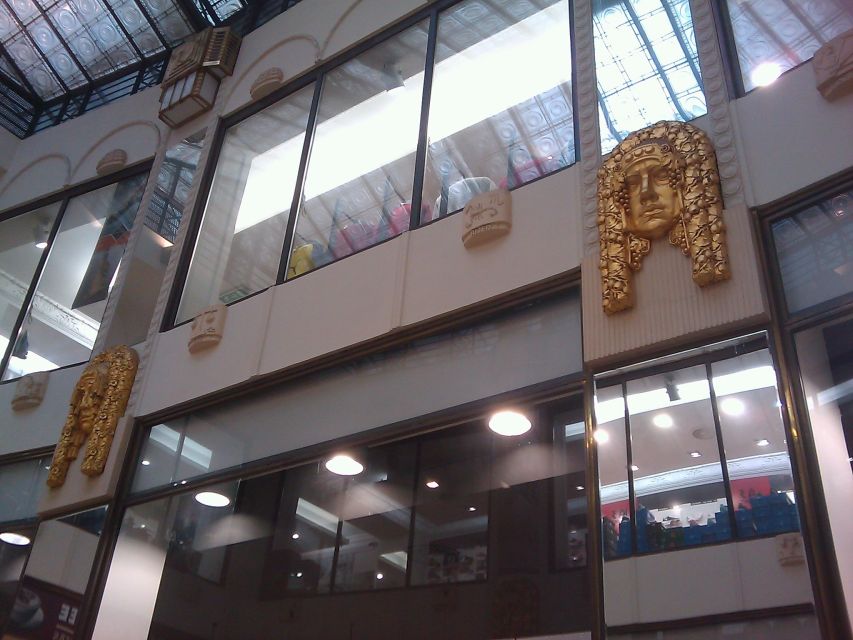
If you have visited Paris, you may recognize the style from the swirling entrances and organic ironwork associated with the city’s metro. In Prague, the look appears in a broader urban setting. You can encounter decorative facades, sculpted details, elegant lettering, and carefully designed public buildings as part of an ordinary walk through the center.
That is the useful idea behind this tour. You are not being taken to one isolated masterpiece and then sent on your way. You follow a route where the architecture becomes part of Prague’s streetscape. A guide can point out details you might pass without noticing, then explain how the architects worked within the city’s changing plans and ambitions.
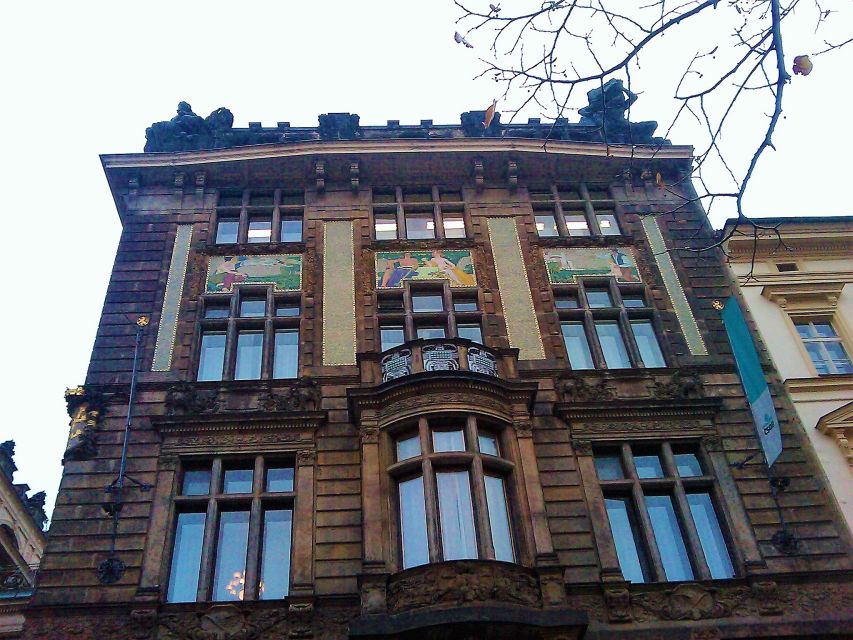
The tour focuses particularly on Antonín Balšánek and Osvald Polívka. Their names may mean little to you before the walk, but hearing them attached to specific buildings gives the architecture a human shape. You begin to see Prague not as a collection of pretty fronts, but as a city shaped by designers, civic goals, and changing tastes.
A few more Prague options to compare
- Prague: 50-Minute Sightseeing Evening Cruise
★ 4.2 · 33,780 reviews - Prague: Medieval Dinner with Unlimited Drinks
★ 4.4 · 19,847 reviews - Prague: Skip-the-line Castle Ticket and Optional AudioGuide
★ 4.3 · 11,121 reviews
Starting at Republic Square
Republic Square is a sensible place to begin. It is one of central Prague’s key meeting points, and it gives you an immediate sense of the city’s mixture of grand public architecture, busy streets, and historic routes.
The tour does not simply drop you in front of a building, point out its date, and move on. The stated focus is on the important Art Nouveau structures in this part of town, with general Prague history added along the way. That balance matters because architecture makes more sense when you know what kind of city you are looking at.
At the start, listen for the guide’s method. A good explanation will help you separate Art Nouveau from nearby styles and notice repeated features such as plant-like curves, decorative ironwork, and lettering treated as part of the design. You may also get local facts that do not appear on a standard sightseeing map.
This is where Tomas seems to make a difference. His feedback describes a friendly guide who explains Prague from a local point of view and adds fun facts without losing the main subject. That combination suits a walking tour. You get information, but the experience does not have to feel like a lecture delivered beside a pavement.
One practical point: the tour may begin with a short transfer from your hotel. The guide holds a desk with a name sign at the hotel reception, then the journey can continue on foot, by tram, or by metro. The exact choice depends on the starting location, so allow some flexibility before the official route begins.
Following Na Příkopě Street
From Republic Square, the route continues along Na Příkopě Street. This gives the tour a useful change of rhythm. You are no longer looking at one square from a fixed position. You are walking through an important central street, where building fronts compete for your attention and details can appear above shop level.
This is the point where comfortable shoes matter. The walk lasts two hours, and you will spend that time outdoors, moving between several parts of the center. You do not need specialist hiking gear, but shoes suited to city pavement will make it easier to look upward, stop for explanations, and keep pace with the group.
Na Příkopě also helps explain why an architecture tour can be more rewarding than a simple list of landmarks. The street is part of Prague’s active center, so the historic buildings are encountered in a working urban setting. You are seeing architecture where people shop, commute, meet, and pass through, not only in a quiet museum zone.
The drawback is that a central street can be visually and physically busy. You may need to concentrate to hear the guide, particularly if other groups or city traffic are nearby. The private format helps, since the guide can adjust explanations for your group rather than addressing a large mixed crowd, but you should not expect a silent heritage walk.
This section is also where a guide’s eye earns its fee. Decorative work can sit high on a facade or appear in a doorway that you would otherwise ignore. A local guide can tell you where to look, what design elements matter, and how one building relates to the next.
Reaching Wenceslas Square
The route finishes at Wenceslas Square, one of Prague’s best-known central spaces. Ending here gives the tour a clear destination and places Art Nouveau within a larger view of the city.
Wenceslas Square is not a small, intimate plaza. Its scale helps you understand how Prague developed as a major urban center, and it gives the guide room to connect architecture with general city history. The tour’s goal is not only to show decorative buildings but also to explain how Prague’s past is reflected in its central streets.
This final section should be especially useful if you are still learning the city’s layout. You have started at Republic Square, followed a major route, and arrived at another central hub. The walk can help you get your bearings without turning into a full orientation tour of Prague.
Do not expect every important Prague sight to be covered. The route is designed around Art Nouveau structures and related history, not around the castle, Charles Bridge, Jewish Quarter, or medieval churches. That limitation is worth accepting before you book. A focused tour usually gives you a better understanding of one subject, but it cannot replace a general city tour.
The finish at Wenceslas Square also makes the experience easy to fit into a day of sightseeing. You can continue exploring from this central point, though the activity itself does not promise additional guided visits after the walk.
Or spend the afternoon on something completely different:
- Prague: Castle Tour with Local Guide and Entry Ticket
★ 4.6 · 10,422 reviews - Prague Castle 2.5-Hour Tour Including Admission Ticket
★ 4.7 · 8,927 reviews - Prague: Oldtown, Medieval Underground & Dungeon History Tour
★ 4.2 · 8,244 reviews - Prague: Vltava River Night Cruise with Buffet
★ 4.3 · 7,338 reviews
How the private format changes the experience
The booking is for a private group of up to 25 people. That is a generous maximum, so the feel will depend on how many people are actually in your party. A couple or small family can ask questions freely and move at a comfortable pace. A full group of 25 will feel less personal, even though it is still private rather than mixed with strangers.
The price is $34 per group, which is the most important value detail here. For one person, that is not an especially low tour price. For two people, it becomes modest, and for a family or group of friends, it can be excellent value for a two-hour private experience with a live French-speaking guide.
The cost includes the local guide. It does not list admissions, meals, or any special interior visit, so you should think of this as a guided outdoor architecture walk. That is not a weakness if you want to study facades and city streets. It would be a concern if you expect entry into major buildings or a longer program of indoor sightseeing.
A private group also gives you more control over the conversation. You can ask about the architects, the Art Nouveau style, or Prague’s general history as questions come to mind. The comments about Tomas being attentive and passionate suggest a guide who responds to that kind of interest rather than rushing through a fixed script.
What the French-language guiding adds
The live guiding is offered in French. That is a major reason to choose this experience, since architectural terms and historical explanations can lose their force when you are working through a language barrier.
The tour is particularly suited to visitors who want the story behind what they see. You will hear about the work of Balšánek, Polívka, and other architects while moving through the central city. The guide can also place the buildings within Prague’s broader history, so the walk is not limited to design vocabulary.
The strongest praise centers on the human side of the guiding. Tomas is described as friendly, passionate, and able to share Prague through local knowledge. Another piece of feedback describes a private walk with interesting explanations and an attentive guide. Those details suggest the experience works best when you enjoy conversation and questions, not just photographs.
There is also a useful hint about possible follow-up interests. One French-language comment wished for tours focused on Art Deco or Rondo-Cubism. That tells you where this walk stops. It may awaken an interest in Prague’s later decorative styles, but those subjects are not presented as part of this particular experience.
What this tour does well, and where it is limited
I like this tour because it gives a familiar city a fresh subject. Many first-time visitors look straight ahead toward famous towers and bridges. An Art Nouveau walk asks you to look at entrances, lettering, curves, and upper floors. That change in attention can make even a familiar central street feel new.
I also like the practical route. Republic Square, Na Příkopě Street, and Wenceslas Square are easy points to understand on a map. You are not spending two hours searching for a remote building. The tour uses the center of Prague as its classroom.
The main limit is depth versus range. Two hours is enough to introduce the style, discuss key architects, and connect the buildings to Prague’s history. It is not enough to cover every significant Art Nouveau structure or trace the city’s architecture from medieval times through the modern era.
You should also remember that the tour is promoted for visitors interested in both general Prague history and Art Nouveau. If you already know the city well and want a specialist study of architectural technique, the general history sections may feel basic. On the other hand, if you know little about Prague, those sections are a useful part of the experience rather than a distraction.
The lack of named individual buildings in the tour details means you should not book expecting a guaranteed list of interior visits or a set sequence of famous monuments. The route and themes are clear, but the guide’s selection and emphasis may shape the walk.
Who should book this Prague walk?
I would choose it for a French-speaking couple, family, or group of friends who want a private introduction to Prague’s Art Nouveau buildings. It is also a good fit if you have already seen the city’s headline sights and now want to notice its decorative urban details.
The tour suits you if you enjoy:
- Architecture explained in plain language
- Local history tied to the streets around you
- A private guide rather than a large mixed group
- A two-hour activity that leaves time for other plans
- Walking through the city center instead of spending the whole time indoors
I would choose a different activity if your main goal is Prague Castle, museum collections, extensive interior access, or a broad sightseeing program. This is a focused walk, and its value depends on your interest in the subject.
Book with comfortable shoes and leave room for the hotel pickup. The guide may reach Republic Square by walking, tram, or metro, and the exact transfer will depend on where you are staying. Since the guide waits at reception with a name sign, make sure the hotel knows to direct you to the pickup desk.
Should you book the Prague Art Nouveau Tour?
Book it if the details of a doorway, facade, or piece of lettering can hold your attention. The combination of a private French-speaking guide, a central two-hour route, and a group price of $34 gives this experience strong value for small parties.
The best reason to book is the guide-led interpretation. Tomas is praised for his passion, friendly style, and local perspective, and those qualities matter more than simply ticking off buildings. You will come away with a better sense of how Art Nouveau fits into Prague and with a route that helps you understand the center.
Skip it if you want a full city tour or guaranteed indoor access. Choose it if you want to slow down, look up, and see Prague through its early modern architecture.
FAQ
Where does the Prague Art Nouveau Tour take place?
The tour takes place in central Prague in the Central Bohemian Region of the Czech Republic. The walking route begins at Republic Square, continues along Na Příkopě Street, and ends at Wenceslas Square.
How long does the tour last?
The tour lasts two hours. Starting times depend on availability when you book.
What language is the tour in?
The live tour guide speaks French.
Is hotel pickup included?
Yes. The guide meets you at your hotel reception, where the guide holds a desk with a name sign. The journey to Republic Square may be on foot, by tram, or by metro.
Is this a private tour?
Yes. It is a private group experience for up to 25 people.
What is included in the price?
A local guide is included. The stated price is $34 per group of up to 25 people.
What should you bring?
Bring comfortable shoes because the experience includes walking through central Prague.
Newest listings in Prague
- World War II 4WD Tour from Prague with Lunch★ 4.4 · 3 reviews
- Prague: Historical Walking Tour with Focus on World War 2★ 4.3 · 12 reviews
- WWII and Communism History in Prague’s Old Town Private Tour★ 5.0 · 4 reviews
- Wroclaw: Giant Mountains & Valley of Palaces Day Tour★ 4.8 · 36 reviews
- Walking tour of Prague in French : Nové Město★ 4.9 · 16 reviews
- Walking tour of Prague in french: Old Town & Charles Bridge★ 4.9 · 62 reviews
- Vltava River Cruise and Private Tour of Prague’ Old Town★ 5.0 · 1 review
- Ultimate Unlimited Beer Pong with Czech Beer★ 4.6 · 5 reviews
Tours, compared.
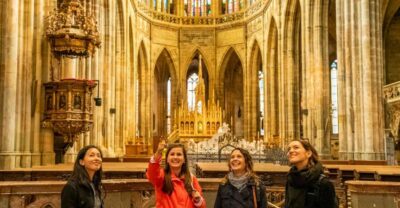
Castle Tour with Local Guide and Entry Ticket
Read our review →
Prague Castle 2.5-Hour Tour Including Admission Ticket
Read our review →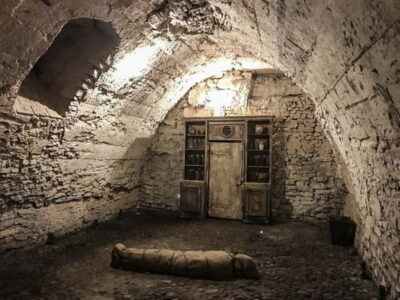
Oldtown, Medieval Underground & Dungeon History Tour
Read our review →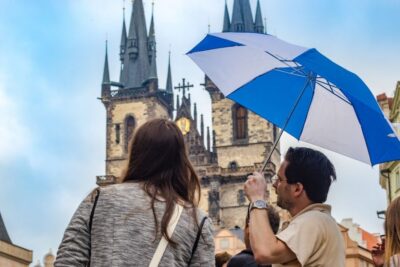
3-Hour Walking Tour of Old Town & Prague Castle
Read our review →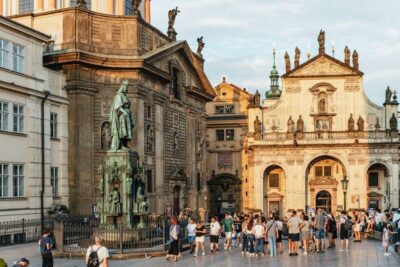
Ghost Walking Tour Where Legends Come To Life
Read our review →
Ghosts, Legends, Medieval Underground & Dungeon Tour
Read our review →
Klementinum Library & Astronomical Tower Guided Tour
Read our review →