
REVIEW · WALKING TOURS
Prague Art Nouveau and Cubism Walking Tour
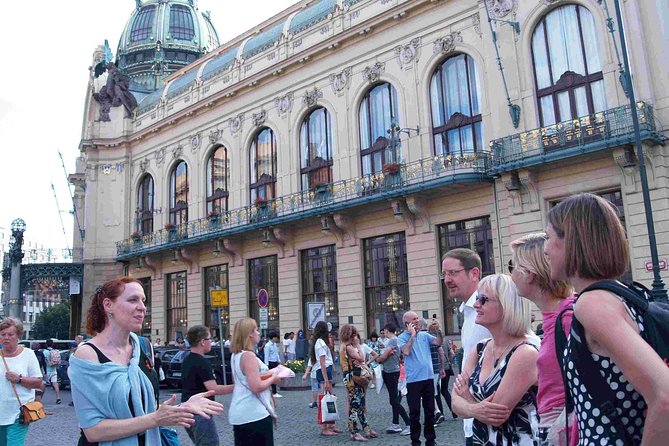
Prague’s buildings tell stories in curves and angles. This three-hour walk helps you read them, from ginkgo leaves and glowing light fixtures to the bold geometry of Cubist façades. I especially like the way the tour connects design with the people who paid for it, including the pre-war social elite who gathered in cafés, restaurants, hotels, and railway stations.
I also like the access to places such as Lucerna bar and Grand Hotel Europa, where the architecture makes more sense from the inside. Guides such as Robert and Vadim Erent bring strong academic and local backgrounds, yet keep the pace lively with humor and plenty of time for questions.
The main consideration is the $123 price. That is a serious cost for a three-hour walk, and this tour makes the most sense for travelers who care deeply about architecture, social history, and details they would miss alone. It may feel too specialized if you mainly want Prague’s headline sights.
In This Review
- Key points at a glance
- Why Prague’s Art Nouveau deserves a closer look
- Starting at the House of the Black Madonna
- Learning the language of Art Nouveau façades
- Lucerna bar and the social life of modern Prague
- Grand Hotel Europa and the polished face of Prague
- Cubism and Rondo-Cubism in Prague
- Side streets, passages, and unexpected interiors
- The guide makes or breaks this walk
- Pace, comfort, and practical planning
- Is $123 a fair price?
- Who should book this Prague walk?
- Final verdict: book it for the way it changes your eye
- FAQ
- Where does the Prague Art Nouveau and Cubism Walking Tour meet?
- How long does the tour last?
- What language is the tour offered in?
- Is the tour private or shared?
- What buildings and places are included?
- What is the cancellation policy?
Key points at a glance
- Look for ginkgo leaves: These small details reveal the oriental influences woven into Prague’s Art Nouveau façades.
- Step inside Lucerna bar: Interior design is a major part of the experience, not an afterthought.
- See Cubism beside Art Nouveau: The House of the Black Madonna and Bank of the Legions show how sharply Prague’s modern styles could differ.
- Follow the café crowd: Hotels, bars, restaurants, and stations reflect the new social world created by industrial travel.
- Expect an expert guide: The guiding team includes professors, doctoral students, historians, journalists, art critics, and published authors.
- Allow some flexibility: The official length is three hours, but the guide may offer extra time if your schedule allows.
Why Prague’s Art Nouveau deserves a closer look
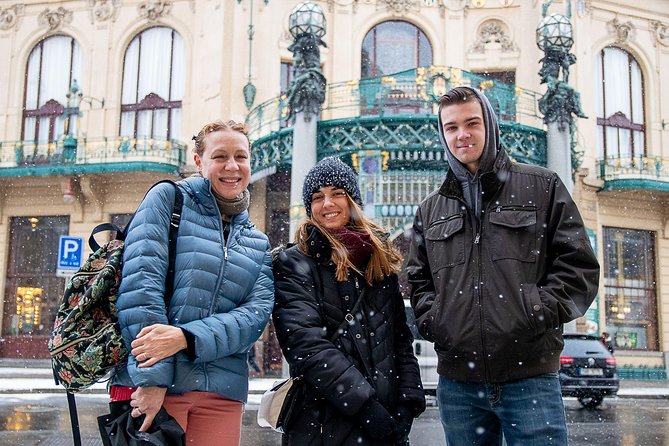
Prague is often introduced through Gothic towers, Baroque churches, and medieval lanes. Those older styles are important, but the city’s Art Nouveau buildings reveal another Prague: modern, confident, wealthy, and eager to join the wider European world.
Art Nouveau appeared across Europe near the end of the 19th century. It favored flowing lines, plant forms, decorative lettering, colored glass, metalwork, and interiors designed as complete works of art. In Prague, the style found a particularly receptive audience. It suited a city looking toward the future while also building a stronger Czech national identity.
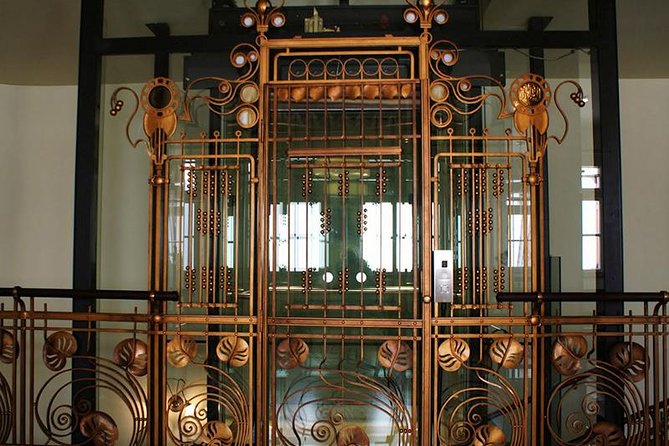
Your guide will show you how to recognize the style rather than simply point at attractive buildings. Watch for ginkgo biloba leaves, curved stems, floral patterns, elaborate lamps, and façades that seem to move instead of sitting still. These details are easier to notice once someone explains what they mean.
The tour also places Art Nouveau beside Cubism and Rondo-Cubism. That comparison matters. Without it, Prague’s early 20th-century architecture can look like a jumble of decorative buildings. With it, you begin to see a conversation between soft organic lines and hard geometric forms.
More Walking Tours in Prague:
- Prague: 3-Hour Walking Tour of Old Town & Prague Castle
★ 4.7 · 5,696 reviews - Prague: Ghost Walking Tour Where Legends Come To Life
★ 4.4 · 5,253 reviews - Prague: Jewish Quarter Walking Tour with Admission Tickets
★ 4.7 · 3,729 reviews
Starting at the House of the Black Madonna
The meeting point is the House of the Black Madonna and Grand Café Orient, at the front doors downstairs on Ovocný 19 in Prague 1. This is a useful starting point because the building introduces Cubism before the walk turns toward Art Nouveau.
The House of the Black Madonna is one of Prague’s best-known Cubist buildings. Its name comes from the statue of the Black Madonna on the façade, while the building itself uses strong geometric forms that reject the gentle curves of Art Nouveau. The Grand Café Orient adds an interior setting where the style becomes easier to understand.
This first stop also gives the guide a chance to establish the larger story. Prague was not simply copying Paris, Vienna, or other European capitals. Local architects adapted international ideas to express a Czech sense of modernity and national confidence.
I would arrive a little early here. The meeting point is specific, and the tour begins at the front doors rather than somewhere vague in the surrounding square. Since the walk is in central Prague, you will already be among major city sights, but the focus quickly shifts from famous views to architectural details many people pass without noticing.
Learning the language of Art Nouveau façades
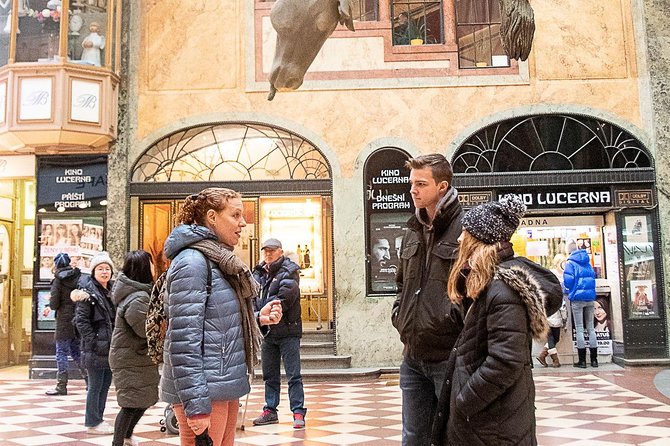
Once the walk is under way, the most useful part is the visual training. Your guide helps you identify the design choices that separate Art Nouveau from older and newer styles.
Look for the following:
- Plant forms that twist across stone and plaster
- Ginkgo leaves and other botanical patterns
- Curved lines inspired by nature
- Decorative windows and metalwork
- Elaborate lamps and fittings
- Façades where ornament is part of the structure, not merely stuck on afterward
This is not a tour where you stand in one spot while someone delivers a long lecture. Robert, one of the guides praised for his clear explanations and sense of humor, keeps the group moving. That makes the three-hour format easier on your feet than a long stationary talk, though it can mean you need to ask for a few extra seconds when taking photographs.
The pace is worth noting. You will see a lot, but the route is built around connections rather than a single grand interior. If you photograph every doorway, lamp, and balcony, you may occasionally feel rushed. Tell the guide if you need a moment for a particular shot.
Lucerna bar and the social life of modern Prague
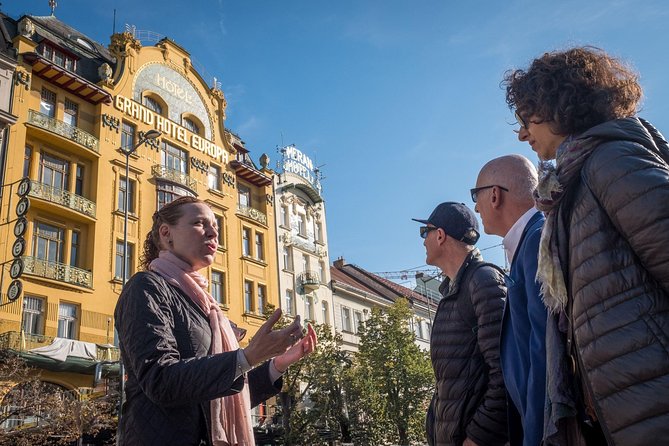
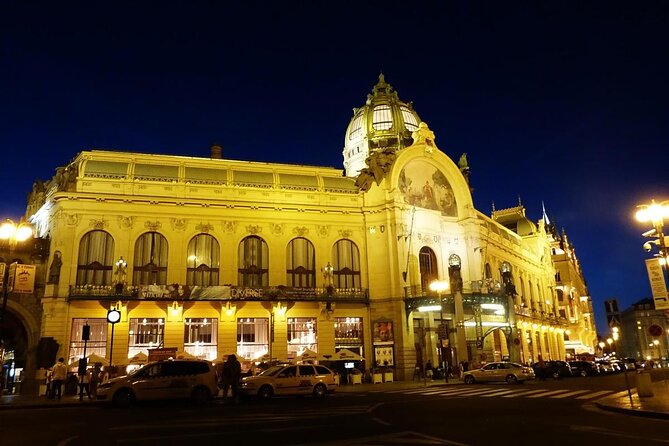
Lucerna bar is one of the tour’s strongest stops because it shows how Art Nouveau worked indoors. Exterior decoration can be admired from the pavement, but an interior reveals the full design plan: lighting, furniture, walls, ceilings, and social atmosphere working together.
The setting also explains why so many Art Nouveau buildings were hotels, elegant restaurants, bars, and railway stations. These were places connected with modern urban life. The first globetrotters were enjoying faster transport and the wealth produced by 19th-century industry. They wanted refined places to meet, eat, drink, sleep, and be seen.
That social detail gives the architecture some life. These buildings were not just pretty containers. They were stages for business deals, political talk, romance, fashion, and public display.
The tour links this world to the pre-war elite who frequented Prague’s cafés and restaurants. Before the First World War disrupted the old order, these spaces represented a new kind of public life. You can look at a decorative lamp and understand it not only as an object of design, but also as part of a setting built for conversation and status.
The chance to warm up indoors is practical in colder months. A December group described being able to enter buildings for closer looks and short breaks from the weather. That does not turn the tour into an indoor activity, so dress for walking, but the interior visits make winter more manageable.
A few more Prague options to compare
- Prague: 50-Minute Sightseeing Evening Cruise
★ 4.2 · 33,780 reviews - Prague: Medieval Dinner with Unlimited Drinks
★ 4.4 · 19,847 reviews - Prague: Skip-the-line Castle Ticket and Optional AudioGuide
★ 4.3 · 11,121 reviews - Prague: Castle Tour with Local Guide and Entry Ticket
★ 4.6 · 10,422 reviews
Grand Hotel Europa and the polished face of Prague
Grand Hotel Europa offers another view of Art Nouveau design. Hotels were especially important to the style because they needed to impress visitors arriving in a rapidly changing city. A grand hotel could announce that Prague belonged to the modern European world.
Here, pay attention to how decorative details serve a public purpose. The goal was not quiet domestic comfort. The design had to create an immediate impression for people arriving from elsewhere, often by train, and for local residents who wanted to take part in an elegant social scene.
The stop works well beside Lucerna bar. One is associated with leisure and nightlife, while the other represents lodging, hospitality, and the arrival of outsiders. Together, they show why Art Nouveau flourished in commercial buildings.
I like this approach because it avoids treating architecture as a string of isolated façades. You begin to see a network of places used by the same urban society. Hotels, cafés, stations, and restaurants all supported the same desire for movement and display.
Cubism and Rondo-Cubism in Prague
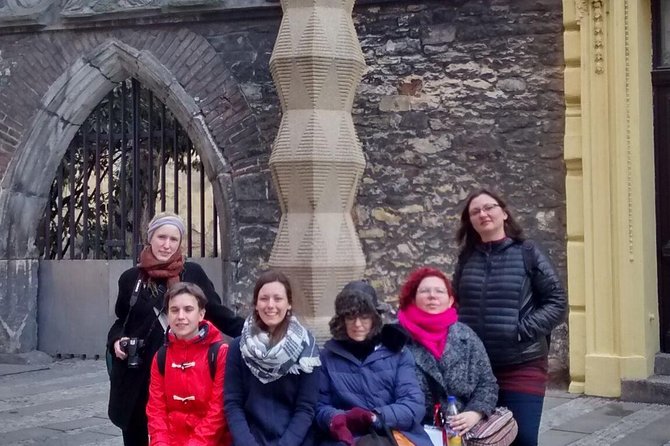
Art Nouveau is only half the story. The walk also includes examples of Prague’s Cubist and Rondo-Cubist architecture, including the House of the Black Madonna and Bank of the Legions.
Cubism uses angles, planes, and faceted forms. Instead of making a façade look like a growing plant, it breaks the surface into energetic geometric shapes. Prague’s architects adapted the style for buildings, interiors, furniture, and decorative objects.
Rondo-Cubism developed with more rounded forms and often used bold circular or semi-circular motifs. It gives you a useful middle point between sharp Cubist geometry and the flowing decoration of Art Nouveau.
Seeing these buildings in sequence is much more useful than studying each one in a separate museum display. You can compare them immediately:
- Art Nouveau favors organic movement and plant-based decoration.
- Cubism relies on geometric force and broken planes.
- Rondo-Cubism softens some of those hard edges with rounded patterns.
- All three styles express a desire to create something modern and distinct.
The Bank of the Legions is especially important in the discussion of Czech identity. The tour explains how architecture became a statement of national confidence, not just a fashionable international style. Prague’s architects were participating in European modernism while also asking what a Czech modern city should look like.
Side streets, passages, and unexpected interiors
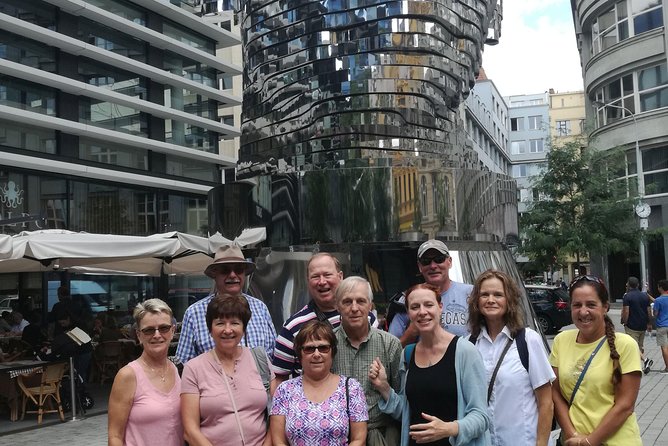
The best moments may come between the named landmarks. The route can lead through passages, courtyards, and lesser-known interiors that you are unlikely to notice while rushing between Prague’s major sights.
Robert’s tours have included places such as a university grand hall, an underground chapel, student cafés tucked behind courtyards, Roman ruins, and frescoes. These details show the range of the experience, though the exact stops may vary. The important point is that the guide looks beyond the obvious street frontage.
Passages are especially useful in Prague. They connect major streets with quieter corners and often preserve layers of commercial and social life. A sign, staircase, ceiling, or small café can reveal how people used the city in ways that a standard sightseeing route misses.
The tour is not limited to Art Nouveau and Cubism in a narrow sense. Guides place both styles within Prague’s older architectural story, drawing lines from Gothic and earlier periods into the modern age. This broader frame helps explain why a new style mattered so much in a city with such a long architectural past.
Vadim Erent has been praised for making those connections clear and for keeping the discussion lively. His approach appears particularly suited to people who want architecture explained as part of politics, society, and national identity rather than as a list of dates.
The guide makes or breaks this walk
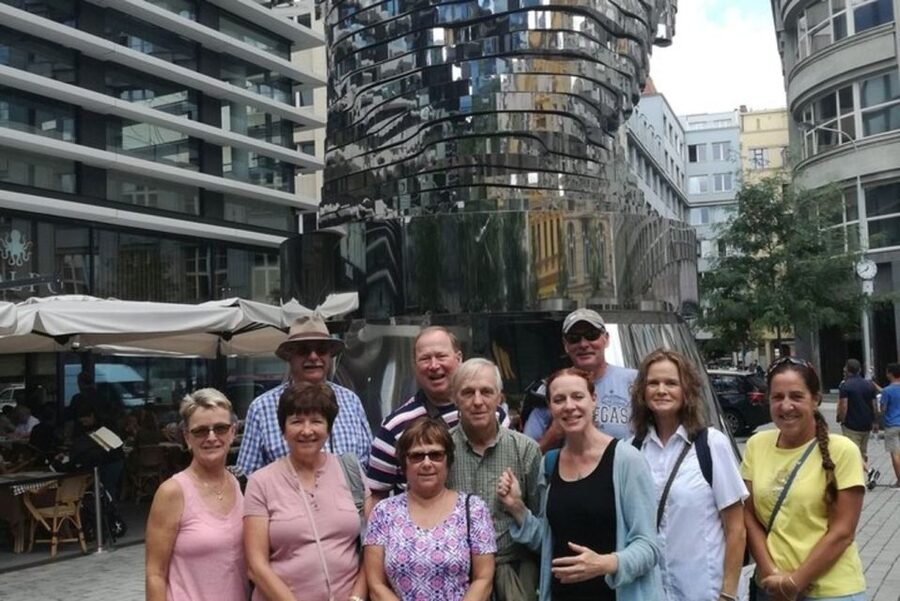
This experience depends heavily on the person leading it. The guiding team is made up of academics, historians, journalists, art critics, and published authors, so you should expect more than basic sightseeing commentary.
Robert is known for answering questions thoroughly while keeping a sense of humor. Vadim Erent brings a strong interest in Art Nouveau and Cubism, along with a talent for drawing broad connections. Bonita, another guide associated with the tour, has lived in Prague for many years and has led people to architectural details they would not find alone.
The names matter because the tour is built around interpretation. You are not merely being taken from one address to another. You are being shown how to look, and that depends on a guide who can explain complex ideas without turning the walk into a university seminar.
The small-group or private format should help. You can ask why one façade uses a particular motif, request clarification about Czech history, or ask for a short pause to take photographs. A large group would make those conversations harder.
Pace, comfort, and practical planning
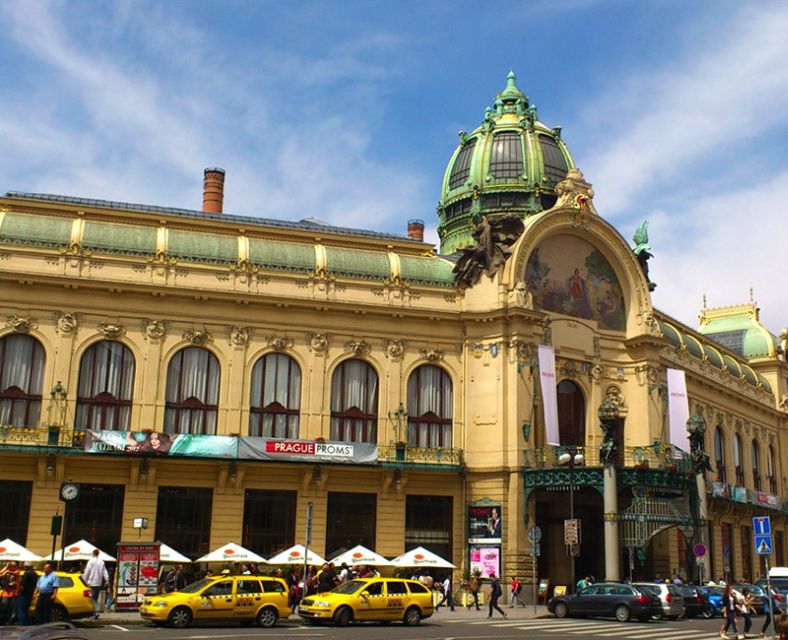
The advertised duration is three hours. That is enough time to cover a focused section of central Prague without making the subject feel rushed, but you should plan to walk and remain engaged for most of the period.
This is not a hop-on, hop-off outing. There is no transport included, and the experience is built around moving through the city on foot. Wear comfortable shoes and bring clothing suitable for the forecast. In cold weather, the indoor visits are welcome, but you should not assume you will spend most of the time inside.
One useful detail is the guide’s flexibility at the end. Robert reportedly asks early on whether the group has somewhere to be afterward, and he may allow more time when schedules permit. Do not count on an extension, but avoid booking a tightly timed activity immediately after the walk.
English is the stated tour language. Private and small-group options are available, which is helpful if you want a quieter pace or have a particular interest in architecture.
Cancellation is free up to 24 hours before the start, and you can reserve now while paying later. Those terms reduce the risk of booking a specialized tour before your Prague plans are fully settled.
Is $123 a fair price?
At $123 per person, this is expensive compared with a basic city walk. You are paying for a specialist-led experience rather than simple orientation.
The value improves if you care about design and want access to interiors, passages, bars, hotels, and less obvious details. A guide who can explain the relationship between Art Nouveau, Cubism, Czech identity, industrial travel, and pre-war society offers something that a standard overview usually cannot.
The price is harder to justify if you want a broad introduction to Prague or have only a few hours in the city. You will not focus on Prague Castle, the Charles Bridge, or every major historic sight. This is a targeted choice.
For an architecture enthusiast, private group, or repeat visitor, I think the cost can make sense. You are likely to leave with a better eye for the rest of the city, which adds value beyond the three-hour route. If you are traveling alone on a tight budget, compare the price with your other priorities before booking.
Who should book this Prague walk?
I would recommend it to:
- People who enjoy architecture but want help spotting design details
- Repeat visitors who have already seen Prague’s main landmarks
- First-time visitors who want a more focused introduction to modern Prague
- Travelers interested in Czech national identity and urban society
- Photographers who enjoy façades, interiors, lamps, passages, and unusual angles
- Small groups willing to pay more for an expert-led experience
I would be more cautious if you dislike walking, need a very slow photo pace, or prefer a simple checklist of famous sights. The route keeps moving, and the subject rewards concentration.
Final verdict: book it for the way it changes your eye
Book this tour if you want Prague to become more than a collection of pretty streets. The strongest feature is the guide’s ability to connect small visual clues with larger stories about modern life, wealth, travel, social status, and Czech identity.
I especially like the combination of Lucerna bar, Grand Hotel Europa, the House of the Black Madonna, and Bank of the Legions. It gives you a clear comparison between flowing Art Nouveau and geometric Cubist design, while the side passages and interiors keep the walk from feeling like a parade of façades.
The price is high, and the pace may occasionally test a serious photographer. Still, for an architecture-minded visitor, this is one of the more distinctive ways to understand central Prague. It is a specialist walk, not a general city tour, and that focus is precisely its value.
FAQ
Where does the Prague Art Nouveau and Cubism Walking Tour meet?
The meeting point is at the House of the Black Madonna and Grand Café Orient, downstairs at the front doors on the square, at Ovocný 19, Prague 1.
How long does the tour last?
The scheduled duration is three hours. The guide may offer additional time when possible, depending on the group’s schedule.
What language is the tour offered in?
The tour is offered in English with a live guide.
Is the tour private or shared?
Private and small-group options are available.
What buildings and places are included?
The tour includes visits to Lucerna bar and Grand Hotel Europa. It also discusses Prague’s Art Nouveau, Cubist, and Rondo-Cubist architecture, including the House of the Black Madonna and Bank of the Legions.
What is the cancellation policy?
You can cancel up to 24 hours in advance for a full refund. Reserve-now, pay-later booking is also available.
Newest listings in Prague
- World War II 4WD Tour from Prague with Lunch★ 4.4 · 3 reviews
- Prague: Historical Walking Tour with Focus on World War 2★ 4.3 · 12 reviews
- WWII and Communism History in Prague’s Old Town Private Tour★ 5.0 · 4 reviews
- Wroclaw: Giant Mountains & Valley of Palaces Day Tour★ 4.8 · 36 reviews
- Walking tour of Prague in French : Nové Město★ 4.9 · 16 reviews
- Walking tour of Prague in french: Old Town & Charles Bridge★ 4.9 · 62 reviews
- Vltava River Cruise and Private Tour of Prague’ Old Town★ 5.0 · 1 review
- Ultimate Unlimited Beer Pong with Czech Beer★ 4.6 · 5 reviews
Walking Tours, compared.
3-Hour Walking Tour of Old Town & Prague Castle
Read our review →
Ghost Walking Tour Where Legends Come To Life
Read our review →
Jewish Quarter Walking Tour with Admission Tickets
Read our review →
Prague Guided Walking Tour and Cruise with Authentic Czech Lunch
Read our review →
Old Town and Jewish Quarter Guided Walking Tour
Read our review →
Prague Ghost and Legend of Old Town Walking Tour
Read our review →
Prague 3-hour Afternoon Walking Tour including Prague Castle
Read our review →
Ghosts and Legends Nighttime Guided Walking Tour
Read our review →Browse the lists this tour appears in