
REVIEW · MUSEUMS
Museum Story of Prague
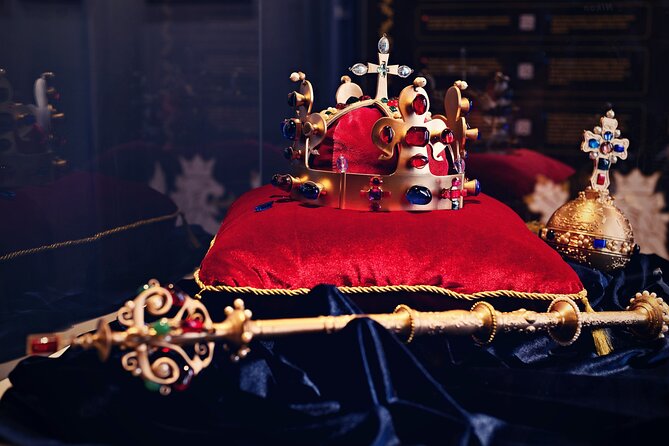
Prague’s past gets a modern makeover. The Story of Prague Museum turns major events into an active, visual experience, moving from knights and kings to the Velvet Revolution. I like the way it brings together interactive displays and real historical stories, and I also like the clear three-floor progression through Prague’s long, often difficult past.
The museum gives you more than glass cases and labels. Film installations, audio elements, mixed reality, QR codes, and a few theatrical touches keep the visit moving. The main drawback is that the QR codes may feel overused, especially if you want to look at the exhibits without constantly reaching for your phone.
In This Review
- Key Points To Know Before You Go
- Entering Prague’s Story Through Interactive Exhibits
- Medieval Prague, Jan Žižka, and the Hussites
- The Golem and Prague’s Folklore
- The Second Floor: Occupation, Bombing, and Soviet Rule
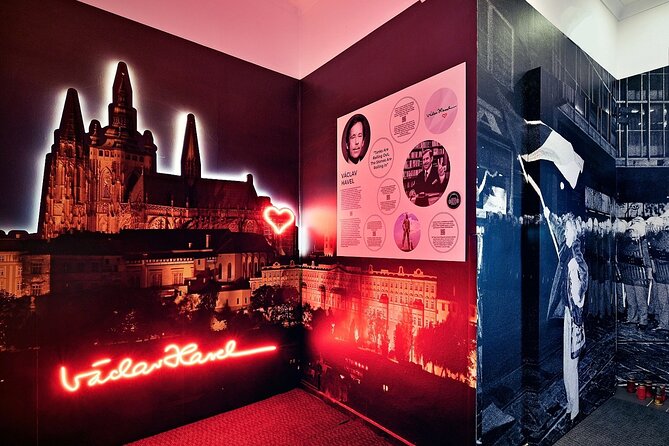
- The Third Floor and the Velvet Revolution
- Mixed Reality, Film, Audio, and QR Codes
- The Hidden Room and Unseen Exhibits
- Is $19.27 Good Value for 90 Minutes?
- Who Will Enjoy This Museum Most?
- Practical Tips for a Better Visit
- Should You Book the Story of Prague Museum?
- FAQ
- How long does the Story of Prague Museum take?
- How much does admission cost?
- What time does the experience start?
- Is the museum near public transportation?
- Is a mobile ticket available?
- Can I cancel for a full refund?
Key Points To Know Before You Go
- Three floors cover Prague from medieval legends to modern freedom.
- The Golem appears in the dimly lit medieval section, adding a touch of Prague folklore.
- Mixed reality, films, audio, and interactive displays replace a purely traditional museum format.
- The difficult twentieth century receives serious attention, including Nazi occupation, the bombing of Prague, and Soviet rule.
- A hidden room and exhibits not shown in photographs give the visit a few surprises.
- The visit lasts about 90 minutes and costs $19.27 per person, with free cancellation up to 24 hours before the start time.
Entering Prague’s Story Through Interactive Exhibits
The Story of Prague Museum is designed for people who want history to move at a steady pace. You are not simply asked to read long blocks of text beside old objects. Instead, the museum uses film, sound, digital features, and mixed reality to place you near the major moments it presents.
That approach matters in Prague, where almost every street seems to carry a medieval legend, a religious conflict, or a twentieth-century political story. A traditional museum can sometimes make those layers feel separate. Here, the goal is to connect them in one visit.
You should plan on roughly one hour and thirty minutes. That is long enough to give the major periods attention, but short enough to fit into a busy day in central Prague. I would see it as a useful first stop, especially if you want some historical context before exploring the Old Town on foot.
The museum is near public transportation, and most people can take part. A mobile ticket keeps the entry process simple, though you should make sure your phone is charged if you plan to use the digital features.
More Museum Tours in Prague:
- Prague: Museum of Fantastic Illusions Entry Ticket
★ 4.3 · 4,337 reviews - IAM Illusion Art Museum Entry Ticket
★ 4.2 · 1,664 reviews - Prague: Museum of Senses Admission Ticket
★ 4.0 · 1,445 reviews
Medieval Prague, Jan Žižka, and the Hussites
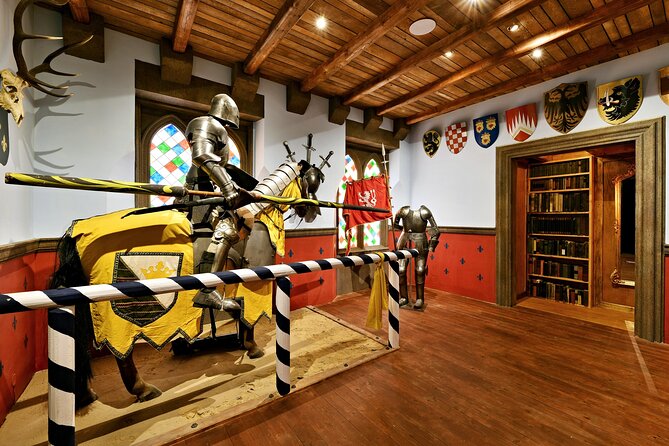
The first part takes you into the age of knights, kings, religious conflict, and city building. It includes Jan Žižka and the Hussites, an important chapter in Czech history that can be unfamiliar if you are visiting Prague without much background.
The Hussites were connected to religious reform and resistance in medieval Bohemia. Jan Žižka became one of their best-known military leaders. The museum’s treatment gives you a visual introduction to this period rather than leaving you to piece together names and dates from a dry wall panel.
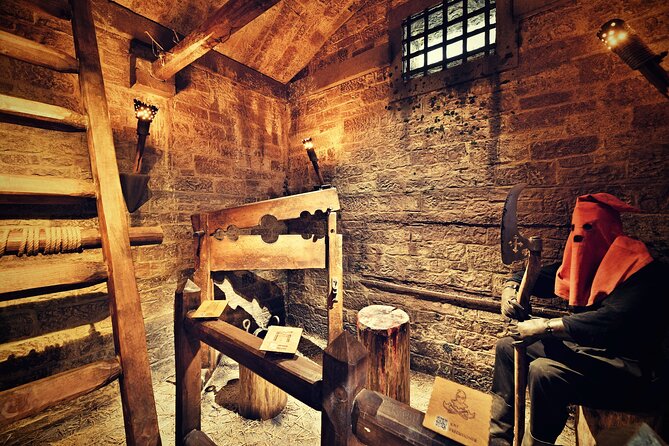
You also encounter medieval torture, presented without practical demonstrations. That distinction matters. The subject is part of the period’s story, but the museum does not turn it into a graphic show. If you are visiting with children or prefer less grim material, you can expect the topic to be included without the experience becoming a torture display.
Another key part of this floor is the construction of the Old Town Hall and the Astronomical Clock. These are among Prague’s most recognizable landmarks, and seeing their creation placed in a historical setting adds meaning to the structures you may later visit outside.
The dim lighting helps create a medieval mood. Then comes the Golem, a towering figure tied to Prague’s Jewish folklore and old mystical traditions. It is one of the museum’s most memorable visual touches, though it also signals that this is not a strictly academic presentation. Legend and documented history share the same route.
That mixture can work well for a first visit. You get a sense of the stories that shaped Prague’s identity, while the displays keep the pace lively.
The Golem and Prague’s Folklore
The Golem deserves special attention because it represents a side of Prague that does not fit neatly into a political timeline. The figure is associated with the city’s Jewish folklore and the story of a supernatural protector created from clay.
You are not visiting a separate folklore museum, so the Golem appears as part of the larger medieval setting. The low light and tall figure give the room a theatrical quality. It may appeal especially to you if you like legends, old city mysteries, and the less formal side of European history.
At the same time, you should know what kind of experience this is. The museum combines authentic stories with film and mixed reality, so it does not always separate historical fact from cultural memory in the way a specialist museum might. I see that as a strength for atmosphere, but visitors looking for a strictly scholarly presentation may want to pair it with a more traditional history museum.
The Second Floor: Occupation, Bombing, and Soviet Rule
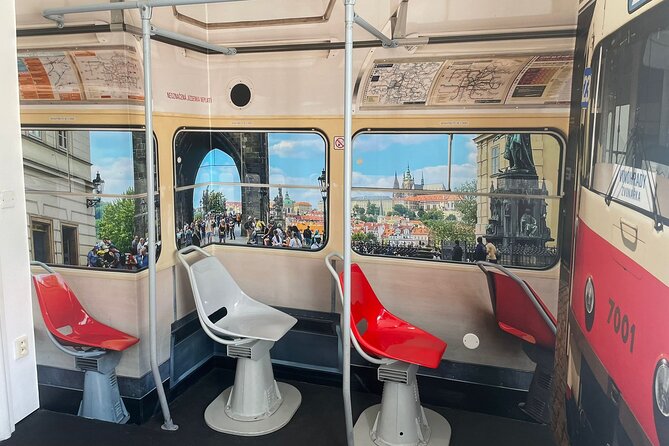
The second floor changes tone. The museum leaves behind medieval warfare and folklore to examine Prague’s harder twentieth-century experiences.
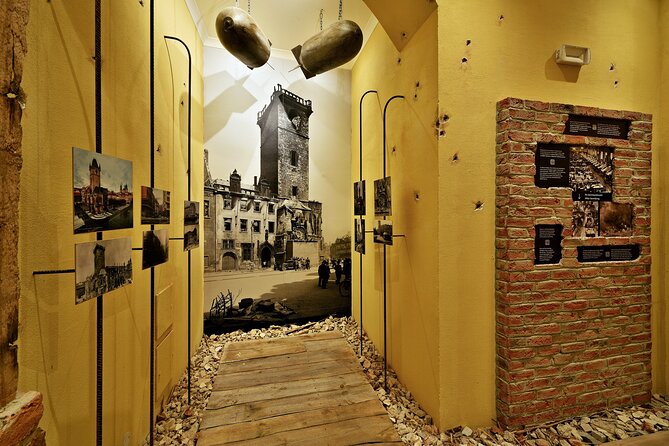
You will encounter the Nazi occupation, the bombing of Prague, and the Soviet occupation. These subjects give the museum weight. The story is not limited to royal architecture and romantic legends. It also looks at the political forces that changed daily life and shaped the city in ways that still matter.
This section is valuable because it prevents a common mistake: treating Prague as only a picturesque old city. The streets, monuments, and public spaces also carry memories of occupation, destruction, and state control. A short visit cannot explain every event in detail, but it can give you a framework for understanding why modern Czech history feels so important in Prague.
The mood may feel more serious here, and rightly so. The museum uses audiovisual material to make the period more immediate. You might find the technology more effective in this section than in the medieval rooms because film and sound can help convey the pressure of recent history.
Do not expect a full research museum on the Nazi or Soviet periods. The Story of Prague is a broad city-history experience, not a specialist institution devoted to one era. Its value is in the connections it makes across several centuries.
A few more Prague options to compare
- Prague: 50-Minute Sightseeing Evening Cruise
★ 4.2 · 33,780 reviews - Prague: Medieval Dinner with Unlimited Drinks
★ 4.4 · 19,847 reviews - Prague: Skip-the-line Castle Ticket and Optional AudioGuide
★ 4.3 · 11,121 reviews - Prague: Castle Tour with Local Guide and Entry Ticket
★ 4.6 · 10,422 reviews
The Third Floor and the Velvet Revolution
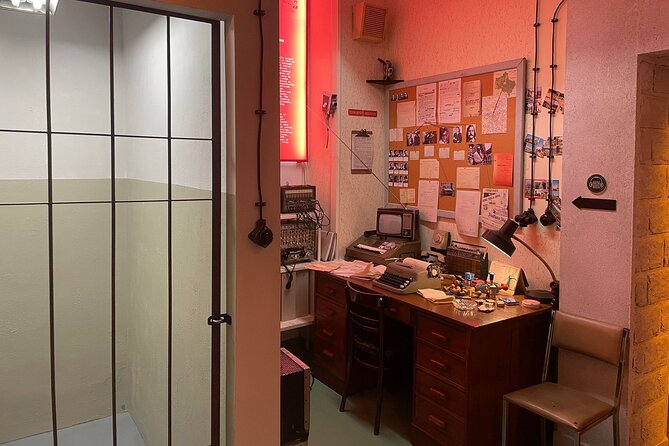
The third floor brings the story into modern times, with attention to the Velvet Revolution and Czech achievements around the world.
The Velvet Revolution is a central part of the modern Czech identity. In 1989, peaceful protests helped bring an end to Communist rule in Czechoslovakia. Including it here gives the museum’s timeline a clear ending: Prague moves from kings and religious wars through occupation and Soviet control toward political change and greater freedom.
This floor also celebrates Czech accomplishments beyond the country’s borders. The supplied information does not specify every achievement or object, so you should expect a broad celebratory section rather than a detailed list of individual inventions, artists, or public figures.
I like the placement of this material at the end. It gives the visit a sense of movement and makes Prague feel like a living city, not a preserved medieval stage set. You leave with a better idea of how the old streets connect to the country you are visiting now.
Mixed Reality, Film, Audio, and QR Codes
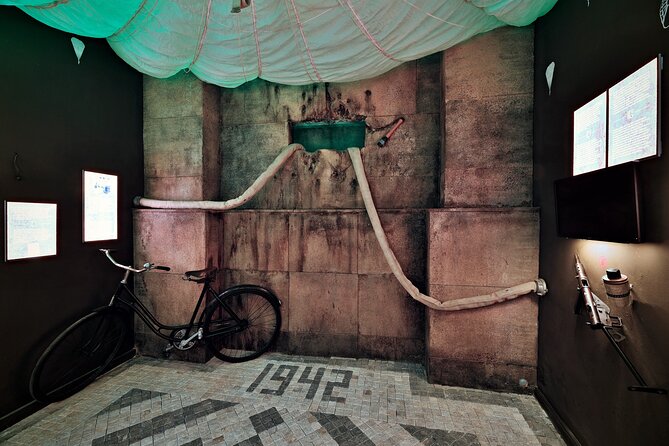
The museum’s central idea is to put you at the heart of the story. It does this with mixed reality, film installations, audio elements, and interactive displays.
These tools are useful when they clarify a complicated event or show how a landmark developed. They can also help hold the attention of younger visitors who may lose interest in long written explanations. If you enjoy pressing buttons, watching short films, and using your phone as part of a museum visit, this format should suit you.
The QR codes are the one feature I would approach with caution. They add more material, but there may be so many that the experience starts to feel like a series of optional phone tasks. One useful strategy is to scan only the codes that genuinely interest you. You do not need to treat every code as an assignment.
That choice helps preserve the museum’s rhythm. Look at the main display first, listen to the audio if it adds something, and then decide if you want more detail. If you scan every code, you may spend more time with your screen than with the exhibits.
The technology also means the museum may appeal more to you if you like modern presentation. If your ideal museum has quiet rooms, original objects, and long labels, this could feel too staged in places.
The Hidden Room and Unseen Exhibits
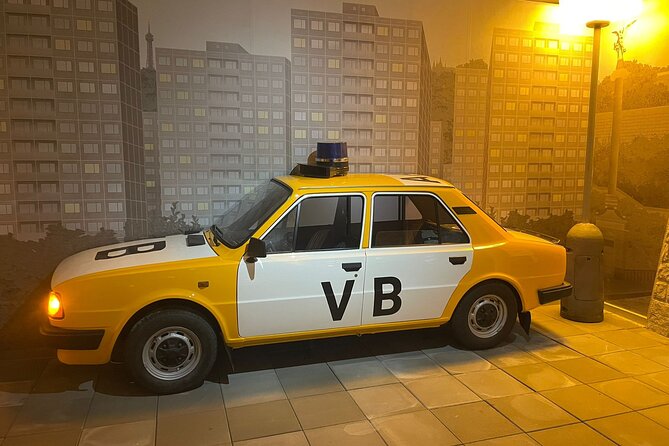
The museum includes a hidden room and displays that are not shown in photographs. That gives the visit a little uncertainty, which is useful in an age when many attractions reveal nearly everything online.
The hidden room is part of the museum’s effort to make the experience feel discovered rather than simply consumed. I would not book the museum only for that feature, since the available details do not explain exactly what the room contains. Still, it adds a pleasant reason to pay attention as you move through the floors.
The mention of exhibits not visible in photographs is also helpful. You may already have seen images of the museum’s main features before arriving, but the full visit includes more than the familiar promotional views.
Is $19.27 Good Value for 90 Minutes?
At $19.27 per person, the museum is not a bargain attraction in the strictest sense. But the price can make sense if you want a focused introduction to Prague’s past and prefer an active presentation over a conventional display of objects.
The visit lasts about 90 minutes, so you are paying roughly for a compact, structured history experience. That works best when you value convenience. You can move from medieval Prague to the twentieth century and the Velvet Revolution without arranging several separate museum visits.
The value is also tied to your interests. If you enjoy technology, visual storytelling, and a broad historical sweep, the ticket should feel more worthwhile. If you mainly want original works of art, detailed artifacts, or a quiet academic setting, your money may be better spent elsewhere.
I would also consider the museum’s location near public transportation. Easy access matters in Prague, where you may be fitting several sights into one day. A 90-minute visit can work before lunch, after a walk through the Old Town, or during a rainy afternoon.
The experience is booked about 12 days ahead on average. That does not mean you must reserve that far in advance, but it suggests that planning ahead is sensible during busy periods. The mobile ticket is convenient, and free cancellation is available if you cancel at least 24 hours before the 10:00 am start time. Changes or cancellations made inside that window are not accepted for a refund.
Who Will Enjoy This Museum Most?
I would recommend the Story of Prague Museum to you if you want a broad introduction rather than a deep study of one period. It works particularly well for first-time visitors who want to understand how Prague’s medieval legends, major landmarks, modern occupations, and political changes fit together.
Families may appreciate the interactive displays and mixed reality, although the medieval torture section and the twentieth-century occupation material are not light subjects. Parents should decide how much context their children need before entering.
The museum also suits you if the weather is poor or if you want a break from walking. Prague rewards time outdoors, but a compact indoor attraction can provide useful context while giving your feet a rest.
I would be less enthusiastic if you dislike QR codes or phone-based exhibits. The technology is part of the museum’s identity, not a minor extra. You can ignore some of it, but you cannot avoid the modern presentation entirely.
Practical Tips for a Better Visit
Arrive ready to move through three floors. The experience is designed as a chronological journey, so rushing the first floor could make the later sections feel less connected.
Give yourself the full 90 minutes if you want to watch the films and listen to the audio elements. A faster visit is possible, but you would lose much of what separates this museum from a simple collection of labels and objects.
Keep your phone available, but do not feel obliged to scan every QR code. Choose the material that adds to your understanding and skip the rest.
If you are planning a wider day in Prague, use the museum as a history primer. Afterward, the Old Town Hall, Astronomical Clock, and surrounding streets should feel less like isolated sights and more like parts of a long story.
Should You Book the Story of Prague Museum?
Book it if you want Prague’s history presented in a short, visual, technology-led format. The museum covers a lot in 90 minutes, from Jan Žižka and the Hussites to the Golem, the Astronomical Clock, Nazi occupation, Soviet rule, and the Velvet Revolution.
I especially like its broad timeline and its willingness to address difficult periods alongside legends and royal history. The main caution is the heavy use of QR codes and digital features. If that sounds annoying rather than helpful, you may not enjoy the format.
For most first-time visitors, the museum offers a useful orientation at a reasonable price, especially on a rainy day or before exploring Prague’s historic center. For a specialist history enthusiast, it is best treated as an accessible introduction, not a final word.
FAQ
How long does the Story of Prague Museum take?
The visit lasts approximately 1 hour and 30 minutes.
How much does admission cost?
Admission costs $19.27 per person.
What time does the experience start?
The stated start time is 10:00 am.
Is the museum near public transportation?
Yes. The museum is located near public transportation.
Is a mobile ticket available?
Yes. The experience includes a mobile ticket.
Can I cancel for a full refund?
Yes. You can cancel for a full refund if you do so at least 24 hours before the experience start time. Cancellations or changes made less than 24 hours before the start time are not refunded.
Newest listings in Prague
- World War II 4WD Tour from Prague with Lunch★ 4.4 · 3 reviews
- Wroclaw: Giant Mountains & Valley of Palaces Day Tour★ 4.8 · 36 reviews
- Prague: Historical Walking Tour with Focus on World War 2★ 4.3 · 12 reviews
- WWII and Communism History in Prague’s Old Town Private Tour★ 5.0 · 4 reviews
- Walking tour of Prague in French : Nové Město★ 4.9 · 16 reviews
- Walking tour of Prague in french: Old Town & Charles Bridge★ 4.9 · 62 reviews
- Vltava River Cruise and Private Tour of Prague’ Old Town★ 5.0 · 1 review
- Ultimate Unlimited Beer Pong with Czech Beer★ 4.6 · 5 reviews
Museums, compared.


IAM Illusion Art Museum Prague Fast Pass Ticket
Read our review →
Ticket to Audiovisual Light Art at Lumia Gallery
Read our review →
Browse the lists this tour appears in