
REVIEW · JEWISH QUARTER TOURS
Kafka in Prague’s Jewish Quarter and Old Town Private Tour
Kafka still haunts Prague. This private walk links his family, faith, study, and writing life across Old Town and Josefov, giving you a human way into a writer often treated as a puzzle. I especially like the small private format, which lets your guide adjust the pace and explain Kafka in context rather than recite a list of addresses. I also like the choice of three tour lengths, from a quick two-hour introduction to a four-hour visit with two synagogues.
The main drawback is easy to understand: the basic two-hour tour does not include synagogue interiors, and the Kafka Museum is not part of any listed option. If you want to see the spaces connected with Kafka’s Jewish childhood, the three-hour version is the sensible minimum. The four-hour tour costs more time and energy, but it gives you the fuller picture.
In This Review
- Key points at a glance
- Why Kafka belongs in Prague’s Old Town
- Starting at the World of Franz Kafka
- Old Town stops that explain Kafka’s daily world
- Josefov and Kafka’s Jewish roots
- The Old-New Synagogue on the three-hour tour
- The Spanish Synagogue and the four-hour option
- Kafka’s monuments bring some humor to the route
- Is $104 per person good value?
- Who should choose this tour?
- Practical details before you book
- Should you book Kafka’s Prague?
- FAQ
- How long does the Kafka in Prague tour last?
- Where does the tour meet?
- Is the tour private?
- Which languages are available?
- Does the two-hour tour include synagogue tickets?
- Which option includes the Old-New Synagogue?
- Which option includes the Spanish Synagogue?
- Is the Kafka Museum included?
Key points at a glance
- Follow Kafka’s actual Prague trail: See the House at the Minute, Charles University, Estates Theater, Kafka’s family area, and several monuments.
- Understand Josefov through Kafka: Visit the Jewish Town Hall, Maisel Synagogue, Old-New Synagogue, and Spanish Synagogue from the outside or inside, depending on your option.
- Choose your depth: The two-hour route is mainly an outdoor walk, the three-hour route adds the Old-New Synagogue, and the four-hour route adds both synagogues.
- Hear the Golem legend: The Old-New Synagogue brings a famous Prague story into the tour, along with the Gothic interior where Kafka attended services.
- See unusual Kafka art: The Rotating Head and the surreal Kafka Monument add a playful, modern edge to the literary theme.
- Get a private guide in your language: Czech, Polish, German, Russian, English, French, Italian, and Spanish are available.
Why Kafka belongs in Prague’s Old Town
Franz Kafka is often presented as a gloomy, isolated figure. Prague gives you a more useful picture. He was a German-speaking Jewish writer living in a Czech city, born into a family tied to the Old Jewish Town, educated at Charles University, and shaped by the streets and institutions around him.
That complicated setting matters. Kafka’s work often deals with bureaucracy, law, family pressure, guilt, and alienation. Those subjects did not come from nowhere. He lived within several overlapping cultures and languages, and this tour helps you see how that tension formed part of his world.
You are not simply walking to a statue and taking a photograph. You are moving between places linked to his family, education, religion, and public life. That makes the tour useful even if you have read only The Metamorphosis. If you have read The Trial, the route may feel even more revealing, since the story’s strange systems and anxious city atmosphere connect naturally with old Prague.
The five-star rating and the praise for the guide’s command of Kafka’s life are important here. This subject can become a dry lecture very quickly. A strong guide needs to explain both the facts and the contradictions: Kafka was uneasy with his Jewish identity, yet he is widely treated as a major Jewish writer; he studied law, yet became famous for literature; he lived in a historic quarter, yet his writing feels oddly modern.
More Jewish Quarter walks:
- Prague: Jewish Quarter Walking Tour with Admission Tickets
★ 4.7 · 3,729 reviews - Prague: Old Town and Jewish Quarter Guided Tour in German
★ 4.8 · 3,143 reviews - Prague: Old Town and Jewish Quarter Guided Walking Tour
★ 4.6 · 2,847 reviews
Starting at the World of Franz Kafka
The meeting point is in front of the World of Franz Kafka at Nám. Franze Kafky 16/1 in Staré Město. This is a practical starting place because you begin close to the Old Town streets connected with Kafka’s adult life, rather than spending the first part of the tour crossing the city.
Your guide will lead a private group, and the tour is offered in eight languages. That private arrangement is a real advantage for a literary walk. You can ask why a certain place matters, pause over a detail, or connect the setting to a book without worrying about holding up a large group.
The tour is listed as wheelchair accessible. Still, you should confirm the specific route and synagogue access when booking, since historic buildings can have their own practical limits. The meeting point itself is in central Prague, so comfortable shoes are sensible even though the tour lasts only two to four hours.
Old Town stops that explain Kafka’s daily world
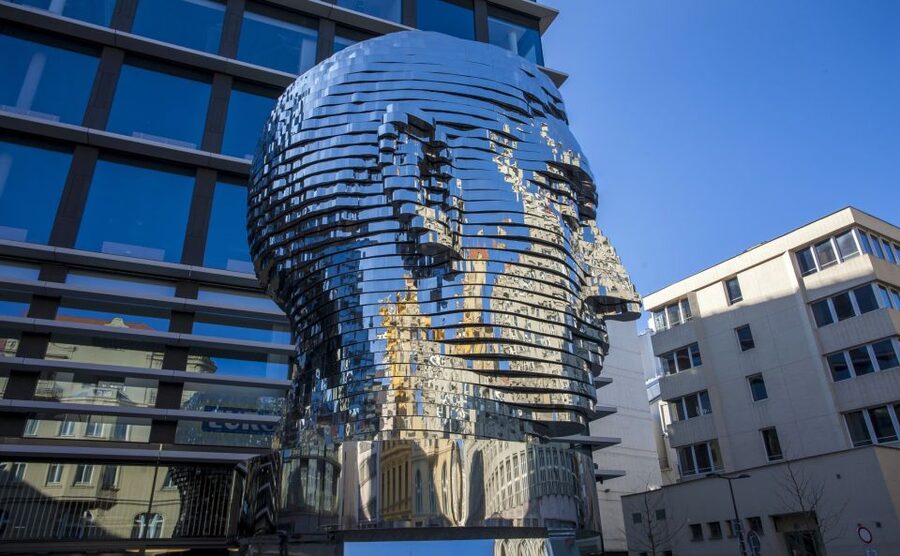
The two-hour option begins with several well-chosen Old Town landmarks. The first major stop is the Franz Kafka Rotating Head, one of Prague’s most striking Kafka sculptures. Its moving form gives you a quick introduction to the city’s modern reading of the author: clever, unsettling, and slightly comic.
You then see Charles University, where Kafka studied law. This is more than a school connection. His legal education helps explain his lifelong concern with rules, authority, courts, official language, and systems that seem impossible to escape. You will not be touring the university as a student, but its place in the route gives useful context for his professional background.
The Estates Theater adds another side of Kafka’s life. He attended plays there, so this stop shifts the focus from private anxiety to Prague’s public culture. It reminds you that Kafka was not cut off from the city. He went to performances, studied, worked, and moved through the same civic world as everyone else.
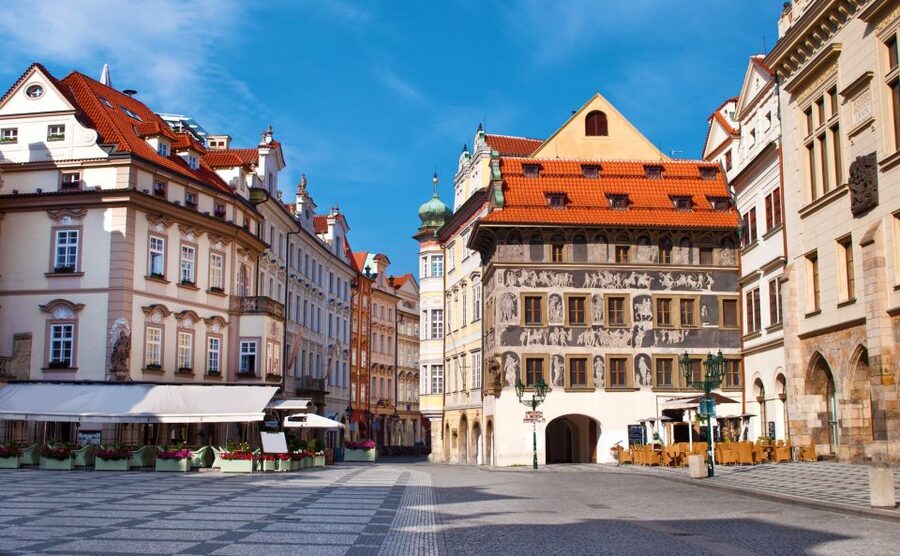
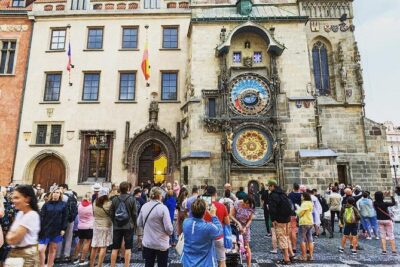
The House at the Minute is one of the most personal stops. Kafka once lived there, just steps from the Astronomical Clock. The location puts his family life right beside one of Prague’s best-known public sights. You get a vivid sense of how close domestic life, tourism, commerce, and ceremony were in the Old Town.
The tour does not claim that every stone changed Kafka’s writing. That is a good thing. Instead, it gives you a sequence of grounded connections. The value comes from seeing several parts of his life in one walk, not from forcing a grand meaning onto every building.
Josefov and Kafka’s Jewish roots
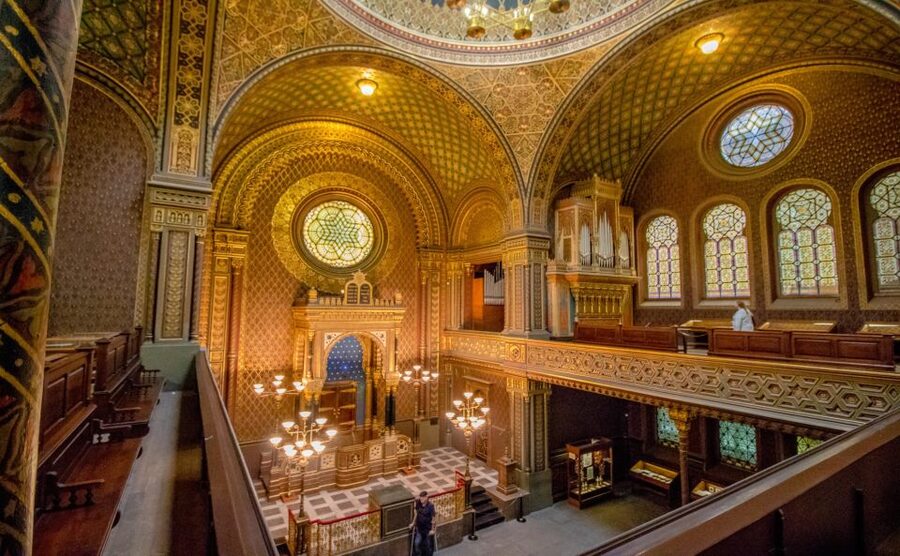
From Old Town, the route moves into Josefov, Prague’s former Jewish Town. This is where the tour becomes more than a literary sightseeing walk. Your guide explains Kafka’s Jewish background and the complicated way he related to it.
Kafka was not a simple symbol of religious confidence. He felt uneasy about his Jewish heritage, yet Jewish identity, memory, and life in Prague are central to how many readers understand his work. The tour presents that tension rather than smoothing it away.
You will see the historic Maisel Synagogue, the Jewish Town Hall, and the Old-New Synagogue. On the two-hour route, these are primarily exterior stops. That is enough to understand the shape of the quarter, but it is not enough if your main goal is interior architecture or museum displays.
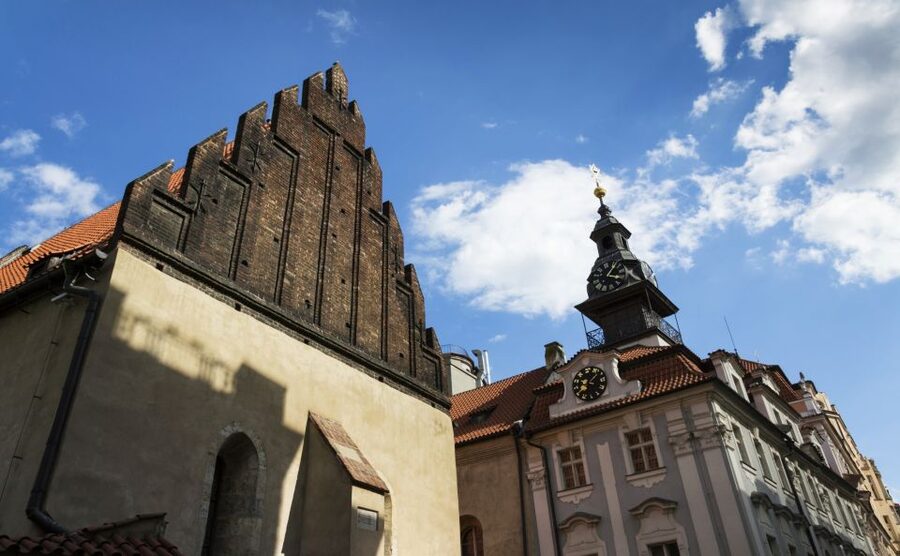
The Old-New Synagogue has a particularly direct link to Kafka. As a child, he attended services there. The building was completed in 1270 and remains the oldest active synagogue in Europe. Its age gives the Jewish Quarter a very different sense of time from the modern Kafka sculptures seen earlier in the day.
Your guide also tells the legend of the Golem of Prague, the artificial being traditionally associated with Rabbi Judah Loew and the Jewish Quarter. The story is folklore, not a documented episode from Kafka’s life, but it fits the tour because it shows how Prague’s Jewish memory mixes religious tradition, local legend, and literary imagination.
A few more Prague options to compare
- Prague: 50-Minute Sightseeing Evening Cruise
★ 4.2 · 33,780 reviews - Prague: Medieval Dinner with Unlimited Drinks
★ 4.4 · 19,847 reviews - Prague: Skip-the-line Castle Ticket and Optional AudioGuide
★ 4.3 · 11,121 reviews - Prague: Castle Tour with Local Guide and Entry Ticket
★ 4.6 · 10,422 reviews
The Old-New Synagogue on the three-hour tour
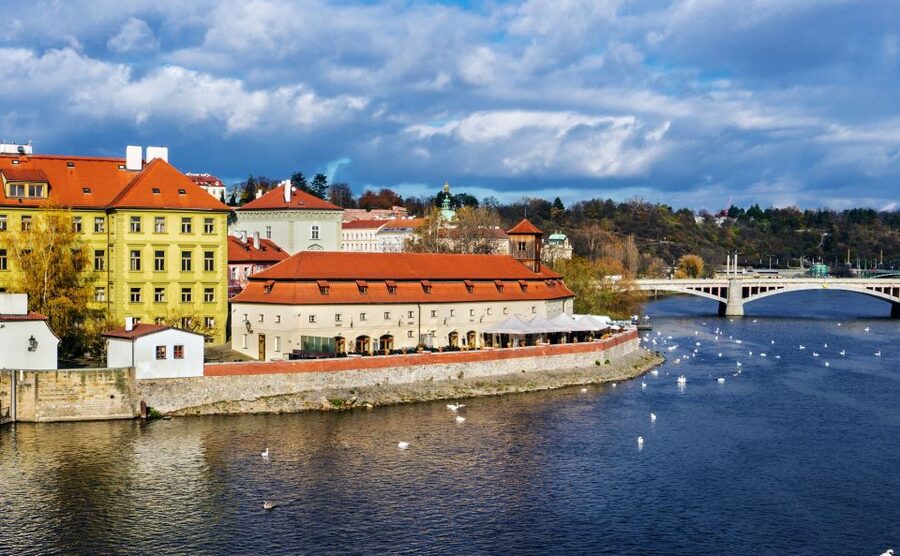
The three-hour option is the best middle choice for many people. It includes the Old-New Synagogue’s interior and skip-the-line admission, while keeping the overall experience shorter than the four-hour version.
Inside, you can see the Gothic space where Kafka attended services as a child. That connection makes the building feel less like a general attraction and more like a place tied to his family and religious environment. The interior also gives you something an outdoor route cannot: a clearer sense of the atmosphere and scale of Prague’s medieval Jewish quarter.
Skip-the-line access matters most when your schedule is tight. It does not make the visit private, since the synagogue remains a public historic site, but it removes the need to spend part of your tour waiting to enter. The ticket is included only with the three and four-hour options, so check your selected duration carefully.
The three-hour tour is also a good fit if you want Kafka and Josefov without turning the experience into a full museum afternoon. You get the outdoor sites, the Old-New Synagogue, and the Golem story, but not the Spanish Synagogue interior.
The Spanish Synagogue and the four-hour option
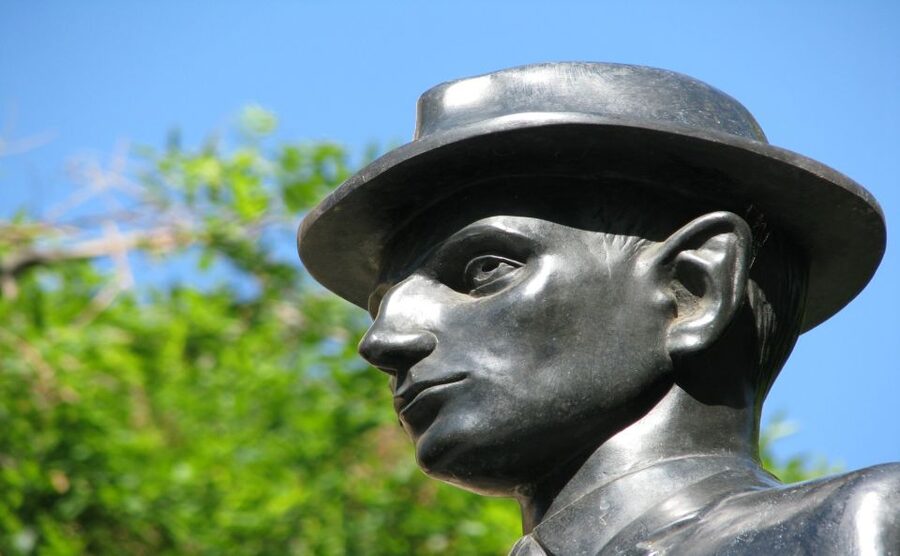
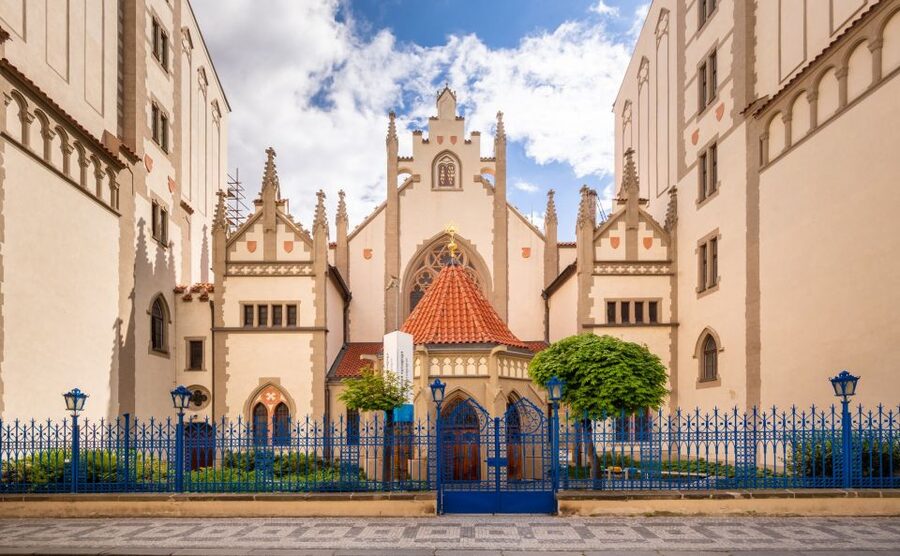
The four-hour tour adds the Spanish Synagogue, with skip-the-line entry included. This synagogue is known for its Moorish-style design, which provides a strong visual contrast with the Gothic Old-New Synagogue.
The building is part of Prague’s Jewish Museum and contains a permanent exhibition covering Jewish history from the 18th century to the present. That period includes Kafka’s lifetime, so the visit gives you a wider frame for understanding Jewish life in Prague instead of focusing only on one writer.
This is the most complete choice if you want both literary connections and Jewish cultural history. You see the city through Kafka’s biography, then spend time with the institutions and stories that give that biography meaning.
The tradeoff is time. Four hours is a substantial walking and sightseeing block, especially if you are already planning to visit several other Prague sites. The longer option makes sense for readers with a serious interest in Kafka, Jewish Prague, architecture, or modern European history. If you mainly want a quick introduction and a few photographs, it may be more than you need.
Kafka’s monuments bring some humor to the route
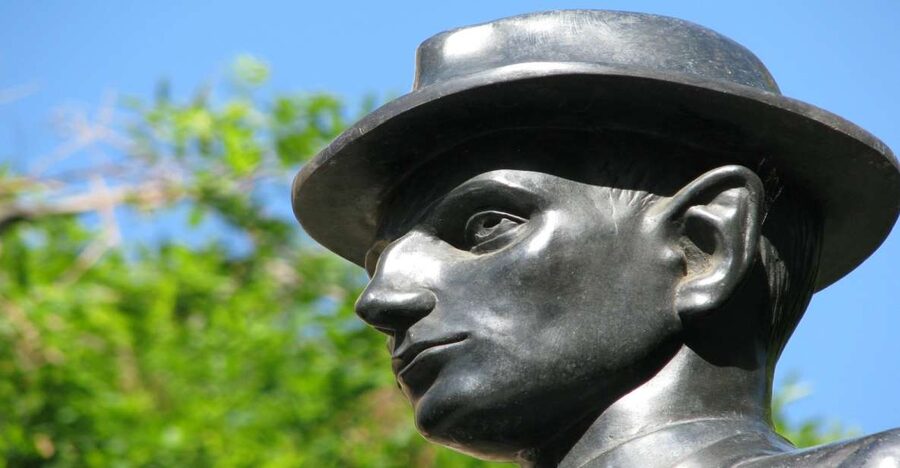
Kafka’s Prague is not all dark courtyards and difficult books. The city’s monuments often treat him with an odd sense of humor.
The Rotating Head is a good example. It turns Kafka’s divided identity and restless mind into a public sculpture. The effect is easier to appreciate after hearing about his life, since the artwork then feels connected to the writer rather than simply being an unusual object in a city square.
The tour ends near the Franz Kafka Monument in front of the Spanish Synagogue. Its surreal design makes a fitting final image. You have moved from Kafka’s family home and university to his Jewish neighborhood, then finish with a monument that interprets his work in visual form.
That ending is especially useful on the four-hour option because the Spanish Synagogue and monument belong together geographically. On the shorter tours, you still reach the monument, but the interior experience is limited by the option you choose.
Is $104 per person good value?
At $104 per person, this is not a bargain walking tour. It is priced as a private experience, and that distinction matters. You are paying for a licensed guide, a private group, language choice, and, on the longer versions, included synagogue admission with priority entry.
The value is strongest if two or more people in your party care about Kafka or Jewish Prague. A private guide can spend time on your questions instead of delivering a fixed speech. The format also avoids the awkward fit of joining a general city walk where Kafka might receive only ten minutes.
The two-hour option offers the lowest time commitment, but it does not include interior tickets to the Old-New or Spanish Synagogue. If you later pay separately to enter those sites, the price advantage may shrink. For that reason, I would compare the options by what you want to see, not just by the number of hours.
The three-hour tour gives the clearest balance of cost, time, and content. The four-hour option delivers the most complete experience, but only if the Spanish Synagogue and its Jewish Museum exhibition are priorities for you.
A five-star score, along with direct praise for the guide’s command of the subject and the appeal of the small format, supports the private-tour price. Still, the quality depends heavily on the guide you receive. Kafka is a subject that benefits from clear explanation, and the tour’s strongest reported quality is precisely the guide’s ability to make the material enjoyable.
Who should choose this tour?
I would recommend this experience to:
- Readers who want to connect Kafka’s books with real places in Prague
- First-time visitors who want a focused walk through Old Town and Josefov
- People interested in Jewish history and culture, not only literary landmarks
- Couples, families, or small groups who prefer a private guide
- Visitors who want a tour in English, German, French, Italian, Spanish, Czech, Polish, or Russian
- Anyone who values a flexible two, three, or four-hour schedule
I would be more cautious if you want a broad Prague history tour. This experience is built around Kafka and the Jewish Quarter, so it will not cover Prague Castle, the Charles Bridge in detail, or the city’s wider art and political history.
I would also skip the two-hour option if synagogue interiors are central to your plans. The route visits important buildings from the outside, but the Old-New Synagogue and Spanish Synagogue tickets depend on the selected duration.
Practical details before you book
The tour has free cancellation up to 24 hours before the start, and you can reserve now and pay later. That is useful if your Prague plans are still shifting.
Starting times vary, so you need to check availability for your preferred day. You should also check your email the day before the tour for important instructions. Meet your guide in front of the World of Franz Kafka at Nám. Franze Kafky 16/1, 110 00 Staré Město.
The basic tour does not include the Kafka Museum. That point is easy to miss if you are planning a full Kafka day. If the museum is important to you, treat it as a separate visit rather than expecting it to be part of this route.
Should you book Kafka’s Prague?
Book it if you want a focused, private walk that connects Kafka’s biography with Prague’s Old Town and Jewish Quarter. The guide’s strong command of Kafka, the small-group setting, and the chance to enter the Old-New Synagogue or both synagogues make this more useful than a simple statue hunt.
Choose the three-hour option for the best balance. It adds the Old-New Synagogue and its direct link to Kafka’s childhood without taking most of your day. Choose four hours if the Spanish Synagogue’s Moorish interior and Jewish Museum exhibition matter as much to you as Kafka himself.
Skip or shorten it if you only want a quick city orientation or have little interest in literature and Jewish history. For the right reader, though, this tour gives Prague a personal voice. Kafka stops being a distant name on a book jacket and becomes a man who studied, worshipped, watched plays, lived near the Astronomical Clock, and walked these same streets.
FAQ
How long does the Kafka in Prague tour last?
You can choose a two-hour, three-hour, or four-hour private tour.
Where does the tour meet?
Meet your guide in front of the World of Franz Kafka at Nám. Franze Kafky 16/1, 110 00 Staré Město, Czechia.
Is the tour private?
Yes. The experience is offered for a private group.
Which languages are available?
The live guide can conduct the tour in Czech, Polish, German, Russian, English, French, Italian, or Spanish.
Does the two-hour tour include synagogue tickets?
No. The two-hour option does not include skip-the-line admission to the Old-New Synagogue or the Spanish Synagogue.
Which option includes the Old-New Synagogue?
The three-hour and four-hour options include skip-the-line tickets to the Old-New Synagogue.
Which option includes the Spanish Synagogue?
Only the four-hour option includes skip-the-line tickets to the Spanish Synagogue.
Is the Kafka Museum included?
No. The Kafka Museum is not included in the listed tour options.
Newest listings in Prague
- World War II 4WD Tour from Prague with Lunch★ 4.4 · 3 reviews
- Prague: Historical Walking Tour with Focus on World War 2★ 4.3 · 12 reviews
- WWII and Communism History in Prague’s Old Town Private Tour★ 5.0 · 4 reviews
- Wroclaw: Giant Mountains & Valley of Palaces Day Tour★ 4.8 · 36 reviews
- Walking tour of Prague in French : Nové Město★ 4.9 · 16 reviews
- Walking tour of Prague in french: Old Town & Charles Bridge★ 4.9 · 62 reviews
- Vltava River Cruise and Private Tour of Prague’ Old Town★ 5.0 · 1 review
- Ultimate Unlimited Beer Pong with Czech Beer★ 4.6 · 5 reviews
Jewish Quarter Tours, compared.
Jewish Quarter Walking Tour with Admission Tickets
Read our review →
Old Town and Jewish Quarter Guided Walking Tour
Read our review →
Jewish Quarter Ticket with optional Audio Guide
Read our review →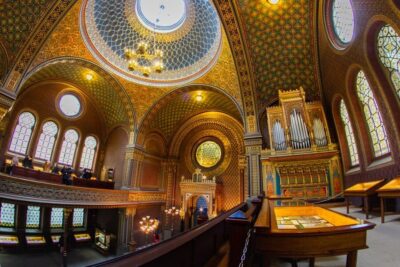
Prague’s TOP Sights – Old Town, Jewish Quarter, Charles Bridge (Tip-based tour)
Read our review →
Prague Old Town New Town and Jewish Quarter Morning Tour
Read our review →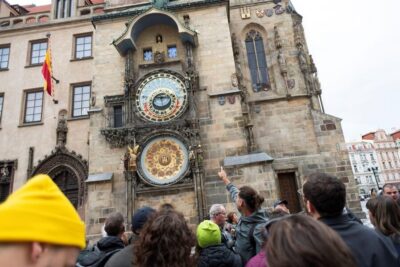
Old Town, Jewish Quarter & Astro Clock Walking Tour
Read our review →
Prague Essential Tour Old Town and Jewish Quarter
Read our review →Browse the lists this tour appears in