
REVIEW · JEWISH QUARTER TOURS
Guided Old Town & Jewish quarter Walking Tour Prague (Tip-based)
Prague reveals itself on foot. This tip-based walk links Charles Bridge, Old Town, and the Jewish Quarter while adding odd little details, local stories, and useful advice for the rest of your stay. I like the three-hour pace, which gives you time for photos, and the chance to spot details you could easily miss alone. The main drawback is the meeting point: Malostranská metro station must not be confused with Malostranské náměstí.
I also like that the route ends at Rudolfinum, where you can catch public transport onward. The listed price is only $3.62 per person, but this is a tip-based experience, so you should plan to reward the guide separately if the tour earns it. Wear solid walking shoes, since Prague’s hard paving can make the miles felt.
In This Review
- Key points to know before you go
- A useful first walk through Prague
- Starting at Malostranská and meeting Prague’s stranger side
- Kampa Park and the approach to Charles Bridge
- The lucky touch at Saint John of Nepomuk
- Klementinum and the Old Town Square
- The Jewish Quarter, with important limits
- Finishing at the Powder Gate and Rudolfinum
- Guides, pace, and what the feedback tells you
- Who gets the most value from this walk
- Should you book the Prague Old Town and Jewish Quarter walk?
- FAQ
- How long does the walking tour last?
- Where does the tour start?
- Where does the tour end?
- Is admission to the sights included?
- How large can the group be?
- Can I cancel for a full refund?
Key points to know before you go
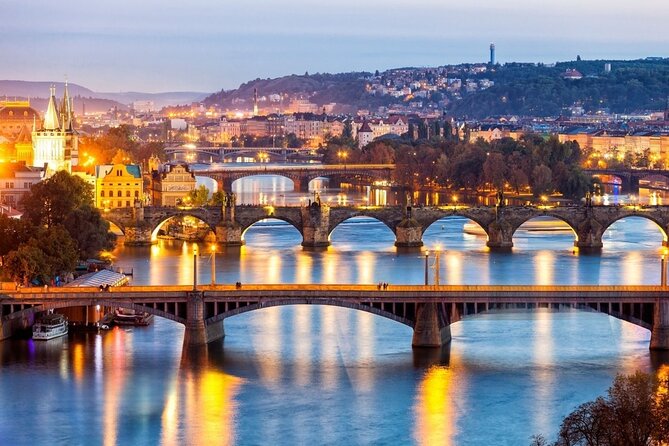
- Charles Bridge gets a full 30 minutes, enough time for statues, views, and photos rather than a quick crossing.
- The tour connects Prague’s major districts, moving from Malá Strana and Kampa to Old Town, the Jewish Quarter, and the Powder Gate.
- David Černý’s peeing sculptures and the narrowest street add some oddball Prague flavor to the usual monuments.
- Several Jewish Quarter sights are viewed from outside, so this is an orientation walk, not a Jewish Museum admission tour.
- Guide quality is a major strength, with Daniil, Vadym, Joan, and other guides praised for humor, facts, and practical recommendations.
- The meeting point needs care, because Malostranská metro station and Malostranské Square are different places.
A useful first walk through Prague
This is a long city walk, about three hours and 15 minutes, with a maximum group size of 25 people. That is large enough to give the tour energy, but small enough that you should usually be able to hear the guide if the group stays together.
The route is useful because Prague’s center can feel like a string of unrelated pretty places at first. One minute you are among modern sculptures, then you are in a quiet park, then on a medieval bridge, and finally in the Old Town and Jewish Quarter. A guide helps connect those pieces.
The tour is offered in English and uses a mobile ticket. Most of the planned stops are free to view, so you are paying mainly for the guide’s time, explanations, and route planning rather than for entry to attractions.
At $3.62 per person, the listed cost is remarkably low. Since the tour is tip-based, treat that figure as the starting cost, not the full measure of value. The right question is not simply how cheap it is, but how much you want to give at the end for the quality of the walk.
More Jewish Quarter walks:
- Prague: Jewish Quarter Walking Tour with Admission Tickets
★ 4.7 · 3,729 reviews - Prague: Old Town and Jewish Quarter Guided Tour in German
★ 4.8 · 3,143 reviews - Prague: Old Town and Jewish Quarter Guided Walking Tour
★ 4.6 · 2,847 reviews
Starting at Malostranská and meeting Prague’s stranger side
The tour begins at Malostranská, on the Malá Strana side of the river. Take the meeting instructions seriously. The operator specifically identifies Malostranská metro station, and confusion with Malostranské náměstí has caused at least one person to miss the tour.
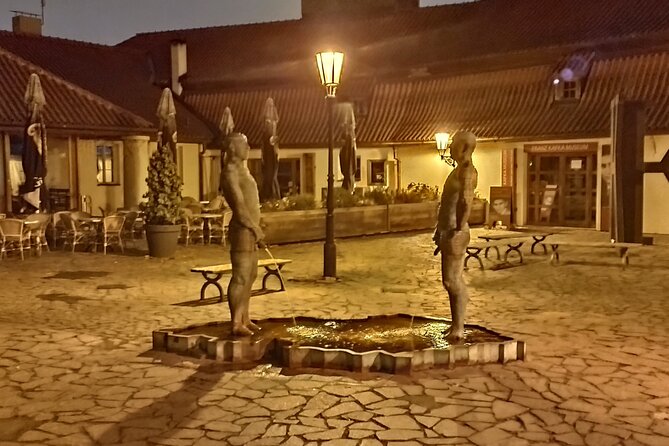
The opening stop is the Urinating Sculptures, the famous work by David Černý. You get about 10 minutes here. It is a quick, humorous introduction to Prague’s modern public art, and it helps set this walk apart from a standard march past churches and palaces.
You then spend about five minutes at Prague’s narrowest street. Traffic lights regulate movement because the passage is so tight. The stop is brief, but it is the sort of unusual detail that guidebooks can easily reduce to one sentence. A guide can explain why it matters as part of the city’s public character.
These opening stops are not major monuments, and that is the point. They make the tour feel less like a checklist. You get a bit of Prague’s playful side before the grander sights take over.
Kampa Park and the approach to Charles Bridge
The walk continues to Kampa Park, known as Little Venice in Prague. Allow about 10 minutes here. The park offers a calmer setting and a change of pace after the small, quirky opening sights.
You might find this part especially useful if you have just arrived in Prague and want help understanding the city’s layout. Kampa sits beside the Vltava, close to Charles Bridge, so the route begins to show how water, islands, lanes, and historic districts fit together.
The main event follows: Charles Bridge. The tour gives this famous crossing about 30 minutes, the longest stop on the route. That extra time matters. Instead of simply crossing from one end to the other, you can look at the 30 statues, hear about the best-known figures, and pause for city views.
The bridge is one of the tour’s best photo locations. From here, you can frame Prague’s rooftops, river, towers, and hills in a single view. Go expecting crowds and a busy public space, but the guide’s explanations give you something to notice beyond the picture in front of you.
The lucky touch at Saint John of Nepomuk
One of the bridge’s statues receives its own five-minute stop: Saint John of Nepomuk. It is the most famous statue on the bridge, and the local tradition says that touching the statue brings luck.
This is a small moment, but it gives the bridge a human touch. You are not just looking at stone figures in a row. You are seeing how a monument becomes part of everyday custom, with people stopping to rub the statue and make their own wish for good fortune.
Do not expect a full study of every sculpture. The guide highlights the best-known ones, which is a sensible choice during a three-hour city walk. If you want detailed art history, you would need a more specialized tour or a return visit with extra time.
More Walking Tours in Prague:
- Prague: 3-Hour Walking Tour of Old Town & Prague Castle
★ 4.7 · 5,696 reviews - Prague: Ghost Walking Tour Where Legends Come To Life
★ 4.4 · 5,253 reviews - Prague Guided Walking Tour and Cruise with Authentic Czech Lunch
★ 5.0 · 3,627 reviews - Prague Ghost and Legend of Old Town Walking Tour
★ 4.5 · 2,630 reviews
Klementinum and the Old Town Square
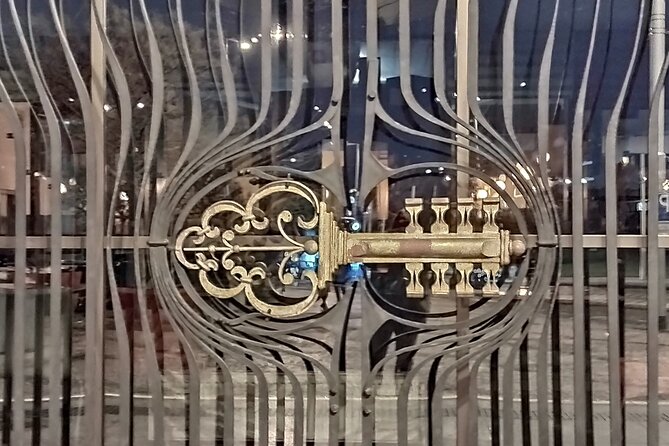
From the bridge, the walk heads toward the Klementinum. The stop lasts about five minutes and views the building from outside. It is described as Prague’s second-biggest building, so the guide’s role here is mainly to give you context and point out what you are seeing.
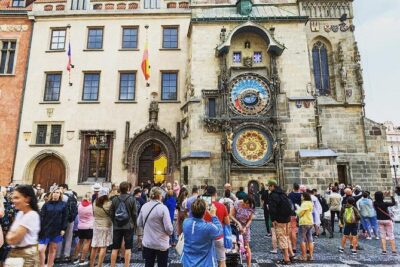
The route then reaches Staré Město, Prague’s Old Town. You spend about 10 minutes looking at the main buildings around Old Town Square. This is the part of the walk where the city’s grand public face comes forward: broad civic spaces, ornate façades, and the famous collection of buildings that make Prague feel larger than its compact center suggests.
The Old Town Square can be hard to read on your own. You may see a church, a town hall, a palace front, and several architectural styles without knowing which detail deserves your attention. A guide gives you a basic map in words, which is valuable if you plan to return later.
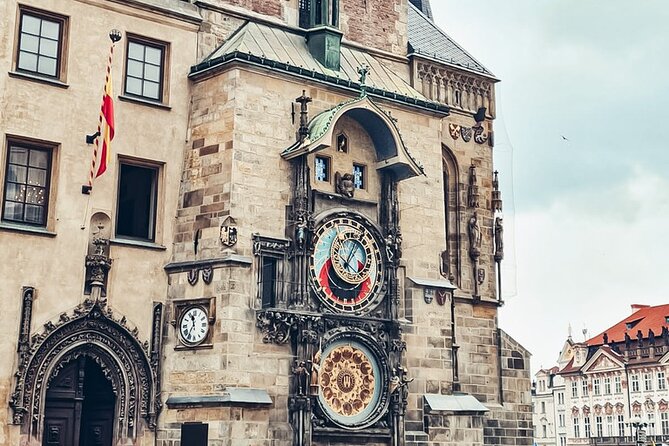
The Astronomical Clock gets another five-minute stop. The tour views Prague’s clock, described as the oldest of its kind in the world, from outside. The stop is short, so it is best to think of it as an introduction rather than a full explanation of the clock’s figures, mechanisms, and schedule.
The Church of Our Lady before Týn is also viewed from outside, with about five minutes for the stop. Its twin towers are among the most recognizable sights around the square. You may want to return when you have more time, especially if the guide’s short explanation leaves you curious.
The Jewish Quarter, with important limits
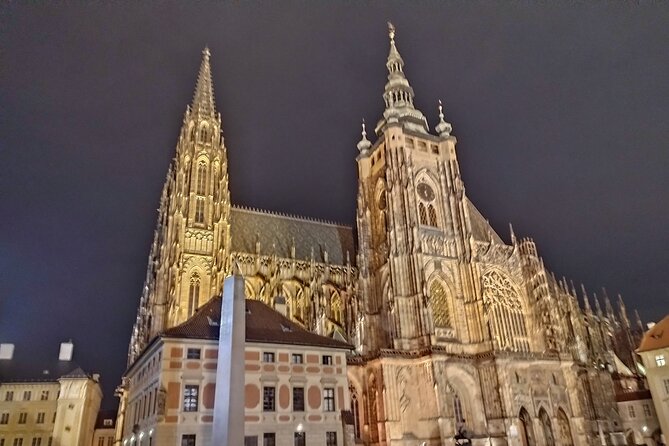
The route continues into Josefov, Prague’s Jewish Quarter. This is a meaningful part of the walk, but you should understand what is included. The oldest synagogue is viewed from outside, and the Spanish Synagogue is also an exterior stop lasting about five minutes.
That means you do not receive admission to the Jewish Museum complex or an interior visit as part of this experience. The walk gives you a street-level introduction, points out major buildings, and places the quarter within the wider story of central Prague. It does not replace a dedicated museum visit.
This distinction matters when you decide how to spend your time. If you want the interiors, exhibitions, cemetery, and fuller historical treatment, plan a separate visit. If you mainly want to understand where the Jewish Quarter is and which buildings to investigate later, this route can be a practical first look.
The stop at the Spanish Synagogue also leads to the statue of Franz Kafka by Jaroslav Róna. The sculpture is near the synagogue and receives about five minutes. It adds another modern, unusual image to a route already marked by Černý’s work.
That mix is one of the tour’s better qualities. Prague is not presented only as a medieval postcard. You see monuments, religious buildings, public art, and literary references in one continuous walk.
Finishing at the Powder Gate and Rudolfinum
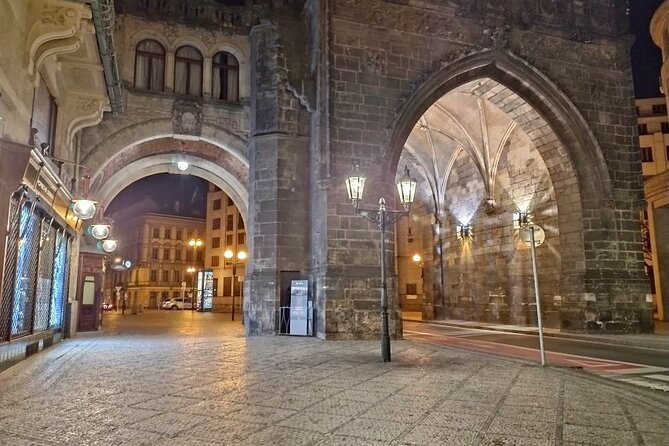
The final listed sight is the Powder Gate, which marks the border between Prague’s Old Town and New Town. The stop lasts about five minutes. It is a useful closing point because it helps you understand how the historic center is divided.
The tour ends at Rudolfinum on Alšovo nábřeží. This is a practical finish. You can use the nearby metro, bus, or tram connections to return to your hotel or continue exploring.
The end point also gives you a good choice. You can stop for the day, visit another sight nearby, or use the transport network instead of retracing the entire route. A tour that ends at a useful transport location is easier to fit into a busy Prague schedule.
Guides, pace, and what the feedback tells you
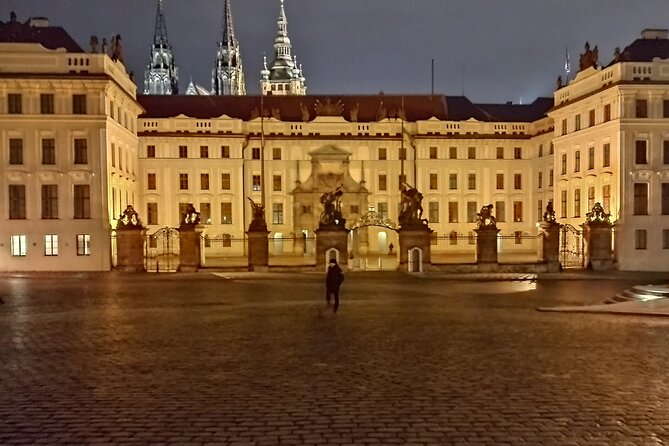
The strongest part of this experience appears to be the guiding. Daniil is praised for being well informed and for making plenty of stops. Vadym is described as funny, interactive, and good at working with a group. Joan receives praise for a relaxed manner, useful recommendations, and a reassuring approach to the city.
That pattern matters more than one polished description. A walking tour depends heavily on the person holding the group together. The route has many short stops, so a guide who can explain clearly, keep the pace comfortable, and add a little humor will make a major difference.
The pace is described as slow and pleasant rather than rushed. That suits you if you want time for photos and small explanations. It may feel less suitable if you prefer to cover ground quickly or spend long periods inside major attractions.
One person described the tour as a good way to see what is worth returning to later. I think that is the right way to use it. You get a broad first look, then choose which places deserve your own afternoon.
The hard paving is the practical catch. Wear sneakers or another pair of supportive shoes. Three hours and 15 minutes on Prague streets can be tiring, even though the route itself is not presented as strenuous.
Who gets the most value from this walk
I would recommend this tour most strongly for a first visit to Prague. It gives you a usable orientation to Malá Strana, Kampa, Charles Bridge, Old Town, Josefov, and the edge of New Town in one outing.
It also suits you if you like a mix of famous sights and unusual stops. The narrowest street, the Černý sculptures, the Kafka statue, and the Saint John of Nepomuk tradition keep the walk from feeling like a list of formal buildings.
Families and mixed-age groups may appreciate the short stops. You are rarely standing in one place for a very long time, and the route includes visual details that can hold attention better than a long lecture.
You may want another option if your main goal is detailed Jewish history, church interiors, or museum access. Most of the listed stops are exterior views, so this tour works best as an introduction.
The maximum group size is 25. That is not a private walk, and you should not expect the intimacy of a one-to-one guide. Still, the size is limited enough to keep the experience manageable if the guide gives clear instructions.
Service animals are allowed, and the route is near public transportation. The booking confirmation arrives at the time of booking. Free cancellation is available up to 24 hours before the local start time. After that point, the amount paid is not refunded, and late changes are not accepted.
Should you book the Prague Old Town and Jewish Quarter walk?
Book it if you want a low-cost, broad introduction to central Prague with a relaxed pace and a guide who can fill in the details. The 4.7 rating from 69 ratings and 93 percent recommendation figure support the idea that the experience usually delivers what it promises.
I especially like it for your first full day in the city. The route helps you decide where to return, and the guide can offer suggestions for the rest of your stay. Just confirm that you are going to Malostranská metro station, wear good shoes, and remember that the $3.62 price belongs to a tip-based format.
Skip it if you want entry into the Jewish Museum, extensive interior visits, or a tightly focused specialist tour. For everyone else, it is a sensible way to get your Prague bearings without spending much, and it leaves you at Rudolfinum with public transport close at hand.
FAQ
How long does the walking tour last?
The tour lasts approximately three hours and 15 minutes.
Where does the tour start?
It starts at Malostranská, Prague 1. The meeting information identifies Malostranská metro station, not Malostranské Square.
Where does the tour end?
The tour ends at Rudolfinum, at Alšovo nábř. 79/12 in Prague’s Old Town. Metro, bus, and tram services are available nearby.
Is admission to the sights included?
The listed stops are free exterior visits. The tour does not include admission to the Jewish Museum or interior visits to the synagogues, churches, Klementinum, or other buildings.
How large can the group be?
The maximum group size is 25 people.
Can I cancel for a full refund?
Yes. You can cancel at least 24 hours before the experience’s local start time for a full refund. Cancellations or changes made less than 24 hours in advance are not accepted for a refund.
Newest listings in Prague
- World War II 4WD Tour from Prague with Lunch★ 4.4 · 3 reviews
- Wroclaw: Giant Mountains & Valley of Palaces Day Tour★ 4.8 · 36 reviews
- Prague: Historical Walking Tour with Focus on World War 2★ 4.3 · 12 reviews
- WWII and Communism History in Prague’s Old Town Private Tour★ 5.0 · 4 reviews
- Walking tour of Prague in French : Nové Město★ 4.9 · 16 reviews
- Walking tour of Prague in french: Old Town & Charles Bridge★ 4.9 · 62 reviews
- Vltava River Cruise and Private Tour of Prague’ Old Town★ 5.0 · 1 review
- Ultimate Unlimited Beer Pong with Czech Beer★ 4.6 · 5 reviews
Jewish Quarter Tours, compared.
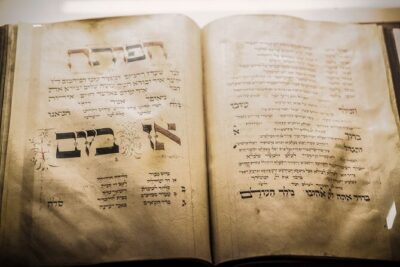
Jewish Quarter Walking Tour with Admission Tickets
Read our review →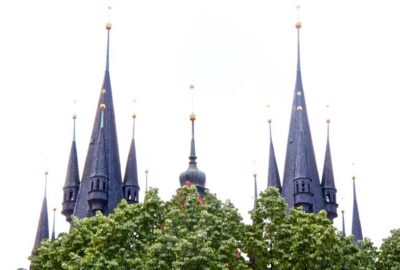
Old Town and Jewish Quarter Guided Walking Tour
Read our review →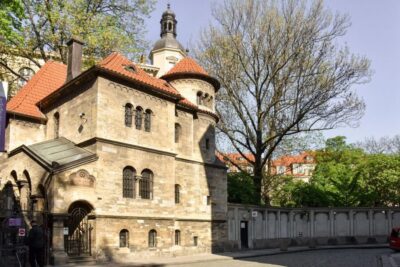
Jewish Quarter Ticket with optional Audio Guide
Read our review →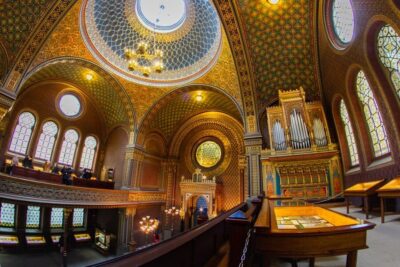
Prague’s TOP Sights – Old Town, Jewish Quarter, Charles Bridge (Tip-based tour)
Read our review →
Prague Old Town New Town and Jewish Quarter Morning Tour
Read our review →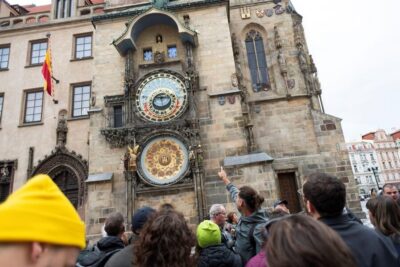
Old Town, Jewish Quarter & Astro Clock Walking Tour
Read our review →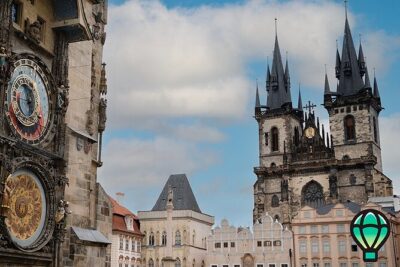
Prague Essential Tour Old Town and Jewish Quarter
Read our review →Browse the lists this tour appears in