
REVIEW · TEREZIN MEMORIAL TOURS
From Prague: Tour of Terezin Concentration Camp
Terezín asks you to look closely. This five-hour trip from Prague connects the Jewish Ghetto Museum, cemetery, crematorium, and Small Fortress prison in one carefully arranged day. I like the useful historical briefing during the drive and the chance to see both the former ghetto and the Gestapo prison. The main drawback is time: several visitors wanted longer in the museum, especially the section about children.
The tour costs $66 per person and includes transport, admission, a live guide, and a bonus ticket to Prague’s Kingdom of Railways. That is good value if you want the sites explained in context, though the subject is painful and the schedule can feel tight. Guides such as Stefan, Sofia, Alex, Romica, and Jacob have been praised for handling this difficult material with care, clarity, and respect.
In This Review
- Key points to know before booking
- Why Terezín belongs on a Prague itinerary
- Leaving Prague from Na Příkopě 23
- The Large Fortress and the Jewish Ghetto Museum
- The propaganda film and the 1944 Red Cross visit
- The National Jewish Cemetery and crematorium
- Crossing to the Small Fortress prison
- Guides, languages, and the tone of the day
- What $66 includes, and what it does not
- Who should take this tour?
- Should you book the Terezín tour from Prague?
- FAQ
- How long is the Terezín tour from Prague?
- Where does the tour leave from?
- Which languages are available?
- Is the crematorium open every day?
- What is included in the $66 price?
- Can I cancel the booking?
Key points to know before booking
- The drive is part of the lesson: The roughly one-hour ride from Prague includes background on the Czech Republic, both world wars, and Terezín.
- You visit two very different sites: The Large Fortress tells the story of the Jewish ghetto, while the Small Fortress was a Gestapo prison.
- The children’s exhibits are especially difficult: Set aside your attention for the museum displays about children and separated families.
- The day is tightly scheduled: You see a great deal in five hours, but you may want more time at the museum and Small Fortress.
- The tour can be bilingual: English, Italian, German, and Spanish are offered, and a departure may combine two languages.
- Saturday has one limitation: The crematorium is closed on Saturdays.
Why Terezín belongs on a Prague itinerary
Prague has no shortage of beautiful streets, grand churches, and cheerful cafés. Terezín offers something very different. It is a place for understanding how Nazi persecution worked in occupied Czech lands, not only through imprisonment and death, but also through forced movement, family separation, propaganda, and daily control.
Terezín was used as a Jewish ghetto and holding camp for people brought from across Europe. The Nazis also used it to create a false picture of humane treatment during a 1944 Red Cross visit. That contrast is central to the visit. The town and its buildings were presented as evidence of decent conditions, while prisoners faced overcrowding, fear, hunger, illness, and the constant threat of deportation.
The experience is not designed as light sightseeing. You should expect a solemn day. Several guides have been praised for keeping the tone respectful while still making the subject understandable. Jacob, for example, was noted for explaining the material carefully, answering questions, allowing time for photographs and restrooms, and helping the group keep to schedule.
I think the site is most useful when you want more than dates and names. Walking through the buildings, seeing the prison spaces, and reading personal stories can change your understanding of the Holocaust in a way that a short museum visit in Prague cannot.
More Terezin memorial visits:
- From Prague: Terezin Concentration Camp Guided Tour w/ Audio
★ 4.5 · 1,959 reviews - Terezin Concentration Camp Day Tour from Prague
★ 4.0 · 1,007 reviews - From Prague: Terezin Concentration Camp Tour
★ 3.7 · 573 reviews
Leaving Prague from Na Příkopě 23
The meeting point is Na Příkopě 23, a central Prague address that is easy to build into a day of sightseeing. You leave by air-conditioned bus or minibus, then spend about an hour reaching Terezín. Hotel pickup and drop-off are not included, so plan your route to the departure point in advance.
The ride matters. A good guide uses it to explain the Nazi occupation, the Czech Republic’s wartime experience, and Terezín’s place in the wider story of World War II. One particularly useful comment from the tour was that nearly the whole drive was filled with background information. That gives you a framework before arriving, rather than leaving you to interpret every room without context.
Transport has generally been praised for being clean, comfortable, punctual, and well organized. There was one complaint about an unpleasant smell on the bus, so standards may vary by vehicle or day. Another departure left late, which created a rushed walk for two people using walking sticks. Those points are worth keeping in mind if you have mobility concerns or a fixed appointment after returning to Prague.
The ride back also takes about an hour. The advertised total duration is five hours, including about three hours at Terezín and roughly two hours on the road. You return to Na Příkopě 23 rather than ending at the site.
The Large Fortress and the Jewish Ghetto Museum
The first major part of the visit takes place at the Large Fortress, where the museum is housed in a former all-boys school. This is not the same kind of site as the Small Fortress. Here, the focus is on the Jewish ghetto, the people held there, and the way the Nazis manipulated Terezín for propaganda.
The museum gives the visit its human center. Instead of seeing only walls and empty rooms, you encounter documents, photographs, and personal stories showing how people were transported to Terezín and how their lives were controlled once they arrived. The section about children is especially affecting. It shows the cruelty of separating families and reminds you that the victims were not an anonymous crowd, but mothers, fathers, sons, daughters, and schoolchildren.
You need to pay attention here because the museum contains more material than the schedule allows you to absorb comfortably. I would have preferred another thirty minutes, and several people felt the same. The children’s section in particular can feel rushed, which is unfortunate because it is one of the most powerful parts of the museum.
This is the clearest weakness of the half-day format. The tour gives you access and a guide, but you cannot stop at every display or read every panel at length. If you are especially interested in Jewish history, wartime Europe, or Holocaust education, you may leave wishing for more independent time.
Still, the organized visit has a real advantage. Your guide points out the meaning behind the buildings and links the museum to the other parts of Terezín. Without that connection, it would be easy to see an old school, a cemetery, and a prison as separate stops. The guide helps you understand how they formed one system.
The propaganda film and the 1944 Red Cross visit
You also watch History of Terezin, in Czech with English subtitles. It is a useful part of the program because it shows how the Nazis tried to control the outside world’s view of the ghetto.
The 1944 Red Cross visit was used for propaganda. Terezín was presented as if prisoners enjoyed a normal community life, with cultural activity and acceptable living conditions. The film helps expose the gap between that performance and the reality of imprisonment.
Because the film is subtitled, you need to stay close enough to read the screen clearly. The schedule includes it, but the exact amount of time available can depend on the pace of the day. One guide, Sofia, received special praise for making sure the group got to see the propaganda film while keeping everyone on schedule.
This is one reason a guided tour is valuable. The film can be misleading if you watch it without explanation. With context, you can see it as part of the machinery of Nazi deception rather than as a simple historical documentary.
Or spend the afternoon on something completely different:
- Prague: 50-Minute Sightseeing Evening Cruise
★ 4.2 · 33,780 reviews - Prague: Medieval Dinner with Unlimited Drinks
★ 4.4 · 19,847 reviews - Prague: Skip-the-line Castle Ticket and Optional AudioGuide
★ 4.3 · 11,121 reviews - Prague: Castle Tour with Local Guide and Entry Ticket
★ 4.6 · 10,422 reviews
The National Jewish Cemetery and crematorium
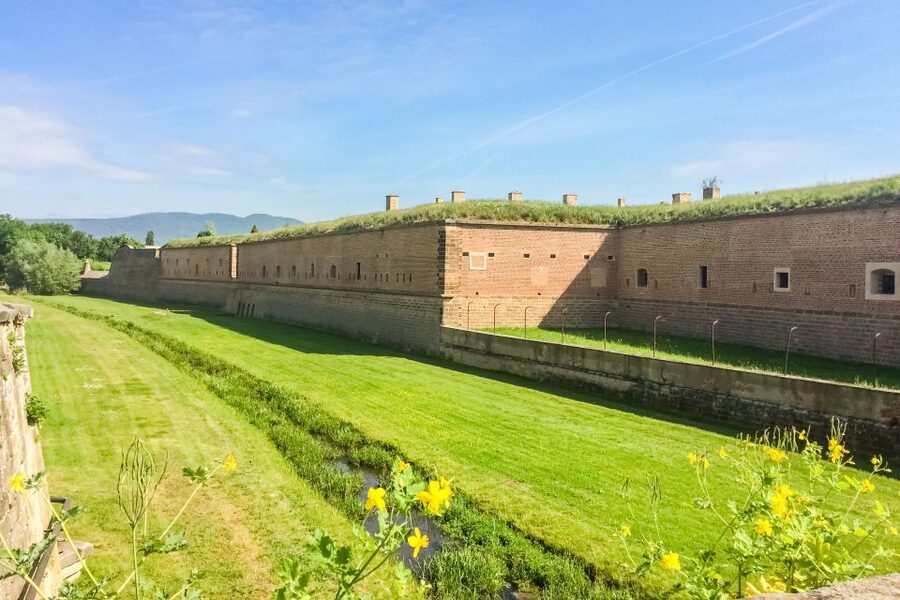
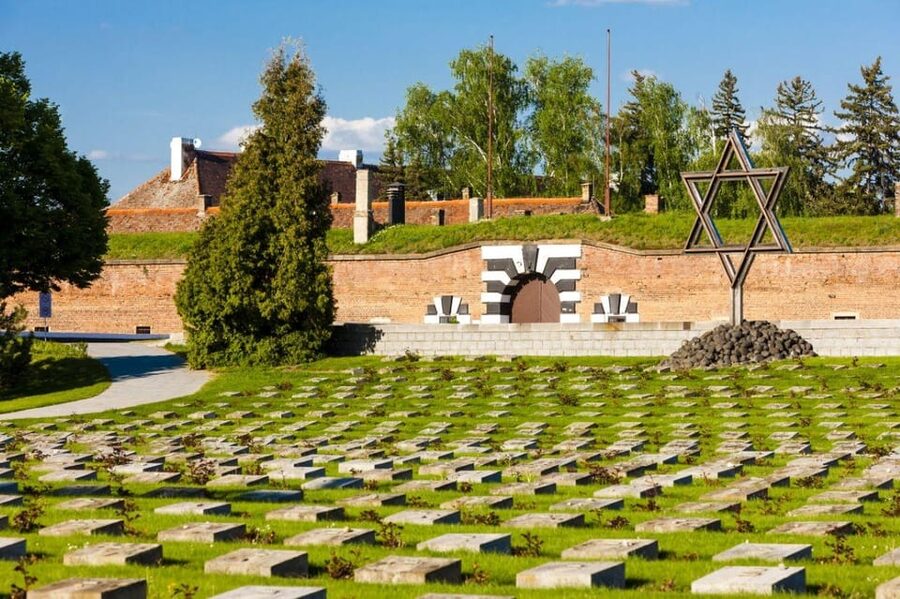
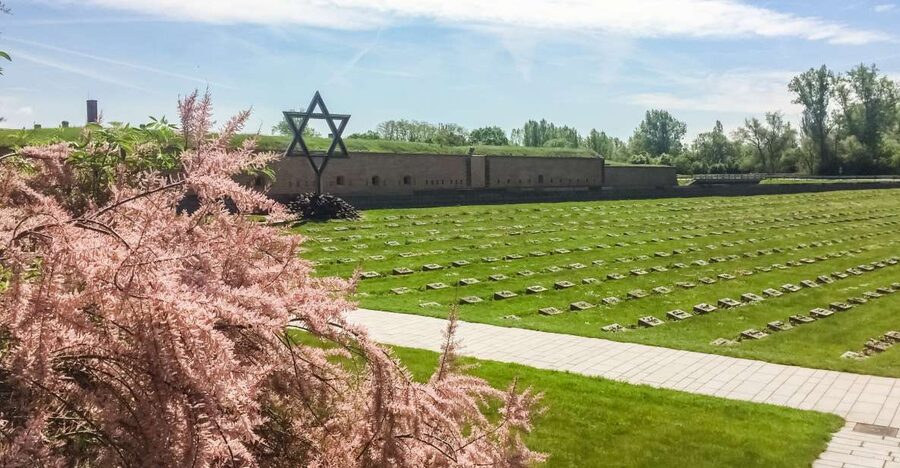
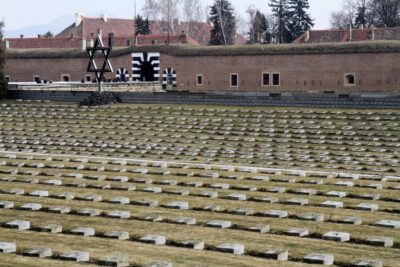
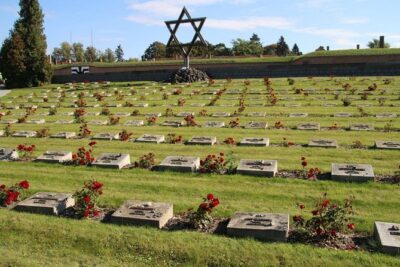
After the museum, the route continues to the National Jewish Cemetery and crematorium. The cemetery provides a quiet, direct reminder of the number of people who died under the conditions imposed at Terezín.
This stop is less about a long lecture and more about space, names, and scale. After the enclosed museum rooms, stepping outside changes the pace. You have a chance to take in what you have already seen, though the visit remains tightly organized.
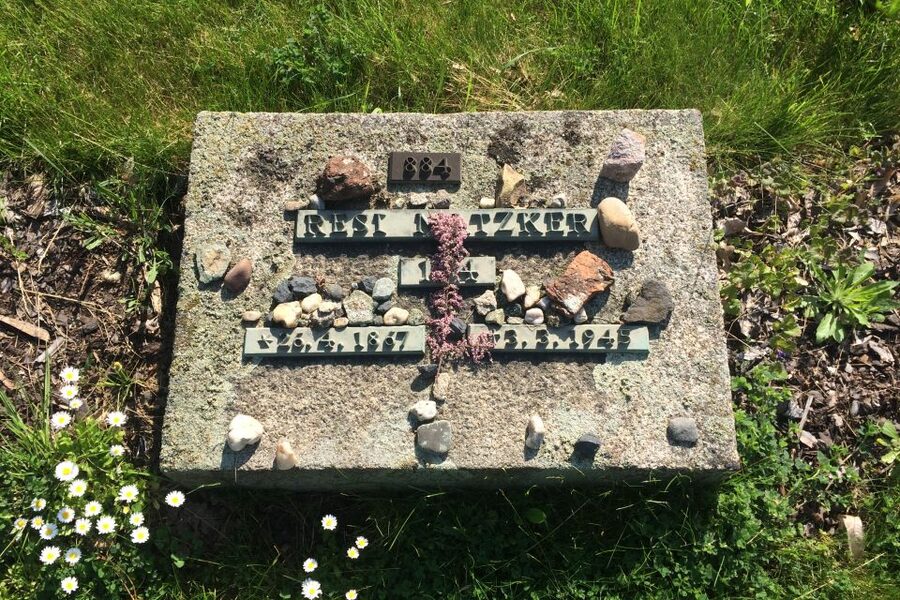
The crematorium is included in the normal program, but it is closed on Saturdays. If seeing this site matters to you, choose another day. The supplied information does not indicate a replacement visit, so do not assume that another stop will fill the gap.
The cemetery and crematorium also help explain that Terezín was not merely a temporary transit point. It was a place where people suffered and died, even though many were later deported elsewhere. This distinction is important for understanding the camp’s role in the Nazi system.
Crossing to the Small Fortress prison
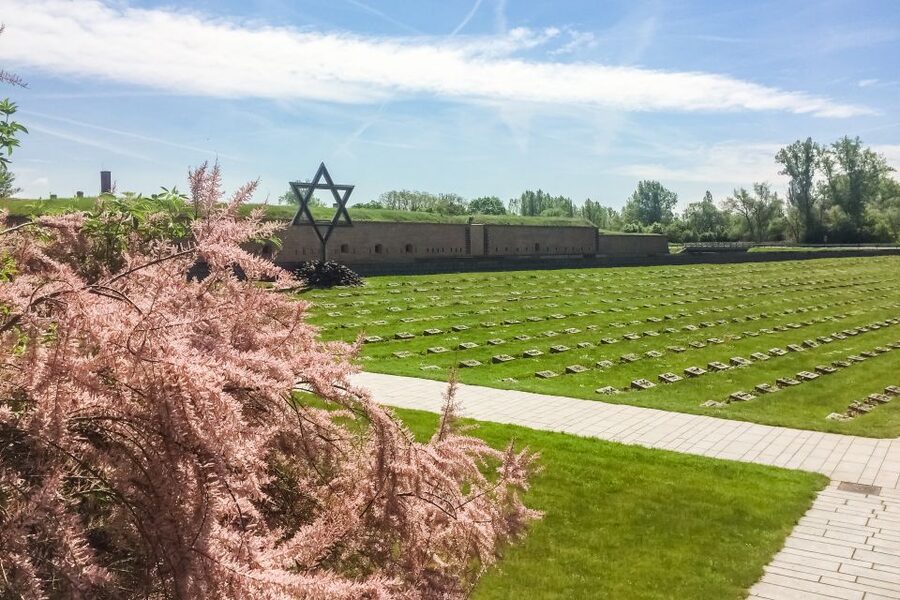
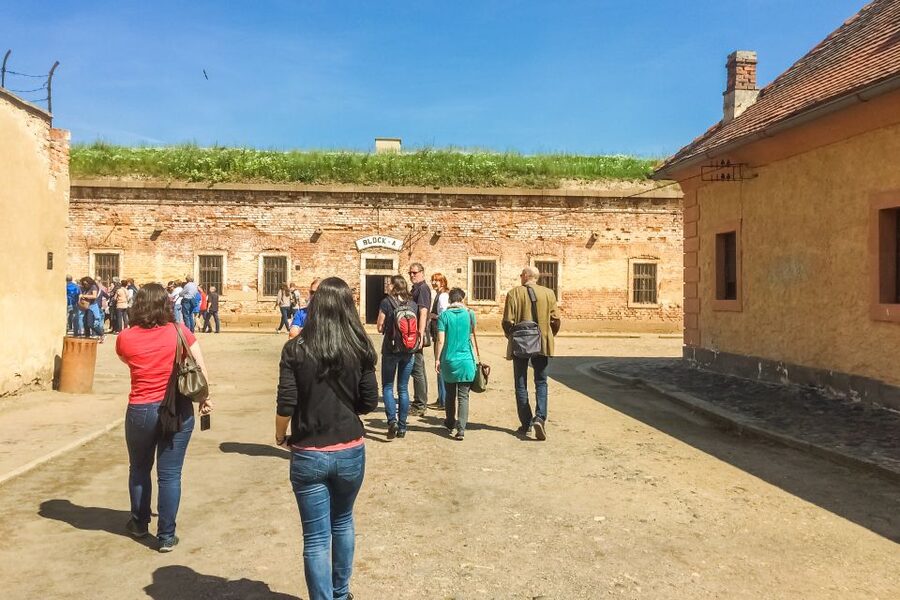
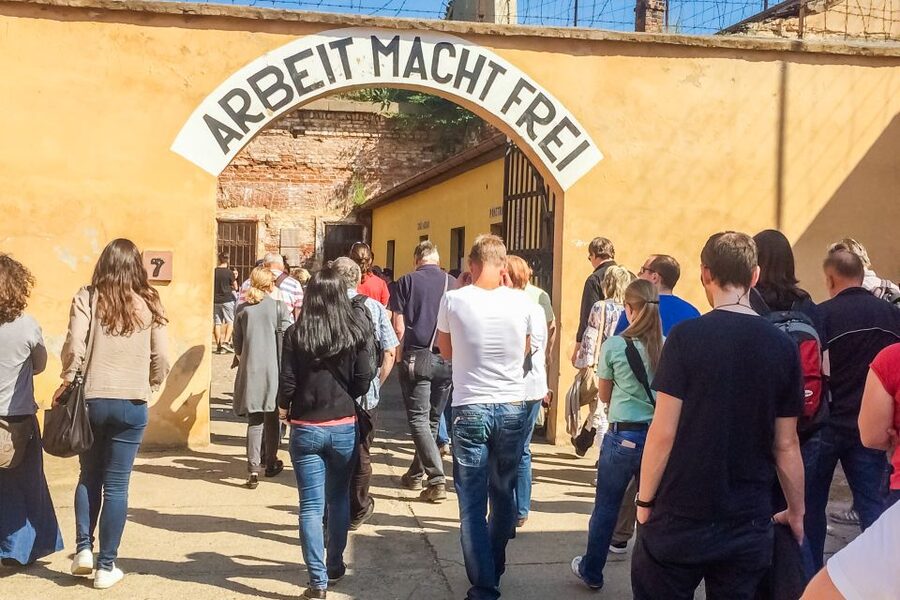
The Small Fortress is the most physical and immediate part of the visit. It functioned as a Gestapo prison, and the tour takes you through cramped cells and other prison areas. Here, you see the conditions imposed on prisoners held by the German secret police.
One unusual detail is the cell associated with Gavrilo Princip, the assassin of Archduke Franz Ferdinand. His imprisonment predates the Nazi period, but the cell adds another layer to the fortress’s long use as a place of confinement. The tour then turns to the Nazi era, including the firing squads organized by the Gestapo.
The Small Fortress guide often makes a strong impression. Visitors have singled out the local guides for explaining the conditions clearly and speaking movingly about the hardships endured by prisoners, including children. At times, the local guide may speak alongside the main guide in two languages, so listen carefully and stay with the group.
The prison can feel rushed because it contains many rooms and details. One practical suggestion was to add another thirty minutes here, and I understand why. You may want time to look around without being hurried from one section to the next. On the other hand, the compressed schedule means you return to Prague in the afternoon rather than losing the entire day.
The site is not designed for casual wandering. Floors and paths may be uneven, and the route involves walking between areas. One person using a walking bike received thoughtful help from both the guide and driver, but another pair using walking sticks found the pace difficult after a late departure. If you have limited mobility, tell the operator before booking and ask how much walking and standing to expect.
Guides, languages, and the tone of the day
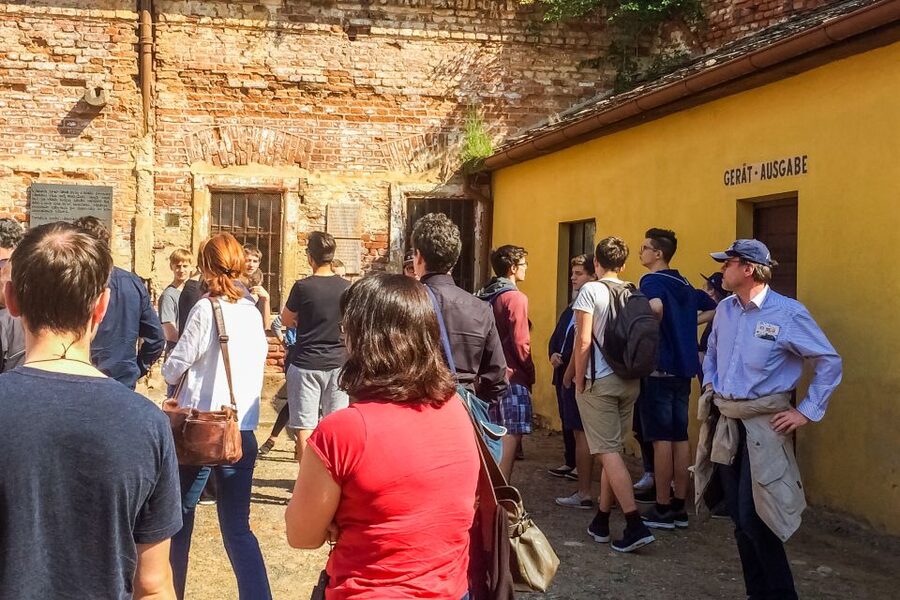
The guide can make or break a Terezín visit. The subject is too serious for a rushed reading of facts, yet too complex for vague storytelling. The best guides combine dates and explanations with attention to the people who lived through the events.
The strongest praise has gone to guides including Stefan, Sofia, Alex, Romica, Jacob, and Remy. Stefan was described as precise, friendly, and ready to answer questions. Remy was praised for making a grim subject feel personal and understandable. Romica and Sofia handled bilingual groups with patience, while Jacob kept the day moving without making the experience feel mechanical.
The available languages are English, Italian, German, and Spanish. The tour can be bilingual, so you may hear explanations in two languages. That can lengthen some stops, but it also allows mixed-language groups to travel together.
Guide quality can vary from one departure to another. One person found the main guide difficult to understand, even though the Small Fortress guide was excellent. Another wished the local guide had spoken louder. If you have hearing difficulties, stand near the guide and ask to be included at the front of the group.
The tone is respectful rather than theatrical. Appropriate humor may occasionally appear to relieve tension, but the focus remains on the victims and the facts. That balance matters. You want a guide who can keep the group attentive without turning suffering into a spectacle.
What $66 includes, and what it does not
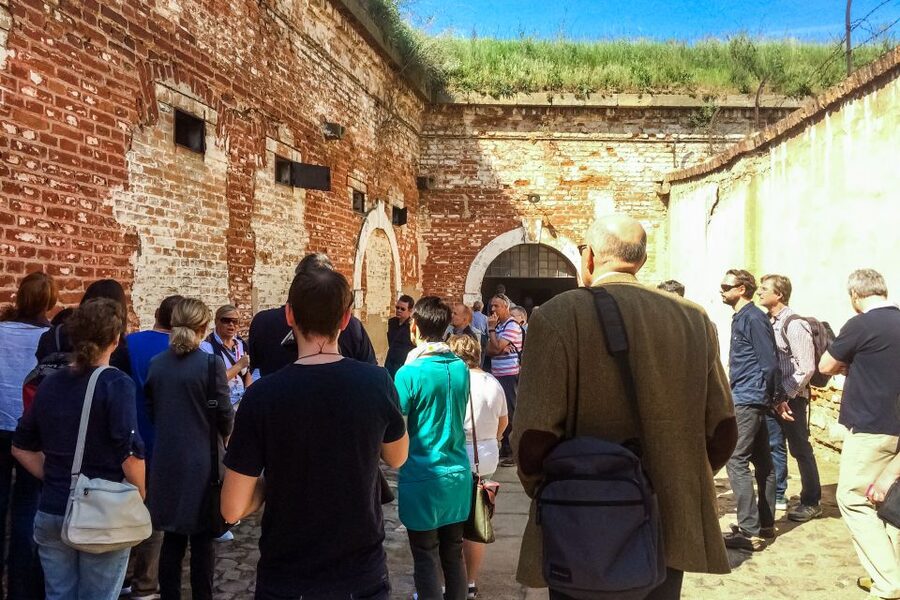
At $66 per person, this is a fair price for a five-hour trip from Prague. Your fee covers the return ride, entry to the Large Fortress, museum admission, entry to the Small Fortress prison, the guided tour, and a live guide.
You are also given a ticket to Prague’s Kingdom of Railways, which can be used at any time after the tour. This is a modest but useful extra, especially for families or anyone looking for a lighter activity after a heavy day.
Food and drinks are not included. The tour information does not provide a meal stop, so do not plan on a full lunch being part of the program. You should also remember that the price is buying convenience as much as admission. Reaching four related places without organized transport would be difficult, and the guide’s explanation during the drive adds real value.
The tradeoff is independent time. You pay for an efficient overview rather than a leisurely day at Terezín. If you want to read every museum panel, photograph each building, or explore the town at your own pace, an independent visit with more time may suit you better. If you want the main sites connected by transport and explanation, $66 is reasonable.
Free cancellation is available up to 24 hours before departure, and you can reserve now and pay later. Check the starting time when booking, since the exact departure schedule can vary.
Who should take this tour?
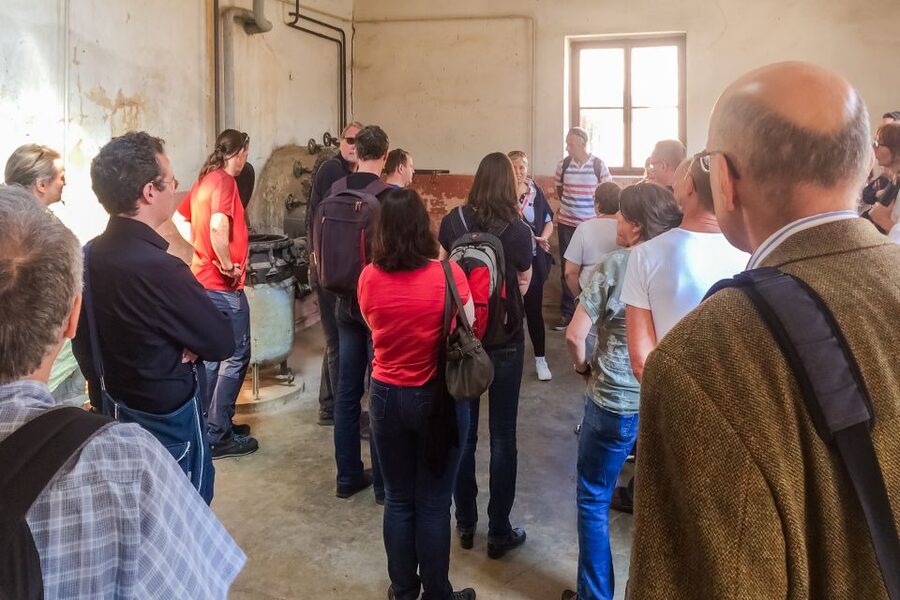
I would recommend this trip to anyone with a serious interest in World War II, the Holocaust, Jewish history, or the Czech experience under Nazi rule. It is also useful if you want a difficult but important counterpoint to Prague’s more decorative sights.
The five-hour length works well if you want to return to Prague in the afternoon. One person praised the tour for covering the main sites without taking the whole day, leaving time for more city sightseeing.
Families should decide carefully based on the age and sensitivity of children in the group. The museum’s children’s section is powerful and upsetting. The same is true for anyone who finds prison spaces or Holocaust sites emotionally overwhelming.
I would not choose this as a casual outing between restaurants and shopping. You need to give the subject your full attention. Wear practical shoes, arrive at Na Příkopě 23 on time, and leave breathing room after your return rather than scheduling an important appointment immediately afterward.
Should you book the Terezín tour from Prague?
Book it if you want a well-organized introduction to Terezín, especially if you value context, transport, and a guide who can handle painful material with care. The combination of the ghetto museum, propaganda film, cemetery, crematorium, and Gestapo prison gives you a broad picture in one day.
Think twice if you dislike fixed schedules or want hours of quiet museum time. The most consistent weakness is the rushed pace, particularly in the museum and children’s exhibits. Also avoid Saturday if the crematorium is essential to your visit.
For most people with a genuine interest in this period, I think the tour earns its place on a Prague itinerary. It is sad, demanding, and sometimes difficult to process. That is also why it matters.
FAQ
How long is the Terezín tour from Prague?
The experience lasts five hours. The schedule includes about one hour by bus to Terezín, about three hours for the guided visit, and about one hour back to Prague.
Where does the tour leave from?
The departure point is Na Příkopě 23 in Prague. Hotel pickup and drop-off are not included.
Which languages are available?
Live guides are available in English, Italian, German, and Spanish. The tour can be bilingual, so some departures may use two languages.
Is the crematorium open every day?
No. The crematorium is closed on Saturdays. Choose another day if this stop is important to you.
What is included in the $66 price?
The price includes entry to the Large Fortress, the museum, the Small Fortress prison, the guided tour, the live guide, and a ticket to Prague’s Kingdom of Railways for use after the tour.
Can I cancel the booking?
You can cancel up to 24 hours in advance for a full refund. A reserve now and pay later option is also available.
Newest listings in Czechia
- World War II 4WD Tour from Prague with Lunch★ 4.4 · 3 reviews
- Wroclaw to Prague: 2-in-1 (Private Transfer + Country Tour)★ 5.0 · 4 reviews
- Prague: Historical Walking Tour with Focus on World War 2★ 4.3 · 12 reviews
- WWII and Communism History in Prague’s Old Town Private Tour★ 5.0 · 4 reviews
- Wroclaw: Giant Mountains & Valley of Palaces Day Tour★ 4.8 · 36 reviews
- Walking tour of Prague in French : Nové Město★ 4.9 · 16 reviews
- Walking tour of Prague in french: Old Town & Charles Bridge★ 4.9 · 62 reviews
- Vltava River Cruise and Private Tour of Prague’ Old Town★ 5.0 · 1 review
Terezin Memorial Tours, compared.
Terezin Concentration Camp Guided Tour w/ Audio
Read our review →
Terezin Concentration Camp Day Tour from Prague
Read our review →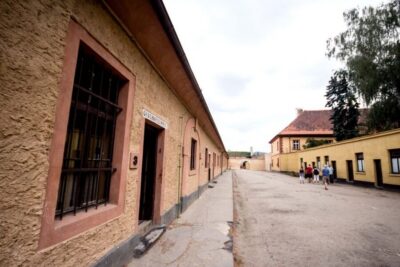
Terezin & Bohemian Switzerland from Prague: Bastei, Narnia & Café
Read our review →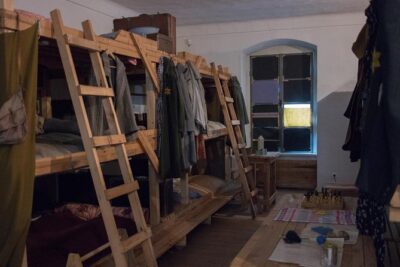
Terezin Concentration Camp Day Tour Including Admission From Prague
Read our review →
Terezin In-Depth Holocaust Tour From Prague’s Center (max 7 pax)
Read our review →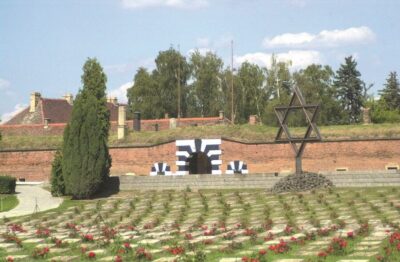
Browse the lists this tour appears in