
REVIEW · CESKY KRUMLOV DAY TRIPS
Český Krumlov 20th century tour
The pretty town has a darker story. This two-hour private walk looks past Český Krumlov’s Baroque façades to its 20th century troubles, including Adolf Hitler’s prewar visit, the fate of local Jews, the Nazi period, World War II, and the Soviet invasion of 1968. It gives you a useful counterpoint to the town’s usual castle-and-postcard sightseeing.
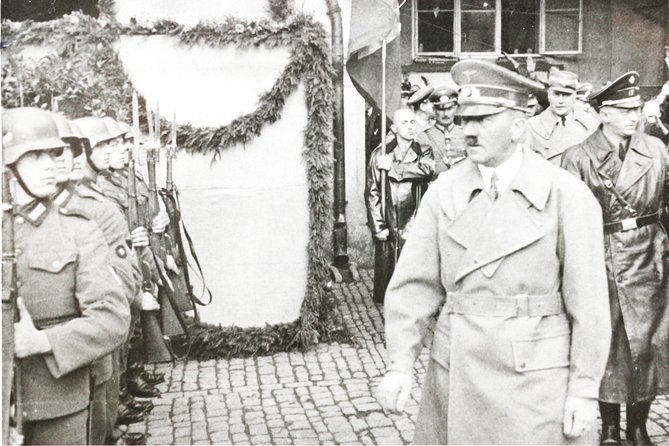
I like the private group format, which keeps the tour focused on your questions, and I like the use of black and white photographs to show how familiar places looked during major events. Guide Jan also receives strong praise for careful research and for handling a wide range of questions. The main consideration is that this is a serious history walk, not a light sightseeing stroll, and some of the details may feel heavy.
In This Review
- Key points to know
- Why Český Krumlov’s 20th Century Story Matters
- Meeting at Náměstí Svornosti
- Stop One: Forty Minutes in the Historic Center
- Stop Two: Fifteen Minutes at Český Krumlov Synagogue
- Stop Three: Ten Minutes on Hitler’s Arrival
- Stop Four: Twenty Minutes at Český Krumlov Castle
- Stop Five: Fifteen Minutes at Budějovická Gate
- Historic Photographs Make the Walk More Concrete
- Jan’s Guiding Style and the Private Format
- Who Should Book This Two-Hour Walk?
- Is the Český Krumlov 20th Century Tour Worth It?
- FAQ
- How long is the Český Krumlov 20th Century Tour?
- Where does the tour start?
- Where does the tour end?
- Is this a private tour?
- What is included in the price?
- What historical subjects does the tour cover?
- Can I cancel for a full refund?
- What happens if the weather is poor?
Key points to know
- A rare focus on recent history: The walk deals with the 20th century, a period often missed on standard Český Krumlov tours.
- Five stops across the old town: You visit the historic center, synagogue, castle area, and Budějovická Gate.
- Private for up to 15 people: Your own group takes part, rather than joining a larger public crowd.
- Photographs bring the past into view: Jan uses historic images to compare past events with the streets around you.
- Good value for a small group: At $90.76 per group, the price can work well when shared by several people.
- Weather and timing matter: The tour is outdoors, lasts about two hours, and may be changed or canceled in poor weather.
Why Český Krumlov’s 20th Century Story Matters
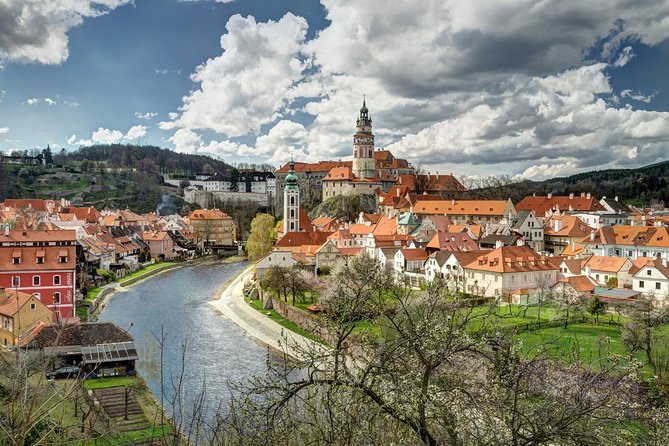
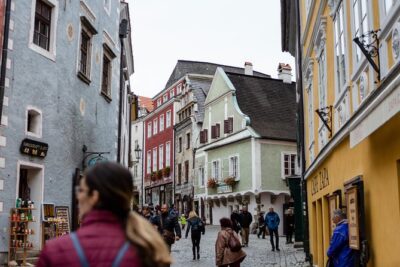
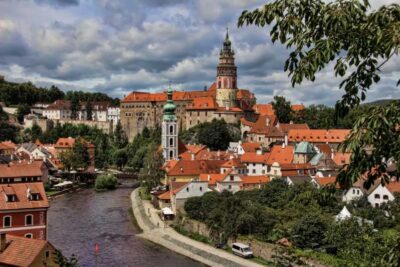
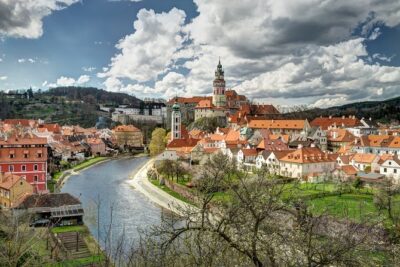
Most people arrive in Český Krumlov for the castle, river bends, painted houses, and medieval street plan. Those sights are real attractions, but they can make the town feel frozen in an earlier age. This tour corrects that impression.
The walk asks what happened here when Europe was being pulled apart by nationalism, dictatorship, war, and Soviet power. You hear about Jews, Nazis, nobles, and local residents caught in events far larger than this small South Bohemian town. That human scale is the point. Instead of treating history as a list of dates, the guide connects it to places you can see.
The subject also makes the tour different from a standard castle visit. You are not simply learning who built a tower or which noble family owned a wing. You are hearing how the town’s people and institutions faced the upheavals of the 1930s, 1940s, and postwar years.
I would choose this experience after seeing the main sights, or early in a stay if you want a stronger sense of place before exploring on your own. It should help you notice that Český Krumlov is not only a preserved historic center. It is also a living town shaped by difficult recent events.
More Cesky Krumlov trips:
- Český Krumlov: Wooden Raft River Cruise
★ 4.9 · 450 reviews - Český Krumlov Free Tour
★ 5.0 · 260 reviews - Český Krumlov: 2 Hour Private Walking Tour with Guide
★ 4.8 · 182 reviews
Meeting at Náměstí Svornosti
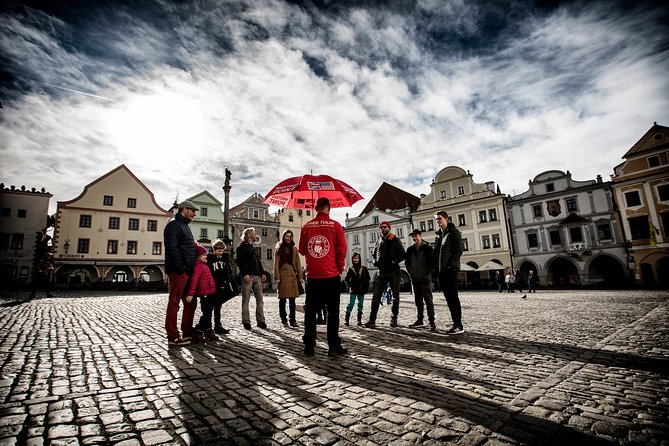
The walk begins at the Info Czech Krumlov office at Náměstí Svornosti 2, in the central part of Český Krumlov. This is a practical starting point because you begin among the town’s most recognizable historic streets rather than at a distant outlying location.
The central square also puts the subject into context right away. You are surrounded by the picturesque architecture that attracts most day visitors, yet the discussion turns toward modern political and social change. That contrast gives the tour its character.
Because the activity uses a mobile ticket, you can keep your confirmation on your phone. The booking confirmation arrives at the time of reservation. The tour is private, with only your group participating, and the maximum group size is 15 people.
That size is worth noting. A group of two or four should feel personal and easy to manage. A full group of 15 is still limited compared with a large public walking tour, but it may be harder for everyone to hear or ask questions at once. If you are booking for a family or a group of friends, the flat group price can make financial sense.
Stop One: Forty Minutes in the Historic Center
The first and longest section lasts about 40 minutes and sets up the modern history of Český Krumlov. This is where you get the broad framework for the rest of the walk.
Expect the guide to connect the old town’s streets and buildings with the political changes that affected the region. The information provided for the tour highlights World War II, the town’s place in the period before the war, and the later Soviet invasion in 1968.
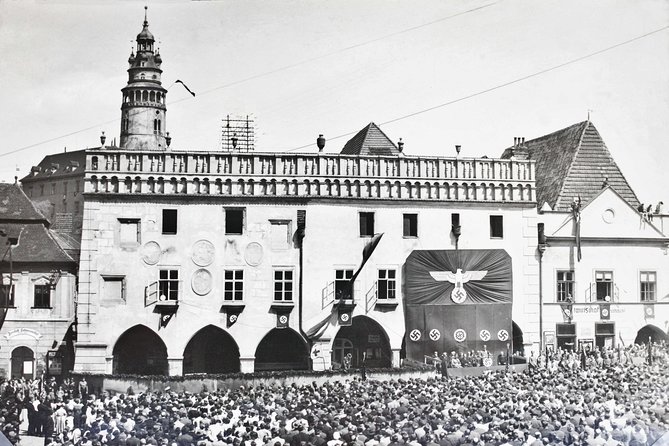
The strength of spending this much time in the center is that the history is not separated from the town itself. You are walking through the same public spaces where official decisions, military movements, and ordinary life once unfolded. Historic photographs help make that connection more concrete.
I especially like the visual approach. A photograph shown at the place where the event occurred can tell you more than a long spoken description. You can look at the old image, then look around at the present-day street and consider what changed, what survived, and what was lost.
This portion may feel dense if you only want quick facts about monuments. It is better suited to you if you enjoy asking questions and following a story across several decades. Jan’s ability to answer questions on a broad range of subjects is useful here, since the 20th century does not fit neatly into one topic.
Stop Two: Fifteen Minutes at Český Krumlov Synagogue
The synagogue stop lasts about 15 minutes and focuses on the history of Jews in Český Krumlov. It adds an important human dimension to the tour’s discussion of the Nazi period and World War II.
The synagogue is also one of the visual anchors of the experience. You can expect to see photographs connected with the local synagogue and hear how Jewish life formed part of the town’s story. This makes the stop more than a quick architectural pause.
Fifteen minutes is not a long time, so the guide cannot cover every aspect of Jewish history in the region. Still, the stop gives you a specific place through which to understand the effects of broader events. I value that kind of focus. It keeps the tour connected to local people rather than turning the subject into a general lecture about Europe.
The topic is serious, and the tone may not suit someone looking only for cheerful sightseeing. For many people, though, this is precisely why the stop matters. A beautiful historic town can hide the communities and families who were pushed aside, persecuted, or erased from public memory.
A few more Cesky Krumlov options to compare
- Cesky Krumlov: Private 2-Hour City Walking Tour
★ 4.8 · 96 reviews - Český Krumlov: Night Walking Tour with a Professional Guide
★ 4.8 · 43 reviews - Cesky Krumlov Tour 4 hours
★ 5.0 · 31 reviews - Prague: Cesky Krumlov Private Day Tour
★ 4.8 · 31 reviews
Stop Three: Ten Minutes on Hitler’s Arrival
The next section takes about 10 minutes and examines Adolf Hitler’s arrival in Český Krumlov before the war. This is a short stop, but it addresses one of the most striking facts in the town’s modern story.
The value here is local scale. Hitler’s rise is familiar as a major European subject, yet the tour asks what his presence meant in this particular town. You are not only hearing about events in Berlin, Prague, or distant battlefields. You are looking at Český Krumlov’s place in the political climate that led to war.
A short stop also helps keep the two-hour walk moving. The guide can introduce the event, show relevant images, and connect it to the next stages of the story without letting one episode take over the whole experience.
This is another point where the historic photographs sound especially useful. Seeing public spaces as they appeared during that period can make the event feel less abstract. You may find yourself comparing the image with the street in front of you, which is one of the tour’s best habits.
Stop Four: Twenty Minutes at Český Krumlov Castle
The castle section lasts about 20 minutes and focuses on the last lord of the town and his struggle against the Nazis. That personal conflict gives the tour a strong change of scale.
The castle is one of Český Krumlov’s great visual attractions and is described as the second biggest castle in the Czech Republic. On this walk, you are not simply admiring its size or architecture. You are hearing about the people who held power there and how noble status did, or did not, protect them during dictatorship and war.
The story of the last lord adds tension to the castle visit. It shows that political pressure affected the ruling class as well as Jewish residents, ordinary families, and public institutions. Those experiences were not identical, of course, and the guide’s job is to place them in their proper context.
Do not assume this walk includes a full interior castle tour or admission to the castle rooms. The supplied details identify the castle as a stop, but they do not include a separate entrance ticket. If you want to tour the interiors, treat that as a separate plan and check the opening arrangements for your date.
For me, this is a strong reason to pair the history walk with a regular castle visit. One gives you the political and personal story, while the other lets you examine the building and collections in more detail.
Stop Five: Fifteen Minutes at Budějovická Gate
The final stop is Budějovická Gate, also called the Budweiser Gate, where the tour ends. This section lasts about 15 minutes and looks at Český Krumlov during World War II, including the battle of Český Krumlov in 1938.
Ending at a gate makes sense. Gates are places of movement, control, defense, and arrival, so they offer a natural setting for discussing military events and the town’s position during a tense period. The stop also brings the story back from the castle and central square to the edge of the historic town.
The route ends at Latrán 106, close to the gate. That is useful when planning the rest of your day. You are not returned to the starting point, so collect anything you need before the walk and know that your final location will be near Budějovická Gate.
The route’s five stops add up to 100 minutes, while the experience is advertised at about two hours. That leaves roughly 20 minutes for walking between locations, transitions, and questions. The timing looks realistic for a compact old-town route, though the exact pace may depend on group size and discussion.
Historic Photographs Make the Walk More Concrete
The use of black and white photographs is one of the most appealing features here. Český Krumlov is so carefully preserved that it can be hard to picture wartime disruption or political change. Old images help break through that illusion.
You may see photographs of streets, buildings, public events, or the synagogue as they looked in earlier decades. The supplied information does not specify the full collection, so I would not book this expecting a formal archive exhibition. Instead, think of the photographs as visual tools used during the walk.
That distinction matters. The images are there to support the guide’s explanation, not replace it. Jan’s role is to point out what you are seeing and explain why the location mattered.
This approach also helps if you are not a serious history reader. You do not need to memorize dates before arriving. You can follow the story through places, people, and images, then ask about the details that interest you most.
Jan’s Guiding Style and the Private Format
Guide Jan is the named guide associated with the experience, and the available feedback gives him strong praise for the time he has put into researching the subject. His ability to handle questions across several connected topics is particularly valuable for a tour covering Jews, Nazis, nobles, war, and the Soviet period.
I would use the private format to ask direct questions. If your group wants more detail about the synagogue, castle leadership, Hitler’s visit, or 1968, you can guide the conversation toward those subjects. The tour is not designed as a one-size-fits-all public performance.
The private setup also suits families, couples, friends, and small history-minded groups who prefer a slower exchange. A group of up to 15 can participate, but the price remains $90.76 per group rather than being charged per person.
At two people, that is a fairly significant cost per person. At 10 or 15 people, it becomes much better value. Even with a smaller group, the private attention may justify the price if you care more about discussion than the lowest possible cost.
The available feedback also points to flexibility with changing the tour time. That is helpful in a town where castle visits, meals, and day-trip arrivals can make schedules awkward. Still, any changes need to be made more than 24 hours before the start time.
Who Should Book This Two-Hour Walk?
I would recommend this experience to you if you:
- Want modern history rather than another medieval overview
- Are interested in World War II and the Nazi period
- Want to understand Jewish life in Český Krumlov
- Prefer a private guide and time for questions
- Like photographs and place-based storytelling
- Are visiting with enough people to share the group price
I would think twice if you want a relaxed architectural walk with little discussion of politics or wartime suffering. The subject is serious, and the tour’s appeal depends on your interest in recent European history.
It also works best if you can walk through the old town for about two hours. The details provided do not describe special physical requirements, and most people can participate. Service animals are allowed, and the starting point is near public transportation.
The tour requires good weather. If poor weather causes cancellation, you are offered another date or a full refund. The same applies if the minimum number of participants is not met. For a normal cancellation, you can receive a full refund if you cancel at least 24 hours before the start time. Late cancellations and late changes are not accepted.
Is the Český Krumlov 20th Century Tour Worth It?
Book it if you want the town to feel like a real place rather than a perfectly preserved backdrop. The strongest parts are the local Jewish history, the story of Hitler’s arrival, the castle’s wartime connection, and the photographs that place those subjects on actual streets.
The value improves sharply when several people share the $90.76 price. A private group of up to 15 also gives you more freedom to ask questions than a large public tour. Just remember that the walk ends at Budějovická Gate, does not list separate castle admission, and deals with difficult material.
I would choose this tour for a history-focused morning or afternoon, then visit the castle interiors separately if that is on your list. If you want a broader view of Český Krumlov, Jan’s two-hour walk adds the recent past that the town’s lovely façades can easily hide.
FAQ
How long is the Český Krumlov 20th Century Tour?
The tour lasts approximately two hours.
Where does the tour start?
It starts at Info Czech Krumlov, Náměstí Svornosti 2, 381 01 Český Krumlov, Czech Republic.
Where does the tour end?
The tour ends at Budějovická Gate, also called Budweiser Gate, at Latrán 106.
Is this a private tour?
Yes. Only your own group participates, with a maximum group size of 15 people.
What is included in the price?
The price is $90.76 per group. The listed stops have no admission ticket charge, and the experience includes the guided walking tour. Separate castle interior admission is not specified.
What historical subjects does the tour cover?
It covers Český Krumlov’s 20th century history, including World War II, Adolf Hitler’s arrival before the war, the history of local Jews, the Nazi period, the 1938 battle of Český Krumlov, and the Soviet invasion in 1968.
Can I cancel for a full refund?
Yes. You can cancel at least 24 hours before the experience starts for a full refund. Cancellations or changes made less than 24 hours before the start time are not accepted for a refund.
What happens if the weather is poor?
The experience requires good weather. If it is canceled because of poor weather, you are offered a different date or a full refund.
Newest listings in Cesky Krumlov
- Touristic highlights of Český Krumlov on a Private half day tour with a local★ 5.0 · 1 review
- Transfer from Cesky Krumlov to Prague: Private daytrip with 2h for sightseeing★ 5.0 · 2 reviews
- Enchanting Český Krumlov Private Walking Tour: Echoes of the Past★ 5.0 · 2 reviews
- Walking private guided tour in Cesky Krumlov with local certified guide★ 5.0 · 3 reviews
- Private Romantic Whispers of Český Krumlov★ 5.0 · 3 reviews
- Private one way transfer from Cesky Krumlov to Linz★ 5.0 · 1 review
- Explore the Instaworthy Spots of Cesky Krumlov with a Local★ 5.0 · 1 review
- Private one way transfer from Cesky Krumlov to Vienna★ 5.0 · 3 reviews
Cesky Krumlov Day Trips, compared.
Cesky Krumlov Full day tour from Prague and back
Read our review →
UNESCO Cesky Krumlov from Prague with Guided Tour and Transfer
Read our review →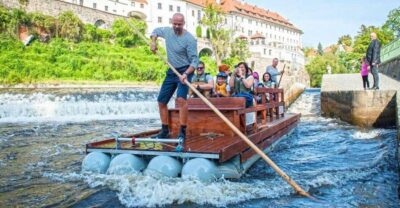
Browse the lists this tour appears in